



















































































































































































Property Insurance in Today's World: Coverage Types, Exclusions, and Industry Trends
A comprehensive guide to property insurance covering coverage options, replacement costs, policy limits, claims processes, and asset protection.

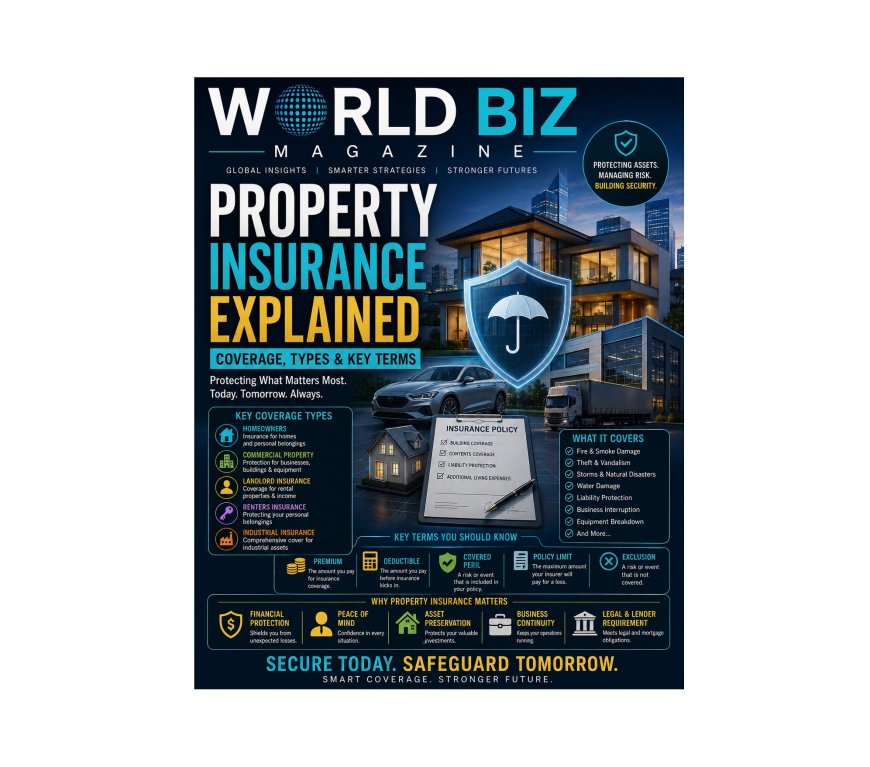
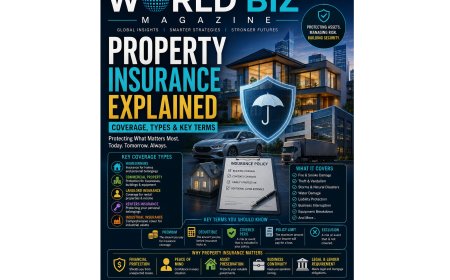
Property Insurance Explained: Coverage, Types, and Key Terms
Understanding How Property Insurance Protects Assets, Mitigates Financial Risk, and Supports Long-Term Financial Security
World Biz Magazine | Insurance, Risk Management & Real Estate
Property ownership represents one of the most significant financial investments made by individuals, businesses, institutions, and governments. Whether it is a family home, commercial office building, manufacturing facility, warehouse, retail center, hotel, or industrial complex, physical property often forms a substantial portion of an owner's wealth and operational capability. However, these valuable assets are constantly exposed to a wide range of risks, including fire, storms, flooding, theft, vandalism, accidents, natural disasters, and other unforeseen events. Property insurance exists to provide financial protection against such losses, helping policyholders recover and rebuild when unexpected damage occurs.
Property insurance has become one of the most important components of modern risk management. It provides a mechanism through which individuals and organizations transfer financial risks to insurance companies in exchange for premium payments. By spreading risk across large groups of policyholders, insurers help reduce the potentially devastating financial impact of property-related losses. Without property insurance, many homeowners, businesses, and investors would face significant financial hardship following major incidents.
The global property insurance industry plays a critical role in economic stability. Property insurance not only protects individual assets but also supports lending markets, real estate development, business continuity, and broader economic resilience. Financial institutions often require insurance coverage before approving mortgages or commercial loans because insured properties represent lower financial risks.
Despite its importance, property insurance remains one of the least understood areas of personal and commercial finance. Policy language can be complex, coverage options vary significantly, and many policyholders are uncertain about what is and is not covered. Understanding the fundamentals of property insurance including coverage types, policy structures, exclusions, and key terminology is essential for making informed insurance decisions and ensuring adequate protection.
What Is Property Insurance?
Property insurance is a type of insurance designed to protect physical assets against financial losses resulting from covered events.
The policyholder pays a premium to an insurance company in exchange for financial protection against specified risks.
Property insurance may cover:
- Buildings
- Homes
- Commercial facilities
- Personal belongings
- Equipment
- Inventory
- Business property
- Specialized assets
When covered damage occurs, the insurer may compensate the policyholder for repair costs, replacement expenses, or financial losses according to policy terms.
The specific scope of protection depends on the policy purchased.
Why Property Insurance Matters
Property damage can create substantial financial burdens.
Repairing or replacing damaged structures often involves significant costs that may exceed available savings or operational resources.
Property insurance helps mitigate these risks by providing financial support following covered losses.
Key benefits include:
- Asset protection
- Financial stability
- Business continuity
- Mortgage compliance
- Risk transfer
- Peace of mind
Insurance allows property owners to recover more quickly from unexpected events.
This protection supports both personal and economic resilience.
How Property Insurance Works
Property insurance operates through a contractual agreement between the insurer and policyholder.
The policy outlines:
- Covered property
- Covered risks
- Policy limits
- Deductibles
- Exclusions
- Claim procedures
If a covered event occurs, the policyholder submits a claim.
The insurer investigates the loss and determines compensation based on policy terms.
Coverage payments may be used to repair, rebuild, or replace damaged property.
The exact process varies among insurers and jurisdictions.
Types of Property Insurance
Property insurance encompasses several distinct categories designed to address different types of risks and ownership structures.
Homeowners Insurance
Homeowners insurance is one of the most common forms of property coverage.
It typically protects:
- Residential structures
- Personal belongings
- Additional living expenses
- Liability exposures
Coverage often applies to events such as:
- Fire
- Windstorms
- Theft
- Vandalism
- Certain water damage incidents
Homeowners policies generally combine property protection with liability coverage.
They are widely required by mortgage lenders.
Commercial Property Insurance
Businesses rely on commercial property insurance to protect operational assets.
Covered property may include:
- Office buildings
- Retail stores
- Manufacturing facilities
- Warehouses
- Equipment
- Inventory
Commercial policies help businesses recover following property-related losses.
Business continuity often depends on adequate commercial property protection.
Landlord Insurance
Property owners who rent residential or commercial units often purchase landlord insurance.
These policies may cover:
- Rental buildings
- Structural damage
- Loss of rental income
- Certain liability risks
Landlord coverage differs from homeowners insurance because rental properties present unique risk profiles.
Specialized protection is often necessary.
Renters Insurance
Renters insurance protects personal belongings owned by tenants.
Although landlords insure the building itself, renters are generally responsible for insuring their own possessions.
Coverage commonly includes:
- Furniture
- Electronics
- Clothing
- Personal property
Liability protection may also be included.
Renters insurance is often relatively affordable compared to other property coverage types.
Industrial Property Insurance
Industrial operations frequently require specialized property insurance solutions.
Coverage may address:
- Factories
- Production facilities
- Heavy machinery
- Specialized equipment
Industrial risks often involve higher potential losses due to operational complexity and asset values.
Insurers frequently conduct detailed risk assessments before issuing coverage.
Inland Marine Insurance
Despite its name, inland marine insurance often covers movable property and equipment.
Examples include:
- Construction equipment
- Valuable tools
- Mobile assets
- Specialized equipment
These policies help protect assets while they are transported or used at various locations.
Understanding Covered Perils
A peril refers to the specific cause of loss covered by an insurance policy.
Common covered perils include:
- Fire
- Lightning
- Windstorms
- Hail
- Theft
- Vandalism
- Explosion
- Smoke damage
Coverage varies depending on policy terms.
Policyholders should carefully review covered perils before purchasing insurance.
Named Perils vs. All-Risk Coverage
Property insurance policies generally follow one of two approaches.
Named Perils Policies
Cover only the specific risks listed within the policy.
All-Risk Policies
· Cover all risks except those specifically excluded.
· All-risk policies generally provide broader protection.
· However, they often involve higher premiums.
· Understanding this distinction is important when evaluating coverage options.
Replacement Cost vs. Actual Cash Value
Property insurance policies may compensate losses using different valuation methods.
Replacement Cost Coverage
Pays the amount required to replace damaged property with similar new property.
Actual Cash Value Coverage
· Accounts for depreciation and age.
· As a result, actual cash value settlements are often lower than replacement cost payments.
· The valuation method can significantly affect claim outcomes.
Deductibles Explained
A deductible represents the amount the policyholder must pay before insurance coverage applies.
For example:
If damage totals $20,000 and the deductible is $2,000, the insurer may cover the remaining $18,000.
Higher deductibles often result in lower premiums.
Lower deductibles generally increase premium costs.
Deductible selection is an important component of policy design.
Policy Limits and Coverage Amounts
Policy limits establish the maximum amount an insurer will pay for covered losses.
Coverage limits may apply to:
- Buildings
- Personal property
- Equipment
- Special categories of assets
Insufficient limits may result in underinsurance.
Regular reviews help ensure coverage remains aligned with current property values.
Accurate valuation is essential.
Common Property Insurance Exclusions
Property insurance does not cover every possible risk.
Common exclusions may include:
- Flood damage
- Earthquakes
- Wear and tear
- Pest infestations
- Intentional damage
- War-related events
Specialized policies may be required for excluded risks.
Understanding exclusions helps avoid unexpected coverage gaps.
Business Interruption Coverage
Commercial property losses often involve more than physical damage.
Business interruption insurance may cover:
- Lost revenue
- Continuing expenses
- Temporary relocation costs
This coverage helps organizations maintain financial stability while recovering from disruptions.
Business interruption protection is particularly valuable for revenue-dependent operations.
Property Insurance Claims Process
The claims process generally involves:
- Reporting the loss
- Documenting damage
- Insurer investigation
- Damage assessment
- Settlement determination
- Payment issuance
Accurate documentation can significantly improve claim efficiency.
Photographs, receipts, inventories, and maintenance records often support claims.
Preparation is important before losses occur.
Catastrophic Events and Property Insurance
Natural disasters create significant challenges for insurers and policyholders.
Events such as:
- Hurricanes
- Wildfires
- Earthquakes
- Floods
- Severe storms
can generate large-scale losses.
Climate-related risks have become increasingly important within property insurance markets.
Insurers continuously adjust underwriting and pricing models to address evolving risk patterns.
Technology and Property Insurance
Technology is transforming property insurance operations.
Innovations include:
- Artificial intelligence
- Satellite imagery
- Predictive analytics
- Internet of Things (IoT) sensors
- Automated claims processing
These technologies improve risk assessment and operational efficiency.
Digital transformation is reshaping underwriting and claims management processes worldwide.
Choosing the Right Property Insurance Policy
Selecting appropriate coverage requires evaluating:
- Property value
- Risk exposures
- Geographic location
- Coverage needs
- Deductible preferences
- Financial objectives
Property owners should regularly review policies to ensure continued adequacy.
Insurance needs often change over time.
Professional guidance may assist with complex coverage decisions.
Emerging Trends in Property Insurance
Several trends are influencing the future of property insurance.
These include:
- Climate risk modeling
- Smart property monitoring
- AI-powered underwriting
- Parametric insurance solutions
- Digital claims management
- Advanced risk analytics
The industry continues evolving to address changing risks and customer expectations.
Innovation is becoming increasingly important for insurers and policyholders alike.
World Biz Magazine Insights
Property insurance serves as one of the most important financial protection mechanisms available to individuals and organizations. By transferring risk from property owners to insurers, these policies help protect assets, support economic resilience, facilitate lending, and enable recovery following unexpected losses. As property values increase and emerging risks such as climate change, cyber-connected infrastructure, and natural catastrophes reshape exposure profiles, understanding insurance coverage has become more important than ever. Effective property insurance strategies are not simply about purchasing coverage they are about ensuring long-term financial security, operational continuity, and risk resilience.
Conclusion
Property insurance provides critical protection against financial losses resulting from damage to homes, businesses, buildings, equipment, and other valuable assets. Through a combination of coverage options, risk-sharing mechanisms, and financial support, insurers help individuals and organizations recover from unforeseen events while maintaining financial stability.
Understanding policy structures, covered perils, valuation methods, deductibles, exclusions, and emerging industry trends enables property owners to make informed insurance decisions. As risks continue evolving and property values increase, adequate insurance coverage remains a fundamental component of responsible financial planning and risk management.
Ultimately, property insurance is more than a contractual agreement it is a strategic tool that helps protect investments, preserve wealth, and support long-term economic resilience in an increasingly uncertain world.
Disclaimer
This article is published for informational, educational, and industry analysis purposes only and does not constitute legal, insurance, financial, investment, tax, regulatory, or professional advice. Insurance policies, coverage terms, exclusions, claims procedures, and regulatory requirements vary by insurer, jurisdiction, and policy type. Readers should consult qualified insurance professionals, legal advisors, and financial experts regarding specific insurance coverage needs and policy decisions.
What's Your Reaction?
 Like
0
Like
0
 Dislike
0
Dislike
0
 Love
0
Love
0
 Funny
0
Funny
0
 Angry
0
Angry
0
 Sad
0
Sad
0
 Wow
0
Wow
0