












































































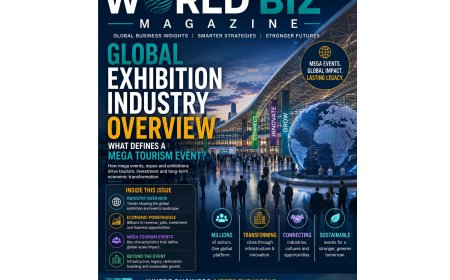

World's Largest Expo Markets: The Global Exhibition Powerhouses Driving Business and Tourism Growth
A comprehensive analysis of the world's largest expo markets, their economic impact, industry leadership, tourism benefits, and future growth opportunities.

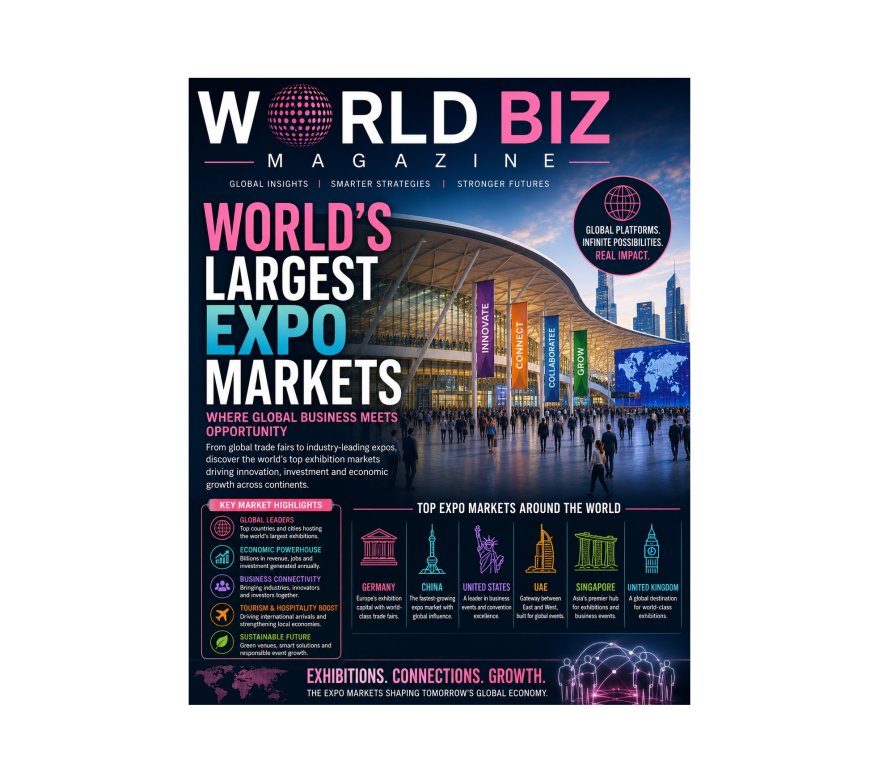
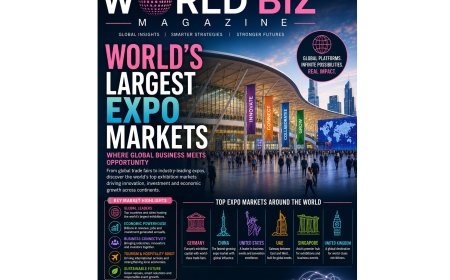
World’s Largest Expo Markets
The Global Exhibition Powerhouses Driving Business, Tourism, Innovation, and Economic Growth
World Biz Magazine | Travel, Tourism & Hospitality
The global exhibition industry has evolved into one of the most influential sectors of the modern economy, serving as a critical platform for international trade, business networking, investment attraction, innovation showcases, and tourism development. Across the world, major exhibition markets attract millions of visitors annually, generate billions of dollars in economic activity, and connect industries, governments, investors, and consumers on an unprecedented scale.
From international trade fairs and technology expos to industry conventions and consumer exhibitions, expo markets have become strategic assets for countries seeking to strengthen their competitive position in the global economy. These large-scale events not only facilitate commerce but also support hospitality, transportation, real estate, infrastructure, and destination branding initiatives.
As globalization continues to reshape business and travel patterns, a select group of countries and cities have emerged as dominant players in the exhibition industry. These markets host some of the world's largest and most influential expos, attracting exhibitors and visitors from every corner of the globe.
Understanding the Global Expo Market
An expo market refers to a destination or region that hosts a significant number of exhibitions, trade fairs, conventions, and industry events. The strength of an expo market is typically measured by exhibition space, visitor attendance, exhibitor participation, event frequency, international reach, and economic impact.
Successful expo markets create ecosystems that support year-round business activity. These ecosystems include convention centers, exhibition halls, hotels, transportation infrastructure, technology providers, event organizers, logistics companies, and tourism services.
As industries become increasingly globalized, exhibitions continue to provide valuable opportunities for companies to launch products, build partnerships, generate leads, and explore new markets.
Why Expo Markets Matter
Expo markets play a vital role in economic development and international business growth.
Their benefits include:
- Facilitating international trade
- Promoting foreign investment
- Supporting tourism growth
- Encouraging innovation and knowledge exchange
- Creating employment opportunities
- Enhancing destination branding
- Strengthening industry competitiveness
- Accelerating infrastructure development
For many cities, exhibitions have become a major pillar of economic diversification and long-term growth strategies.
Germany: The World's Exhibition Capital
Germany is widely regarded as one of the world's most important exhibition markets.
The country hosts numerous globally recognized trade fairs across industries including manufacturing, automotive, industrial technology, healthcare, consumer goods, and engineering.
Major exhibition cities include:
- Hanover
- Frankfurt
- Cologne
- Düsseldorf
- Munich
Germany's reputation for engineering excellence, infrastructure quality, and international accessibility has helped establish its leadership position in the global exhibition industry.
China: The Fastest-Growing Expo Market
China has emerged as one of the largest and fastest-growing exhibition markets in the world.
Rapid industrialization, economic expansion, manufacturing leadership, and increasing international engagement have fueled demand for exhibitions across sectors including technology, electronics, automotive, healthcare, and consumer products.
Leading exhibition destinations include:
- Shanghai
- Guangzhou
- Shenzhen
- Beijing
China's growing influence in international trade continues to strengthen its position as a global exhibition powerhouse.
United States: Business Events and Convention Leadership
The United States remains one of the world's most significant exhibition and convention markets.
Its extensive convention infrastructure supports major industry events covering technology, healthcare, finance, entertainment, aerospace, energy, and consumer products.
Key exhibition cities include:
- Las Vegas
- Chicago
- Orlando
- New York City
- Atlanta
The U.S. benefits from strong domestic demand, advanced facilities, and extensive international connectivity.
United Arab Emirates: Gateway Between East and West
The UAE has transformed itself into one of the world's leading exhibition destinations.
Strategically located between Europe, Asia, and Africa, the country has invested heavily in world-class exhibition facilities, aviation infrastructure, hospitality services, and tourism development.
The city of Dubai has become particularly prominent through its ability to host large-scale international exhibitions, trade fairs, and business forums.
The success of global events has reinforced the UAE's reputation as a leading center for business tourism and international commerce.
Singapore: Asia's Premier Business Events Hub
Singapore has built one of the most sophisticated exhibition and convention industries in the world.
The city-state benefits from:
- Strategic geographic location
- Political stability
- Strong connectivity
- Advanced infrastructure
- Business-friendly regulations
Singapore continues to attract major events across technology, finance, healthcare, sustainability, logistics, and innovation sectors.
Its efficient event ecosystem makes it one of Asia's most competitive expo markets.
United Kingdom: A Global Events and Exhibition Leader
The United Kingdom remains a major force within the international exhibition sector.
Cities such as:
- London
- Birmingham
- Manchester
host numerous international trade fairs, conferences, and exhibitions that attract global audiences.
The UK's strengths include financial services expertise, international accessibility, and strong industry networks.
Emerging Expo Markets
Several countries are rapidly expanding their exhibition industries.
These include:
- Saudi Arabia
- Brazil
- South Korea
- Thailand
- Malaysia
- India
· Philippines
These markets are investing heavily in exhibition facilities, tourism infrastructure, and international event attraction strategies.
Key Industries Driving Expo Growth
Several sectors account for a large portion of global exhibition activity:
Technology and Innovation
Artificial intelligence, software, electronics, and digital transformation events continue to expand globally.
Healthcare and Life Sciences
Medical technology, pharmaceuticals, biotechnology, and healthcare innovation exhibitions attract strong international participation.
Manufacturing and Industrial Technology
Industrial automation, engineering, machinery, and supply chain events remain major exhibition drivers.
Energy and Sustainability
Renewable energy, climate technology, and sustainability-focused expos are becoming increasingly important.
Consumer Goods and Retail
Retail, fashion, lifestyle, and consumer product exhibitions continue to generate significant visitor traffic.
Future Trends Shaping Expo Markets
The exhibition industry is undergoing significant transformation driven by technological innovation and changing participant expectations.
Emerging trends include:
- Hybrid exhibitions
- Artificial intelligence integration
- Smart venue technologies
- Data-driven event experiences
- Sustainable event operations
- Carbon-neutral exhibitions
- Virtual networking platforms
- Enhanced visitor personalization
Destinations that successfully embrace these trends are expected to strengthen their position within the global exhibition marketplace.
World Biz Magazine Insights
The world's largest expo markets are no longer competing solely on venue size or visitor numbers. Increasingly, success is determined by a destination's ability to integrate business events with tourism, innovation, sustainability, and investment attraction strategies. The leading exhibition hubs of the future will be those that transform events into year-round economic ecosystems that support global commerce, talent attraction, and long-term destination growth.
Conclusion
The global exhibition industry remains one of the most powerful platforms for international business engagement, tourism development, and economic growth. Countries such as Germany, China, the United States, the United Arab Emirates, Singapore, and the United Kingdom have established themselves as leaders by investing in world-class infrastructure, connectivity, and event ecosystems.
As industries become increasingly interconnected, the importance of expo markets will continue to grow. For governments, investors, tourism authorities, and business leaders, exhibitions represent far more than temporary events they are strategic assets that drive innovation, facilitate commerce, strengthen international relationships, and create lasting economic value.
Disclaimer
This article is published for informational, educational, and industry analysis purposes only. Exhibition market rankings, industry performance, visitor statistics, and economic impacts may vary based on market conditions, methodology, and reporting sources. Readers are encouraged to consult official industry associations, exhibition organizers, government agencies, and professional advisors when evaluating specific markets or investment opportunities.
What's Your Reaction?
 Like
0
Like
0
 Dislike
0
Dislike
0
 Love
0
Love
0
 Funny
0
Funny
0
 Angry
0
Angry
0
 Sad
0
Sad
0
 Wow
0
Wow
0