
























































































































































Global Cruise Industry Overview: Trends, Growth Drivers, Investment Opportunities, and Future Outlook
A comprehensive overview of the global cruise market covering cruise lines, destinations, passenger trends, technological advancements, and industry growth prospects.

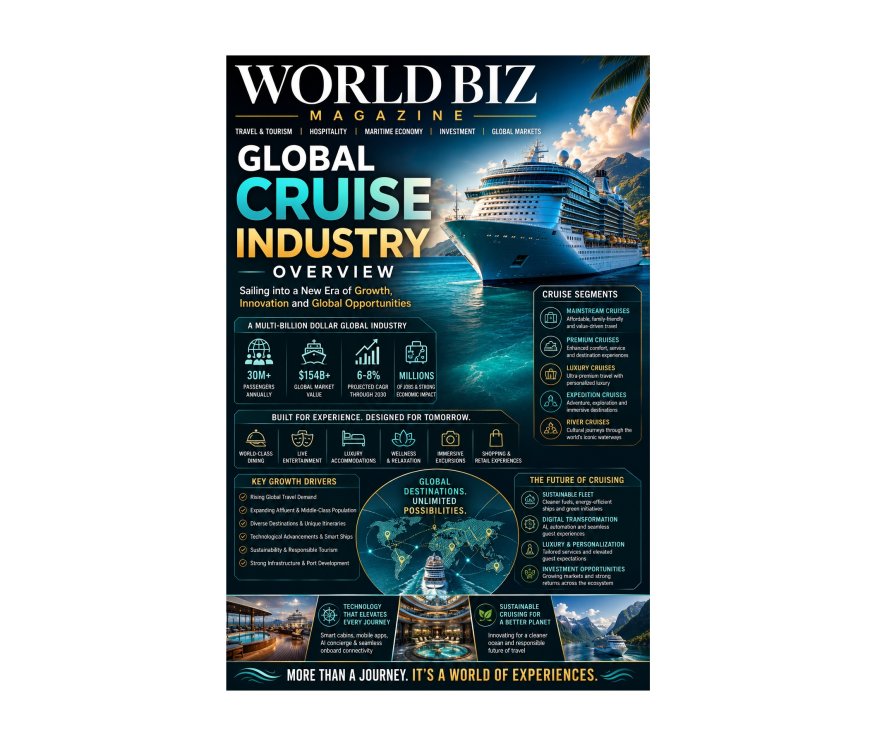
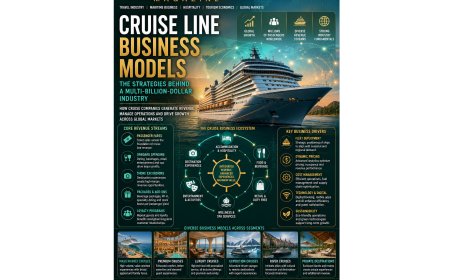
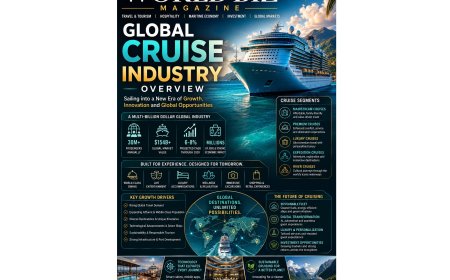
Global Cruise Industry Overview
Navigating Growth, Innovation, Luxury Travel, and the Future of the Worldwide Cruise Market
World Biz Magazine | Travel, Tourism & Hospitality
The global cruise industry has evolved from a niche segment of leisure travel into one of the most dynamic sectors within the broader tourism and hospitality economy. Combining transportation, accommodation, entertainment, dining, and destination experiences into a single integrated offering, cruise tourism has become a major contributor to international travel, regional economic development, employment generation, and maritime innovation.
Over the past several decades, cruise operators have transformed the passenger experience through larger vessels, luxury amenities, advanced technologies, and increasingly diverse itineraries. Modern cruise ships function as floating destinations, offering everything from luxury accommodations and fine dining to entertainment complexes, wellness facilities, shopping districts, and immersive cultural experiences.
As global tourism rebounds and consumer demand for experiential travel continues to rise, the cruise industry is entering a new phase of expansion. Industry leaders are investing billions of dollars in fleet modernization, sustainability initiatives, digital transformation, and destination development to capture growing demand from travelers seeking convenience, value, and memorable experiences.
Today, the cruise industry represents a significant force within the global tourism ecosystem, connecting continents, supporting local economies, and creating opportunities for investors, travel operators, hospitality providers, and maritime businesses worldwide.
Understanding the Cruise Industry
The cruise industry encompasses companies and organizations involved in operating passenger vessels designed primarily for leisure travel.
Unlike traditional transportation services, cruises combine multiple travel components into a single product, including:
- Accommodation
- Transportation
- Dining
- Entertainment
- Recreation
- Excursions
- Cultural experiences
Passengers travel between destinations while enjoying onboard facilities and services throughout their journey.
Cruise vacations appeal to a broad range of travelers, including:
- Families
- Couples
- Luxury travelers
- Retirees
- Adventure seekers
- Corporate groups
- High-net-worth individuals
This diversity has helped support sustained industry growth across multiple market segments.
The Economic Importance of the Cruise Industry
The cruise sector generates substantial economic activity worldwide.
Its economic impact extends far beyond ticket sales and onboard spending.
The industry supports:
- Port operations
- Tourism businesses
- Hotels
- Restaurants
- Transportation providers
- Tour operators
- Retail businesses
- Maritime services
- Shipbuilding industries
Cruise tourism also creates employment opportunities across:
- Hospitality
- Entertainment
- Marine operations
- Engineering
- Logistics
- Travel services
Many coastal cities and island destinations rely heavily on cruise-generated tourism revenue as part of their broader economic development strategies.
Key Segments of the Cruise Market
The global cruise industry serves multiple traveler categories.
Mainstream Cruises
Mainstream cruise operators focus on affordability and mass-market appeal.
These cruises typically feature:
- Family entertainment
- Multiple dining options
- Recreational facilities
- Diverse itineraries
They represent the largest segment of the global cruise market.
Premium Cruises
Premium operators provide enhanced service levels and more sophisticated experiences.
Features often include:
- Higher staff-to-guest ratios
- Elevated dining experiences
- Premium accommodations
- Enriched cultural programming
This segment appeals to travelers seeking greater comfort and exclusivity.
Luxury Cruises
Luxury cruises focus on personalized service and ultra-premium experiences.
Luxury offerings commonly include:
- Spacious suites
- Fine dining
- Butler services
- Exclusive shore excursions
- All-inclusive pricing models
The luxury segment continues experiencing strong growth among affluent travelers.
Expedition Cruises
Expedition cruises focus on exploration and adventure tourism.
Popular destinations include:
- Polar regions
- Remote islands
- Wildlife habitats
- Environmentally sensitive areas
These voyages often feature educational programs led by experts and scientists.
River Cruises
River cruising has emerged as one of the fastest-growing sectors.
Unlike ocean cruises, river cruises focus on inland waterways and cultural exploration.
Popular regions include:
- Europe
- Asia
- Africa
- North America
River cruises appeal to travelers seeking immersive destination experiences.
Major Global Cruise Markets
The cruise industry serves passengers from around the world.
Several regions dominate demand and operational activity.
North America
North America remains the world's largest cruise source market.
Strong consumer demand, established infrastructure, and high disposable incomes support continued growth.
Major departure hubs include:
- Miami
- Fort Lauderdale
- Port Canaveral
- New York
- Los Angeles
The Caribbean remains one of the most popular cruise destinations globally.
Europe
Europe represents a major cruise market both as a source region and destination.
Popular cruise routes include:
- Mediterranean cruises
- Northern Europe cruises
- Baltic Sea voyages
- River cruises
Europe continues attracting both domestic and international cruise travelers.
Asia-Pacific
Asia-Pacific is emerging as one of the industry's most promising growth regions.
Drivers include:
- Expanding middle-class populations
- Rising disposable incomes
- Growing tourism infrastructure
Regional operators and international cruise lines continue investing in Asian markets.
Middle East
The Middle East has strengthened its position as a cruise destination.
Investment in:
- Modern cruise terminals
- Luxury tourism infrastructure
- Destination development
has supported regional growth.
Several Gulf destinations are increasingly attracting cruise traffic.
Cruise Ship Innovation and Technology
Modern cruise ships are among the most technologically advanced passenger vessels ever built.
Industry investments focus on:
Digital Guest Experiences
Mobile applications streamline:
- Check-in
- Reservations
- Navigation
- Payments
Smart Cabin Technology
Connected accommodations improve convenience and personalization.
Artificial Intelligence
AI enhances:
- Customer service
- Personalization
- Operational efficiency
- Predictive maintenance
Advanced Entertainment Systems
Interactive attractions, immersive experiences, and next-generation theaters continue enhancing onboard engagement.
Technology is becoming a critical differentiator within the industry.
Sustainability and Environmental Responsibility
Environmental sustainability has become a major priority.
Cruise operators are investing heavily in:
Alternative Fuels
Including:
- LNG-powered vessels
- Biofuel research
- Future hydrogen solutions
Energy Efficiency
New ship designs prioritize reduced fuel consumption and emissions.
Waste Management Systems
Advanced onboard systems improve waste treatment and recycling capabilities.
Shore Power Technology
Allowing ships to connect to local power grids while in port.
These initiatives aim to align industry growth with evolving environmental expectations.
Emerging Consumer Trends
Changing traveler preferences continue influencing industry strategies.
Key trends include:
Experiential Travel
Passengers increasingly prioritize unique experiences over traditional sightseeing.
Wellness Tourism
Cruise operators are expanding:
- Spa services
- Fitness facilities
- Wellness programs
Multigenerational Travel
Cruises remain popular among families traveling across multiple generations.
Luxury and Personalized Experiences
Demand for customized itineraries and premium services continues rising.
Sustainable Tourism
Travelers increasingly consider environmental and social responsibility when selecting cruise operators.
These trends are shaping future product development across the industry.
Challenges Facing the Cruise Industry
Despite positive growth prospects, several challenges remain.
Economic Volatility
Global economic conditions influence consumer spending and travel demand.
Fuel Costs
Energy prices significantly impact operating expenses.
Regulatory Requirements
Environmental and maritime regulations continue evolving.
Geopolitical Risks
Regional conflicts and trade disruptions may affect itineraries and operations.
Infrastructure Limitations
Growing passenger volumes require ongoing investment in ports and destination facilities.
Successfully managing these challenges will be essential for sustained growth.
Investment Opportunities in the Cruise Sector
The cruise industry offers opportunities across multiple sectors.
Areas attracting investor interest include:
- Cruise operators
- Port infrastructure
- Maritime technology
- Hospitality services
- Travel technology
- Sustainable shipping solutions
- Destination development
- Luxury tourism
As demand continues increasing, investment opportunities are expected to expand throughout the broader cruise ecosystem.
The Future of Global Cruising
Several trends are expected to shape the next decade of industry development.
These include:
- Fleet expansion
- Digital transformation
- Sustainable vessel technologies
- Luxury travel growth
- Expedition cruising
- Smart ship innovation
- Emerging market expansion
- AI-driven guest experiences
Industry leaders are increasingly focused on balancing growth, profitability, sustainability, and customer satisfaction.
The companies that successfully integrate these priorities will likely define the future of cruise tourism.
World Biz Magazine Insights
The cruise industry is no longer simply a travel segment it has evolved into a sophisticated global ecosystem that combines tourism, hospitality, transportation, technology, and destination development. As consumer preferences shift toward experiential and personalized travel, cruise operators are responding with larger investments in innovation, sustainability, luxury experiences, and digital transformation. The industry's ability to adapt to changing traveler expectations while maintaining operational efficiency will play a critical role in determining its long-term growth trajectory.
Conclusion
The global cruise industry stands at an important crossroads, supported by rising travel demand, technological advancement, and increasing consumer interest in experiential tourism. From luxury voyages and expedition cruises to family-oriented vacations and river journeys, the sector continues expanding its appeal across diverse traveler segments.
While challenges related to sustainability, regulation, fuel costs, and economic uncertainty remain, the industry's long-term fundamentals remain strong. Investments in fleet modernization, environmental initiatives, smart technologies, and destination development are creating new opportunities for growth and innovation.
As cruise operators continue redefining the travel experience, the industry is positioned to remain a major contributor to global tourism, economic development, and international connectivity for years to come.
Disclaimer
This article is published for informational, educational, and industry analysis purposes only and does not constitute financial, investment, legal, tourism, maritime, or professional advice. Industry trends, market conditions, regulations, and economic factors may change over time. Readers should conduct independent research and consult qualified professionals before making investment, business, travel, or strategic decisions related to the cruise industry.
What's Your Reaction?
 Like
0
Like
0
 Dislike
0
Dislike
0
 Love
0
Love
0
 Funny
0
Funny
0
 Angry
0
Angry
0
 Sad
0
Sad
0
 Wow
0
Wow
0