



































































































































































































Technology-Driven Cities: The Rise of Smart City Adoption and Urban Intelligence
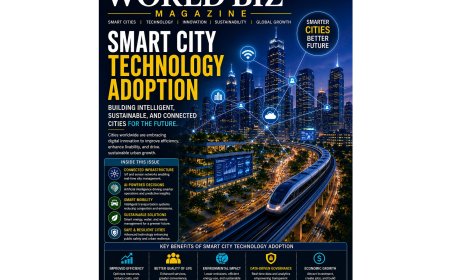
Smart city technology adoption is enabling governments to create connected, efficient, and resilient urban environments for future generations.


Smart City Technology Adoption
How Cities Worldwide Are Leveraging Digital Innovation to Create More Efficient, Sustainable, and Livable Urban Environments
World Biz Magazine | Smart Cities, Technology & Urban Development
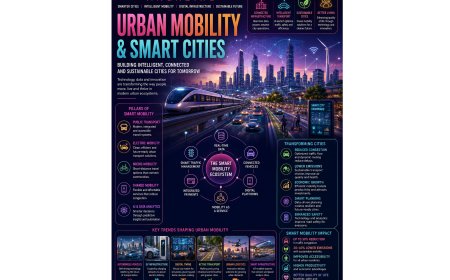
As urban populations continue to expand and infrastructure demands intensify, smart city technology adoption is emerging as a transformative force that enables cities to operate more efficiently, improve quality of life, and build sustainable foundations for future growth.
The Growing Importance of Smart City Technologies
Cities have always been centers of economic activity, innovation, and social development. However, rapid urbanization, increasing population density, environmental concerns, and rising demands for public services are placing unprecedented pressure on urban infrastructure. To address these challenges, governments and city planners around the world are increasingly adopting smart city technologies that leverage data, connectivity, automation, and artificial intelligence to enhance urban management and improve citizen experiences.
Smart city technology adoption represents a strategic shift from traditional urban management toward data-driven, connected ecosystems where infrastructure, services, and citizens interact through digital platforms. By integrating advanced technologies into transportation systems, utilities, public safety networks, and government services, cities can improve operational efficiency while creating more sustainable and resilient urban environments.
Understanding Smart City Technology Adoption
Smart city technology adoption refers to the implementation and integration of digital technologies designed to improve urban operations, resource management, and public service delivery. These technologies typically include Internet of Things (IoT) devices, artificial intelligence (AI), cloud computing, big data analytics, digital twins, edge computing, blockchain, advanced telecommunications, and smart sensors.
The objective is not simply to deploy technology but to create intelligent systems capable of collecting, analyzing, and acting upon real-time data. This enables city authorities to make informed decisions, optimize resource allocation, reduce operational costs, and proactively address challenges before they escalate.
As digital transformation becomes a central component of urban development strategies, smart city initiatives are increasingly viewed as critical investments in long-term economic competitiveness and sustainability.
Internet of Things: The Foundation of Smart Cities
The Internet of Things serves as one of the most important pillars of smart city technology adoption. IoT networks consist of connected sensors, devices, and infrastructure components that continuously collect and transmit data across urban systems.
Traffic sensors monitor vehicle movement, environmental sensors track air quality and weather conditions, smart meters measure utility consumption, and connected infrastructure monitors public assets such as bridges, roads, and buildings. These devices provide city managers with real-time visibility into urban operations.
The widespread deployment of IoT technology allows cities to identify inefficiencies, optimize services, improve maintenance planning, and respond more effectively to changing conditions. As sensor costs continue to decline and connectivity improves, IoT adoption is accelerating across both developed and emerging markets.
Artificial Intelligence Enhances Urban Decision-Making
Artificial intelligence is playing an increasingly important role in smart city technology adoption. AI systems analyze vast volumes of data generated by connected devices, enabling city authorities to identify patterns, forecast future conditions, and automate decision-making processes.
Traffic management systems utilize AI algorithms to optimize signal timing and reduce congestion. Utility providers employ predictive analytics to forecast energy demand and identify potential system failures. Public safety agencies leverage AI-powered surveillance and emergency response systems to improve situational awareness and response times.
Beyond operational efficiency, AI supports strategic urban planning by helping governments model future growth scenarios, evaluate infrastructure investments, and anticipate changing citizen needs. As machine learning capabilities continue to evolve, AI is expected to become even more deeply embedded within smart city ecosystems.
Smart Mobility and Intelligent Transportation Systems
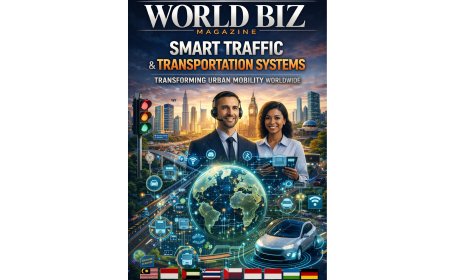
Transportation remains one of the most visible areas of smart city technology adoption. Urban congestion, air pollution, and growing transportation demands require innovative mobility solutions capable of improving efficiency while reducing environmental impact.
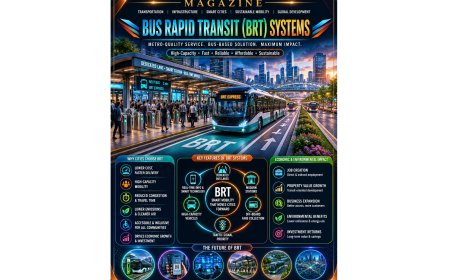
Smart mobility technologies integrate traffic management platforms, intelligent signaling systems, connected vehicles, public transit optimization tools, and mobility-as-a-service applications. These systems allow cities to manage transportation networks dynamically based on real-time conditions.
Electric vehicles, autonomous transportation systems, smart parking solutions, and integrated multimodal transportation platforms are also becoming key components of modern urban mobility strategies. Together, these technologies contribute to safer, cleaner, and more efficient transportation ecosystems.
Digital Twins Revolutionize Urban Planning
Digital twin technology is emerging as a powerful tool for smart city development. A digital twin is a virtual representation of a physical city or infrastructure system that continuously receives data from real-world assets and operations.
By creating digital replicas of urban environments, city planners can simulate development scenarios, test infrastructure changes, predict maintenance requirements, and evaluate policy decisions before implementing them in the real world.
Digital twins enable governments to make more informed investment decisions while reducing risks associated with large-scale infrastructure projects. As computational capabilities advance, digital twins are expected to become standard components of smart city planning frameworks.
Smart Energy Systems and Sustainable Development
Sustainability remains a primary driver behind smart city technology adoption. Urban areas account for a significant share of global energy consumption and greenhouse gas emissions, making energy optimization a critical priority.
Smart energy systems utilize advanced metering infrastructure, intelligent grids, renewable energy integration, and energy management platforms to improve efficiency and reliability. These technologies allow utilities to monitor consumption patterns, balance demand, reduce waste, and support the integration of renewable energy sources.
Many cities are combining smart energy initiatives with broader sustainability programs focused on carbon reduction, green buildings, electric transportation, and climate resilience. These efforts contribute to environmental goals while generating economic benefits through reduced operating costs and improved resource utilization.
Smart Water and Waste Management Solutions
Water scarcity and waste management challenges are driving significant investment in smart utility technologies. Smart water systems use connected sensors and analytics platforms to monitor consumption, detect leaks, assess water quality, and optimize distribution networks.
Similarly, intelligent waste management systems improve collection efficiency through sensor-enabled containers, route optimization software, and predictive analytics. Municipalities can reduce operational costs while improving service quality and environmental performance.
By leveraging real-time data, cities gain greater visibility into utility operations and can proactively address issues before they affect residents or infrastructure.
Public Safety and Urban Resilience
Technology adoption is also strengthening public safety and disaster preparedness efforts. Smart city platforms increasingly integrate surveillance systems, emergency response networks, environmental monitoring tools, and predictive analytics capabilities.
Real-time data sharing between emergency services, transportation authorities, healthcare providers, and government agencies improves coordination during crises. Advanced monitoring systems can provide early warnings for natural disasters, severe weather events, flooding, and other emergencies.
These capabilities enhance urban resilience by enabling faster responses, minimizing disruption, and protecting citizens and critical infrastructure.
Challenges to Smart City Technology Adoption
Despite the significant benefits, smart city technology adoption presents several challenges. Funding requirements, cybersecurity risks, data privacy concerns, interoperability issues, and digital inclusion remain important considerations.
As cities become more connected, they also become more vulnerable to cyber threats. Protecting critical infrastructure and citizen data requires robust cybersecurity frameworks, continuous monitoring, and effective governance policies.
Additionally, successful adoption depends on collaboration among governments, technology providers, infrastructure operators, and citizens. Without clear governance structures and public trust, smart city initiatives may face implementation barriers.
Ensuring equitable access to digital services is equally important. Smart city technologies must benefit all residents regardless of socioeconomic status, geographic location, or digital literacy levels.
Global Leaders in Smart City Technology Adoption
Cities around the world are advancing ambitious smart city agendas. Governments in Asia, Europe, North America, and the Middle East are investing heavily in digital infrastructure, AI-powered services, intelligent transportation systems, and sustainability-focused urban development.
These cities are demonstrating how technology can improve public services, enhance economic competitiveness, reduce environmental impact, and create more attractive living environments. Their experiences are providing valuable lessons for municipalities seeking to accelerate their own digital transformation efforts.
As technology costs decline and innovation accelerates, smart city adoption is expected to expand rapidly across both developed and emerging economies.
World Biz Magazine Insights
Smart city technology adoption is no longer a future vision it is becoming a fundamental requirement for modern urban development. Cities that successfully integrate digital technologies into infrastructure, governance, and public services will be better positioned to address population growth, sustainability challenges, and economic competition. The convergence of AI, IoT, cloud computing, and advanced connectivity is creating unprecedented opportunities to build more intelligent, efficient, and resilient urban ecosystems.
Conclusion
The adoption of smart city technologies is transforming the way cities operate, grow, and serve their citizens. From intelligent transportation and smart energy systems to digital governance and AI-powered decision-making, technology is enabling urban environments to become more sustainable, connected, and responsive. While challenges related to security, privacy, and implementation remain, the long-term benefits of smart city adoption continue to drive investment and innovation worldwide. As cities embrace digital transformation, smart technologies will play a central role in shaping the future of urban living.
Disclaimer
This article is published by World Biz Magazine for informational and educational purposes only. The content reflects general industry perspectives regarding smart city technologies, urban development, digital transformation, and infrastructure innovation. It does not constitute investment, engineering, legal, technology, or policy advice. Readers should consult qualified professionals and conduct independent research before making decisions related to technology adoption, infrastructure development, public policy, or investment opportunities. World Biz Magazine assumes no responsibility for actions taken based on the information contained in this publication.
What's Your Reaction?
 Like
1
Like
1
 Dislike
0
Dislike
0
 Love
0
Love
0
 Funny
0
Funny
0
 Angry
0
Angry
0
 Sad
0
Sad
0
 Wow
1
Wow
1