



































































Traffic Management & Congestion Reduction Strategies: The Future of Smart Cities | World Biz Magazine
A complete executive guide to traffic management, congestion reduction, smart mobility, autonomous vehicles, and future transportation technologies.

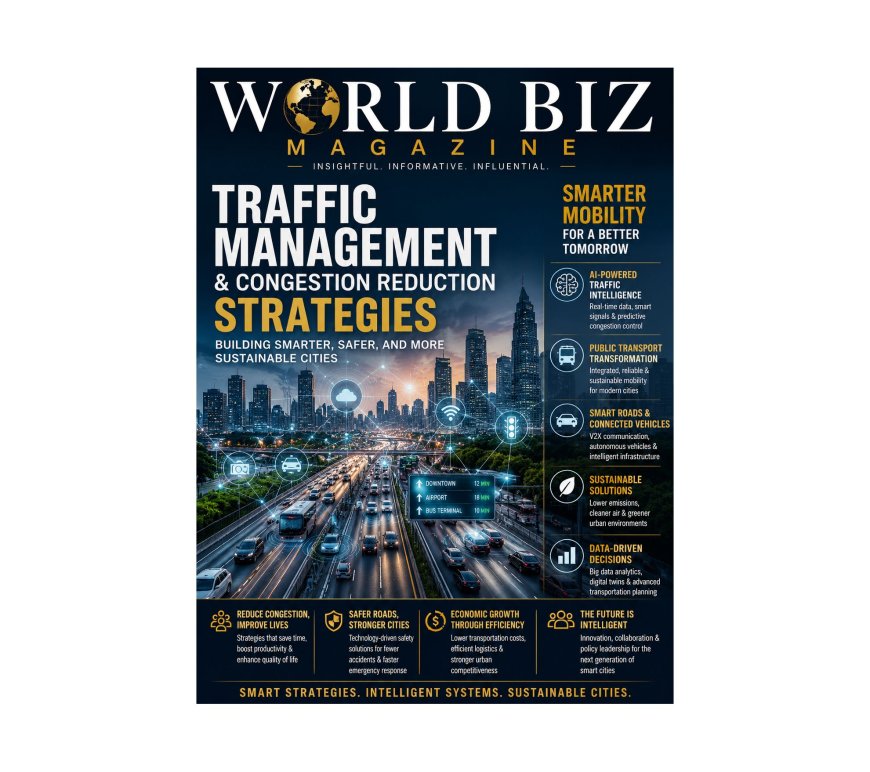
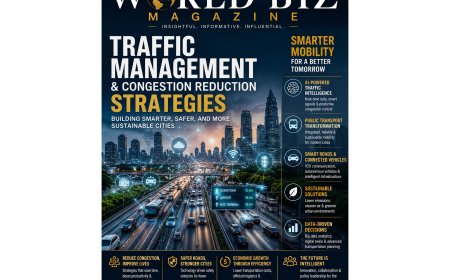
Traffic Management & Congestion Reduction Strategies: Building Smarter, Safer, and More Sustainable Cities
World Biz Magazine | Smart Cities | Transportation | Urban Infrastructure | Executive Feature
Traffic congestion has become one of the most significant urban challenges of the 21st century. As cities continue to expand, populations grow, and economic activities intensify, transportation networks face unprecedented pressure. Congested roads no longer represent merely an inconvenience for commuters they have evolved into complex economic, environmental, and social challenges that affect productivity, public health, energy consumption, and the overall quality of urban life.
According to international transportation studies, billions of hours are lost annually due to traffic congestion, resulting in enormous economic losses through wasted fuel, delayed deliveries, increased logistics costs, and reduced workforce productivity. In addition, congested roadways contribute significantly to greenhouse gas emissions, air pollution, road accidents, and deteriorating public health.
Traffic management has therefore become a strategic priority for governments, municipalities, urban planners, technology companies, and transportation authorities worldwide. The emergence of Artificial Intelligence (AI), Internet of Things (IoT), Big Data Analytics, autonomous vehicles, cloud computing, and intelligent transportation systems (ITS) is enabling cities to transition from reactive traffic control to predictive, data-driven, and autonomous mobility management.
This article explores modern traffic management strategies, intelligent transportation technologies, congestion reduction methods, global best practices, emerging innovations, and the future of smart urban mobility.
Understanding Traffic Congestion
Traffic congestion occurs when the demand for road space exceeds its available capacity, causing slower travel speeds, longer journey times, and increased vehicle queues. While temporary congestion may result from accidents or road construction, chronic congestion is typically driven by long-term structural issues such as rapid urbanization, inadequate infrastructure, inefficient traffic management, and excessive dependence on private vehicles.
Congestion affects every sector of the economy. Emergency response times increase, businesses experience supply chain delays, fuel consumption rises, and commuters lose valuable productive hours. Urban competitiveness increasingly depends on how effectively cities manage transportation networks.
Major Causes of Traffic Congestion
Traffic congestion rarely results from a single factor. Instead, it arises from the interaction of multiple infrastructure, demographic, economic, and behavioral variables.
Population Growth
Rapid urban population growth increases the number of daily commuters, placing enormous pressure on existing road networks. Many cities expand faster than transportation infrastructure can accommodate.
Urbanization
Economic opportunities attract millions of people toward metropolitan areas. Concentrated employment centers generate peak-hour traffic patterns that overwhelm transportation systems.
Insufficient Road Infrastructure
Many cities operate road networks originally designed decades ago for significantly smaller populations. Limited road expansion contributes to bottlenecks.
Private Vehicle Dependency
Limited public transportation encourages citizens to rely on private automobiles, increasing vehicle density on roads.
Poor Traffic Signal Coordination
Fixed-time traffic lights often fail to adapt to changing traffic conditions, resulting in unnecessary delays and inefficient intersection performance.
Road Accidents
Even minor collisions reduce roadway capacity and create ripple effects across surrounding transportation networks.
Illegal Parking and Encroachments
Improper parking, roadside vendors, and unauthorized encroachments reduce effective road width and disrupt traffic flow.
Freight Traffic
Heavy commercial vehicles operating during peak hours contribute significantly to urban congestion.
Economic Impact of Traffic Congestion
Traffic congestion imposes enormous financial costs on economies.
Businesses experience delayed deliveries, higher logistics expenses, and increased operational costs. Employees spend additional time commuting, reducing workforce productivity and affecting work-life balance.
Governments incur higher infrastructure maintenance costs, while fuel imports increase due to inefficient vehicle operation. Tourism may also suffer when transportation becomes unreliable.
For rapidly developing economies, efficient traffic management directly influences national competitiveness and investment attractiveness.
Environmental Impact
Congested roads significantly increase carbon emissions.
Vehicles operating in stop-and-go conditions consume more fuel and produce higher levels of:
- Carbon dioxide (CO₂)
- Nitrogen oxides (NOx)
- Particulate Matter (PM2.5)
- Carbon monoxide (CO)
Poor air quality contributes to respiratory diseases, cardiovascular illnesses, and reduced life expectancy.
Traffic congestion has therefore become both an environmental and public health concern.
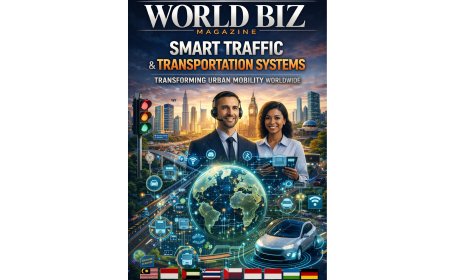
Intelligent Transportation Systems (ITS)
Modern cities increasingly deploy Intelligent Transportation Systems to optimize traffic flow.
ITS integrates:
- Artificial Intelligence
- Sensors
- Cameras
- GPS
- IoT Devices
- Communication Networks
- Cloud Computing
- Data Analytics
Rather than relying solely on manual traffic control, ITS continuously monitors transportation conditions and automatically responds to changing traffic patterns.
Key ITS components include:
- Smart traffic signals
- Incident detection
- Dynamic route guidance
- Variable message signs
- Automated enforcement
- Traffic analytics
- Public transport monitoring
ITS transforms transportation management from reactive decision-making into proactive optimization.
Artificial Intelligence in Traffic Management
Artificial Intelligence is revolutionizing transportation planning.
AI algorithms analyze millions of traffic events in real time to predict congestion before it occurs.
Applications include:
- Adaptive traffic signal optimization
- Traffic forecasting
- Accident prediction
- Incident response
- Route optimization
- Emergency vehicle prioritization
- Public transportation scheduling
- Parking management
Machine learning continuously improves system performance as more transportation data becomes available.
Adaptive Traffic Signal Control
Traditional traffic lights operate on fixed schedules regardless of actual traffic conditions.
Adaptive systems dynamically adjust signal timing according to:
- Vehicle volume
- Queue length
- Pedestrian activity
- Emergency vehicles
- Public transport priority
This significantly reduces waiting times while improving intersection efficiency.
Several cities have reported travel time reductions exceeding 20% through adaptive traffic signal systems.
Real-Time Traffic Monitoring
Modern transportation authorities increasingly deploy:
- CCTV Cameras
- AI Video Analytics
- Road Sensors
- GPS Data
- Mobile Network Data
- Connected Vehicle Information
- Drone Surveillance
These technologies provide continuous visibility across transportation networks.
Traffic control centers receive instant alerts regarding:
- Congestion
- Accidents
- Road closures
- Weather conditions
- Construction zones
Rapid response minimizes disruption.
Public Transportation Enhancement
Improving public transportation remains one of the most effective congestion reduction strategies.
Governments increasingly invest in:
- Metro Rail
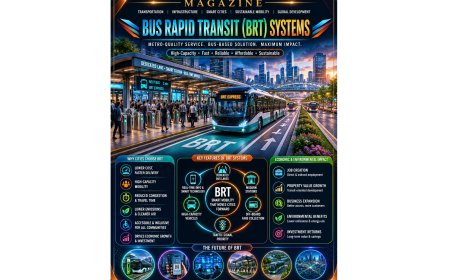
- Bus Rapid Transit (BRT)
- Light Rail Transit
- Electric Buses
- High-Speed Rail
- Smart Bus Networks
Reliable public transport reduces dependence on private vehicles while lowering emissions.
Integrated ticketing systems and mobile journey planning further improve passenger experience.
Smart Parking Management
Searching for parking contributes substantially to urban congestion.
Smart parking systems use:
- IoT Sensors
- Mobile Applications
- AI Prediction
- Digital Payments
- Parking Guidance
Drivers receive real-time information regarding available parking spaces, reducing unnecessary circulation.
Congestion Pricing
Several global cities have introduced congestion charging.
Motorists entering highly congested urban zones during peak hours pay access fees.
Benefits include:
- Reduced vehicle numbers
- Increased public transport usage
- Lower emissions
- Additional infrastructure funding
While politically challenging, congestion pricing has proven effective in several major cities.
Integrated Mobility (Mobility-as-a-Service)
Future transportation increasingly emphasizes integrated mobility.
Rather than owning private vehicles, citizens increasingly access transportation through digital platforms combining:
- Public Transit
- Ride Sharing
- Bike Sharing
- Electric Scooters
- Car Sharing
- Walking Routes
Single applications allow users to plan, book, and pay for multimodal journeys.
This concept, known as Mobility-as-a-Service (MaaS), improves convenience while reducing vehicle ownership.
Connected and Autonomous Vehicles
Connected vehicles exchange information with:
- Traffic signals
- Road infrastructure
- Other vehicles
- Traffic management centers
This communication improves:
- Collision avoidance
- Route optimization
- Emergency response
- Fuel efficiency
Autonomous vehicles may further improve traffic flow by reducing human driving errors and maintaining optimal vehicle spacing.
Data-Driven Urban Planning
Transportation planning increasingly relies on Big Data.
Urban planners analyze:
- Population growth
- Land use
- Employment centers
- Travel demand
- Public transit usage
- Mobile phone mobility patterns
Predictive analytics enables governments to anticipate future transportation requirements before congestion becomes severe.
Traffic Demand Management
Rather than continually expanding road infrastructure, cities increasingly manage transportation demand.
Strategies include:
- Flexible working hours
- Remote work
- School scheduling
- Freight delivery windows
- Carpool incentives
- Cycling infrastructure
- Pedestrian-friendly development
Managing travel demand often proves more cost-effective than constructing new roads.
Sustainable Urban Mobility
Modern transportation policies increasingly prioritize sustainability.
Cities encourage:
- Electric Vehicles (EVs)
- Cycling
- Walking
- Green Corridors
- Renewable Energy Charging
- Low Emission Zones
Transportation systems increasingly align with broader environmental and climate objectives.
Cybersecurity in Intelligent Transportation
As transportation systems become increasingly digital, cybersecurity becomes essential.
Traffic management platforms must protect:
- Traffic signal systems
- Connected vehicles
- Cloud infrastructure
- Citizen mobility data
- IoT devices
- Communication networks
Cyber resilience ensures transportation systems remain safe and reliable.
Challenges Facing Smart Traffic Management
Despite technological advances, implementation challenges remain.
Key obstacles include:
- Aging infrastructure
- High implementation costs
- Legacy systems integration
- Data privacy concerns
- Cybersecurity threats
- Regulatory complexity
- Public acceptance
- Skilled workforce shortages
- Funding limitations
- Interagency coordination
Addressing these challenges requires long-term planning, public-private partnerships, and sustained investment.
The Future of Urban Traffic Management
Over the next decade, transportation systems will become increasingly autonomous, intelligent, and interconnected.
Emerging innovations include:
- AI-powered Digital Twins of cities
- Predictive congestion modeling
- Autonomous public transport
- Drone traffic management
- Vehicle-to-Everything (V2X) communication
- Quantum-enhanced traffic optimization
- Edge AI traffic controllers
- Smart intersections
- Autonomous incident response
- City-wide mobility operating systems
These technologies will transform transportation from reactive infrastructure into intelligent urban ecosystems capable of continuously optimizing mobility.
World Biz Magazine Insights
Traffic management is no longer simply about controlling vehicles it is about orchestrating the movement of people, goods, and services within increasingly complex urban environments. The future of transportation lies in intelligent ecosystems where Artificial Intelligence, connected infrastructure, predictive analytics, and sustainable mobility work together to improve efficiency, safety, and environmental performance.
Cities that invest today in smart transportation infrastructure will not only reduce congestion but also strengthen economic competitiveness, enhance public health, lower carbon emissions, and improve the overall quality of life for their citizens. As urban populations continue to grow, intelligent mobility will become one of the defining pillars of successful smart cities.
Conclusion
Efficient traffic management has become a strategic necessity for governments and urban planners worldwide. Traditional approaches centered solely on expanding road infrastructure are no longer sufficient to address the growing complexity of modern transportation systems. Instead, cities must embrace integrated strategies that combine intelligent transportation systems, artificial intelligence, public transit modernization, sustainable mobility, and data-driven urban planning.
The convergence of AI, IoT, cloud computing, autonomous vehicles, and real-time analytics is reshaping how transportation networks are designed, monitored, and optimized. These technologies enable proactive traffic management, improve commuter experiences, reduce environmental impact, and enhance economic productivity.
The cities that successfully integrate technology with forward-looking transportation policies will establish safer, cleaner, and more resilient mobility ecosystems capable of supporting sustainable urban growth for decades to come.
Disclaimer
This article is published by World Biz Magazine for informational, educational, and editorial purposes only. The analysis, opinions, forecasts, and recommendations presented are based on publicly available information, industry research, transportation trends, and the editorial assessment of the publication at the time of writing.
The content should not be interpreted as engineering, legal, financial, regulatory, transportation planning, or professional consulting advice. Readers are encouraged to consult qualified transportation experts, urban planners, government authorities, and infrastructure professionals before making policy, investment, or implementation decisions.
References to organizations, technologies, standards, products, or transportation systems are provided solely for editorial and educational purposes and do not constitute endorsement or recommendation by World Biz Magazine. As transportation technologies, regulations, and urban policies continue to evolve, readers should verify current information through official and authoritative sources before relying on it for operational or strategic decisions.
What's Your Reaction?
 Like
1
Like
1
 Dislike
0
Dislike
0
 Love
0
Love
0
 Funny
0
Funny
0
 Angry
0
Angry
0
 Sad
0
Sad
0
 Wow
0
Wow
0