



































































































































































How Real Estate Companies Use Digital Marketing to Drive Growth and Conversions
Digital marketing has become the foundation of modern real estate success. This World Biz Magazine analysis examines the latest strategies, technologies, and trends helping property companies increase online visibility, attract high-intent buyers, improve customer engagement, and outperform competitors in an increasingly digital marketplace.

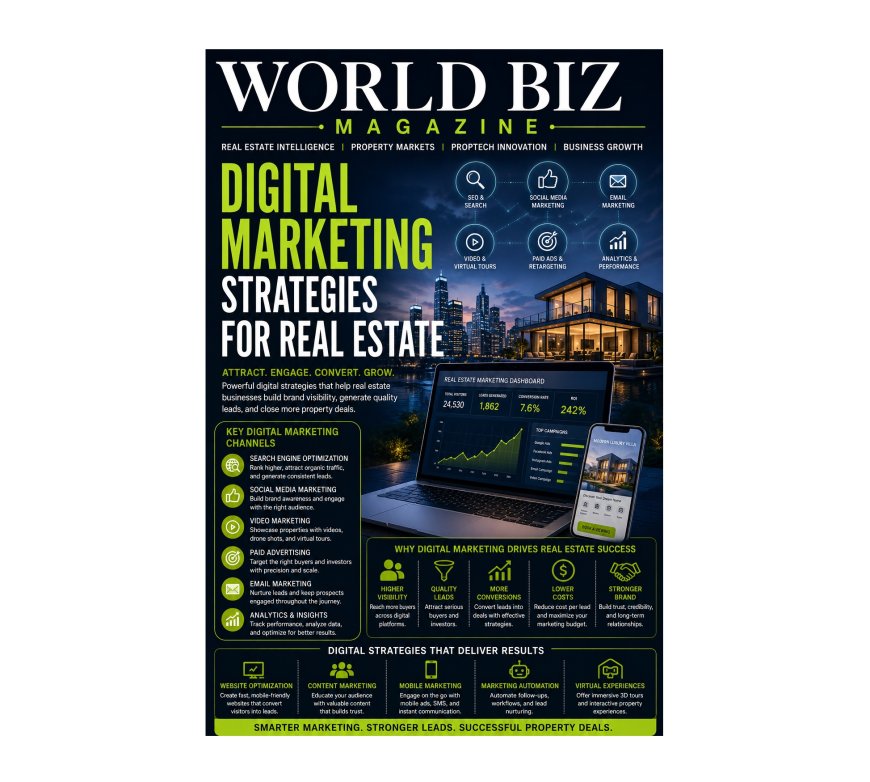
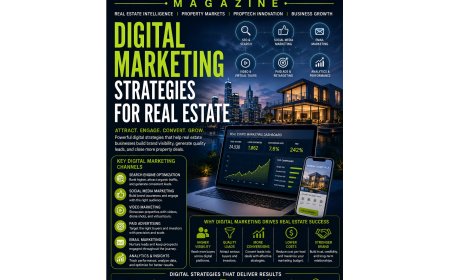
Digital Marketing Strategies for Real Estate
How Developers, Brokers, Property Platforms, and Agents Are Using Digital Channels to Generate Leads, Increase Conversions, and Drive Growth
World Biz Magazine | Real Estate Intelligence | Digital Marketing Strategy | PropTech Innovation
The Digital Transformation of Real Estate Marketing
The real estate industry has undergone a profound transformation over the past two decades. Traditional marketing methods such as newspaper advertisements, billboards, brochures, cold calling, and walk-in inquiries once dominated the sector. While these channels still have relevance in certain markets, the modern property buyer's journey increasingly begins online. Today, buyers, tenants, investors, and sellers rely on search engines, property portals, social media platforms, video content, online reviews, and digital experiences to evaluate opportunities before engaging with a real estate professional.
This shift has fundamentally changed how real estate companies attract customers and generate sales. Developers, brokers, agencies, and property technology platforms now compete not only on pricing, location, and inventory but also on their ability to create effective digital customer acquisition systems. Digital marketing has become one of the most important drivers of lead generation, customer engagement, brand visibility, and revenue growth within the property sector.
Modern real estate marketing is no longer about simply advertising properties. It involves building brand awareness, educating customers, nurturing leads, personalizing experiences, analyzing customer behavior, and optimizing every stage of the buyer journey. Companies that successfully leverage digital channels can reach larger audiences, improve conversion rates, reduce marketing costs, and create sustainable competitive advantages.
As artificial intelligence, automation, data analytics, and mobile technologies continue reshaping consumer behavior, digital marketing is becoming increasingly central to real estate success. Understanding the strategies that drive performance is essential for developers, agents, brokers, investors, and PropTech entrepreneurs seeking growth in a highly competitive marketplace.
The Evolution of Real Estate Marketing
Historically, real estate marketing relied heavily on physical and local advertising.
Common methods included:
- Newspaper listings
- Outdoor signage
- Direct mail campaigns
- Property exhibitions
- Referral networks
While effective in the past, these approaches offered limited targeting and measurement capabilities.
Digital marketing introduced greater scalability, precision, and analytics.
Today, property buyers conduct extensive online research before making contact.
Why Digital Marketing Matters in Real Estate
Modern buyers expect information to be available instantly.
Before contacting an agent, prospects often:
- Compare properties online
- Read reviews
- Explore neighborhoods
- Research developers
- Watch videos
- Analyze pricing trends
Digital marketing allows real estate companies to influence customers throughout this journey.
Benefits include:
- Increased visibility
- Better targeting
- Lower acquisition costs
- Improved customer engagement
- Measurable performance
These advantages make digital marketing essential for modern real estate businesses.
Search Engine Optimization (SEO)
SEO remains one of the most valuable long-term marketing investments.
Property buyers frequently search for:
- Homes for sale
- Apartments for rent
- Commercial properties
- Investment opportunities
- Real estate agencies
Strong SEO performance improves visibility in search engine results.
Higher rankings increase organic traffic and lead generation.
Successful SEO strategies often include:
- Keyword optimization
- Local SEO
- Content marketing
- Technical website improvements
- Backlink development
Organic search traffic frequently delivers highly qualified leads.
Local SEO for Real Estate Businesses
Real estate transactions are location-dependent.
Local SEO helps companies appear in searches such as:
- Apartments in Dubai
- Villas in Riyadh
- Commercial property in London
- Homes for sale in New York
Effective local SEO strategies include:
- Business profile optimization
- Local keywords
- Customer reviews
- Geographic content
Local visibility can significantly impact lead volume.
Content Marketing and Authority Building
Content marketing has become a cornerstone of digital real estate strategies.
Examples include:
- Market reports
- Investment guides
- Neighborhood insights
- Property trends
- Educational articles
Content helps establish authority and trust.
It also supports SEO performance.
Buyers often engage with valuable information long before making purchasing decisions.
Educational content positions companies as trusted advisors.
Video Marketing and Property Storytelling
Video has become one of the most powerful real estate marketing tools.
Popular formats include:
- Property tours
- Drone footage
- Development showcases
- Neighborhood guides
- Client testimonials
Video helps buyers visualize properties and lifestyles.
It also increases engagement across digital platforms.
High-quality visual storytelling often improves lead conversion rates.
Social Media Marketing
Social media has transformed customer engagement.
Platforms enable real estate companies to:
- Showcase listings
- Build brand awareness
- Share market insights
- Generate leads
- Engage communities
Visual platforms are particularly effective because real estate is highly image-driven.
Social media also allows targeted advertising based on customer interests and demographics.
Paid Search Advertising
Paid search campaigns help companies appear prominently in search results.
Benefits include:
- Immediate visibility
- Highly targeted traffic
- Scalable lead generation
Advertising platforms allow targeting based on:
- Location
- Search intent
- Demographics
- User behavior
Paid search remains one of the most effective channels for capturing active buyers.
Display Advertising and Retargeting
Most visitors do not convert immediately.
Retargeting campaigns help re-engage users who previously interacted with:
- Websites
- Property listings
- Landing pages
Retargeting increases brand recall and conversion opportunities.
Repeated exposure often improves purchase consideration.
Property Portal Marketing
Property portals represent major lead-generation channels.
These platforms attract large audiences actively searching for properties.
Success depends on:
- Listing quality
- Visual presentation
- Pricing accuracy
- Response speed
Property portals often serve as the first interaction point between buyers and sellers.
Optimization is essential.
Email Marketing and Lead Nurturing
Email remains one of the highest-return marketing channels.
Real estate companies use email to deliver:
- Property alerts
- Market updates
- Investment opportunities
- Project announcements
Personalized communication improves engagement.
Email nurturing helps maintain relationships throughout long buying cycles.
Customer Relationship Management (CRM)
CRM systems support marketing and sales alignment.
Benefits include:
- Lead tracking
- Customer segmentation
- Automated communication
- Conversion monitoring
Modern CRMs improve efficiency while enhancing customer experiences.
Technology-driven lead management is increasingly essential.
Landing Pages and Conversion Optimization
Dedicated landing pages are designed to capture leads.
Effective pages include:
- Clear value propositions
- Strong calls to action
- Lead capture forms
- Testimonials
- Visual content
Conversion optimization focuses on maximizing inquiries and registrations.
Small improvements can generate substantial revenue increases.
Virtual Tours and Interactive Experiences
Digital experiences have become increasingly important.
Innovations include:
- 3D walkthroughs
- Virtual reality tours
- Interactive floor plans
- Augmented reality features
These tools allow buyers to evaluate properties remotely.
They improve engagement and reduce uncertainty.
Virtual experiences are particularly valuable for international buyers.
Influencer Marketing in Real Estate
Influencers are becoming more relevant in property marketing.
Collaborations may include:
- Lifestyle influencers
- Investment experts
- Local personalities
Influencers help expand reach and credibility.
Their audiences often trust recommendations more than traditional advertising.
Online Reviews and Reputation Management
Reputation significantly influences customer decisions.
Buyers frequently evaluate:
- Customer reviews
- Ratings
- Testimonials
- Online feedback
Positive reviews improve trust and lead generation.
Reputation management should be an ongoing priority.
Artificial Intelligence in Real Estate Marketing
AI is reshaping customer acquisition and engagement.
Applications include:
- Predictive lead scoring
- Chatbots
- Personalized recommendations
- Marketing automation
- Customer segmentation
AI improves efficiency while enhancing customer experiences.
Its influence continues expanding across the industry.
Marketing Automation
Automation allows companies to scale communication.
Examples include:
- Email sequences
- Lead nurturing campaigns
- Appointment reminders
- Follow-up workflows
Automation improves consistency while reducing manual workload.
It supports long-term lead conversion efforts.
Data Analytics and Marketing Intelligence
Data-driven marketing provides valuable insights.
Metrics may include:
Website Traffic
Measures visibility.
Lead Conversion Rate
Measures effectiveness.
Customer Acquisition Cost
Measures efficiency.
Return on Investment (ROI)
Measures profitability.
Analytics enable continuous optimization.
Successful companies make decisions based on data rather than assumptions.
Mobile-First Marketing Strategies
Most property searches now occur on mobile devices.
Real estate companies must optimize:
- Websites
- Landing pages
- Emails
- Applications
Mobile-friendly experiences improve engagement and conversion.
User experience remains a critical factor.
Personalization and Customer Experience
Modern consumers expect personalized interactions.
Customization may include:
- Property recommendations
- Market insights
- Location-specific content
Personalization increases relevance and trust.
Customer-centric marketing improves long-term performance.
Omnichannel Marketing Approaches
Today's customers interact across multiple touchpoints.
These may include:
- Search engines
- Social media
- Email
- Property portals
- Direct communication
Consistent messaging across channels improves customer journeys.
Integrated marketing strategies often outperform isolated campaigns.
Common Digital Marketing Mistakes
Many real estate organizations struggle due to:
- Weak websites
- Poor content quality
- Slow lead response times
- Limited analytics
- Inconsistent branding
Avoiding these mistakes can significantly improve results.
Execution often matters as much as strategy.
Future Trends in Real Estate Digital Marketing
Several developments are shaping the future.
Artificial Intelligence
Increasing personalization and automation.
Voice Search
Changing search behavior.
Virtual Property Experiences
Expanding remote buying.
Predictive Analytics
Improving lead quality.
Smart Property Platforms
Creating integrated customer ecosystems.
Innovation will continue redefining customer acquisition.
World Biz Magazine Insights
At World Biz Magazine, we view digital marketing as one of the most important competitive advantages in modern real estate. As buyers become increasingly digital-first, organizations that successfully combine technology, content, analytics, automation, and customer experience optimization will be best positioned for long-term success.
The future of property marketing lies not only in generating visibility but in creating meaningful customer journeys that guide prospects from awareness to transaction. Developers, brokers, and property platforms that embrace digital transformation will continue gaining market share in an increasingly competitive global real estate environment.
Conclusion
Digital marketing has become a fundamental driver of growth within the real estate industry. From SEO and content marketing to social media, AI-powered personalization, virtual tours, and marketing automation, digital strategies enable companies to attract, engage, and convert customers more effectively than ever before.
As technology and consumer behavior continue evolving, real estate businesses that invest in digital capabilities will be better equipped to generate leads, improve customer experiences, increase conversions, and achieve sustainable competitive advantages in the global property marketplace.
Disclaimer
This article is published for informational, educational, and editorial purposes only and does not constitute legal, financial, marketing, investment, or professional business advice. Digital marketing performance varies based on market conditions, strategy execution, budget allocation, and customer behavior. Readers should consult qualified professionals before implementing business or marketing initiatives.
What's Your Reaction?
 Like
0
Like
0
 Dislike
0
Dislike
0
 Love
0
Love
0
 Funny
0
Funny
0
 Angry
0
Angry
0
 Sad
0
Sad
0
 Wow
0
Wow
0