



























































































































































































The Role of Real Estate Laws in Modern Economies and Infrastructure Development
A detailed World Biz Magazine analysis explaining real estate law, property rights, land regulation, infrastructure development, and investment markets.

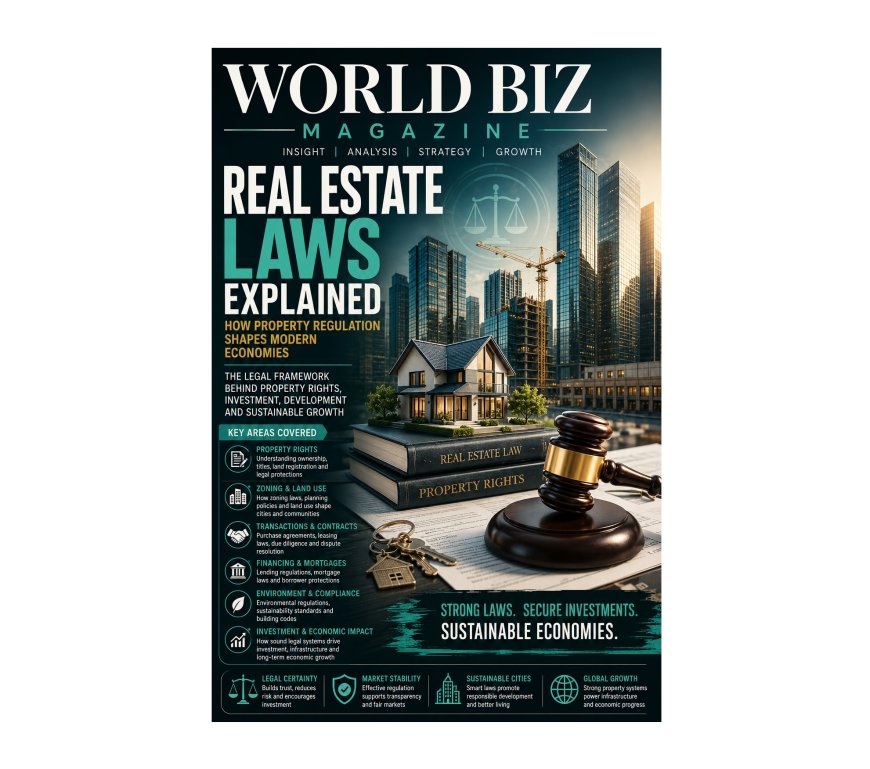
Real Estate Laws Explained: How Property Regulation Shapes Modern Economies
Understanding the Legal Framework Behind Global Property Markets and Economic Development
World Biz Magazine | Real Estate Legal & Economic Intelligence | Property Markets
Why Real Estate Laws Matter More Than Ever
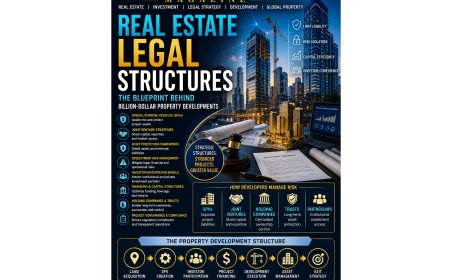
Real estate is one of the most valuable and influential asset classes in the global economy. From residential housing and commercial skyscrapers to industrial parks, agricultural land, infrastructure projects, and smart city developments, property ownership and land use shape the physical and financial foundation of modern societies. Behind every successful real estate market exists a complex legal system governing ownership rights, development regulations, transactions, financing structures, taxation policies, environmental standards, tenant protections, and investment frameworks. These legal systems collectively form what is commonly referred to as real estate law.
Real estate laws influence far more than property ownership alone. They affect economic growth, foreign investment, infrastructure development, housing affordability, urban planning, banking systems, environmental sustainability, and national financial stability. Governments rely heavily on property regulation to manage land resources, protect ownership rights, generate tax revenue, maintain social order, and encourage economic expansion. At the same time, investors, developers, businesses, financial institutions, and consumers depend on legal certainty to confidently buy, sell, finance, lease, and develop real estate assets.
As urbanization accelerates globally and real estate markets become increasingly interconnected through international investment and digital infrastructure, property regulation has become one of the most strategically important components of modern economic governance. Legal frameworks surrounding land use, zoning, construction standards, environmental compliance, mortgage systems, and property taxation directly influence how cities grow, how businesses expand, and how wealth is created across economies.
The rise of globalization, smart cities, climate regulation, proptech innovation, digital land records, and cross-border investment is also transforming the future of real estate law itself. Policymakers worldwide are being forced to modernize outdated regulatory systems to address emerging challenges including housing shortages, sustainability requirements, cybersecurity risks, infrastructure modernization, and the growing digitalization of property ownership systems.
Understanding how real estate laws work is therefore essential not only for lawyers and developers, but also for investors, governments, entrepreneurs, financial institutions, and citizens participating in the modern global economy.
What Is Real Estate Law?
Real estate law refers to the legal framework governing land, property ownership, real estate transactions, development rights, leasing arrangements, financing systems, construction regulations, and land use policies. It defines how property can be owned, transferred, developed, leased, financed, inherited, taxed, and regulated within a jurisdiction.
Real estate law generally covers:
- Property ownership rights
- Land registration systems
- Real estate contracts
- Zoning and land use regulations
- Construction and building codes
- Leasing and tenancy laws
- Mortgage and financing regulations
- Environmental compliance
- Property taxation
- Eminent domain and public acquisition
- Real estate investment regulation
These laws create the legal infrastructure supporting real estate markets and economic development worldwide.
Property Ownership and Legal Rights
At the foundation of real estate law lies the concept of property ownership rights. Legal ownership provides individuals, corporations, and institutions with recognized rights to use, lease, transfer, develop, or sell property assets.
Types of Property Ownership
Different legal systems recognize various forms of ownership including:
- Freehold ownership
- Leasehold ownership
- Joint ownership
- Corporate ownership
- Government ownership
- Trust ownership
Ownership rights often determine:
- Duration of ownership
- Development permissions
- Transferability
- Inheritance rights
- Tax obligations
- Land usage limitations
Strong property rights are considered essential for economic stability because they encourage investment, lending activity, entrepreneurship, and long-term infrastructure development.
Land Registration and Title Systems
Real estate transactions depend heavily on secure land registration systems.
Land registries provide official records of:
- Ownership history
- Property boundaries
- Legal claims
- Mortgages and liens
- Easements
- Development restrictions
Reliable title systems reduce fraud, ownership disputes, and investment uncertainty.
In many developing economies, weak land registration systems remain major barriers to economic growth and infrastructure investment. Governments worldwide are increasingly digitizing land records to improve transparency and efficiency.
Blockchain-based property registration systems are also emerging as potential future solutions for secure digital ownership tracking.
Zoning Laws and Urban Planning
Zoning laws are among the most influential forms of property regulation.
Zoning determines:
- How land can be used
- Building density limits
- Commercial vs residential usage
- Industrial development zones
- Infrastructure planning
- Environmental protection areas
Governments use zoning policies to manage urban growth, transportation systems, housing development, and economic planning.
For example:
- Residential zones may restrict commercial construction
- Industrial zones may regulate manufacturing operations
- Mixed-use zoning may encourage integrated urban development
Zoning laws directly shape city design, infrastructure investment, real estate pricing, and long-term economic expansion.
Building Codes and Construction Regulation
Construction and development activities are governed by strict legal standards designed to ensure safety, environmental compliance, and structural integrity.
Building regulations typically cover:
- Structural engineering standards
- Fire safety requirements
- Accessibility compliance
- Electrical systems
- Environmental sustainability
- Energy efficiency
- Occupancy regulations
Governments enforce building codes to protect public safety and reduce infrastructure risk.
As climate concerns intensify globally, green building standards and sustainability regulations are becoming increasingly important within real estate law frameworks.
Real Estate Contracts and Transactions
Real estate transactions involve legally binding agreements governing property sales, leasing arrangements, financing terms, and development obligations.
Property Sale Agreements
Property contracts generally include:
- Purchase price
- Ownership transfer terms
- Due diligence conditions
- Financing arrangements
- Legal disclosures
- Inspection requirements
Legal professionals often oversee transactions to ensure regulatory compliance and protect all parties involved.
Leasing and Rental Agreements
Leasing laws regulate relationships between landlords and tenants.
Lease agreements define:
- Rental payments
- Occupancy duration
- Maintenance obligations
- Tenant protections
- Eviction procedures
- Property usage rights
Residential tenancy laws are especially important in maintaining housing stability and consumer protection.
Mortgage and Real Estate Financing Laws
Modern property markets depend heavily on mortgage financing systems.
Mortgage laws regulate:
- Lending practices
- Foreclosure procedures
- Interest structures
- Borrower protections
- Credit standards
- Financial disclosures
Banks and financial institutions rely on strong legal systems to secure collateral rights and manage lending risk.
Mortgage regulation became especially important after the 2008 global financial crisis, which exposed weaknesses in financial oversight and real estate lending practices.
Property Taxation and Government Revenue
Real estate taxation represents a major source of government revenue worldwide.
Property taxes help fund:
- Public infrastructure
- Schools
- Transportation systems
- Municipal services
- Urban development
Governments may impose:
- Property ownership taxes
- Capital gains taxes
- Transfer taxes
- Development fees
- Rental income taxes
Tax policy significantly influences real estate investment behavior and market activity.
Environmental and Sustainability Regulations
Environmental law is becoming increasingly integrated with real estate regulation.
Governments now require compliance with:
- Environmental impact assessments
- Emissions standards
- Sustainable construction practices
- Energy efficiency requirements
- Land conservation policies
Climate change is reshaping real estate law globally as governments introduce stricter environmental regulations for developers, infrastructure projects, and commercial properties.
Green buildings and sustainable urban planning are becoming major legal and investment priorities.
Eminent Domain and Government Acquisition
Governments may acquire private property for public use under eminent domain or compulsory acquisition laws.
This allows governments to develop:
- Highways
- Airports
- Rail systems
- Public infrastructure
- Energy projects
However, legal systems generally require fair compensation for affected property owners.
Eminent domain remains one of the most politically and legally sensitive areas of property regulation.
Real Estate Investment Regulation
Global real estate investment is heavily influenced by regulatory frameworks governing:
- Foreign ownership
- Investment funds
- REIT structures
- Securities laws
- Cross-border transactions
Countries often adjust real estate investment laws to:
- Encourage foreign capital
- Control speculative activity
- Protect housing affordability
- Stabilize financial markets
International investors closely monitor regulatory stability before entering real estate markets.
Technology and Digital Transformation in Real Estate Law
Technology is rapidly modernizing property regulation and legal infrastructure.
PropTech Innovation
Property technology platforms are digitizing:
- Real estate transactions
- Lease management
- Property analytics
- Smart contracts
- Virtual property tours
Blockchain and Smart Contracts
Blockchain systems may eventually automate:
- Ownership verification
- Contract execution
- Property transfers
- Land registration
Smart contracts could significantly reduce legal processing time and transaction costs.
AI and Legal Automation
Artificial intelligence is increasingly used for:
- Legal document analysis
- Property valuation
- Risk assessment
- Compliance monitoring
Technology-driven legal systems are expected to reshape real estate administration worldwide.
Real Estate Law and Economic Growth
Strong property laws are closely connected to economic development.
Secure legal systems encourage:
- Investment confidence
- Infrastructure expansion
- Financial market stability
- Urban development
- Entrepreneurship
- Housing market growth
Weak property rights or unstable regulations can discourage investment and limit economic growth.
Countries with transparent legal systems and reliable property protections generally attract greater domestic and international real estate investment.
Global Challenges in Real Estate Regulation
The real estate sector faces several growing regulatory challenges.
Housing Affordability
Governments worldwide are struggling to balance:
- Real estate investment growth
- Affordable housing access
- Urban population expansion
Climate Risk Regulation
Climate adaptation policies are reshaping:
- Coastal development laws
- Insurance requirements
- Environmental construction standards
Cross-Border Investment Oversight
Globalization has increased regulatory complexity for:
- International investors
- Foreign ownership laws
- Cross-border financing
Digital Security Risks
As property systems become digitalized, cybersecurity protection is becoming increasingly important.
The Future of Real Estate Law
The future of real estate law will likely be influenced by:
- Smart cities
- Digital property ownership systems
- AI-powered regulation
- Sustainable infrastructure
- ESG compliance
- Tokenized real estate assets
- Cross-border investment integration
Governments are expected to modernize property frameworks to support digital economies, climate resilience, infrastructure growth, and urban expansion.
The integration of technology and law may fundamentally transform how real estate markets operate over the next several decades.
World Biz Magazine Insights
At World Biz Magazine, we view real estate law as one of the foundational systems shaping economic development, infrastructure growth, financial stability, and global investment markets. Property regulation extends far beyond legal paperwork; it influences how cities evolve, how businesses expand, how housing systems operate, and how wealth is distributed across societies.
As digital transformation, climate regulation, and international investment reshape global property markets, governments and financial institutions face increasing pressure to modernize legal systems while maintaining stability, transparency, and investor confidence.
The future of real estate law will likely become increasingly connected to technology, sustainability, digital ownership systems, and global infrastructure modernization. Nations capable of balancing innovation, regulatory efficiency, environmental responsibility, and property rights protection may emerge as the strongest real estate and investment markets of the future.
Conclusion
Real estate laws play a central role in shaping modern economies, financial systems, urban development, and global investment activity. From property ownership rights and zoning regulations to mortgage systems and environmental compliance, legal frameworks determine how real estate markets operate and evolve.
As technology, sustainability, globalization, and urbanization continue transforming the world economy, real estate law is becoming more important and more complex than ever before. Strong legal systems encourage investment, protect ownership rights, support infrastructure growth, and contribute to long-term economic stability.
Understanding real estate law is therefore essential not only for legal professionals and developers, but also for investors, governments, financial institutions, businesses, and consumers participating in the increasingly interconnected global property market.
Disclaimer
This article is published for informational, educational, and editorial purposes only and does not constitute legal, financial, tax, or investment advice. Readers should consult qualified legal professionals, real estate experts, or financial advisors before making property-related decisions or investments. World Biz Magazine and its affiliates are not responsible for legal outcomes, financial losses, or decisions made based on the information presented in this publication.
What's Your Reaction?
 Like
0
Like
0
 Dislike
0
Dislike
0
 Love
0
Love
0
 Funny
0
Funny
0
 Angry
0
Angry
0
 Sad
0
Sad
0
 Wow
0
Wow
0