













































































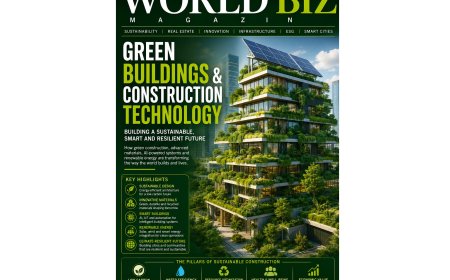
































































Green Buildings & Construction Technology: The Future of Sustainable Infrastructure
A detailed analysis of sustainable architecture, green construction materials, renewable energy integration, smart buildings, and intelligent urban infrastructure.

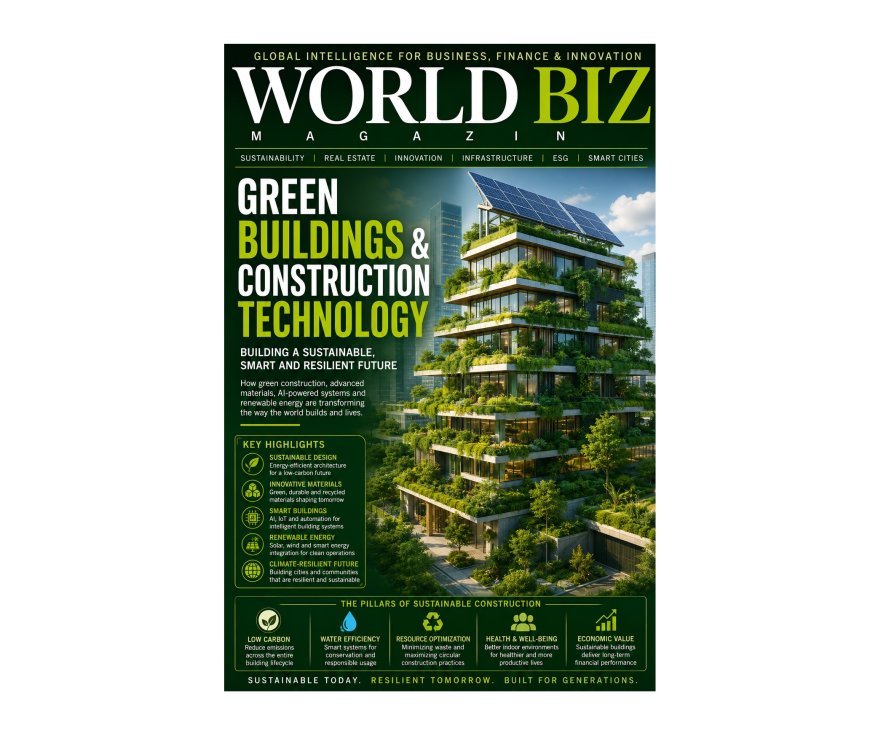
Green Buildings & Construction Technology
How Sustainable Architecture, Smart Infrastructure, and Green Construction Innovation Are Reshaping the Future of Urban Development
From energy-efficient skyscrapers and carbon-neutral construction systems to AI-powered smart buildings and sustainable urban infrastructure, green construction technology is becoming one of the most important transformations in the global real estate and infrastructure economy
World Biz Magazine | Sustainability, Real Estate & Global Infrastructure Intelligence
The Transformation of the Built Environment
The modern world is built on infrastructure.
Cities, residential towers, transportation hubs, industrial complexes, commercial buildings, hospitals, data centers, logistics facilities, and public infrastructure form the physical backbone of the global economy. Yet the construction and real estate industries also represent some of the world’s largest sources of:
- Carbon emissions
- Energy consumption
- Material waste
- Water usage
- Environmental impact
According to global environmental estimates, buildings and construction activities contribute significantly to worldwide greenhouse gas emissions through:
- Cement production
- Steel manufacturing
- Energy-intensive operations
- Heating and cooling systems
- Resource extraction
- Urban expansion
As climate concerns intensify and governments strengthen environmental regulations, the construction industry is entering a major structural transformation.
This shift is driving the rapid rise of:
Green buildings and sustainable construction technology.
Green construction technology refers to systems, materials, engineering methods, and intelligent infrastructure designed to reduce the environmental impact of buildings while improving:
- Energy efficiency
- Resource optimization
- Operational sustainability
- Human well-being
- Long-term economic resilience
Today, sustainability is no longer viewed as a secondary architectural trend.
It is increasingly becoming:
Strategic infrastructure policy for the future global economy.
Between 2025 and 2035, green construction and intelligent building systems may become foundational to:
- Smart cities
- Climate policy
- Urban modernization
- ESG investment
- Sustainable real estate development
- Infrastructure resilience
The future built environment may increasingly depend on:
Intelligent, efficient, low-carbon, and digitally connected construction ecosystems.
Understanding Green Buildings
Green buildings are structures designed, constructed, and operated in environmentally responsible and resource-efficient ways throughout their lifecycle.
This includes consideration of:
- Site selection
- Design planning
- Construction methods
- Material sourcing
- Energy systems
- Water management
- Waste reduction
- Indoor environmental quality
Unlike traditional construction focused primarily on functionality and cost, green buildings aim to balance:
- Economic performance
- Environmental sustainability
- Human health
- Long-term operational efficiency
Green buildings increasingly integrate:
- Renewable energy systems
- Smart energy controls
- Sustainable materials
- AI-powered building management
- Intelligent ventilation systems
- Water recycling infrastructure
The objective is not only reducing environmental impact but also improving:
- Building performance
- Occupant experience
- Long-term asset value
Why Green Construction Matters Globally
The construction sector holds enormous global economic importance.
Urbanization continues expanding rapidly across:
- Asia
- Africa
- Middle East
- Latin America
At the same time, climate pressure is intensifying concerns surrounding:
- Carbon emissions
- Urban heat islands
- Energy consumption
- Water scarcity
- Infrastructure resilience
Traditional construction models increasingly face criticism for:
- High resource consumption
- Waste-intensive practices
- Environmental degradation
- Poor energy efficiency
Governments, investors, and developers increasingly recognize that future urban growth may require:
Sustainable infrastructure rather than resource-intensive expansion.
Green construction technology therefore plays a major role in:
- Climate transition strategies
- Net-zero targets
- Smart city planning
- ESG investment frameworks
- Long-term urban resilience
Sustainable Building Materials
One of the most important aspects of green construction involves sustainable material innovation.
Traditional construction materials such as:
- Concrete
- Steel
- Glass
- Asphalt
often require highly energy-intensive manufacturing processes.
Modern sustainable construction increasingly explores alternatives involving:
- Recycled materials
- Low-carbon concrete
- Engineered timber
- Bamboo systems
- Recycled steel
- Green insulation materials
- Carbon-sequestering construction products
Advanced material science is also creating:
- Self-healing concrete
- Smart glass systems
- Energy-efficient coatings
- Lightweight structural composites
Future construction materials may increasingly combine:
Sustainability, intelligence, and operational efficiency.
Spotlight: The Carbon Challenge of Cement and Steel
Cement and steel production remain among the largest industrial contributors to global carbon emissions.
The construction industry is therefore investing heavily into:
- Green cement alternatives
- Carbon capture systems
- Low-emission steel production
- Circular material recovery systems
Reducing embodied carbon the emissions generated during material production and construction has become one of the most important sustainability priorities in modern infrastructure development.
The future competitiveness of construction firms may increasingly depend on:
Their ability to reduce both operational and embodied carbon intensity.
Energy-Efficient Building Design
Modern green buildings increasingly focus on reducing energy consumption through intelligent architectural design.
Energy-efficient systems may include:
- High-performance insulation
- Passive solar design
- Smart ventilation
- Advanced glazing systems
- LED lighting infrastructure
- AI-powered climate control systems
Architects increasingly design buildings that optimize:
- Natural light
- Airflow
- Temperature management
- Energy conservation
Smart building systems can automatically adjust:
- Heating
- Cooling
- Lighting
- Occupancy management
to reduce energy waste significantly.
The future building may increasingly function as:
An intelligent self-optimizing energy ecosystem.
Renewable Energy Integration in Buildings
Renewable energy is becoming deeply integrated into modern construction systems.
Green buildings increasingly include:
- Solar panels
- Rooftop energy systems
- Geothermal heating
- Smart battery storage
- Wind-assisted architecture
Future buildings may increasingly generate portions of their own energy consumption through decentralized renewable infrastructure.
Some advanced developments already explore:
- Net-zero buildings
- Energy-positive buildings
- Carbon-neutral infrastructure
The future real estate economy may increasingly prioritize:
Buildings capable of operating as independent energy ecosystems.
Smart Buildings and AI-Powered Infrastructure
Artificial intelligence is transforming the future of building management.
Smart buildings increasingly use:
- IoT sensors
- AI analytics
- predictive maintenance systems
- automated climate controls
- occupancy optimization platforms
These systems help improve:
- Energy efficiency
- Security
- Maintenance management
- Operational performance
- Occupant comfort
AI-powered infrastructure can monitor:
- Electricity usage
- Water consumption
- Air quality
- Structural conditions
- Environmental efficiency
in real time.
The future smart building may increasingly behave like:
A living intelligent digital infrastructure system.
Water Efficiency and Sustainable Urban Infrastructure
Water management is becoming one of the most critical challenges in urban sustainability.
Green construction increasingly integrates:
- Rainwater harvesting
- Greywater recycling
- Smart irrigation systems
- Low-flow plumbing systems
- Water monitoring technologies
Cities facing water scarcity increasingly depend on:
- Sustainable urban drainage systems
- AI-powered water management
- Infrastructure leak detection systems
The future sustainable city may require:
Intelligent resource management embedded directly into urban architecture.
Indoor Environmental Quality and Human Health
Green buildings also prioritize human well-being.
Modern sustainable architecture increasingly focuses on:
- Indoor air quality
- Natural lighting
- Thermal comfort
- Acoustic optimization
- Biophilic design
Studies increasingly show that healthier building environments can improve:
- Productivity
- Cognitive performance
- Employee satisfaction
- Wellness outcomes
This is especially important in:
- Offices
- Hospitals
- Schools
- Residential developments
The future built environment may increasingly emphasize:
Human-centered sustainability rather than purely structural efficiency.
Circular Construction and Waste Reduction
Construction generates enormous quantities of waste globally.
Circular construction models aim to reduce waste through:
- Material recycling
- Modular design
- Reusable components
- Smart demolition systems
- Lifecycle resource management
Digital technologies increasingly support:
- Material tracking
- Supply chain transparency
- Waste optimization analytics
Future construction ecosystems may increasingly prioritize:
Resource circulation instead of resource disposal.
Green Building Certification Systems
Several global certification systems now evaluate building sustainability performance.
Major frameworks include:
- LEED certification
- BREEAM systems
- WELL Building Standard
- Green Star frameworks
These certifications assess:
- Energy efficiency
- Water performance
- Carbon impact
- Environmental quality
- Operational sustainability
Green certification increasingly influences:
- Real estate valuation
- Investor confidence
- Corporate ESG performance
- Tenant demand
Sustainable buildings are increasingly viewed as:
Premium long-term infrastructure assets.
Country-Wise Green Construction Leadership
United States: Sustainable Real Estate and Smart Building Innovation
The United States remains highly influential in:
- Smart building systems
- ESG real estate investment
- Green architecture
- Sustainable infrastructure technology
American cities increasingly integrate climate-focused building policies into urban development strategy.
China: Large-Scale Green Urban Development
China aggressively expands:
- Smart cities
- Green infrastructure
- Sustainable transportation systems
- Renewable-powered urban development
China increasingly positions sustainable construction as part of long-term modernization planning.
European Union: Environmental Regulation and Green Architecture Leadership
The European Union strongly emphasizes:
- Net-zero construction
- Energy efficiency regulation
- Sustainable urban infrastructure
- Green building standards
Europe remains highly influential in global sustainability policy frameworks.
Singapore: Smart Sustainable Urban Infrastructure
Singapore has become globally recognized for:
- Smart urban planning
- Vertical greenery systems
- Sustainable high-density development
- Intelligent building management infrastructure
United Arab Emirates: Sustainable Mega-Projects and Future Cities
The United Arab Emirates increasingly invests in:
- Sustainable urban developments
- Smart city infrastructure
- Renewable-powered architecture
- Climate-adaptive construction systems
ESG Investing and Green Real Estate
Environmental, social, and governance investing is significantly influencing global real estate development.
Institutional investors increasingly evaluate:
- Carbon efficiency
- Sustainability certification
- Energy performance
- Climate resilience
- Operational efficiency
Green buildings increasingly attract:
- Higher tenant demand
- Long-term investment interest
- Premium asset positioning
Sustainability may become one of the most important drivers of future real estate valuation.
Construction Robotics and Automation
Advanced construction technologies increasingly include:
- Robotics
- 3D printing
- autonomous construction systems
- drone inspection infrastructure
AI-powered robotics can improve:
- Precision
- Safety
- Waste reduction
- Operational efficiency
Future construction sites may increasingly combine:
- Human workers
- autonomous machinery
- AI coordination systems
- digital twin infrastructure
The future construction industry may become:
Highly automated, data-driven, and sustainability-focused simultaneously.
Challenges Facing Green Construction
Despite rapid growth, green construction still faces several challenges.
These include:
- High upfront costs
- Regulatory complexity
- Skilled labor shortages
- Material scalability limitations
- Infrastructure modernization requirements
Developers must balance:
- Sustainability goals
- Financial viability
- Urban demand
- Construction speed
However, long-term operational savings increasingly improve the economic attractiveness of sustainable buildings.
The Future of Green Buildings & Construction Technology: 2025-2035
Between 2025 and 2035, the construction industry may experience one of the most important transitions in its history.
Future developments may increasingly include:
- Net-zero cities
- Carbon-negative buildings
- AI-powered infrastructure management
- Autonomous construction robotics
- Self-healing materials
- Climate-resilient architecture
- Intelligent urban ecosystems
- Circular construction economies
The future built environment may increasingly evolve from:
Static infrastructure toward intelligent sustainable ecosystems.
World Biz Magazine Insights
WBJ Insight 01 - Green Construction is Becoming Strategic Infrastructure
Sustainable buildings increasingly influence urban competitiveness, climate resilience, and investment value.
WBJ Insight 02 - AI and Smart Systems Will Redefine Buildings
Future buildings may function as intelligent ecosystems capable of optimizing energy, maintenance, and occupant experience in real time.
WBJ Insight 03 - Sustainable Materials Will Drive Industry Transformation
Material innovation may significantly reduce construction-related carbon emissions globally.
WBJ Insight 04 - ESG Investment is Accelerating Green Real Estate Growth
Institutional investors increasingly prioritize sustainability-certified infrastructure assets.
WBJ Insight 05 - The Future City Will Be Intelligent and Sustainable
Urban infrastructure may increasingly integrate AI, renewable energy, smart mobility, and climate-resilient architecture.
Conclusion
Green buildings and sustainable construction technology are becoming central to the future of global infrastructure development.
As urban populations expand and environmental pressures intensify, the construction industry is increasingly transitioning toward:
- Low-carbon materials
- Intelligent infrastructure
- Renewable energy integration
- Smart building ecosystems
- Sustainable urban planning
This transformation extends far beyond architecture alone.
It influences:
- Climate policy
- Economic development
- Real estate investment
- Infrastructure resilience
- Human health
- Future urban competitiveness
Between 2025 and 2035, green construction may become one of the largest industrial transformation sectors in the global economy.
The future built environment may no longer focus solely on constructing buildings.
It may increasingly focus on:
Building intelligent, sustainable ecosystems capable of supporting resilient economies and future generations.
Disclaimer
This article is intended for informational and editorial purposes only and does not constitute engineering, architectural, environmental, operational, investment, legal, sustainability, or regulatory advice. Building technologies, environmental standards, infrastructure policies, and construction regulations vary significantly across jurisdictions and industries. Readers should consult qualified engineering, legal, environmental, architectural, and professional advisors before making infrastructure, sustainability, construction, operational, or investment decisions related to green building systems or sustainable construction technologies.
What's Your Reaction?
 Like
1
Like
1
 Dislike
0
Dislike
0
 Love
1
Love
1
 Funny
0
Funny
0
 Angry
0
Angry
0
 Sad
0
Sad
0
 Wow
1
Wow
1