




























































































































































Web3 Industry Report 2026 2030: Market Size, Key Players, Investments & Economic Impact
A complete Web3 industry analysis covering decentralized finance, NFTs, digital assets, political impact, venture capital trends, price history, inflation effects, and future global outlook to 2030.

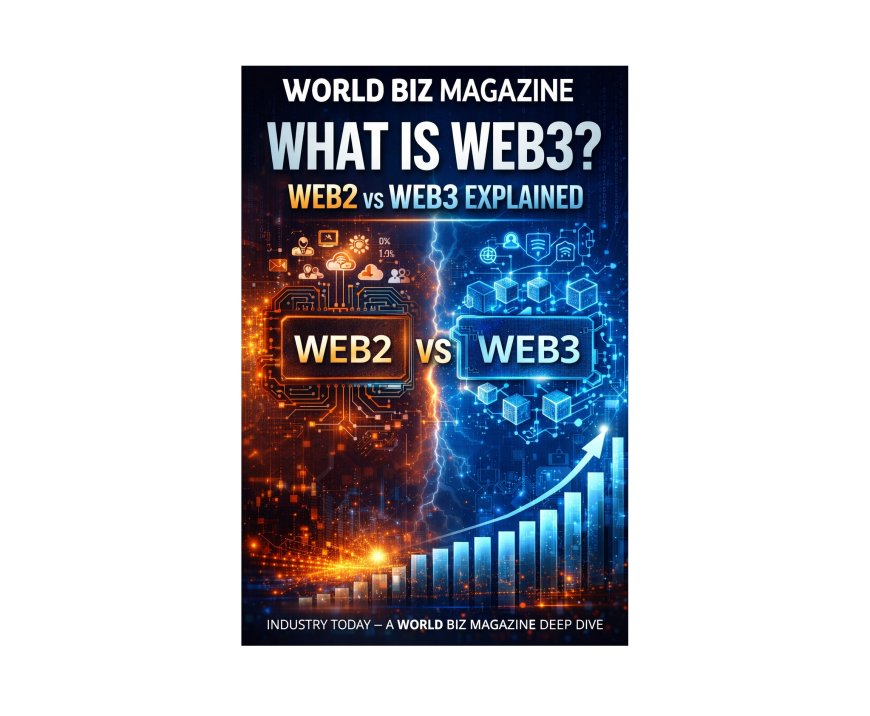
The Great Unbundling: Your Guide to Web3 and Why It’s Fighting to Take the Internet Back
From Wall Street to Your Wallet, a Deep Dive into the Decentralized Revolution, the Battle with Web2, and What the Next Decade Holds
The internet is evolving from static web pages to interactive platforms and now toward a decentralized ecosystem known as Web3. This transformation promises to redefine how data, ownership, and value flow across the digital economy. In this comprehensive World Biz Magazine report, we explain what Web3 is, how it compares with Web2, the market dynamics shaping its growth, global investments, political and regulatory impacts, economic influences, country-by-country adoption, forecasts through 2030, and the challenges and opportunities ahead.
The Internet Had a Promise
Do you remember the early internet? It felt like a vast, unexplored wilderness. A place where you could be anyone, say anything, and carve out your own little corner of the world on a GeoCities page or a LiveJournal blog. It was chaotic, yes, but it felt free. It felt like ours.
Then, something happened. The wilderness was tamed. Giant corporations built fences around the best land and charged admission. They paved the roads (the search engines), built the town squares (the social networks), and became the landlords of our digital lives. In exchange for "free" services, we paid with the most valuable currency of all: our attention and our data.
This was Web2. It was the era of the platform. And for a while, it was incredible. We connected with friends across the globe, built businesses on Etsy and Amazon, and shared our lives on Facebook and Instagram. But the hangover has been brutal. We’ve realized that on Web2, we are not the customers. We are the product.
Now, a new promise is on the horizon. It’s called Web3. And its fundamental thesis is radical: What if we took the internet back?
This isn't about a new app or a slightly better search engine. It’s a full-blown philosophical and technological revolution. It’s about rebuilding the digital world from the ground up, with the user not the corporation at the center. This is the story of that revolution.
To understand Web3, you have to understand what came before.
- Web1 (The Read-Only Web): Think of it as a massive digital library. You could go online, find information, and read it. That was it. It was static, boring by today's standards, but it was a miracle of information democratization. You were a consumer of content.
- Web2 (The Read-Write Web): This was the social revolution. You didn't just read the internet; you lived in it. You commented, you posted photos, you uploaded videos, you wrote reviews. You became a creator. But the platforms you used Facebook, Google, Twitter, Uber owned the infrastructure, owned the data, and owned the relationship with your audience. You were a tenant on their land, not a landowner.
- Web3 (The Read-Write-Own Web): This is the ownership layer. Web3 uses blockchain technology a kind of decentralized, tamper-proof digital ledger to give you back control. In Web3, you don't just have an account on a company's server; you have a digital wallet that is uniquely yours. Your identity, your data, your digital assets, and your online reputation live in that wallet. When you move between apps and platforms, your wallet and everything in it goes with you.
This simple shift from a platform-controlled account to a user-owned wallet unlocks a world of new possibilities:
- Decentralized Finance (DeFi): Banking without a bank. Lending, borrowing, and trading, all governed by code, not by loan officers in suits.
- Non-Fungible Tokens (NFTs): Digital deeds of ownership. They’re not just overpriced monkey jpegs; they’re a way to prove you own a piece of digital art, a ticket to a concert, or even a share in a real-world asset.
- Decentralized Autonomous Organizations (DAOs): Internet-native communities with a shared bank account. Think of it as a group chat that can vote on how to spend its treasury, hire people, or govern a protocol. No CEO, just collective decision-making by members.
- Smart Contracts: Self-executing contracts with the terms of the agreement directly written into code. No lawyers, no middlemen. If X happens, Y is automatically executed.
Web3 isn't just a technology; it’s a statement. It’s the belief that the value created on the internet should flow back to the people who create it, not just to the platforms that host it.
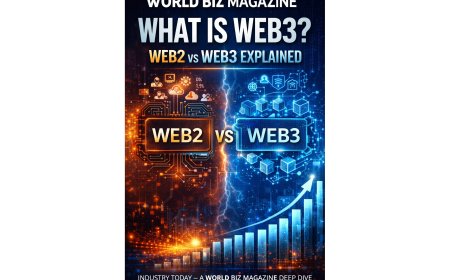
Web2 vs. Web3 - A Tale of Two Internets
To make this concrete, let’s put them side-by-side. It’s the difference between renting an apartment and owning your home.
|
Feature |
The Web2 World (The Landlord Economy) |
The Web3 World (The Digital Homestead) |
|
Who Controls Your Data? |
The platform. Facebook knows you're expecting a baby before your family does. |
You do. It lives in your wallet. You grant apps permission to see it, and you can revoke that permission. |
|
Who Are You? |
You are a username and password tied to a specific platform. Lose your password, and you lose your account. |
You are a cryptographic key in a self-sovereign wallet. Your identity is portable. |
|
Where Does the Money Go? |
The platform takes the lion's share of the revenue. A creator on YouTube might get 55% of the ad revenue. |
Value flows to the users and creators through tokens. If an app becomes popular, the early users who hold its token benefit. |
|
How Is It Secured? |
By a central company's security team. If their server gets hacked, millions of accounts are compromised. |
By cryptography and distributed consensus. There's no single point of failure for a hacker to attack. |
|
Who Makes the Rules? |
A corporate board and executive team. They can change the terms of service whenever they want. |
The community, through token-holder voting in a DAO. The rules are often transparent and coded into the protocol. |
Web2 was about democratizing the ability to create. Web3 is about democratizing the ability to own.
This isn't just a fringe movement anymore. A massive, global ecosystem has emerged, attracting some of the brightest minds and deepest pockets in the world.
The Architects (The Protocol Layer)
These are the foundations upon which everything is built.
- Ethereum: The undisputed king of smart contract platforms. It’s the bustling metropolis of Web3, home to thousands of apps, but it can be slow and expensive to use.
- Solana: The challenger. A high-performance blockchain designed for speed and low cost, aiming to be the "global supercomputer" for the masses.
- Polkadot & Cosmos: The interoperability specialists. They are building the infrastructure to allow different blockchains to talk to each other, preventing the internet from becoming a series of isolated islands again.
The Builders (The Application Layer)
These are the companies and protocols building the apps you actually use.
- OpenSea & Magic Eden: The shopping malls of the NFT world. Where you go to buy and sell digital collectibles.
- Chainlink: The bridge builder. It connects smart contracts to real-world data (like stock prices or weather reports) so they can function.
- Alchemy & Infura: The plumbers. They provide the infrastructure that makes it easy for developers to build on Web3 without having to run their own complex servers.
The Financiers (The Capital Layer)
Web3 has birthed a new breed of investor.
- Venture Capital: Top-tier firms like Andreessen Horowitz (a16z), Paradigm, and Multicoin Capital have raised billions of dollars specifically to bet on Web3. They are not just investing; they are actively shaping the direction of the ecosystem.
- The Corporates: Even the Web2 giants are hedging their bets. Google Cloud, AWS, and Microsoft Azure now offer blockchain infrastructure services. Meta (Facebook) has dabbled, and major financial institutions like BlackRock and Fidelity are exploring tokenized assets.
Here’s where the idealism of Web3 meets the hard reality of geopolitics. A decentralized, borderless internet still has to live in a world of nation-states with borders and laws.
The Havens (Where They Get It)
Some jurisdictions have rolled out the welcome mat, recognizing that clear rules attract innovation and capital.
- The UAE (Dubai): Has established itself as a global Web3 hub, with licensing frameworks for crypto businesses and a proactive government embracing the technology.
- Singapore: A stable, business-friendly environment with a progressive central bank that has been at the forefront of developing digital asset regulations.
- Switzerland (Crypto Valley): The town of Zug has become a legendary home for blockchain foundations, offering legal clarity and a supportive ecosystem.
- The European Union: With its Markets in Crypto-Assets (MiCA) regulation, the EU is creating the first comprehensive, harmonized rulebook for digital assets across an entire continent. It’s a massive step toward legitimacy.
The Battlegrounds (Where It’s Complicated)
- The United States: This is the biggest, most chaotic battleground. The SEC (Securities and Exchange Commission) and the CFTC (Commodity Futures Trading Commission) are fighting over who gets to regulate what. Is a token a security or a commodity? The lack of clear answers has created uncertainty, though it remains the largest hub for developers and venture capital.
- China: Has taken a hardline stance, banning cryptocurrency trading and mining. However, it is simultaneously pushing its own Central Bank Digital Currency (CBDC), the digital yuan a state-controlled version of digital money, which is the philosophical opposite of decentralized Web3.
Underneath all the technology and politics, Web3 is fundamentally an economic story. It’s about the creation of a new, internet-native asset class.
- The Investment Boom: In 2024 alone, venture capital firms poured over $30 billion into blockchain and Web3 startups. This isn't just speculative frenzy; it’s strategic allocation. Institutions are betting that this infrastructure will be as foundational as cloud computing or artificial intelligence.
- The Market Trajectory: The global blockchain market is projected to exceed $1.4 trillion by 2030. This growth will be driven not just by crypto speculation, but by enterprise adoption (supply chain tracking), financial integration (DeFi), and new digital economies (gaming, the metaverse).
- A Detailed Look Ahead:
|
Sector |
What It Is |
Estimated Value by 2030 |
|
Web3 Infrastructure |
The blockchains, oracles, and data tools that power everything. |
$300 Billion+ |
|
Decentralized Finance |
Lending, borrowing, and trading without banks. |
$450 Billion+ |
|
NFTs & MetaEconomies |
Digital ownership in gaming, art, and virtual worlds. |
$150 Billion+ |
|
Tokenized Real-World Assets |
Putting stocks, bonds, real estate, and commodities on the blockchain. |
$200 Billion+ |
The total market potential could easily exceed $1 trillion. This is the unbundling of traditional finance, one piece at a time.
The Map of the World - Who’s Adopting What?
The adoption of Web3 is a fascinating geopolitical mosaic.
- The West (Capital & Code): The US and Europe are the engine rooms of Web3 innovation. They produce the most developers, host the most VC funds, and are building the foundational technology.
- The East (Culture & Scale): In South Korea and Japan, there’s a massive cultural appetite for digital ownership, driven by deep gaming and pop culture industries. Play-to-earn games found their earliest massive adoption in Southeast Asia, where they provided real economic opportunity.
- The Global South (Utility): In countries like Nigeria, Brazil, and India, Web3 isn't just an investment; it’s a utility. It’s a hedge against inflation, a way to send remittances home without paying huge fees, and a source of income in economies with high unemployment. Necessity is the mother of adoption.
The Road to 2030 - Hype, Hope, and Hard Problems
The next five years will be critical. Web3 will either fade into a niche or become the default architecture of the internet. The outcome depends on solving three massive challenges.
The Opportunities (The Bright Side)
- Data Sovereignty: Imagine a world where you own your medical records, your browsing history, and your social graph. You choose to share them with apps in exchange for payment or better service. That’s the promise.
- Financial Inclusion: Over a billion people in the world have a smartphone but no bank account. DeFi offers them access to savings, loans, and global markets without needing permission from a traditional financial institution.
- New Ways to Organize: DAOs offer a radical new model for human collaboration global groups of people coming together to buy a rare book, fund a public good, or govern a digital protocol, without a traditional corporate structure.
The Challenges (The Hard Truth)
- Regulatory Uncertainty: This is the biggest sword hanging over the industry. A few bad-faith actors or a major financial panic could trigger a crackdown that stifles innovation for years.
- The User Experience: It’s still too hard. Managing your own crypto wallet’s "seed phrase" (a long string of words) is like being your own bank. If you lose it, your money is gone forever. For mass adoption, it needs to be as easy as online banking.
- Scalability and Cost: When too many people use popular blockchains like Ethereum, transaction fees can skyrocket. Building systems that can handle billions of users without costing a fortune is an ongoing engineering battle.
- Security and Scams: For all its talk of trustlessness, the Web3 ecosystem is still rife with hacks, exploits, and outright scams. Building a secure and trustworthy environment is paramount.
Future of Web3
Opportunities
- Empowering user-centric data ownership
- Decentralized finance to global financial inclusion
- Governance token models
- Interoperable digital ecosystems
Risks & Challenges
- Regulatory uncertainty
- Security and scalability limitations
- Usability and onboarding friction
Conclusion
Web3 represents a fundamental shift in digital architecture toward decentralized ownership, open protocols, and user-driven governance. As global forces converge from regulators to venture capital Web3 is steadily maturing from experimentation to mainstream infrastructure. Its economic impact could rival the transformative rounds of cloud computing and mobile internet, reshaping industries through 2030 and beyond.
Disclaimer
This article is intended for informational and analytical purposes only. Forecasts, projections, market data, and opinions expressed reflect available research and industry trends at the time of publication. They do not constitute financial, investment, or legal advice. Readers should conduct independent due diligence and consult professional advisors before making investment or strategic decisions. World Biz Magazine is not responsible for market volatility, regulatory changes, or economic conditions that may impact the Web3 industry.
What's Your Reaction?
 Like
0
Like
0
 Dislike
0
Dislike
0
 Love
0
Love
0
 Funny
0
Funny
0
 Angry
0
Angry
0
 Sad
0
Sad
0
 Wow
0
Wow
0