



























































































































































The Future of Central Bank Payment Systems: RTGS, CBDCs & Cross-Border Finance
Central bank payment systems, their role in monetary policy, RTGS, instant payments, CBDCs, and global financial infrastructure.

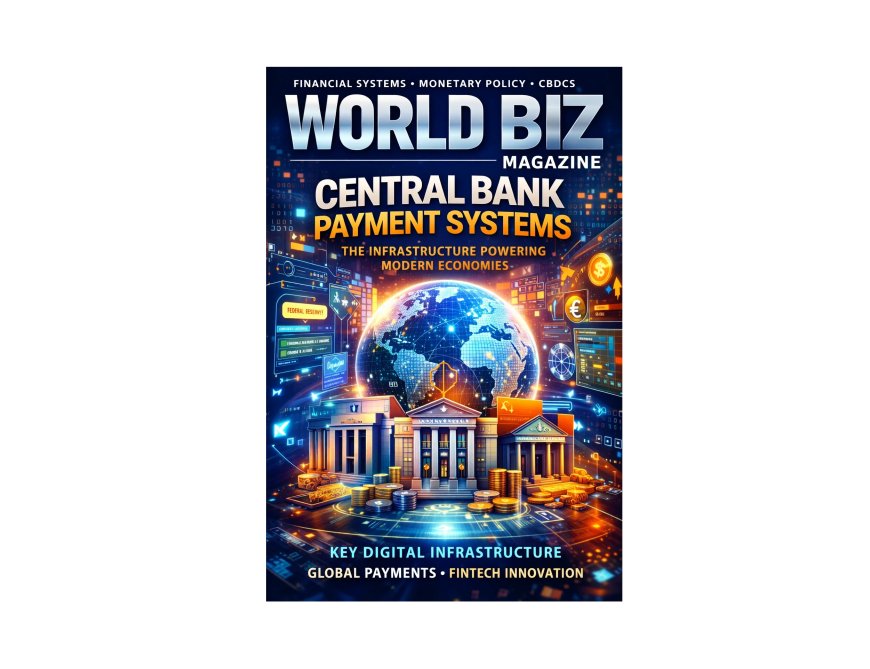
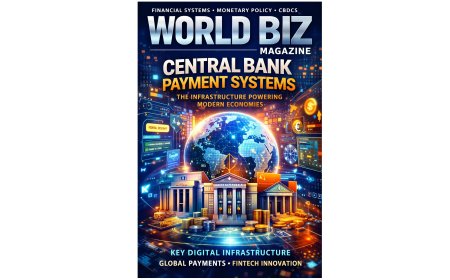
Central Bank Payment Systems
The Infrastructure Powering Modern Economies
World Biz Magazine | Global Financial Architecture Special Report
Central bank payment systems form the backbone of national and global financial stability. While commercial banks serve consumers and businesses, it is central banks that operate the core settlement rails that move trillions of dollars daily across economies.
Every salary payment, securities trade, government bond settlement, interbank transfer, and increasingly instant consumer payment ultimately relies on infrastructure supervised or operated by central banks.
These systems underpin:
- Monetary policy transmission
- Financial stability
- Liquidity management
- Government bond markets
- Cross-border capital flows
Global payment system values exceed several quadrillion dollars annually, reflecting wholesale interbank settlements, securities clearing, and high-value corporate transfers.
What Are Central Bank Payment Systems?
Central bank payment systems are platforms that allow:
- Banks to transfer funds between accounts held at the central bank
- Settlement of high-value interbank transactions
- Clearing of retail payment obligations
- Final settlement of securities transactions
They ensure finality of settlement, meaning once a transaction is processed, it cannot be reversed without systemic consequences.
Core Types of Central Bank Payment Systems
A. Real-Time Gross Settlement (RTGS)
RTGS systems process high-value payments individually and in real time.
Key Features:
- Immediate settlement
- No netting
- High liquidity requirements
- Used for large interbank and corporate transfers
Examples:
- Fedwire operated by Federal Reserve
- TARGET2 managed by the European Central Bank
- BOJ-NET by the Bank of Japan
RTGS systems are critical during financial stress because they prevent payment gridlock.
B. Automated Clearing House (ACH)
ACH systems process high volumes of low-value retail payments through batch clearing.
Used for:
- Payroll
- Utility payments
- Direct debits
- Government transfers
ACH systems reduce liquidity needs through netting.
C. Instant Payment Systems
Modern central banks are launching 24/7 instant payment rails.
Examples:
- FedNow (U.S.)
- TIPS (EU)
- Faster Payments (UK)
- UPI (India, though operated via banking network under central bank oversight)
These systems allow real-time retail transfers within seconds.
D. Securities Settlement Systems
Central banks often integrate payment systems with securities depositories to enable:
- Delivery versus Payment (DvP)
- Government bond settlement
- Repo market operations
This ensures systemic stability in capital markets.
Global Leaders in Payment Infrastructure
United States
The Federal Reserve operates:
- Fedwire (RTGS)
- FedNow (Instant payments)
The U.S. dollar’s global reserve status increases cross-border settlement volume.
European Union
The European Central Bank manages:
- TARGET2 (RTGS)
- TIPS (Instant settlement)
The eurozone operates integrated multi-country payment architecture.
China
The People's Bank of China operates:
- CNAPS (China National Advanced Payment System)
China also leads in central bank digital currency (CBDC) experimentation.
United Kingdom
The Bank of England oversees:
- RTGS Renewal Programme
- Faster Payments System
India
The Reserve Bank of India supervises:
- RTGS
- NEFT
- UPI ecosystem (via NPCI framework)
India has become a global benchmark in retail digital payments scalability.
Market Size & Transaction Scale
While central banks do not operate for profit, the value processed annually is enormous.
Estimated Annual Payment Values:
- U.S. Fedwire: $1 quadrillion+
- Eurozone TARGET2: €1 quadrillion+
- China CNAPS: Rapidly expanding with domestic volume dominance
Retail instant payment volumes are growing 20-40% annually in emerging markets.
Economic Importance
Central bank payment systems ensure:
Liquidity circulation
Monetary policy effectiveness
Crisis containment
Confidence in currency
Efficient capital markets
During financial crises (2008, 2020 pandemic), payment systems prevented systemic collapse by enabling liquidity injections.
Technology Modernization
Central banks are investing heavily in:
- Cloud-compatible infrastructure
- ISO 20022 messaging standards
- Cybersecurity reinforcement
- AI-based fraud monitoring
- API connectivity
ISO 20022 adoption is reshaping global payment data transparency.
Cross-Border Payment Challenges
Cross-border payments face:
- High costs
- Settlement delays
- Currency conversion complexity
- Compliance burdens
The Bank for International Settlements (BIS) is coordinating initiatives to improve cross-border interoperability.
Central Bank Digital Currencies (CBDCs)
CBDCs represent the next evolution of payment systems.
Two types:
- Wholesale CBDC (interbank settlement)
- Retail CBDC (public access digital currency)
China’s e-CNY pilot is among the largest global experiments.
CBDCs aim to:
- Increase payment efficiency
- Reduce reliance on private intermediaries
- Enhance financial inclusion
Regulatory & Political Dimensions
Payment systems are politically sensitive.
Governments may:
- Restrict access during sanctions
- Use payment networks for geopolitical leverage
- Impose AML/CFT compliance
Access to global clearing systems influences economic power.
Risks & Cybersecurity
Key risks include:
- Cyber attacks
- System outages
- Liquidity gridlock
- Operational failures
- State-sponsored digital threats
Central banks classify payment systems as critical national infrastructure.
Investment & Infrastructure Spending
Global central banks are investing billions in:
- RTGS modernization
- Instant payment platforms
- Cybersecurity systems
- Digital currency pilots
Emerging markets are leapfrogging legacy infrastructure with mobile-first systems.
Forecast to 2030
Key Trends:
- 24/7 real-time payments become standard
- ISO 20022 fully implemented globally
- CBDCs move from pilot to limited deployment
- Greater cross-border system integration
- Enhanced digital identity frameworks
Instant retail payments could represent the majority of domestic transactions in several emerging markets by 2030.
Structural Comparison
|
Feature |
RTGS |
ACH |
Instant |
|
Settlement Speed |
Real-time |
Batch |
Seconds |
|
Liquidity Need |
High |
Low |
Moderate |
|
Transaction Value |
High |
Low |
Low-Mid |
|
Operating Hours |
Extended |
Business |
24/7 |
World Biz Magazine Strategic Insights
Payment systems are geopolitical infrastructure
ISO 20022 improves transparency & compliance
CBDCs may reshape monetary transmission
Cyber resilience is now a top priority
Emerging markets lead in retail payment innovation
Conclusion
Central bank payment systems are invisible to consumers yet indispensable to the global economy. They ensure financial stability, enable commerce, support capital markets, and safeguard monetary sovereignty.
As digital payments expand, cross-border integration deepens, and CBDCs mature, central bank infrastructure will become even more strategically important.
By 2030, the global payment architecture will likely be:
- Faster
- More data-rich
- More interoperable
- More secure
- Digitally integrated
Central bank payment systems are not merely financial plumbing they are the foundation of economic sovereignty and global financial order.
Disclaimer
This article is published for informational and editorial purposes only. It does not constitute financial, legal, or policy advice. Market assessments and projections are based on publicly available data and institutional reports. Actual outcomes may vary due to regulatory decisions, technological developments, geopolitical events, and macroeconomic conditions.
World Biz Magazine assumes no liability for decisions made based on this publication.
What's Your Reaction?
 Like
0
Like
0
 Dislike
0
Dislike
0
 Love
0
Love
0
 Funny
0
Funny
0
 Angry
0
Angry
0
 Sad
0
Sad
0
 Wow
0
Wow
0