



































































































































Fashion Industry Supply Chain Challenges, Country, Market & Future Outlook
A detailed World Biz Magazine analysis of global fashion supply chain challenges, including country-wise dynamics, market players, logistics trends, and future outlook through 2030.

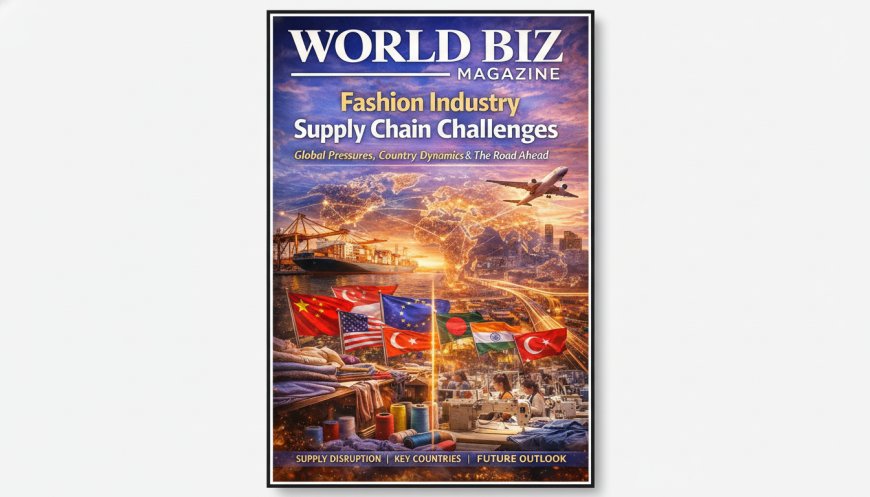
Fashion Industry Supply Chain Challenges
Global Pressures, Country Dynamics, Market Competition & The Road Ahead
World Biz Magazine | Industry Analysis Report
The global fashion industry operates one of the most complex supply chains in modern commerce connecting fiber producers, textile mills, garment factories, logistics networks, retailers, and digital marketplaces across continents. With trillions of dollars in annual economic activity generated through apparel, footwear, and accessories production and distribution, supply chain efficiency is central to profitability and competitiveness.
However, the industry faces structural challenges from environmental pressure, shifting consumer behavior, geopolitical risks, and digital transformation. This article examines supply chain issues country-by-country and market-by-market while analyzing marketing and strategic responses, past-to-future comparisons, and the outlook toward 2030.
Overview of the Fashion Supply Chain
Core Stages
- Raw material sourcing (cotton, wool, synthetics)
- Textile production and dyeing
- Apparel manufacturing
- Distribution and logistics
- Retail & e-commerce
- Recycling or disposal
The complexity stems from seasonality, rapid product turnover, and forecasting challenges retailers often must predict demand 6-12 months in advance, making inventory planning risky and costly.
Short product life cycles and fluctuating consumer tastes intensify the difficulty of demand forecasting and supply alignment.
Major Global Supply Chain Challenges
Environmental & Sustainability Pressures
- Fast fashion overproduction creates waste and pollution
- Excess inventory disposal and chemical usage
- High emissions and resource consumption
Research highlights that fast-cycle production has contributed to overproduction and environmental damage, requiring a shift toward sustainable forecasting and efficiency models.
Reddit industry discussion summarizing commonly cited impacts notes:
“100 billion garments each year - 92 million tonnes end up in landfills.”
Additional community analysis suggests environmental impacts including microplastic release and emissions burdens.
Demand Volatility & Forecasting Complexity
- New seasonal product launches
- Limited historical data
- Rapid style changes
These factors complicate supply planning and inventory optimization across retailers globally.
Global Logistics & Geopolitical Risks
- War or shipping disruptions increase lead times
- Cost inflation across transport networks
- Trade route instability
Community industry reporting indicates conflicts have caused lead times to rise up to 40% and costs up to 20%, demonstrating sensitivity to geopolitical shocks.
Ethical, Social & Compliance Challenges
- Labor transparency requirements
- Sustainability scrutiny
- Seasonal inventory pressure
Industry commentary highlights growing pressure on brands to balance profitability with ethical sourcing and transparency.
Climate and Resource Constraints
- Water scarcity affecting dyeing processes
- Energy-intensive production
- Raw material yield uncertainty
Industry discussion points to climate change impacting cotton production and water availability in manufacturing hubs.
Country-Wise Supply Chain Dynamics
Asia - Manufacturing Core
China
- Integrated textile ecosystem
- Increasing automation and AI integration
- Rising labor costs pushing diversification
Bangladesh & Vietnam
- Large export-oriented garment sectors
- Competitive labor costs
- Infrastructure and compliance challenges
India
- Cotton supply strength
- Fragmented manufacturing networks
Turkey
- Near-shoring hub for Europe
- Faster delivery cycles
Europe - Design & Branding Centers
Italy / France
- Luxury craftsmanship
- Short supply chains
- High cost structures
Eastern Europe
- Contract manufacturing
- Proximity logistics advantage
Americas
USA
- Marketing and retail leadership
- Limited mass manufacturing
- E-commerce supply optimization
Mexico & Central America
- Regional manufacturing support
- Near-shore logistics
Middle East
UAE
- Logistics and re-export hub
- Retail distribution center
Marketing-Driven Supply Chain Challenges
Speed to Market
Fast fashion’s competitive model demands rapid production cycles.
Inventory Management
Overproduction creates financial loss and environmental cost.
Consumer Personalization
Data-driven marketing requires agile supply adaptation.
Counterfeiting & Brand Protection
Large product volumes complicate authentication.
Key Corporate Players Influencing Supply Chains
- Inditex (Zara)
- H&M Group
- Nike
- Adidas
- PVH Corp
- LVMH
- Fast Retailing (Uniqlo)
Large multinational networks set standards for digital forecasting, logistics automation, and sustainability.
Past vs Present vs Future Comparison
Past (Pre-2010)
- Cost-driven outsourcing
- Minimal sustainability oversight
- Linear production chains
Present (2020s)
- Digital forecasting tools
- ESG compliance pressure
- Multi-region sourcing strategies
Future (2026-2030)
- AI-driven design & production
- Blockchain traceability
- Circular fashion ecosystems
- Predictive demand modeling
- Automation in size planning and logistics
AI integration is expected to transform manufacturing, sales, and customer engagement in fashion ecosystems.
Strategic Mitigation Approaches
- Near-shoring manufacturing
- Supply diversification
- Predictive analytics adoption
- Sustainable materials
- Circular recycling programs
Conclusion
The fashion industry’s supply chain stands at a turning point. Rapid growth, consumer expectations, environmental responsibility, and geopolitical risks have forced structural transformation. While the sector’s scale and profitability remain immense, resilience will depend on technological adoption, sustainability integration, and geographic diversification.
Companies that successfully align marketing strategy with adaptive supply infrastructure will dominate the next decade, while those clinging to linear fast-fashion models risk financial and reputational erosion.
Disclaimer
This article is prepared for editorial, research, and informational purposes only for World Biz Magazine. It does not constitute financial, investment, operational, or strategic advice. Industry insights reflect aggregated data, academic research, and public domain discussions and may change due to market developments, geopolitical shifts, or technological disruption. Readers should conduct independent professional evaluation before making business or investment decisions.
What's Your Reaction?
 Like
0
Like
0
 Dislike
0
Dislike
0
 Love
0
Love
0
 Funny
0
Funny
0
 Angry
0
Angry
0
 Sad
0
Sad
0
 Wow
0
Wow
0