




























































































































































































The Battle of Business Models: Startups vs Traditional Enterprises in the Global Economy
Comprehensive report on startup vs traditional business models, global market shifts, political influences, capital flows, cost inflation, and industry forecasts through 2030.


Startup vs Traditional Business Explained
Global Industry Today, Investment Dynamics, Policy Impact & Outlook to 2030
World Biz Magazine | Industry Today Special Report
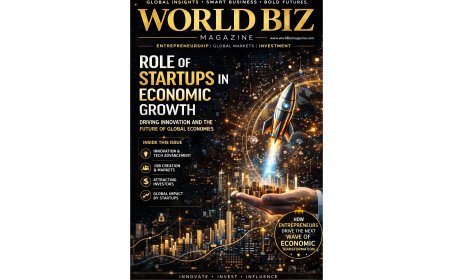
The global business landscape is at an inflection point. New-age startups agile, tech-driven, innovation-centric challenge the dominance of traditional businesses built on fixed assets, hierarchical structures, and established supply chains. The contrast between these models is more than academic: it defines how value is created, how markets evolve, how jobs are generated, and how economies grow.
This article unpacks the fundamental differences between startups and traditional businesses while revealing their respective roles in the global economy. We analyze market size, policy drivers, investment trends, geopolitical influences, country-specific dynamics, inflation and cost trends, 10-year pricing flows, and forecast to 2030. We also examine countries gaining and losing investment momentum, and how the shift toward new technologies (including AI, cloud, and digital platforms) and emerging materials is reshaping the competitive playing field.
What Is a Startup vs a Traditional Business?
Startup:
A startup is a young, fast-growing, innovation-oriented company designed to scale quickly, often leveraging technology to disrupt markets. Startups prioritize experimentation, rapid iteration, and market validation.
Traditional Business:
Traditional businesses are established entities operating within well-defined industries such as manufacturing, retail, logistics, and services. They typically scale through incremental growth, stable cash flows, and capital investment in physical assets.
Startups aim for scalability and network effects. Traditional businesses aim for efficiency, scale, and predictability.
Industry Overview: 2026 and Beyond
The global business ecosystem comprises both traditional and startup enterprises:
- Traditional Business Sector: Manufacturing, retail chains, hospitality, construction, energy companies, legacy services.
- Startup Ecosystem: Tech platforms, digital marketplaces, fintech, health tech, ed tech, clean tech, SaaS, AI, blockchain, digital media.
Together, these represent a multitrillion-dollar economic footprint, with startups now integral to innovation, job creation, and productivity growth.
Market Size & Growth (2015-2025)
Traditional Business Contributions
|
Year |
Approx. Global Revenue (USD) |
|
2015 |
$50T+ |
|
2020 |
$56T+ |
|
2025 |
$60T+ |
Traditional business revenue remains dominant but stable, with slower incremental growth.
Startup Ecosystem Economic Influence (Measured in Ecosystem Value)
|
Year |
Valuation of Global Startup Ecosystem* |
|
2015 |
$1.3T |
|
2018 |
$2.8T |
|
2021 |
$3.9T |
|
2024 |
$4.5T |
|
2026 (Est.) |
$5.2T |
Ecosystem value includes private market valuations, exits, and venture capital sums.
While startups do not surpass the sheer scale of traditional sectors, their growth velocity and market disruption potential are unmatched.
Key Contacts & Industry Networks
- World Economic Forum (WEF) - Global competitiveness and innovation agendas
- OECD - Policy frameworks for business growth
- Global Entrepreneurship Network (GEN) - Startup ecosystem benchmarking
- International Chamber of Commerce (ICC) - Global trade and business policy
- National Startup Funds / Industry Associations
These bodies shape regulatory environments, provide benchmarking, and influence global business climates.
Key Players: Startups vs Traditional Giants
Startup Titans
- By Sector
- Fintech: Stripe, Robinhood
- Mobility: Uber, Grab
- SaaS: Zoom, Snowflake
- AI & Platforms: OpenAI, Anthropic
- Marketplaces: Airbnb, DoorDash
Startups often evolve into unicorns (valuation $1B) and decacorns ($10B), representing deep capital inflows and talent concentration.
Traditional Business Leaders
- Manufacturing & Retail: Toyota, Walmart, Procter & Gamble
- Energy: ExxonMobil, Shell
- Finance: JPMorgan Chase, HSBC
- Telecom: AT&T, China Mobile
- FMCG: Unilever, Nestlé
Traditional enterprises command legacy infrastructure, global distribution, and large workforce deployments.
Policies, Politics & Regulatory Landscape
Government policy has become a key differentiator in the growth of startups vs traditional businesses:
Startup-Friendly Policies
- Startup visas and talent mobility
- R&D tax credits
- Digital infrastructure investment
- Data privacy laws balancing innovation + protection
- Venture capital encouragement
Traditional Business Policies
- Trade tariffs & export incentives
- Capital investment tax deductions
- Labor laws and union frameworks
- Energy, environmental regulation
Political Influences
- Countries with stable startup policies attract global capital flows.
- Political decisions on taxation, digital regulation, and trade impact business confidence and expansion.
Example: Changes in gig-worker classification in the U.S. or labor reforms in Europe directly influence startup workforce costs.
Investment Landscape & Major Investors
Startup Capital Flows
- Venture Capital (VC): Sequoia Capital, Andreessen Horowitz, SoftBank Vision Fund
- Private Equity in Later-Stage Startups: Blackstone, KKR
- Institutional Investors & Pension Funds increasingly allocating to VC
Traditional Business Investment
- Sovereign Wealth Funds investing in infrastructure, energy, manufacturing
- Corporate venture arms (e.g., Google Ventures, Intel Capital)
Funding cycles slowed in 2022-2023 due to macro uncertainty, but stabilized by 2025, with AI and digital health leading funding rounds.
Country-by-Country Landscape
High Investment Growth Regions
- United States: Largest startup ecosystem, deep venture capital networks
- China: Massive digital economy with nationwide scale
- India: Fastest-growing startup adoption and digital audiences
- Singapore & UAE: Policy-driven innovation hubs
- European Union (Germany, UK, France): Strong R&D, scaling SaaS & industrial tech
Traditional Business Powerhouses
- United States, China, Germany, Japan, South Korea remain dominant in manufacturing and exports.
Countries Gaining Investment Momentum
- Vietnam, Indonesia, Brazil, India emerging hubs for digital startups and manufacturing modernization.
Countries Losing Relative Momentum
- Some Western European economies with high taxation and rigid labor laws
- Regions with weak digital infrastructure or political instability
- Commodity-dependent economies with limited diversification
Inflation, Costs & Pricing Trends (2015-2025)
Startup Cost Inflation
- Talent wages up 15-25% in tech hubs (San Francisco, London, Beijing)
- Cloud hosting and data expenses moderated but remain significant
- Customer acquisition costs rose with digital ad inflation
Traditional Business Costs
- Commodities inflation impacted input costs (steel, energy)
- Supply chain disruptions (2021-2023) elevated logistics expenses
- Labor cost increases due to demographic shifts in developed markets
Global inflation slowed from 2023 onward, but structural wage and energy cost pressures remain.
Forecast to 2030: Industry Outlook
Startup Ecosystem Forecast (2026-2030)
- Valuation growth to $8-10T+
- Continued dominance of AI, biotech, fintech, and climate tech startups
- Rising maturity and exit activity (IPOs, acquisitions)
- Expansion in digital marketplaces, creator economy platforms
Traditional Business Forecast
- Continued stability, but slower growth
- Digital transformation and automation investments
- Shift toward “platform industrialization”
- Increasing partnerships with startups for innovation
Growth Drivers to 2030
- AI integration
- Cross-border digital services
- Cloud computing
- Sustainability mandates
- Hybrid work models
- Data-driven business models
Potential Headwinds
- Regulatory fragmentation (tech policy differences)
- Geopolitical tensions affecting trade
- Capital market cyclicality
- Workforce reskilling challenges
Comparative Sector Analysis (2030)
|
Sector |
Estimated Size by 2030 |
Growth Outlook |
Notes |
|
Startup Ecosystem (Captured Value) |
$8-10T+ |
Very High |
Innovation and scaling |
|
Traditional Business |
$70-75T+ |
Moderate |
Stability and scale |
|
Telecom |
$3-4T |
Steady |
Infrastructure |
|
Consumer Economy |
$37-38T |
Strong |
Consumption growth |
|
Platform Economy |
$25-30T (GTV) |
Very High |
Digital marketplaces |
Startups drive disruption and high growth, but traditional businesses provide economic stability and scale.
World Biz Magazine Insights
Startups are engines of innovation but require robust regulatory and talent ecosystems.
Traditional businesses will increasingly adopt platform models to remain competitive.
Most investment growth will occur where digital infrastructure is strong.
Startups that solve real-world scaling problems beyond the digital realm (health, climate, logistics) will define the next decade.
Traditional sectors embracing AI, automation, and cloud infrastructure will maintain leadership.
Conclusion
The contrast between startups and traditional businesses is not binaries it reflects a continuum of innovation, scalability, risk, and resilience. Traditional models bring stability, global scale, and employment, while startups drive agility, disruption, and future value creation.
By 2030:
- Startups will redefine industries through scalable digital platforms and AI-enabled solutions.
- Traditional businesses will evolve through transformation and collaborative ecosystems.
- The global economic architecture will be shaped by hybrid models that combine stability with innovation.
Disclaimer
This article is published by World Biz Magazine for informational purposes only and does not constitute financial, legal, or investment advice. Market conditions, regulations, and investment practices are subject to change. Readers should consult licensed professionals before making financial or investment decisions.
What's Your Reaction?
 Like
0
Like
0
 Dislike
0
Dislike
0
 Love
0
Love
0
 Funny
0
Funny
0
 Angry
0
Angry
0
 Sad
0
Sad
0
 Wow
0
Wow
0