












































































































































































































How Residential Communities Stay Safe: Security Systems in Malaysia, Europe, Middle East and Central Asia
A global analysis of residential security trends, including smart housing safety systems, gated communities, and security strategies across Asia, Europe, and the Middle East.

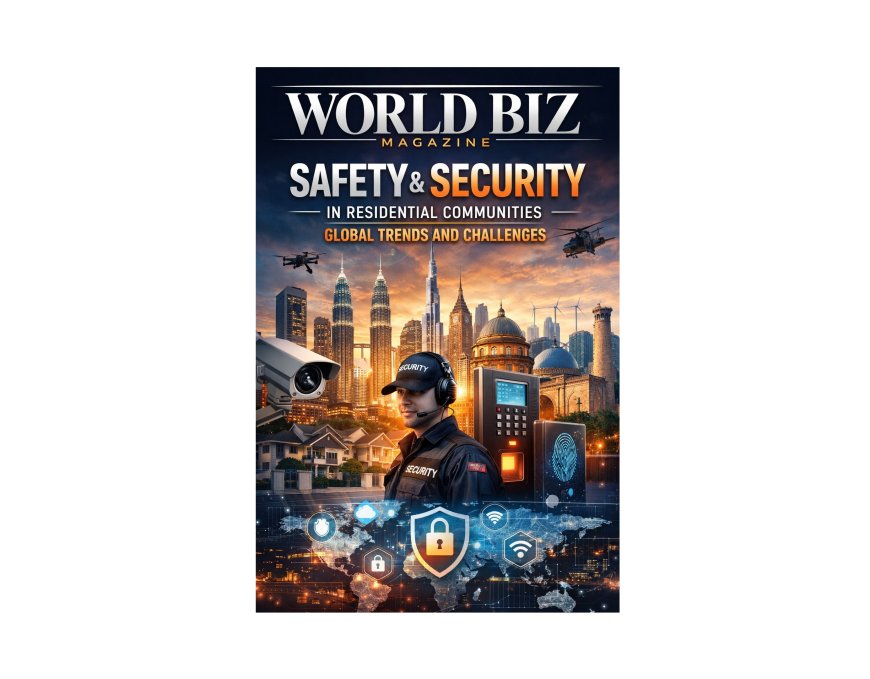
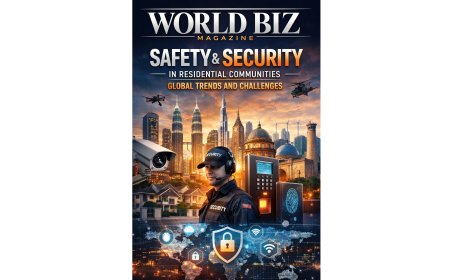
Safety & Security in Residential Communities: Global Trends and Challenges
Industry Today - A World Biz Magazine Report
Safety and security have become central priorities for residential communities worldwide. Rapid urbanization, geopolitical tensions, and rising concerns about crime have transformed how governments, developers, and residents approach community safety. Modern residential developments increasingly integrate technology, physical infrastructure, and policy frameworks to protect residents and property.
Globally, the residential security market is expanding rapidly as individuals and governments invest in smart surveillance systems, access control, alarms, and community policing programs. The global residential security market alone is projected to exceed $116 billion by 2035, driven by urbanization, technological innovation, and heightened safety awareness.
However, the safety environment differs significantly across regions. Factors such as political stability, economic conditions, urban planning, and regional conflicts influence how residential communities design and implement security strategies.
This article examines the safety and security landscape in residential communities across several key regions: Malaysia, Dubai (UAE), Thailand, Europe, Azerbaijan, Indonesia, Tajikistan, and Uzbekistan, highlighting current risks, solutions, and future outlook.
Global Residential Security Landscape
Growing Demand for Secure Communities
Urban populations are increasing rapidly, creating higher demand for secure housing developments. Gated communities, integrated surveillance systems, and digital access controls have become standard features in many residential projects.
Modern residential security typically includes:
· CCTV and AI-based surveillance systems
· Smart access control and biometric entry
· Remote monitoring via mobile apps
· Professional private security services
· Integrated fire protection and emergency systems
The adoption of smart home technology and AI-driven monitoring is transforming residential security by allowing homeowners to monitor their property remotely and respond quickly to threats.
Additionally, gated communities with controlled entry points and private security have become common worldwide, especially in areas with higher crime risks.
Malaysia: Smart Urban Safety
Malaysia has experienced rapid urban development, especially in cities like Kuala Lumpur, Johor Bahru, and Penang. As residential developments grow, safety features have become a key selling point for property developers.
Key Security Features
· Gated and guarded housing schemes
· 24/7 security patrols
· RFID vehicle entry systems
· Smart CCTV monitoring
· Emergency response integration
Malaysia’s property developers increasingly incorporate smart city technologies, including facial recognition systems, license plate recognition, and mobile-controlled access.
Challenges
· Urban burglary in dense cities
· Cybersecurity risks for smart homes
· Rising population density
Despite these challenges, Malaysia remains one of Southeast Asia’s safer urban housing markets due to strong municipal policing and community security systems.
Dubai (UAE): High-Tech Security in a Geopolitical Environment
Dubai is widely recognized as one of the safest major cities globally, supported by strict law enforcement and advanced surveillance infrastructure.
Smart Security Infrastructure
Dubai has invested heavily in advanced policing technologies, including Smart Police Stations, which allow residents to access police services digitally without visiting traditional police stations.
Residential communities often include:
· AI-powered surveillance networks
· Smart gates and biometric access
· Centralized control rooms
· Private security patrols
· Integrated emergency response systems
Current Regional Security Context
Although Dubai itself remains stable, the broader Middle East faces geopolitical tensions and occasional conflict risks. Regional instability can increase:
· Cybersecurity threats
· Terrorism risks
· Strategic infrastructure concerns
Nevertheless, the UAE’s strong security policies and technology-driven policing maintain a high safety index for residential communities.
Thailand: Tourism Cities and Urban Security
Thailand’s residential security environment varies significantly between metropolitan areas and rural regions.
Urban Safety Measures
In cities like Bangkok, Phuket, and Chiang Mai:
· High-rise residential towers dominate housing markets
· Condominiums feature keycard access systems
· CCTV surveillance is standard in most developments
· Security guards operate at entrances
Emerging Concerns
· Property crime in tourist zones
· Cybercrime targeting digital systems
· Natural disaster risks such as flooding
Developers increasingly integrate smart building technology and emergency preparedness systems to improve safety standards.
European Countries: Security Amid Political and Economic Tensions
European residential communities benefit from strong law enforcement systems and high safety standards. However, recent geopolitical developments, migration pressures, and economic challenges have influenced security planning.
Security Features
Typical European residential security includes:
· Secure apartment entry systems
· Video intercom and surveillance
· Community policing programs
· Fire safety and emergency regulations
Current Challenges
· Urban crime in major cities
· Cybersecurity threats
· Social unrest in some regions
Cities like London, Paris, Berlin, and Amsterdam are increasingly investing in smart surveillance systems and predictive policing technologies to prevent crime in residential areas.
Azerbaijan: Modern Developments and Urban Security
Azerbaijan has experienced rapid urban modernization, especially in its capital, Baku. Luxury residential complexes and gated communities are expanding rapidly.
Security Features
· Private security services
· CCTV monitoring systems
· Controlled building access
· Underground parking security
Regional geopolitical tensions in the South Caucasus influence national security strategies, but urban residential communities remain relatively stable due to government investment in infrastructure and policing.
Indonesia: High Population Density and Community Safety
Indonesia faces unique residential security challenges due to its large population and rapid urbanization.
Community-Based Security
Indonesia commonly uses community security systems known as “Siskamling”, where residents organize neighborhood patrols.
Modern developments also include:
· Security guards at housing complexes
· CCTV surveillance
· Controlled access gates
Challenges
· Urban crime in megacities like Jakarta
· Infrastructure strain due to population growth
· Natural disaster risks (earthquakes, floods)
Developers increasingly integrate smart security technologies into new housing projects.
Tajikistan: Security in Emerging Urban Centers
Tajikistan remains one of Central Asia’s developing housing markets. While major cities such as Dushanbe are growing, residential security systems are still evolving.
Key Characteristics
· Government policing as primary security system
· Limited adoption of smart surveillance
· Private security services growing slowly
New residential developments are beginning to include CCTV and controlled access gates, reflecting modernization trends.
Uzbekistan: Rapid Urban Transformation
Uzbekistan has undergone major economic and urban reforms in recent years. Cities like Tashkent are experiencing significant residential development.
Security Improvements
· Increased police presence in urban areas
· Modern apartment complexes with controlled entry
· Expansion of CCTV networks
Government initiatives aimed at improving public safety and urban infrastructure have contributed to rising residential security standards.
Global Residential Security Comparison Chart
|
Country / Region |
Residential Security Infrastructure |
Technology Adoption |
Crime Risk Level |
Common Security Features |
Overall Residential Safety |
|
Dubai (UAE) |
Extremely advanced |
Very High (AI surveillance, smart police systems) |
Very Low |
Smart gates, biometric access, AI CCTV, private security |
Very High |
|
Malaysia |
Highly developed in urban areas |
High |
Low-Moderate |
Gated communities, RFID access, CCTV monitoring |
High |
|
Thailand |
Strong in major cities |
Moderate–High |
Moderate |
Condo keycard systems, security guards, CCTV |
Moderate |
|
European Countries |
Advanced infrastructure |
High |
Low–Moderate |
Secure building entry, video intercoms, police monitoring |
High |
|
Azerbaijan |
Modernizing rapidly |
Moderate |
Low–Moderate |
Gated residential towers, private security |
Moderate |
|
Indonesia |
Mixed (urban vs rural) |
Moderate |
Moderate |
Community patrols (Siskamling), guards, gated housing |
Moderate |
|
Uzbekistan |
Improving urban infrastructure |
Moderate |
Low |
CCTV expansion, controlled apartment access |
Moderate |
|
Tajikistan |
Developing infrastructure |
Low–Moderate |
Low–Moderate |
Government policing, basic CCTV in new developments |
Developing |
Security Technology Adoption Comparison
|
Technology |
Countries Leading Adoption |
|
AI Surveillance Systems |
Dubai, Europe |
|
Smart Access Control |
Dubai, Malaysia, Europe |
|
Gated Community Security |
Malaysia, Indonesia, Azerbaijan |
|
Community Patrol Systems |
Indonesia, Tajikistan |
|
CCTV Public Monitoring Networks |
Dubai, Europe, Uzbekistan |
Key Security Risk Factors by Region
|
Region |
Major Security Concerns |
|
Middle East |
Geopolitical tensions, cyber threats |
|
Southeast Asia |
Urban property crime, natural disasters |
|
Europe |
Urban crime, migration pressures |
|
Central Asia |
Infrastructure modernization, limited technology adoption |
Residential Security Strength Ranking
Tier 1 - Very High Security
Dubai
Tier 2 - High Security
Malaysia
European countries
Tier 3 - Moderate Security
Thailand
Azerbaijan
Indonesia
Uzbekistan
Tier 4 - Developing Security Systems
Tajikistan
Future of Residential Security
Technology-Driven Communities
The next generation of residential security will rely heavily on:
· Artificial intelligence surveillance
· IoT smart home systems
· biometric access control
· drone patrols
· predictive crime analytics
Integrated systems combining video surveillance, alarm systems, and access control are already becoming standard in residential developments worldwide.
Smart Cities and Security
Smart city initiatives will reshape residential safety by connecting:
· police systems
· traffic monitoring
· emergency services
· home security networks
These integrated systems will allow faster responses to security incidents.
Key Insight
Countries with strong urban planning, smart city technology, and strict law enforcement tend to have the safest residential communities. Dubai, Malaysia, and many European cities lead in this category due to large investments in AI surveillance, gated developments, and integrated emergency systems.
Emerging economies such as Uzbekistan, Azerbaijan, and Indonesia are rapidly improving residential security as urban development and property investment grow.
Conclusion
Residential security is evolving rapidly as communities face new challenges ranging from urban crime to geopolitical risks and technological threats. Countries across Asia, Europe, and the Middle East are adopting advanced security technologies, strengthening policing systems, and developing smarter housing infrastructures.
From the high-tech surveillance systems of Dubai to community-based security in Indonesia, each region reflects a unique approach to protecting residential communities. However, one trend remains universal: the increasing integration of technology, policy, and urban planning to create safer living environments.
As cities continue to grow and global risks evolve, secure residential communities will become a defining feature of modern urban development.
Disclaimer
The information presented in this article is intended for general informational and editorial purposes only. While World Biz Magazine strives to ensure accuracy and reliability, the content may include opinions, analysis, and projections based on publicly available data and industry insights at the time of publication.
Security conditions, crime statistics, geopolitical risks, and residential safety standards may change over time and can vary significantly between cities, neighborhoods, and communities within the same country.
Readers are encouraged to conduct independent research and consult local authorities, security professionals, or real estate advisors before making residential, investment, or relocation decisions based on the information provided in this publication.
World Biz Magazine, its publishers, editors, and contributors shall not be held responsible for any decisions, actions, or outcomes resulting from the use of this information.
What's Your Reaction?
 Like
0
Like
0
 Dislike
0
Dislike
0
 Love
0
Love
0
 Funny
0
Funny
0
 Angry
0
Angry
0
 Sad
0
Sad
0
 Wow
0
Wow
0