






























































































































































































Debt vs Equity Capital: Which Financing Strategy Works Best?
Understand how companies balance debt and equity to optimize capital structure and support sustainable business growth.

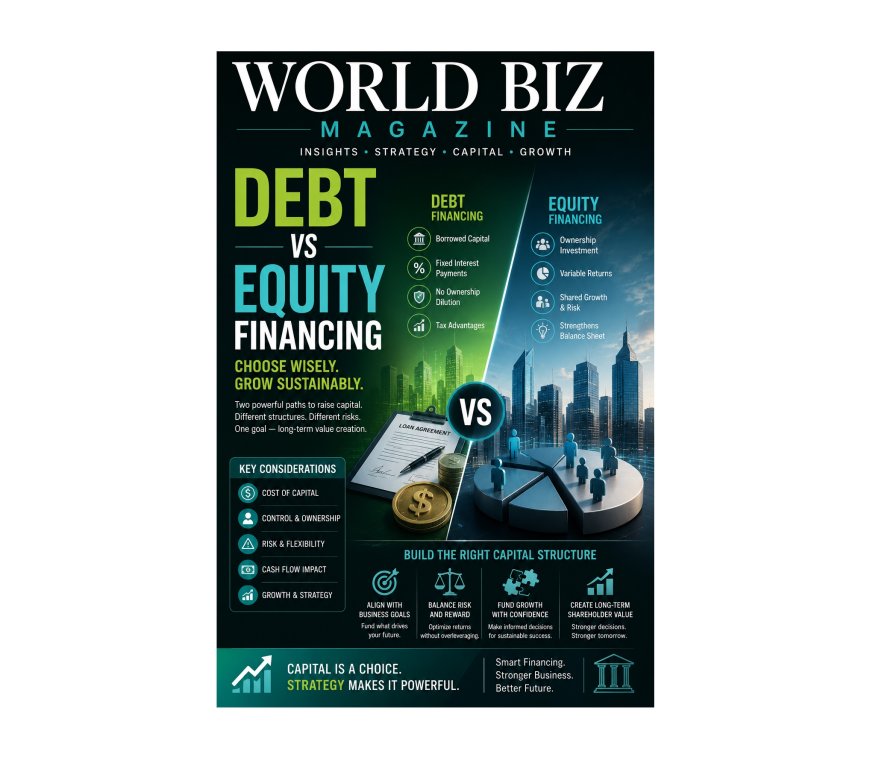
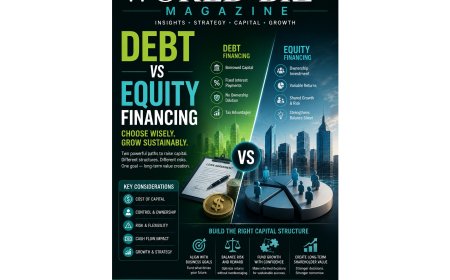
Debt vs Equity Financing
Understanding the Two Primary Funding Methods That Drive Business Growth, Capital Formation, and Corporate Strategy
World Biz Magazine | Corporate Finance Intelligence | Capital Structure Analysis
The Foundation of Business Financing
Every business, regardless of size, industry, or stage of development, requires capital to operate, grow, innovate, and compete. Whether a startup is launching its first product, a growing company is expanding into new markets, or a multinational corporation is funding a major acquisition, securing adequate financing is one of the most important decisions management will face.
At the heart of corporate finance lies a fundamental question: Should a company raise money through debt or equity?
Debt financing and equity financing are the two primary methods businesses use to obtain capital. While both provide the financial resources necessary to support operations and growth, they differ significantly in structure, cost, risk, ownership implications, and long-term impact on business strategy.
Debt financing involves borrowing money that must be repaid over time, typically with interest. Equity financing involves raising capital by selling ownership stakes in the company to investors. Each approach offers distinct advantages and disadvantages, and choosing the right financing mix is one of the most critical responsibilities of corporate financial management.
The decision between debt and equity affects profitability, cash flow, ownership control, financial flexibility, shareholder value, and overall business sustainability. Companies that effectively balance these financing options often gain competitive advantages while minimizing financial risk.
Understanding debt and equity financing is essential for entrepreneurs, executives, investors, students, and business leaders seeking to navigate the complex world of corporate finance.
What Is Debt Financing?
Debt financing involves borrowing money from external lenders with the obligation to repay the principal amount plus interest.
Common sources include:
- Bank loans
- Corporate bonds
- Credit facilities
- Commercial paper
- Equipment financing
- Government-backed loans
Debt financing does not require the company to give up ownership.
Instead, it creates a legal obligation to repay borrowed funds according to agreed terms.
What Is Equity Financing?
Equity financing involves raising capital by selling ownership interests in a business.
Investors provide funding in exchange for shares representing partial ownership.
Common equity investors include:
- Founders
- Angel investors
- Venture capital firms
- Private equity firms
- Institutional investors
- Public shareholders
Unlike debt, equity financing generally does not require repayment.
However, it results in ownership dilution.
Why Businesses Need Financing
Companies seek financing for various reasons.
These include:
- Launching new products
- Expanding operations
- Purchasing equipment
- Building facilities
- Entering new markets
- Hiring employees
- Funding acquisitions
- Supporting working capital
The choice between debt and equity often depends on company objectives, financial condition, growth stage, and market conditions.
The Fundamental Difference
The primary distinction is simple:
Debt Financing
Borrowed money that must be repaid.
Equity Financing
· Ownership sold to investors.
· Debt creates obligations.
· Equity creates partnerships.
· Both provide capital but have very different implications for business owners and investors.
Ownership Implications
One of the most significant differences involves ownership.
Debt Financing
Owners retain full control.
Lenders generally do not participate in business decisions.
Equity Financing
Investors receive ownership rights.
They may gain influence over:
- Strategy
- Governance
- Major decisions
Entrepreneurs often consider ownership retention when evaluating financing alternatives.
Cost of Capital
Financing is never free.
Both debt and equity carry costs.
Cost of Debt
The cost primarily consists of:
- Interest payments
- Loan fees
- Financing charges
Cost of Equity
The cost involves:
- Ownership dilution
- Future profit sharing
- Reduced control
While debt may appear less expensive initially, excessive borrowing can create substantial financial risks.
Debt Financing Advantages
Debt offers several important benefits.
Ownership Retention
Founders maintain control over the business.
Predictable Costs
Interest payments are typically fixed or clearly defined.
Tax Advantages
Interest expenses are often tax deductible.
No Profit Sharing
· Lenders do not participate in future profits.
· These advantages make debt attractive for many established businesses.
Debt Financing Disadvantages
Debt also creates challenges.
Repayment Obligations
Loans must be repaid regardless of business performance.
Cash Flow Pressure
Interest payments reduce available cash.
Increased Financial Risk
Excessive borrowing can threaten business stability.
Credit Requirements
Lenders often require strong financial histories and collateral.
Debt becomes riskier during economic downturns.
Equity Financing Advantages
Equity financing offers several unique benefits.
No Repayment Requirements
Capital does not need to be repaid.
Reduced Financial Pressure
No mandatory interest payments.
Risk Sharing
Investors share business risks.
Growth Support
· Investors may contribute expertise, networks, and strategic guidance.
· Equity often provides greater flexibility during early growth stages.
Equity Financing Disadvantages
Equity financing also has drawbacks.
Ownership Dilution
Founders surrender portions of ownership.
Reduced Control
Investors may influence decision-making.
Profit Sharing
Future earnings are shared among more owners.
Longer Fundraising Process
· Equity transactions can be complex and time-consuming.
· Many entrepreneurs view ownership dilution as the largest disadvantage.
Debt Financing and Business Maturity
Debt financing is generally more accessible to established companies.
Reasons include:
- Predictable cash flows
- Proven operating histories
- Strong credit profiles
Banks and institutional lenders often prefer businesses with stable revenues and demonstrated repayment capacity.
Mature companies frequently utilize debt as a primary financing source.
Equity Financing and High-Growth Companies
Equity financing is particularly common among startups and growth companies.
These businesses often:
- Lack profitability
- Have limited assets
- Face uncertain cash flows
Investors provide capital based on future growth potential rather than current financial performance.
Venture capital and private equity play significant roles in high-growth sectors.
Debt Financing Through Corporate Bonds
Large corporations often raise debt through bond markets.
Corporate bonds allow companies to borrow directly from investors.
Benefits include:
- Large funding amounts
- Long repayment periods
- Capital market access
Bond issuance is a major component of global corporate finance.
Equity Financing Through Public Markets
Companies may raise equity through:
Initial Public Offerings (IPOs)
Selling shares to the public for the first time.
Secondary Offerings
· Issuing additional shares after becoming public.
· Public equity markets provide access to substantial amounts of capital.
· However, public ownership introduces additional regulatory and reporting obligations.
Impact on Financial Risk
Risk profiles differ significantly.
Debt Financing
Increases financial risk through mandatory obligations.
Equity Financing
· Reduces financial risk by eliminating repayment requirements.
· Companies must carefully balance growth opportunities against financial stability.
· Overreliance on either method can create challenges.
Impact on Cash Flow
Cash flow considerations are critical.
Debt Financing
Requires:
- Regular interest payments
- Scheduled repayments
Equity Financing
Requires:
- No mandatory payments
This flexibility often makes equity attractive during uncertain growth periods.
Capital Structure: Finding the Right Balance
Most successful companies utilize both debt and equity.
This combination is known as the company's capital structure.
The objective is to:
- Minimize financing costs
- Maintain flexibility
- Support growth
- Manage risks
Determining the optimal capital structure is one of corporate finance's most important responsibilities.
Debt-to-Equity Ratio
One common financial metric is the debt-to-equity ratio.
It measures:
Total Debt ÷ Total Equity
· A higher ratio indicates greater leverage.
· A lower ratio indicates greater reliance on equity.
· Investors and lenders often evaluate this metric when assessing financial health.
Industry Differences
Financing preferences vary across industries.
Technology Startups
Often favor equity financing.
Manufacturing Companies
May utilize substantial debt financing.
Real Estate Firms
Frequently rely on leverage.
Utilities
· Commonly maintain higher debt levels due to predictable cash flows.
· Industry characteristics influence financing decisions.
Economic Conditions and Financing Choices
Macroeconomic conditions significantly affect financing strategies.
Low Interest Rate Environments
Debt becomes more attractive.
High Interest Rate Environments
· Equity financing may become more appealing.
· Market conditions influence capital costs and investor behavior.
· Corporate finance teams continually monitor these factors.
Debt vs Equity During Economic Downturns
Economic uncertainty often highlights financing differences.
Highly Leveraged Companies
May face repayment challenges.
Equity-Funded Companies
· Typically possess greater financial flexibility.
· Resilience during downturns often depends on prudent capital structure management.
Which Financing Method Is Better?
There is no universal answer.
Debt financing may be preferable when:
- Cash flows are stable
- Interest rates are favorable
- Ownership retention is important
Equity financing may be preferable when:
- Growth opportunities are significant
- Cash flows are uncertain
- Financial flexibility is critical
The best choice depends on individual business circumstances.
How Successful Companies Use Both
Many of the world's most successful companies utilize balanced financing strategies.
They combine:
- Debt for efficiency
- Equity for flexibility
This approach helps optimize growth while managing risk.
Modern corporate finance increasingly focuses on achieving this balance.
World Biz Magazine Insights
At World Biz Magazine, we view debt and equity financing not as competing alternatives but as complementary tools within a broader corporate finance strategy. The most successful businesses understand that capital structure decisions influence far more than funding they affect ownership, risk, growth potential, investor confidence, and long-term value creation.
While debt offers cost efficiency and ownership retention, equity provides flexibility and strategic support. The challenge for business leaders is not choosing one over the other but determining the optimal combination that aligns with company objectives, market conditions, and growth ambitions.
As capital markets continue evolving and businesses face increasingly complex financial environments, effective capital structure management will remain one of the defining characteristics of successful organizations.
Conclusion
Debt and equity financing represent the two fundamental methods businesses use to raise capital. Debt provides funding through borrowing while preserving ownership, whereas equity provides capital through ownership sales while reducing financial obligations.
Each approach offers unique advantages and challenges related to cost, control, risk, cash flow, and growth potential. Understanding these differences is essential for entrepreneurs, executives, investors, and finance professionals seeking to make informed capital allocation decisions.
In today's dynamic business environment, the most successful organizations often combine debt and equity strategically, creating balanced capital structures that support sustainable growth and long-term value creation.
Disclaimer
This article is published for informational, educational, and editorial purposes only and does not constitute financial, investment, legal, accounting, tax, or professional business advice. Financing decisions should be made in consultation with qualified advisors based on individual circumstances, market conditions, and applicable regulations. World Biz Magazine and its affiliates are not responsible for actions taken based on the information presented in this publication.
What's Your Reaction?
 Like
0
Like
0
 Dislike
0
Dislike
0
 Love
0
Love
0
 Funny
0
Funny
0
 Angry
0
Angry
0
 Sad
0
Sad
0
 Wow
0
Wow
0