















































































































































Global Investment Climate Analysis and Economic Growth Trends
A detailed overview of investment climate factors including economic stability, regulatory policies, infrastructure, and global investment trends.

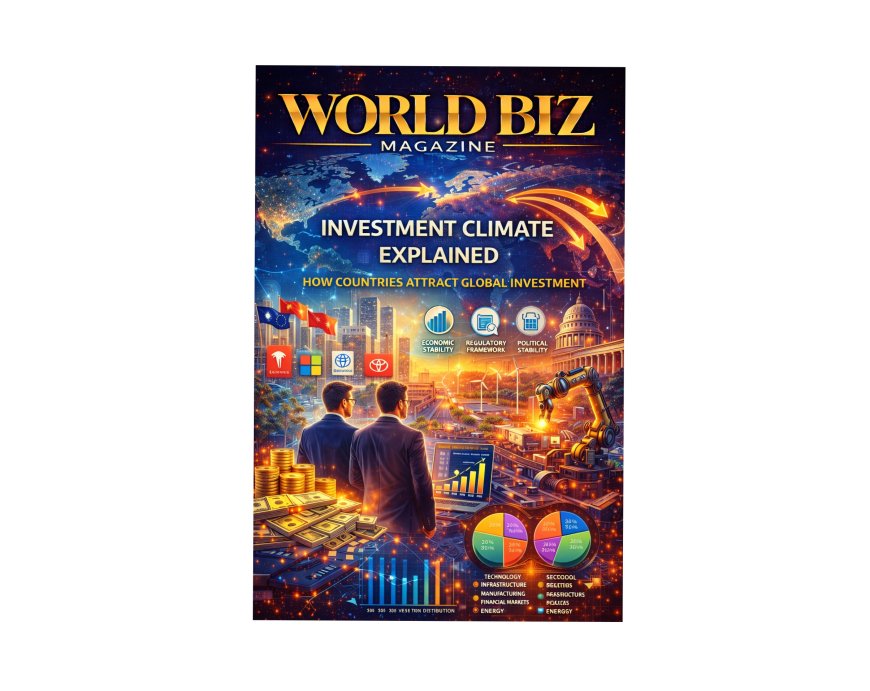
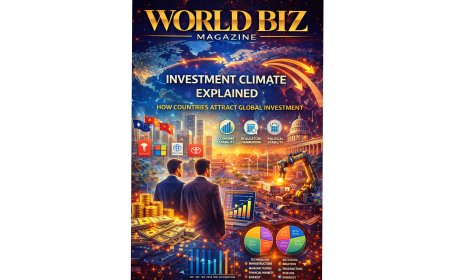
Investment Climate Explained
How Economic Policies, Political Stability, and Market Conditions Shape Global Investment Decisions
World Biz Magazine | Global Economy & Investment Special Report
In an increasingly interconnected global economy, the ability of a country to attract investment depends heavily on its investment climate. Investors whether multinational corporations, institutional funds, or private entrepreneurs carefully evaluate economic conditions, regulatory frameworks, political stability, and market opportunities before committing capital to a particular region.
The investment climate represents the overall environment in which businesses operate and investments are made. It includes a broad range of factors such as government policies, financial market stability, infrastructure quality, taxation, legal systems, labor availability, and geopolitical conditions.
For governments seeking economic growth and employment creation, improving the investment climate has become a strategic priority. Countries that succeed in building investor-friendly environments often attract billions of dollars in Foreign Direct Investment (FDI) and portfolio investment, accelerating industrial development and technological innovation.
This World Biz Magazine Industry Today report examines the concept of investment climate, its major components, global trends, government policies, sectoral investment dynamics, and the future outlook for international capital flows through 2035.
What Is Investment Climate?
The investment climate refers to the set of economic, political, legal, and regulatory conditions that influence the attractiveness of a country or region for business investment.
A favorable investment climate provides investors with confidence that their capital will generate returns under predictable and stable conditions.
Key factors typically include:
· political and economic stability
· transparent regulatory frameworks
· efficient legal systems
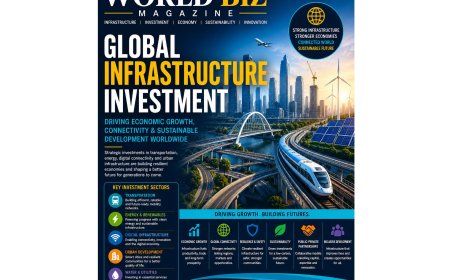
· reliable infrastructure
· access to skilled labor
· competitive tax policies
When these elements align effectively, countries can become global investment hubs.
Why Investment Climate Matters
Investment decisions are rarely based solely on market size or resource availability. Investors assess long-term risks and operational feasibility before entering new markets.
A strong investment climate can provide several economic benefits.
First, it encourages foreign direct investment, which brings capital, advanced technology, and management expertise into domestic industries.
Second, it promotes domestic entrepreneurship, enabling local businesses to expand and compete globally.
Third, it stimulates job creation and industrial development, contributing to sustainable economic growth.
Countries that fail to maintain a stable investment environment often experience capital flight and reduced economic activity.
Core Components of a Strong Investment Climate
A healthy investment climate is shaped by multiple interconnected factors.
Political Stability
Political stability plays a critical role in attracting investors. Countries experiencing frequent political instability or policy reversals often struggle to attract long-term capital investment.
Stable governments that maintain predictable policies tend to attract more foreign investment.
Economic Stability
Macroeconomic stability including controlled inflation, stable currency values, and sustainable fiscal policies helps investors assess risk levels.
High inflation or currency volatility can significantly reduce investor confidence.
Legal and Regulatory Frameworks
Transparent legal systems protect property rights and enforce contracts. Investors need assurance that disputes will be resolved fairly and efficiently.
Countries with strong rule-of-law institutions generally attract higher levels of international investment.
Infrastructure Development
Infrastructure quality is another major determinant of investment attractiveness.
Modern infrastructure includes:
· transportation networks
· energy systems
· telecommunications infrastructure
· digital connectivity
Efficient infrastructure reduces operational costs and improves business productivity.
Taxation and Incentives
Governments often use tax incentives to attract investors.
These incentives may include:
· reduced corporate tax rates
· tax holidays for new investments
· special economic zones
· investment subsidies
Competitive tax environments can significantly increase investment inflows.
Global Investment Climate Trends
Over the past decade, global investment climates have been influenced by several major economic developments.
Digital Transformation
The rapid growth of the digital economy has created new investment opportunities in technology sectors, including artificial intelligence, data centers, cloud computing, and fintech.
Countries investing heavily in digital infrastructure are attracting significant technology investment.
Supply Chain Reconfiguration
Global supply chains are undergoing significant restructuring as companies diversify manufacturing locations and reduce dependency on single-country production.
Emerging markets in Southeast Asia, Latin America, and the Middle East are benefiting from this shift.
Sustainable Investment
Environmental, social, and governance (ESG) considerations are increasingly influencing investment decisions.
Investors are prioritizing sustainable industries such as renewable energy, green infrastructure, and low-carbon technologies.
Global Investment Climate Rankings
Several international organizations publish annual reports evaluating the investment climate of different countries.
Top-performing economies often share common characteristics:
· strong institutional governance
· stable economic policies
· advanced infrastructure
· transparent legal systems
Countries such as Singapore, Switzerland, the United States, and the United Arab Emirates consistently rank among the world’s most attractive investment destinations.
Investment Climate in Emerging Markets
Emerging economies play a growing role in global investment flows.
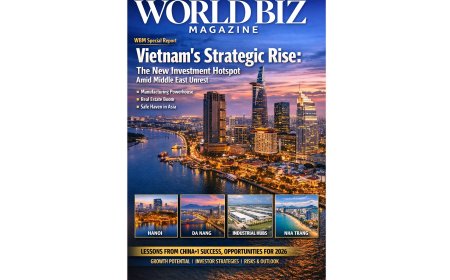
Countries like Vietnam, Indonesia, and Mexico are attracting increasing levels of foreign investment due to expanding consumer markets, competitive labor costs, and improving regulatory environments.
However, challenges such as infrastructure gaps, regulatory complexity, and political uncertainty remain in some emerging markets.
Investment Climate and Industry Growth
The investment climate directly affects industrial development across multiple sectors.
Industries that typically attract strong investment flows include:
· technology and digital services
· manufacturing and industrial production
· energy and renewable resources
· infrastructure development
· financial services
As global markets evolve, technology and green energy sectors are expected to dominate future investment flows.
Government Policies and Investment Promotion
Governments actively compete to attract global investment by implementing pro-business policies.
Common investment promotion strategies include:
· establishing special economic zones
· simplifying business registration procedures
· providing financial incentives for investors
· strengthening legal protections for foreign companies
Investment promotion agencies often play a central role in marketing national investment opportunities to global investors.
Investment Climate Challenges
Despite progress in many regions, several challenges continue to affect investment environments.
Regulatory Complexity
Complex bureaucratic procedures can slow investment projects and discourage international investors.
Geopolitical Tensions
Trade disputes, sanctions, and regional conflicts can disrupt investment flows and create uncertainty.
Infrastructure Deficits
Some developing economies still face major infrastructure gaps that limit industrial growth.
Addressing these challenges requires coordinated policy reforms and long-term economic planning.
Future Outlook for the Global Investment Climate
Looking ahead to 2035, several major trends are expected to reshape global investment environments.
First, the digital economy will continue expanding rapidly, attracting capital into artificial intelligence, cybersecurity, and advanced computing sectors.
Second, renewable energy and sustainability investments will accelerate as governments and corporations pursue climate goals.
Third, emerging markets will capture a larger share of global investment as their economies expand and regulatory frameworks improve.
Countries that invest in innovation, infrastructure, and governance reforms will likely become the next generation of global investment hubs.
World Biz Magazine Insights
The global competition for investment is intensifying. Nations that create transparent regulatory environments, modern infrastructure, and stable economic policies will attract the most international capital.
Investment climate improvements are no longer limited to economic policy they now encompass digital infrastructure, environmental sustainability, and geopolitical stability.
As global capital flows become more dynamic, countries must adapt quickly to maintain investor confidence.
Conclusion
The investment climate remains one of the most critical factors influencing global economic development. A favorable investment environment can unlock economic growth, promote industrial expansion, and strengthen international trade relationships.
For policymakers, improving the investment climate requires a comprehensive approach that balances regulatory reform, infrastructure development, financial stability, and political governance.
As the global economy continues evolving, countries that successfully build strong investment environments will be best positioned to attract the next wave of international capital and economic opportunity.
Disclaimer
The information presented in this article is intended for informational and educational purposes only. Market statistics, projections, and forecasts are based on publicly available industry data and analytical estimates at the time of publication. While every effort has been made to ensure accuracy, World Biz Magazine does not guarantee future market performance or investment outcomes. Readers should consult professional advisors before making financial or strategic decisions based on the information contained in this report. All trademarks and company names mentioned belong to their respective owners.
What's Your Reaction?
 Like
0
Like
0
 Dislike
0
Dislike
0
 Love
0
Love
0
 Funny
0
Funny
0
 Angry
0
Angry
0
 Sad
0
Sad
0
 Wow
0
Wow
0