






























































































































































The Business of Charity: Tax Saving, Power Control & Global Fraud Risks
How powerful elites use charities for tax savings, wealth control, and hidden financial networks plus how governments and media expose fraud.

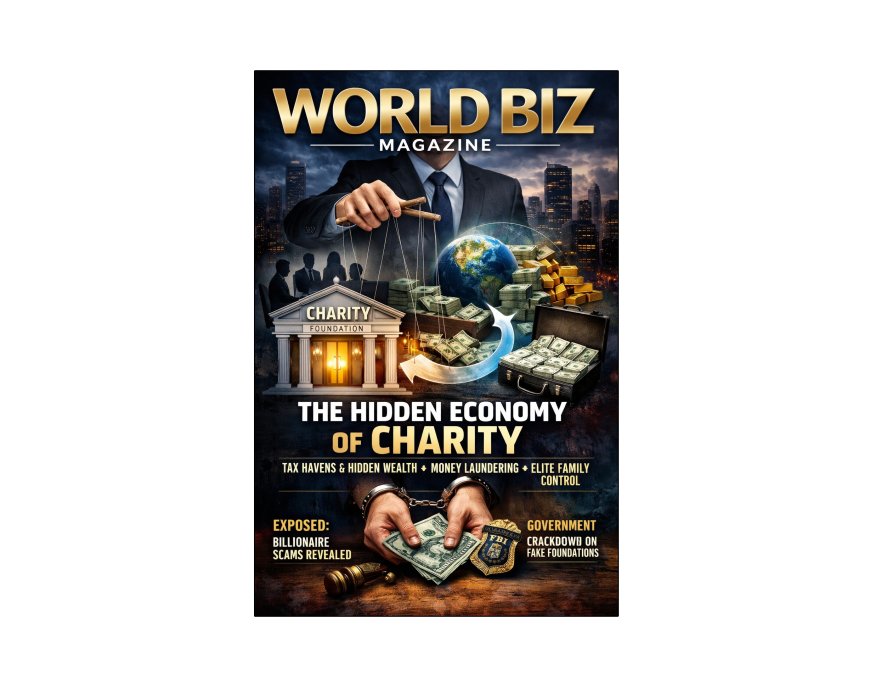
The Hidden Economy of Charity: Power, Tax Shields & Financial Manipulation
World Biz Magazine | Feature: Inside the Hidden Financial Networks of Global Charities
The Dual Face of Charity
Charity organizations are pillars of society funding healthcare, education, disaster relief, and poverty reduction. Yet behind this noble image lies a complex financial ecosystem where some powerful individuals and business elites exploit legal structures for tax optimization, wealth protection, and in extreme cases fraud and money laundering.
This World Biz Magazine deep-dive uncovers how charity structures are used legitimately and how they are abused, revealing the hidden mechanisms, major fraud cases, regulatory gaps, and how governments and media expose these networks.
Why Charity Structures Attract Wealthy Business Owners
Charitable organizations offer legitimate financial advantages, making them attractive for high-net-worth individuals:
Key Benefits (Legal Use)
- Tax deductions on donations
- Capital gains avoidance on donated assets
- Estate planning advantages
- Public image enhancement (reputation capital)
- Control over philanthropic capital allocation
However, these benefits also create loopholes for misuse.
The “Charity Control Model”: Keeping Wealth Without Owning It
A common strategy among elite business owners:
Step-by-Step Structure
- Create a charitable foundation or NGO
- Transfer assets (real estate, shares, cash) into the charity
- Appoint family members (children/spouse) as:
- Chairman
- Trustee
- Board members
- Maintain indirect control over assets
Result
- Assets are no longer “personally owned”
· But remain effectively controlled by the same family, allowing them to enjoy these benefits for a lifetime without losing control.
· Additionally, if any family member faces personal liabilities, these assets typically remain protected making it difficult for creditors to claim them or initiate legal action against the property.”
This creates a legal grey zone between philanthropy and private wealth management.
Tax Optimization vs Tax Abuse
Legal Strategy
- Donations reduce taxable income
- Foundations reinvest funds into approved activities
Abusive Practices
- Inflated donation valuations
- Fake receipts for tax deductions
- “Donation schemes” promising higher tax credits than actual contributions
Example Scheme
- Donate $1M (actual cash: $200K)
- Claim $1M tax deduction via inflated valuation
- Recover remaining funds indirectly
How Charities Are Used for Money Laundering
Charities can act as financial washing machines:
Common Laundering Techniques
1. Shell Charities
- Fake NGOs created solely to receive funds
- No real charitable activity
2. Layering Through Donations
- Criminal money split into small donations
- Reassembled as “clean funds”
3. Cross-Border Transfers
- Funds moved internationally as “aid”
- Hard to trace across jurisdictions
4. Crowdfunding Abuse
- Emotional campaigns (war, disaster, illness)
- Rapid global fundraising without verification
Charities are considered a high-risk sector for money laundering and terrorist financing due to weak oversight in some regions
Asset Shielding Through Charitable Structures
Wealthy individuals and business families often utilize charitable entities not only for philanthropy but also as part of broader wealth preservation and risk management strategies.
Common Strategic Uses
- Protect assets from taxation through charitable transfers and deductions
- Shield wealth from lawsuits or creditor claims, especially in high-risk industries
- Reduce inheritance and estate taxes by transferring ownership to nonprofit entities
- Move wealth offshore under international nonprofit or foundation structures
- Convert personal assets into protected institutional holdings
- Separate legal ownership from beneficial control
- Preserve family wealth across generations under a structured governance model
Operational Reality Behind the Structure
While these assets are legally transferred to charitable entities, the underlying control dynamics often remain concentrated.
In Practice, Assets Are:
- Legally owned by the charity, often benefiting from tax-exempt status
- Effectively controlled by insiders, such as family-appointed trustees or board members
- Managed through internal governance structures, with limited external oversight in some jurisdictions
- Strategically allocated or invested in ways that may indirectly benefit the founding family
Extended Implications
- Continuity of control: Families can maintain long-term influence over significant wealth without direct ownership
- Creditor resistance: In many cases, these structures make it significantly more difficult for creditors to pursue claims against such assets
- Legal insulation: Even when individual family members face financial liabilities, the assets held within charitable entities are often insulated from direct legal attachment
- Reputational advantage: These structures simultaneously enhance public image while securing financial interests
World Biz Magazine Insight
What appears as philanthropy on the surface can, in certain cases, function as a sophisticated financial architecture blending legal compliance with strategic asset protection.
The key distinction lies in:
- Intent (public good vs private control)
- Transparency (open reporting vs opaque governance)
- Accountability (independent oversight vs insider dominance)
Abuse of Power: Political & Elite Manipulation
Charities linked with politically exposed persons (PEPs) are particularly risky.
Documented Cases
- Public officials diverting charity funds for personal expenses
- Donations used for luxury lifestyles, weddings, travel
- Grants redirected to private institutions instead of beneficiaries
These cases highlight how influence + charity = reduced scrutiny.
Major Real-World Fraud Cases
Cancer Charity Scam
- Over $187 million misused
- Funds spent on:
- Luxury cars
- Vacations
- Salaries
Fake Disaster Charities
- Set up after natural disasters
- Use emotional narratives to collect donations
Small-Donation Retail Scams
- Businesses collect “charity” money
- Keep funds instead of donating
How Crimes Are Hidden Inside Charities
Techniques Used
- Complex ownership structures
- Offshore bank accounts
- Lack of transparency in reporting
- Weak auditing systems
- Use of intermediaries and shell entities
Key Insight
Charities rely heavily on public trust, making them easier to exploit when governance is weak
How Governments Detect Charity Abuse
Governments and regulators use:
Financial Monitoring (AML Systems)
- Track suspicious transactions
- Identify unusual donation patterns
Beneficial Ownership Checks
- Who actually controls the charity?
Audits & Compliance Reviews
- Financial statements
- Use of funds
Red Flags
- Sudden spikes in donations
- Lack of transparency
- High administrative expenses
Legal Actions & Penalties
Common Enforcement Bodies
- Tax authorities (e.g., IRS)
- Financial intelligence units (FIUs)
- Anti-fraud agencies
Penalties
- Heavy fines
- Asset seizure
- Lifetime bans from charity roles
- Imprisonment
In some jurisdictions, charity fraud is prosecuted as:
- Tax evasion
- Wire fraud
- Money laundering
Role of Media & Investigative Journalism
Media plays a crucial role in exposing charity abuse:
How Media Investigates
- Leaked financial documents
- Whistleblower testimonies
- Cross-border investigations
- Data journalism
Impact
- Public outrage
- Government investigations
- Regulatory reforms
Government Reforms & Global Measures
Key Global Framework
- FATF (Financial Action Task Force)
- Anti-Money Laundering (AML) laws
Reform Trends
- Stricter charity registration
- Transparency requirements
- Real-time financial tracking
- Digital audit systems
Despite regulations, loopholes still exist, especially in:
- Developing economies
- Online fundraising platforms
World Biz Magazine Insight
Charity organizations represent one of the most powerful intersections of finance, trust, and influence.
For ethical leaders:
Charity is a tool for impact and legacy
For unethical actors:
It becomes a tool for tax avoidance, wealth concealment, and financial crime
The real issue is not charity itself but control, transparency, and accountability.
Conclusion: Reforming Trust in the Charity Economy
Charities remain essential to global society but their misuse threatens:
- Public trust
- Donor confidence
- Social impact
The future of the sector depends on:
- Strong governance
- Transparent reporting
- Global cooperation
Without reform, charity risks becoming a parallel financial system for the elite rather than a tool for social good.
Disclaimer
This article is for educational and information purposes only. It does not accuse any specific individual or organization. While it highlights known patterns, risks, and documented cases, the majority of charities worldwide operate ethically and provide critical humanitarian services. Readers are encouraged to conduct due diligence before forming conclusions or making financial decisions.
What's Your Reaction?
 Like
1
Like
1
 Dislike
0
Dislike
0
 Love
1
Love
1
 Funny
0
Funny
0
 Angry
0
Angry
0
 Sad
0
Sad
0
 Wow
1
Wow
1