














































































































































































































Startup Legal Structure: Choosing the Right Entity for Growth & Investment
How to choose the right legal structure for your startup. Compare LLC, Corporation, and Partnership models with insights on taxation, governance, and investor readiness.

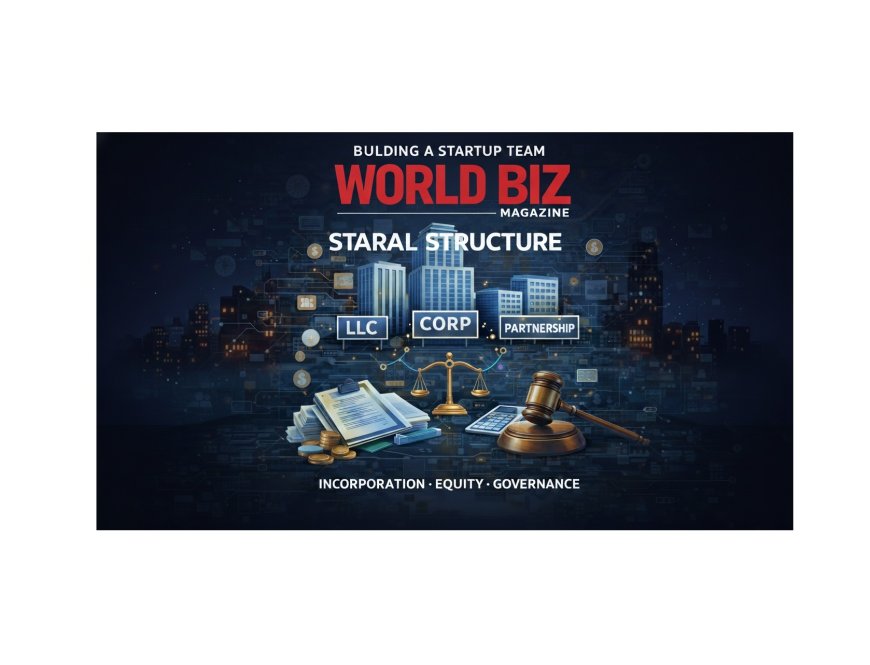
Beyond the Pitch Deck: Building a Startup Team, Choosing a Legal Structure, and Future-Proofing Your Venture
Guide to Aligning Talent, Governance, and Risk for Long-Term Success
The Three-Legged Stool of Startup Success
Let’s be honest: when you first have that brilliant idea, the last thing on your mind is paperwork. You’re thinking about the product, the problem you’re going to solve, and maybe the sleek design of your future office. It’s a thrilling, chaotic time.
But here’s a truth every seasoned founder learns, often the hard way: a startup is a three-legged stool. One leg is your product and vision. The second is your team. And the third the one that’s easy to ignore in the early days is your legal and governance structure. If that third leg is wobbly, the whole thing collapses.
We’ve all heard the stories. The high-flying startup that raised millions but imploded because the founders had a falling out over equity. The brilliant designer who left, taking the core IP with them, because there was no formal contract. The company that couldn’t close a Series A because they were structured as an LLC and the investors wouldn't touch it.
Building a startup isn’t just about coding a killer app or designing a beautiful user interface. It’s about architecting a resilient organization. And that architecture begins with a tough question: How do we structure ourselves legally to protect the team, attract the best talent, secure funding, and sleep soundly at night?
Part I: The Foundation - Why Your Legal Structure is Your Growth Architecture
Think of your legal structure not as a bureaucratic necessity, but as the architectural blueprint for a skyscraper you plan to build. You can’t just keep adding floors to a toolshed and hope it stands. At some point, you need a foundation that can handle the weight.
A startup’s legal structure dictates everything that matters:
- Liability: Can a lawsuit wipe out your personal savings, or is the business a separate shield?
- Ownership: Who really owns what? How is the pie sliced between the two founders who started in a garage and the five engineers who joined later?
- Money: How are you taxed? Can you offer stock options that actually mean something to employees? Will a venture capital firm even look at your term sheet?
- Control: Who makes the final call? The founder, a board of directors, or a group of investors?
A poor structural decision is a slow poison. It might not kill you today, but it will complicate your first funding round, trigger a massive tax bill at the worst possible time, or create a governance conflict that scuttles an acquisition. In the modern startup ecosystem, your legal structure isn't just admin; it's strategic infrastructure.
Part II: The Menu - A Global Overview of Startup Legal Structures
So, what are the options? The right choice depends on where you are, where you’re going, and who’s coming with you.
1. The Solo Act: Sole Proprietorship
This is where most tinkerers and freelancers start. It’s just you. There’s no legal separation between you and the business.
- Best for: Testing a very early idea with no partners and no plans for outside money.
- The harsh reality: You have unlimited personal liability. If your "startup" gets sued, your car, your house, and your savings are on the line. You also can’t offer equity to anyone, which makes building a real team nearly impossible. For any scalable venture, this is a dead end.
2. The Partnership: Treading Carefully
You and a friend decide to go into business together. A handshake and a dream. This is a partnership.
- The Good: It’s simple to start.
- The Bad: In a general partnership, you both share unlimited liability. If your partner makes a bad decision, you’re both on the hook. Without a detailed agreement, a dispute can tear the company apart and destroy the value you’ve both created. These are best left for professional services firms, not high-growth tech startups.
3. The Flexible Container: Limited Liability Company (LLC)
The LLC is a popular choice for many small businesses, and for good reason. It’s like a hybrid. It gives you the liability protection of a corporation (your personal assets are safe) with the tax flexibility of a partnership (profits pass through to your personal taxes, avoiding the "double tax").
- Why founders like it: It’s simpler to manage than a full-blown corporation. It’s great for bootstrapped startups, real estate ventures, and service-based businesses with a few owners.
- The Investor Catch: Here’s the rub for high-growth startups. Most venture capital firms in the U.S. hate investing in LLCs. The tax structure gets complicated for them, and issuing preferred shares—their preferred investment vehicle is clunky. If your goal is to raise serious venture capital, an LLC is often just a stepping stone.
4. The Gold Standard for Scale: The Corporation (C-Corp / Private Limited Company)
If you’re dreaming of Silicon Valley, an IPO, or a massive acquisition, this is your home. The corporation is the structure the entire global venture capital system is built upon.
- Why it wins: It has a clear, legally established hierarchy: shareholders own the company, a board of directors oversees the big picture, and officers (CEO, CTO) run the day-to-day. This structure is designed for outside investment.
- The Superpowers: It allows for the creation of different classes of stock (Common for founders and employees, Preferred for investors) and, most importantly, an Employee Stock Option Pool (ESOP). This is the single most powerful tool for attracting top-tier design, development, and marketing talent when you can’t pay Google salaries.
- The Trade-off: It comes with more compliance, more paperwork, and in some places like the U.S., the potential for "double taxation" (the company pays tax on its profits, and then shareholders pay tax again on dividends). But for a venture-backed startup, the fundraising firepower is worth the complexity.
Part III: Where in the World? A Quick Jurisdictional Guide
Your legal home also has a zip code.
- United States: The undisputed king is the Delaware C-Corp. Even if you operate in California or New York, you might incorporate in Delaware. Its court system is highly specialized in corporate law, and every venture capitalist in the world understands its rules. It’s the universal language of American venture capital.
- United Kingdom: The Private Limited Company (Ltd) is the standard. It’s startup-friendly and offers fantastic tax incentives for early investors through programs like SEIS and EIS, which can be a huge magnet for angel funding.
- Singapore: The go-to hub for Southeast Asia. A Private Limited Company (Pte Ltd) here offers a rock-solid regulatory reputation, great tax schemes, and ease of doing business internationally.
- United Arab Emirates: With hubs like Dubai, startups can choose between Mainland companies (for operating directly in the local market) and Free Zone companies (offering 100% foreign ownership and tax benefits, perfect for regional headquarters).
Part IV: The Heartbeat - Building Your Multidisciplinary Team
A structure is just a shell until you fill it with people. A great legal structure enables you to build a great team, and a great team is what makes the structure valuable.
Building a startup team isn't about cloning yourself. It’s about finding people who fill the gaps in your own skillset. The modern startup requires a symphony of talents:
- The Visionaries (Founders): The ones who set the course, define the product strategy, and sell the dream to investors and early employees.
- The Builders (Design & Development): This is the creative and technical engine. The design team crafts the user experience (UI/UX), the brand identity, and ensures the product isn't just functional, but lovable. The tech team chooses the architecture, writes the code, and ensures the platform can scale from ten users to ten million.
- The Backbone (Operations): The unsung heroes who handle HR, finance, legal compliance, and vendor management. They build the processes that keep the chaos at bay.
- The Storytellers (Marketing & Growth): The team that figures out how to get the product in front of users, acquire customers cost-effectively, and build a brand that resonates.
The challenge is getting all these incredibly different personality types the visionary, the coder, the creative, the operator to pull in the same direction. That’s where your legal structure becomes a team-building tool.
A corporate structure allows you to grant stock options to that lead designer or that first marketing hire. Suddenly, they aren't just employees; they're owners. That piece of paper aligns their financial future with yours. It turns a job into a mission.
Part V: The Architecture of Incentives - Equity, Vesting, and Agreements
This is where the legal blueprint meets the human element.
- Founder Equity: How do you split the pie? A 50/50 split between two founders might feel fair, but what happens if one stops working after six months? This is why vesting is crucial. The standard is a 4-year vesting schedule with a 1-year cliff. This means you earn your shares over time. If you leave in the first year, you get nothing (the cliff). If you leave after two years, you keep half your shares. It protects the company from someone who quits early but still wants to own a huge chunk.
- Employee Stock Option Pools (ESOPs): Before you raise money from VCs, they will often ask you to create an ESOP typically reserving 10-20% of the company's shares for future employees. This pool is your war chest for recruiting. It lets you say to a brilliant developer, "We can't pay you a Meta salary, but we can give you a real piece of this company."
- Investor Terms: When investors come in, they buy Preferred Shares. These shares often come with special rights: liquidation preferences (they get their money back first if the company is sold), anti-dilution protection (protecting them if the company raises money at a lower valuation later), and board seats. A good legal structure makes this complex dance predictable and fair.
Part VI: The Unseen Enemy - Risk Identification & Mitigation
With a team and a legal structure, you’ve built a machine. Now you have to protect it from breaking down. Startups are inherently risky, but the biggest risks aren’t always the competitor down the street; they’re the ones hiding in your own basement.
Let’s look at the four biggest risk categories and how to mitigate them:
1. Team Risk (The Human Factor)
- The Problem: Founders fall out. Key employees get burned out and leave. A brilliant designer takes your core intellectual property to a competitor.
- Mitigation: This is 100% solved by paperwork. Founder Agreements signed on day one. Employment Contracts that clearly define roles, responsibilities, and grounds for termination. Intellectual Property Assignment Agreements that legally confirm anything created for the company belongs to the company. It feels overly formal when it’s just three friends in a room, but it’s essential insurance.
2. Operational Risk (The Process Factor)
- The Problem: Your tech stack fails on launch day. Your supply chain gets disrupted. A communication breakdown between the design and development teams leads to a delayed product release.
- Mitigation: This is about building a culture of process. Adopting collaborative tools, holding regular stand-up meetings, and defining clear lines of reporting. As you scale, your legal governance structure (like forming an audit committee) will force you to create these processes.
3. Financial Risk (The Cash Factor)
- The Problem: You run out of money. Your burn rate is too high. A customer doesn't pay a massive invoice.
- Mitigation: This is where a strong board of directors, mandated by your corporate structure, can help. They provide oversight on financial planning and hold management accountable for key performance indicators.
4. Legal & Regulatory Risk (The Compliance Factor)
- The Problem: You accidentally violate securities laws while raising money from friends and family. You misclassify an intern as a contractor and get hit with a labor dispute. You expand to Europe without considering GDPR.
- Mitigation: This is why you pay for good legal counsel. A startup-specialized lawyer isn't a cost; they are a guide who helps you navigate the minefield.
Quick Recap
Building a successful startup isn’t just about having a great idea, it’s about building the right structure and the right team around that idea.
At the heart of every strong startup is a multidisciplinary team. Founders set the vision, define the product direction, and manage investor relationships. Designers shape the user experience and brand identity. The tech team builds and scales the platform. Operations ensures the business runs smoothly across HR, finance, and compliance. Meanwhile, marketing and growth teams drive customer acquisition and market visibility.
But assembling a team isn’t enough. Startups must actively manage team-related risks. Skill gaps can slow product development, so hiring complementary talent and investing in training is essential. Misaligned incentives often create internal friction structured stock options, profit sharing, and clear KPIs help keep everyone moving in the same direction. Strong communication systems, collaborative tools, and regular check-ins reduce operational breakdowns. Clear employment contracts and properly assigned intellectual property rights protect the company legally from day one.
Legal structure also plays a strategic role in team building. Corporations, for example, are better suited for formal ESOP programs and venture capital funding, while LLCs offer flexibility in ownership arrangements. The right structure protects founders from personal liability, clarifies governance rules, and increases investor confidence by establishing accountability and decision-making frameworks.
Startups also face broader business risks. Operational failures, cash flow shortages, regulatory non-compliance, intense competition, and internal team conflict are all common threats. Mitigation requires proactive planning: formal agreements, defined roles, performance metrics, insurance coverage, and regular financial and operational audits. A risk-aware culture is not optional, it’s a survival strategy.
When comparing legal structures, sole proprietorships and partnerships offer simplicity but expose founders to higher liability and limited investor appeal. LLCs provide liability protection with moderate flexibility. Corporations, while more expensive and compliance-heavy, offer the strongest investor readiness and scalability potential.
Ultimately, long-term startup success depends on alignment, alignment between legal structure, funding strategy, governance, team incentives, and growth objectives. Establish agreements early, define responsibilities clearly, build a balanced team, and embed risk management into the company’s foundation.
Strong structure and strong teams don’t just reduce risk, they create the conditions for sustainable growth.
Conclusion
Building a startup team is more than hiring talent, it requires a strategic blend of legal structure, team design, and risk management. Corporations remain the preferred structure for scalable startups due to investor familiarity and equity flexibility, while LLCs are better for early-stage ventures prioritizing flexibility.
Integrating team structure, legal frameworks, and risk mitigation strategies from the beginning ensures startups are resilient, investor-ready, and positioned for long-term growth.
Disclaimer:
This article is published for informational and educational purposes only. It does not constitute legal, financial, or tax advice. Laws and regulations vary by jurisdiction and may change over time. Founders and business owners should consult qualified legal, tax, and corporate advisors before making decisions regarding company formation, restructuring, equity issuance, or governance models. World Biz Magazine assumes no liability for decisions made based on the information presented herein.
What's Your Reaction?
 Like
0
Like
0
 Dislike
0
Dislike
0
 Love
0
Love
0
 Funny
0
Funny
0
 Angry
0
Angry
0
 Sad
0
Sad
0
 Wow
0
Wow
0