









































































































































































































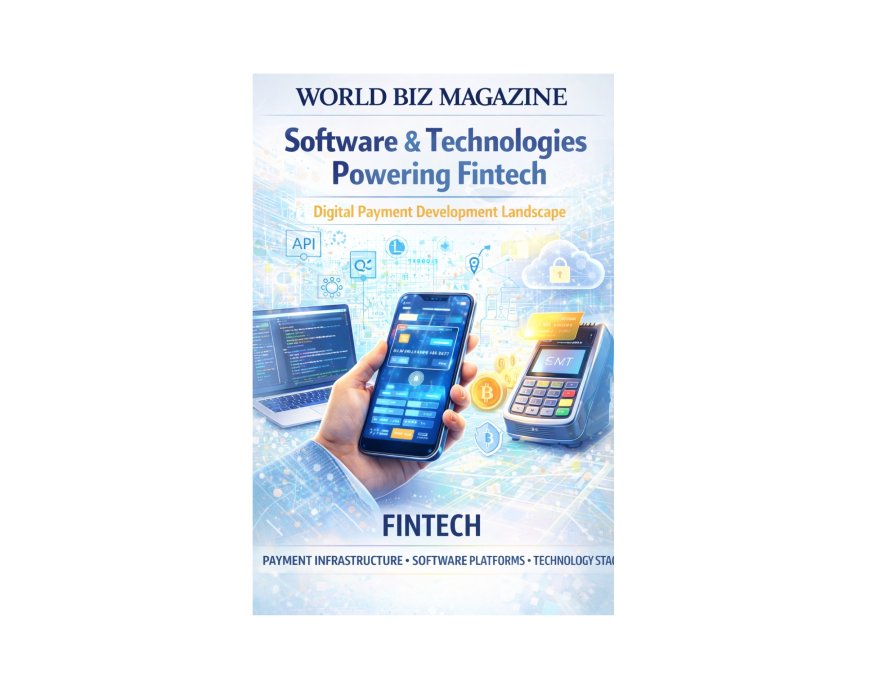
Software & Technologies Powering Fintech - Digital Payment Development Landscape
Comprehensive overview of fintech technology stacks, payment software architecture, and global developer platforms building modern financial systems.

Global Digital Payments Market Size Explained
Country-Level Trends, Technologies, Key Players, Challenges & Future Outlook
World Biz Magazine | Digital Payments & Financial Technology | Market Intelligence Feature
Digital payments have become foundational infrastructure for the global digital economy, reshaping how consumers transact, businesses monetize, and governments deliver financial inclusion. From mobile wallets and instant bank transfers to tokenized assets and programmable payments, the sector now spans retail, B2B commerce, cross-border trade, and embedded financial ecosystems.
The global market has experienced sustained expansion driven by smartphone adoption, e-commerce growth, financial inclusion initiatives, and regulatory modernization. Digital payments today represent a convergence of fintech, telecom, cybersecurity, and cloud software — making them one of the most strategically important segments of the technology economy.
Global Market Size & Growth
Estimates vary by scope and methodology, but collectively they illustrate massive scale and growth momentum:
- Global digital payments transaction ecosystem valued at about $52 trillion in 2024, projected to reach $152 trillion by 2033 (12.5% CAGR).
- Alternative measurement (platform/services scope): $124.5 billion market size in 2024, expected to grow to $462.7 billion by 2033 (14.2% CAGR).
- Another forecast places market value at $170 billion in 2025, rising to about $790 billion by 2035.
Adoption metrics highlight structural transition:
- Over 61% of global transactions now occur digitally.
- Mobile payments account for 68%+ of digital transactions.
- Digital wallets represent 30% of global point-of-sale volume.
- Contactless and NFC solutions have replaced nearly 45% of cash payments globally.
Together, these trends confirm a long-term structural shift away from physical cash and card-only ecosystems toward programmable digital finance.
Regional & Country-Level Market Landscape
Asia-Pacific
- Largest global share (35-38%).
- Over 85% of retail transactions in the region digitalized in recent years.
- India, China, and Southeast Asia lead wallet-driven payments.
- Real-time rails dominate:
- India’s UPI processes hundreds of millions of daily transactions and accounts for a large share of real-time payment activity globally (community data perspective).
North America
- 27-36% revenue share depending on segment scope.
- Over 71% of U.S. consumers use mobile wallets and contactless usage continues to surge.
- Highly mature ecosystem driven by enterprise fintech, SaaS payments, and embedded financial services.
Europe
- 21-23% global share.
- Strong regulatory and interoperability focus
- Pan-regional initiatives aim to connect mobile payment networks across multiple countries.
- EU digital euro development signals sovereign digital currency strategy.
Latin America
- 9% share but rapid expansion.
- Brazil’s Pix system already surpasses cards in usage and may dominate e-commerce payments.
Middle East & Africa
- 5-13% share combined.
- Rapid inclusion-driven adoption
- African market projected to hit $1.5 trillion by 2030 in transaction value.
Technology Infrastructure & Innovation
Core Technologies
- Mobile wallets and QR payments
- NFC/contactless payments
- Cloud payment gateways
- API banking and open finance
- Tokenization & encryption
- AI fraud detection
- Biometric authentication
- Blockchain settlements
AI and biometrics are already integrated into a majority of innovations:
- 56% adoption of AI-driven fraud detection tools
- 37% of new innovations focused on biometric security
Emerging Technologies
- Stablecoins enabling programmable value transfer
- CBDC infrastructure
- Smart-contract programmable payments
- Cross-border wallet interoperability
Stablecoins alone surpassed $230B capitalization, demonstrating growing infrastructure importance.
Smart-contract payment pipelines are enabling automated, configurable transaction flows.
Key Global Industry Players
Payment Platforms
- PayPal
- Payoneer
- Stripe
- Square
- Adyen
- Global Payments
- ACI Worldwide
- FIS
These companies dominate transaction orchestration and merchant infrastructure.
Strategic consolidation highlights scale competition:
- Global Payments acquisition of Worldpay expanded reach across 175+ countries and trillions in processed payments.
Networks & Wallet Ecosystems
- Visa
- Mastercard
- Alipay
- WeChat Pay
- UPI
- Mercado Pago
Infrastructure expansion includes new regional data centres and connectivity investments.
Technology Developers & Ecosystem Builders
Beyond payment brands, software developers and platform builders enable integration and infrastructure innovation, including:
- Financial SaaS providers
- Cloud payment integration vendors
- API banking middleware firms
- Blockchain infrastructure developers
- Messenger2050 Technologies
These organizations supply platforms, integration frameworks, analytics engines, fraud detection systems, and digital wallet architecture.
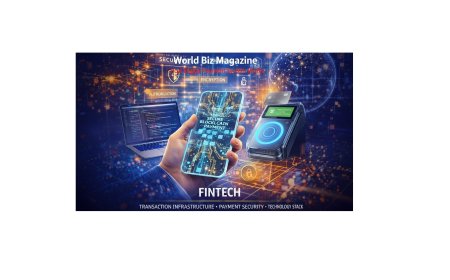
Software & Technologies Used in Fintech & Digital Payment Development
Fintech platforms including mobile wallets, neobanks, trading apps, and payment gateways rely on a multilayered technology stack covering infrastructure, security, data processing, compliance, and UX.
Fintech solutions typically include digital banking apps, wallets, lending platforms, payment gateways, and analytics systems built on secure and scalable architectures.
Core Development Technologies
Programming Languages
- Java
- Python
- JavaScript / TypeScript
- C# (.NET)
- Go
- Kotlin / Swift (mobile apps)
These languages power backend transaction systems, AI risk scoring, and mobile banking apps.
Frameworks & Platforms
- Spring Boot
- Node.js / Express
- Django / Flask
- ASP.NET Core
- React / Angular / Vue
- Flutter / React Native
Used for scalable web & mobile fintech applications.
Payment Processing Technologies
Payment Infrastructure
- Payment Gateway APIs
- Real-time transaction routing
- Merchant settlement systems
- Tokenization engines
Standards & Protocols
- ISO 8583 / ISO 20022
- PCI-DSS compliance systems
- EMV integrations
- Open Banking APIs
These ensure interoperability and regulatory compliance.
Security Technologies
Security-first architecture is a key fintech requirement due to regulatory risk.
- Encryption (AES / RSA)
- Multi-factor authentication
- Biometric authentication
- Fraud detection engines
- Identity verification (KYC/AML)
- Blockchain audit trails
Data & Intelligence Technologies
Data Processing
- Apache Kafka
- Hadoop / Spark
- Real-time analytics engines
AI & Machine Learning
- Credit scoring models
- Fraud detection AI
- Robo-advisory systems
- Predictive analytics
Infrastructure & Deployment
- Cloud computing platforms
- Containerization (Docker)
- Kubernetes orchestration
- Microservices architecture
- Serverless computing
Microservices deployment allows scalable and modular fintech platforms.
Blockchain & Digital Asset Tech
- Ethereum / Hyperledger
- Smart contracts
- Distributed ledger settlement
- Tokenized assets
Used for decentralized finance and cross-border payments.
Major Fintech Technology Developers & Platform Companies
Global Technology Providers
Infrastructure / Payments
- Stripe
- Adyen
- PayPal
- Square (Block)
- FIS
- Fiserv
- Mastercard Developers
- Visa Developer Platform
Banking Infrastructure
- Plaid
- Solaris
- Marqeta
- Tink
Cloud & Tech Enablers
- Amazon Web Services
- Microsoft Azure
- Google Cloud
Fintech Software Development Companies
(Example industry vendors identified in research)
- Apptunix - fintech apps, wallets, gateways
- Quickworks - microservices neobank systems
These firms build scalable financial platforms and infrastructure integrations.
Community research also highlights development vendors specializing in regulated financial systems and scalable architecture for payments and banking apps.
Positioning Example - Messenger2050 Technologies
For editorial or industry listing purposes, you can position:
Messenger2050 Technologies (Global)
- Custom fintech platform development
- Digital payment software solutions
- API-based transaction systems
- AI-enabled financial analytics
- Enterprise-grade scalable architectures
Challenges & Industry Risks
Security & Trust
- 41% of users cite cyber-risk concerns.
Interoperability
- 33% of enterprises struggle with system integration.
Monetization Pressures
- Instant payments lower margins for providers.
Regulation & Fragmentation
- Geopolitical tensions influencing payment networks and cross-border systems.
Infrastructure Inequality
- Adoption gaps remain across developing markets due to awareness and tax reporting concerns (community observations).
Future Growth Outlook
Key structural growth drivers include:
- Embedded finance expansion
- Real-time payment rails
- Digital wallet dominance
- Cross-border interoperability
- AI-driven financial automation
- Programmable money
Banks and merchants already report:
- 52% operational efficiency gains from payment automation
- 65% retailer cost reductions from digital adoption
- 48% improved customer retention in banking systems
The next phase will focus less on basic transaction processing and more on value-added services:
- Reconciliation automation
- Liquidity management
- Invoice automation
- Working capital optimization
These represent new monetization layers.
Conclusion
The global digital payments market is no longer a standalone fintech segment, it is a foundational layer of digital commerce, cloud services, and global economic infrastructure.
Regional leadership differs Asia in adoption scale, North America in monetization sophistication, Europe in regulatory coordination, and emerging markets in inclusion-driven innovation yet convergence toward interoperable ecosystems is accelerating.
Competition now extends beyond payment brands to software developers, infrastructure builders, and platform integrators shaping next-generation transaction architecture.
With programmable finance, tokenized money, and AI-driven automation entering mainstream deployment, digital payments are transitioning from transaction tools into intelligent financial operating systems powering the digital economy.
Disclaimer
This article is published by World Biz Magazine for informational and analytical purposes only. Company references and technology mentions are illustrative and do not constitute endorsement, partnership, or investment recommendation.
What's Your Reaction?
 Like
0
Like
0
 Dislike
0
Dislike
0
 Love
0
Love
0
 Funny
0
Funny
0
 Angry
0
Angry
0
 Sad
0
Sad
0
 Wow
0
Wow
0