




































































































































































Fund Management Business Models: How Global Investment Firms Operate
Global fund management business models, profiles of top companies like BlackRock, Vanguard, Fidelity, and product offerings including ETFs, mutual funds, model portfolios, and alternative strategies.


Inside Fund Management: Business Models, Products & Industry Leaders
World Biz Magazine | Global Finance & Investment Strategies
Understanding the strategies, structures, and products that define modern fund management.
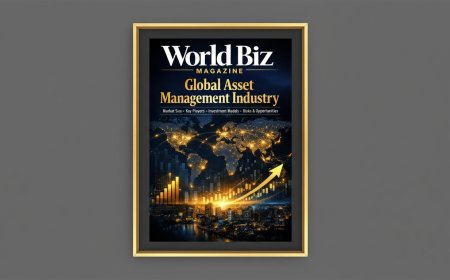
In today’s interconnected financial ecosystem, the fund management industry a core segment of global asset management orchestrates trillions of dollars on behalf of individuals, institutions, and sovereign entities. Fund managers operate at the nexus of investor capital and financial markets, deploying strategic business models and diversified products to meet varied investment goals. This article explores the fund management business models, the leading companies shaping the sector, and a detailed look at their product portfolios and strategic focus.
Understanding Fund Management Business Models
Fund management firms generate value by pooling investor capital and managing it across asset classes, guided by specific strategies and risk profiles. Key business models include:
Active Management
In this model, fund managers actively select securities (stocks, bonds, commodities) aiming to outperform market benchmarks through research, timing, and risk analysis. This approach often commands higher fees due to the expertise and resources involved.
Passive Management
Passive fund managers aim to replicate the performance of a benchmark index (e.g., S&P 500) by matching its holdings, minimizing trading, and lowering costs. Exchange-traded funds (ETFs) and index funds are popular vehicles here.
Fiduciary and Outsourced Chief Investment Officer (OCIO)
Fiduciary models involve asset owners outsourcing investment decisions and risk oversight to a third party, often for large institutional mandates like pension funds.
Alternatives & Specialized Strategies
Some firms focus on hedge funds, private equity, real estate, infrastructure, or credit markets. These strategies are typically less correlated with public markets and can offer diversification.
Multi-Asset and Thematic Investment
Combining different asset classes (equities, bonds, commodities) or focusing on macro themes (like technology, ESG, or demographic shifts) allows firms to tailor solutions to client goals and risk tolerances.
Top Fund Management Firms & Their Business Models
Below is a snapshot of major global players and how they structure their fund management offerings:
BlackRock, Inc.
Overview: BlackRock is the world’s largest asset manager with over $13.5 trillion of assets under management globally.
Business Model:
BlackRock combines active and passive management across public and private markets. Its revenue is diversified across advisory fees, management fees, performance fees, technology services, and securities lending an integrated approach that expands beyond classic fund management.
Product Portfolio:
· iShares ETFs: The backbone of its passive investing suite, with a comprehensive ecosystem covering equity, fixed income, commodities, and thematic exposures.
· Mutual Funds: Targeted active and blended strategies for retail and institutional investors.
· Model Portfolios & SMA Solutions: Customizable portfolios combining ETFs, mutual funds, and alternatives for tailored investment goals.
· Alternatives & Private Markets: Infrastructure, private credit, real assets, and hedge strategies including newly developed active ETFs and private market solutions.
Strategic Focus: BlackRock’s “BlackRock 3.0” prioritizes private assets and technology-enabled services, such as risk analytics platforms and AI-driven investment tools, positioning itself as a comprehensive financial services provider.
The Vanguard Group
Overview: Vanguard manages roughly $12 trillion globally and is famed for its low-cost, investor-centric model.
Business Model:
Vanguard is structured as a mutual ownership company, where products are owned by the investors themselves, enabling exceptionally low fees. Its philosophy centers on long-term, passive investing with broad index exposure.
Product Portfolio:
· Index Mutual Funds: Benchmarks across global equity and bond markets.
· ETFs: Cost-efficient, diversified passive products with broad global exposure.
· Brokerage & Advisory: Complementary services that help investors plan, allocate, and manage assets.
Fidelity Investments
Overview: A top global fund manager with multi-trillion AUM, Fidelity blends traditional investing with innovation.
Business Model:
Fidelity operates a hybrid model running both actively managed funds and competitive passive products such as ETFs. Its strong research capability powers equity and fixed-income performance, while its scale supports product innovation.
Product Portfolio:
· Mutual Funds: A core suite across equities, bonds, and multi-asset classes.
· ETFs & Model Portfolios: Including new all-ETF model portfolios for advisors.
· Managed Accounts & Alternatives: Tailored solutions for high-net-worth and institutional clients.
AllianceBernstein (AB)
Overview: A major U.S. asset manager serving institutional and retail investors globally.
Business Model:
AB integrates active investment research with wealth management solutions, blending tactical asset allocation with top-down insights.
Product Portfolio:
· Active equity and fixed-income funds.
· Research-driven allocation strategies.
· Customized solutions for institutional investors.
First Sentier Group
Overview: Australian global investment manager with diverse strategies.
Business Model:
Decentralized investment teams operate autonomously under a shared framework of disciplined research and responsible investment.
Products:
· Global and regional equities.
· Fixed income and cash management.
· Infrastructure, property, and alternative credit.
Insight Investment
Overview: UK-based firm with strengths in liability-driven and multi-asset strategies.
Business Model:
Focuses on integrated risk management and tailored solutions, especially for institutional clients with complex liabilities (like pension funds).
Products:
· Fixed income and liability-driven solutions.
· Absolute return and multi-asset funds.
· Cash management vehicles.
Product Types Across Fund Managers
Across the global industry, fund manager products generally fall into several categories:
Mutual Funds
Collective investment schemes where fund managers actively or passively allocate investor money to diversified portfolios. Often used for long-term goals like retirement and education planning.
Exchange-Traded Funds (ETFs)
Tradable on exchanges like stocks, ETFs offer low-cost access to broad or thematic markets with intraday liquidity fueling rapid growth in the industry.
Model Portfolios & Managed Accounts
Professionally curated multi-asset portfolios or separately managed accounts (SMAs) that tailor portfolios to client risk profiles.
Alternatives
Including private equity, hedge funds, real estate, infrastructure, and credit strategies typically offered to institutional investors or high-net-worth clients.
Liability-Driven Investments (LDI)
Targeted at institutional clients (especially pension funds) to match asset duration with long-term liabilities.
Business Model Trends & Industry Dynamics
1. Fee Compression: Passive strategies and ETFs have driven industry-wide fee reductions.
2. Technology Integration: AI, data analytics, and risk platforms are enhancing investment decision-making.
3. Private Markets Expansion: Managers are shifting toward alternatives with higher fee potential.
4. Customization Demand: Advisors and wealth platforms increasingly seek tailored model portfolios.
Conclusion
Fund management business models are no longer defined solely by active vs. passive investing. Today’s leading firms combine diversified strategies blending traditional funds with ETFs, alternatives, fiduciary services, and technology-enabled solutions. This structural evolution reflects both investor demand for cost efficiency and performance and the industry’s drive toward innovation and scale. Understanding these models is vital for investors, wealth professionals, and policymakers navigating a landscape where capital aggregation shapes the global economy.
Disclaimer
This article is for informational and editorial purposes only and does not constitute financial advice. Investors should consult professional advisors before making investment decisions.
What's Your Reaction?
 Like
0
Like
0
 Dislike
0
Dislike
0
 Love
0
Love
0
 Funny
0
Funny
0
 Angry
0
Angry
0
 Sad
0
Sad
0
 Wow
0
Wow
0