
















































































































































































































Antitrust in the Digital Age: Regulating Tech Giants and Platform Dominance
A detailed guide to antitrust challenges faced by tech platforms, including data dominance and market control.

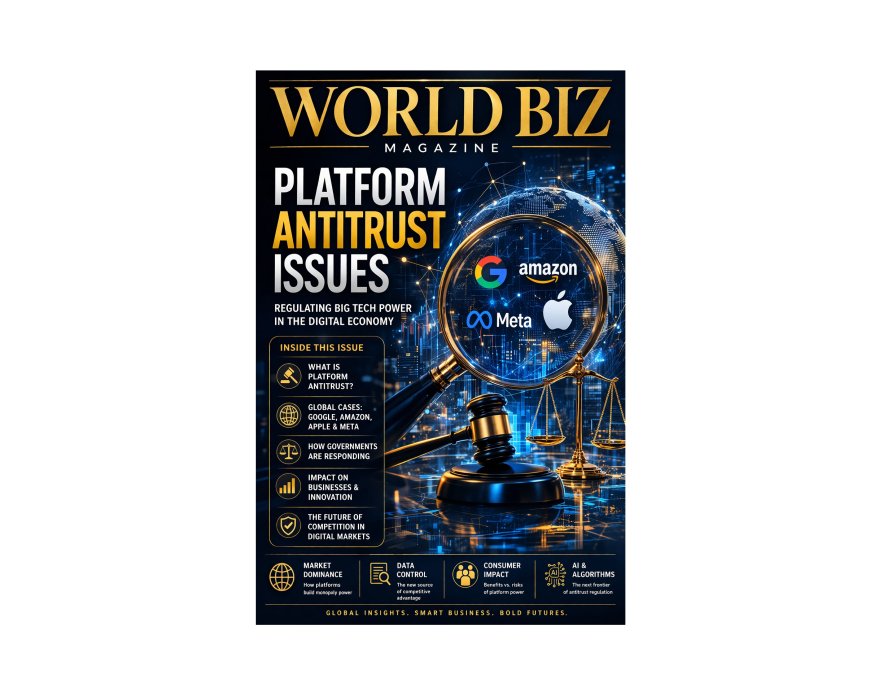
Platform Antitrust Issues
Regulating Big Tech Power in the Age of Digital Dominance
World Biz Magazine Editorial Board
“World Biz Magazine delivers authoritative global coverage on competition law, digital markets, economic policy, and emerging technologies. With a strong focus on investigative analysis and strategic insight, the publication serves business leaders, policymakers, investors, and entrepreneurs navigating complex global market dynamics”
This article is part of World Biz Magazine’s Digital Economy & Regulation Series, examining how governments and regulatory bodies are redefining competition in an era dominated by platform-based business models and data-driven ecosystems.
The New Monopoly Era
In the digital economy, a handful of technology giants have reshaped how the world communicates, shops, searches, and consumes content. Companies like Google, Amazon, Apple, and Meta have built ecosystems so powerful that they influence entire markets.
This dominance has triggered a global debate:
Are digital platforms enabling innovation or restricting competition?
What Are Platform Antitrust Issues?
Platform antitrust issues refer to concerns that large digital platforms:
- Abuse market dominance
- Restrict fair competition
- Control user data and access
Unlike traditional monopolies, digital platforms benefit from:
- Network effects
- Data accumulation
- Ecosystem lock-in
This creates “winner-takes-most” markets.
Why Big Tech Faces Antitrust Scrutiny
Market Dominance & Monopolistic Behavior
Platforms dominate key sectors:
- Search (Google)
- E-commerce (Amazon)
- Mobile ecosystems (Apple)
- Social media (Meta)
This dominance allows:
- Price control
- Market influence
- Competitor suppression
Data Control as Competitive Advantage
Data is the new oil.
Big tech firms:
- Collect massive user data
- Use it to optimize services
- Block competitors from accessing similar data
This creates data monopolies.
Self-Preferencing Practices
Platforms may favor their own services:
- Amazon promoting its private-label products
- Apple prioritizing its apps in the App Store
Acquisition of Competitors
Large firms often acquire startups to:
- Eliminate competition
- Expand dominance
Example:
- Meta acquiring Instagram and WhatsApp
Key Global Antitrust Cases
United States: Big Tech Under Investigation
Authorities have launched major cases against:
- Google (search dominance)
- Amazon (marketplace practices)
Focus areas:
- Monopoly power
- Anti-competitive conduct
European Union: Strict Regulatory Approach
The European Union has led global enforcement with:
- Heavy fines
- Data protection laws
- Digital Markets Act (DMA)
Platforms must ensure:
- Fair competition
- Open ecosystems
China: Platform Crackdown
China has taken aggressive action against:
- Alibaba Group
- Other tech giants
Focus:
- Market fairness
- Financial risk control
Key Antitrust Concerns in Digital Platforms
Network Effects
The more users a platform has:
- The more valuable it becomes
- The harder it is for competitors to enter
Ecosystem Lock-In
Users are locked into ecosystems:
- Apple’s iOS ecosystem
- Google’s Android + services
Switching becomes difficult.
Barriers to Entry
New startups face:
- High customer acquisition costs
- Limited access to data
- Platform dependency
Algorithmic Control
Platforms control:
- Search rankings
- Content visibility
- Pricing mechanisms
Algorithms can shape market outcomes.
Impact on Businesses and Startups
Challenges
- Limited visibility on dominant platforms
- Dependency on platform rules
- Risk of being copied or acquired
Opportunities
- Niche innovation
- Alternative platforms
- Regulatory support
Impact on Consumers
Benefits
- Convenience
- Integrated services
- Lower prices (in some cases)
Risks
- Reduced competition
- Data privacy concerns
- Limited choices
Regulatory Solutions Being Proposed
Breaking Up Big Tech
Separating:
- Platform operations
- Business units
Data Portability
Allow users to:
- Transfer data across platforms
- Reduce lock-in
Algorithm Transparency
Require companies to:
- Explain ranking systems
- Ensure fairness
Anti-Self-Preferencing Rules
Prevent platforms from:
- Favoring their own products
The Role of AI and Future Challenges
With AI integration, antitrust concerns are evolving:
- AI-driven dominance
- Data concentration
- Algorithmic bias
Future regulation will focus on AI governance and digital competition.
World Biz Magazine Insight
At World Biz Magazine, our analysis highlights:
“The next era of competition will not be defined by who owns the market but by who controls the platform.”
Antitrust regulation is shifting from:
- Traditional monopolies
to - Digital ecosystem control
Conclusion: Balancing Innovation and Fair Competition
Platform companies have revolutionized the global economy but their dominance raises critical challenges.
The future depends on:
- Smart regulation
- Fair competition
- Continued innovation
The goal is not to stop Big Tech but to ensure a level playing field for all.
Final Thought
“In the digital age, competition is no longer just about products it’s about platforms, data, and control.”
Disclaimer
The content of this article is provided for informational and educational purposes only and does not constitute legal, regulatory, or financial advice. Antitrust laws and competition policies vary significantly across jurisdictions and are subject to ongoing changes, interpretations, and enforcement actions.
Readers are advised to consult qualified legal counsel, regulatory experts, or policy advisors before making decisions related to compliance, competition strategy, or platform operations.
World Biz Magazine and its associates, do not assume liability for any actions taken based on the information provided. While every effort is made to ensure accuracy and relevance, no guarantees are made regarding completeness or future regulatory developments.
What's Your Reaction?
 Like
0
Like
0
 Dislike
0
Dislike
0
 Love
0
Love
0
 Funny
0
Funny
0
 Angry
0
Angry
0
 Sad
0
Sad
0
 Wow
0
Wow
0