






































































































































































































Real Estate Listing Platforms: Commission vs Subscription Revenue Models
A detailed World Biz Magazine analysis of commission vs subscription business models in property listing platforms and digital marketplaces.


Commission-Based vs Subscription-Based Listing Platforms
Understanding the Revenue Models Powering Digital Property Marketplaces and the Future of Real Estate Platform Economics
World Biz Magazine | Global Real Estate Intelligence | PropTech Innovation | Platform Economics | Digital Property Market Analysis
The Business Models Behind Modern Property Platforms
As digital transformation continues reshaping the global real estate industry, property listing platforms have become critical gateways connecting buyers, sellers, renters, developers, brokers, and investors. These platforms have dramatically improved market accessibility, transparency, and efficiency by allowing users to discover properties, compare opportunities, conduct research, and initiate transactions online.
While users often focus on the properties displayed on these platforms, the underlying business models powering these digital ecosystems are equally important. The financial structure of a property platform directly influences its growth strategy, user experience, listing quality, profitability, and long-term sustainability.
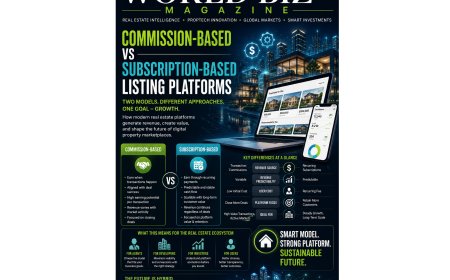
Among the most common revenue structures in the real estate technology industry are the Commission-Based Model and the Subscription-Based Model. Both approaches generate income for platform operators, but they differ significantly in how revenue is earned, how customers are charged, and how platform incentives are aligned.
Commission-based platforms earn revenue when transactions occur, while subscription-based platforms generate recurring income through ongoing membership or listing fees. Each model offers unique advantages and challenges for platform owners, property professionals, developers, and consumers.
As competition intensifies within the PropTech sector, understanding these business models has become increasingly important for investors, entrepreneurs, developers, brokers, and technology companies seeking to navigate the evolving digital property landscape.
The debate between commission-based and subscription-based platforms represents more than a pricing decision it reflects fundamentally different approaches to platform economics, scalability, customer acquisition, and long-term value creation.
The Evolution of Property Listing Platforms
Traditionally, real estate marketing relied heavily on:
- Newspaper advertisements
- Physical offices
- Local brokers
- Printed catalogs
Digital technology transformed the process by enabling:
- Online property listings
- Search filters
- Virtual tours
- Mobile applications
- Data analytics
As digital platforms expanded, operators developed various monetization models to sustain growth and profitability.
Commission and subscription systems emerged as two of the industry's dominant approaches.
What Is a Commission-Based Listing Platform?
A commission-based platform earns revenue when a transaction successfully occurs.
The platform may receive compensation from:
- Property sales
- Rental agreements
- Leasing transactions
- Property referrals
Revenue is directly linked to transaction outcomes.
The platform benefits financially only when deals are completed.
This model aligns platform earnings with transaction success.
How Commission-Based Platforms Operate
Under a commission model:
- Properties are listed.
- Buyers or tenants discover opportunities.
- Transactions are facilitated.
- The platform earns a percentage of the completed deal.
The commission may be paid by:
- Sellers
- Buyers
- Landlords
- Agents
- Developers
depending on the platform structure and local market practices.
Revenue Sources in Commission Models
Commission-based platforms generate income through:
Sales Commissions
A percentage of property sale value.
Rental Commissions
Fees generated from leasing transactions.
Referral Fees
Compensation for introducing qualified leads.
Transaction Services
Additional fees for processing or facilitating transactions.
Revenue growth depends heavily on transaction volume and market activity.
Advantages of Commission-Based Platforms
Strong Revenue Potential
High-value property transactions can generate substantial income.
Performance Alignment
The platform succeeds when customers complete transactions.
Low Initial User Costs
Many users can join without paying upfront fees.
Customer Acquisition Benefits
Lower barriers often encourage participation.
These factors can accelerate platform growth during expansion phases.
Challenges of Commission-Based Models
Despite their strengths, commission-based systems face challenges.
Revenue Volatility
Income fluctuates with market conditions.
Transaction Dependence
Revenue stops when transaction activity slows.
Higher Operational Requirements
Platforms may need sales teams and transaction support services.
Market Cyclicality
Real estate downturns can significantly affect earnings.
Financial performance often depends on broader market activity.
What Is a Subscription-Based Listing Platform?
A subscription-based platform charges recurring fees for access to services.
Customers typically pay:
- Monthly fees
- Quarterly fees
- Annual memberships
Revenue is generated regardless of transaction completion.
This creates predictable recurring income streams.
Subscription models have become increasingly popular within digital marketplaces.
How Subscription Platforms Operate
Under a subscription structure:
- Users pay for access.
- Listings remain active during the subscription period.
- Additional services may be included.
- Revenue continues through membership renewals.
Customers may include:
- Agents
- Developers
- Property managers
- Brokers
- Individual sellers
The platform focuses on delivering ongoing value rather than transaction-based revenue.
Revenue Sources in Subscription Models
Subscription platforms may generate income through:
Membership Fees
Recurring access charges.
Premium Packages
Enhanced features and visibility.
Advertising Upgrades
Additional marketing opportunities.
Data and Analytics Services
Market intelligence products.
Enterprise Solutions
Professional tools for large organizations.
Recurring revenue improves financial predictability.
Advantages of Subscription-Based Platforms
Predictable Revenue
Recurring subscriptions create stable cash flow.
Scalability
Platforms can expand without relying entirely on transaction activity.
Financial Stability
Revenue remains more consistent during market fluctuations.
Customer Retention Opportunities
Long-term subscriptions encourage ongoing engagement.
Investors often favor predictable recurring revenue models.
Challenges of Subscription Models
Several challenges exist.
Higher User Acquisition Resistance
Customers must commit financially before seeing results.
Retention Pressure
Platforms must continually demonstrate value.
Competition
Users may cancel subscriptions if alternatives emerge.
Service Expectations
Subscribers often expect premium experiences and measurable outcomes.
Maintaining customer satisfaction becomes critical.
Incentive Alignment: A Major Difference
One of the most important distinctions between the two models involves incentives.
Commission Platforms
Incentive = Completed Transactions
The platform benefits when deals close.
Subscription Platforms
Incentive = Customer Retention
The platform benefits when users remain subscribed.
These differing incentives influence product development, customer support, and strategic priorities.
User Experience Comparison
Commission-Based Experience
Users often encounter:
- Lower upfront costs
- Transaction-focused services
- Performance-driven support
Subscription-Based Experience
Users typically receive:
- Ongoing platform access
- Marketing tools
- Analytics resources
- Enhanced visibility options
The preferred experience depends on user objectives and transaction frequency.
Which Model Benefits Agents More?
Real estate agents often evaluate platforms differently.
Commission Models
Benefits include:
- Lower upfront costs
- Pay-for-performance structures
Challenges include:
- Revenue sharing
- Higher transaction fees
Subscription Models
Benefits include:
- Fixed predictable costs
- Unlimited listing opportunities
Challenges include:
- Ongoing payment obligations
Agent preferences often depend on transaction volume and business scale.
Which Model Benefits Developers?
Developers frequently favor subscription-based systems because:
- Marketing budgets are predictable
- Large project inventories can be promoted continuously
- Costs remain easier to forecast
However, commission-based models may appeal during early project phases when reducing upfront expenses is important.
Impact on Platform Valuation
Investors often evaluate these models differently.
Commission-Based Platforms
Valuation drivers include:
- Transaction volume
- Market share
- Revenue growth
Subscription-Based Platforms
Valuation drivers include:
- Recurring revenue
- Customer retention
- Lifetime value
Subscription businesses frequently attract premium valuations due to revenue predictability.
Hybrid Models Are Becoming More Common
Many successful platforms now combine both approaches.
Hybrid systems may offer:
- Subscription packages
- Transaction commissions
- Premium advertising
- Data services
This diversification improves:
- Revenue stability
- Scalability
- Customer flexibility
Hybrid models increasingly dominate the PropTech landscape.
Technology's Role in Revenue Models
Artificial intelligence and automation support both structures.
Platforms increasingly utilize:
- Predictive analytics
- Smart recommendations
- Automated lead generation
- Dynamic pricing systems
Technology helps improve:
- Customer acquisition
- Conversion rates
- Retention performance
Digital innovation continues enhancing platform economics.
Global Trends Influencing Platform Economics
Several trends are shaping future business models:
PropTech Expansion
Technology adoption continues accelerating.
Digital Transactions
Online transactions create new monetization opportunities.
Data Commercialization
Market intelligence products generate additional revenue streams.
Platform Consolidation
Larger ecosystems increasingly integrate multiple services.
Future platforms may combine listing, financing, management, and transaction functions within unified environments.
Which Model Is Better?
There is no universally superior approach.
Commission-based models often excel when:
- Transaction values are high
- Market activity is strong
- Customer acquisition is a priority
Subscription-based models often excel when:
- Revenue stability is important
- Long-term customer relationships matter
- Platform scalability is a key objective
Success depends on execution, market positioning, customer needs, and competitive differentiation.
World Biz Magazine Insights
At World Biz Magazine, we view commission-based and subscription-based platforms as two foundational pillars of modern PropTech economics. Each model reflects a different philosophy regarding customer engagement, revenue generation, and platform growth.
Commission models align earnings directly with successful outcomes, while subscription models prioritize recurring relationships and long-term platform value. As digital real estate ecosystems become increasingly sophisticated, many leading platforms are blending these approaches to create diversified and resilient revenue streams.
The future of property platforms may not belong exclusively to commission or subscription models but to integrated ecosystems capable of balancing scalability, profitability, customer satisfaction, and technological innovation.
As the real estate industry becomes increasingly digital, platform economics will remain a critical factor shaping competition, investment, and market leadership.
Conclusion
Commission-based and subscription-based listing platforms represent two of the most influential revenue models within the digital real estate industry. While commission structures tie earnings directly to transaction success, subscription systems create recurring revenue and long-term customer relationships.
Both approaches offer unique strengths and challenges, and many future industry leaders are likely to combine elements of both through hybrid business models. Understanding these revenue structures is essential for investors, entrepreneurs, developers, brokers, and technology companies seeking to succeed in the evolving world of digital real estate.
Disclaimer
This article is published for informational, educational, and editorial purposes only and does not constitute legal, financial, investment, accounting, brokerage, or professional business advice. Revenue models, market practices, and regulatory requirements vary across jurisdictions and industries. Readers should consult qualified advisors before making investment, operational, or strategic business decisions. World Biz Magazine and its affiliates are not responsible for actions taken based on the information presented in this publication.
What's Your Reaction?
 Like
0
Like
0
 Dislike
0
Dislike
0
 Love
0
Love
0
 Funny
0
Funny
0
 Angry
0
Angry
0
 Sad
0
Sad
0
 Wow
0
Wow
0