


































































































































































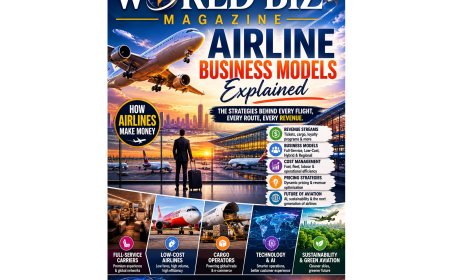


How Airlines Make Money: Understanding Airline Business Models
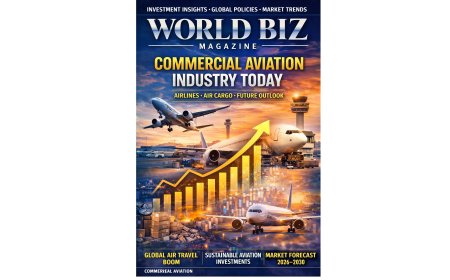
A detailed World Biz Magazine analysis explaining airline economics, route systems, pricing strategies, and aviation industry revenue models.

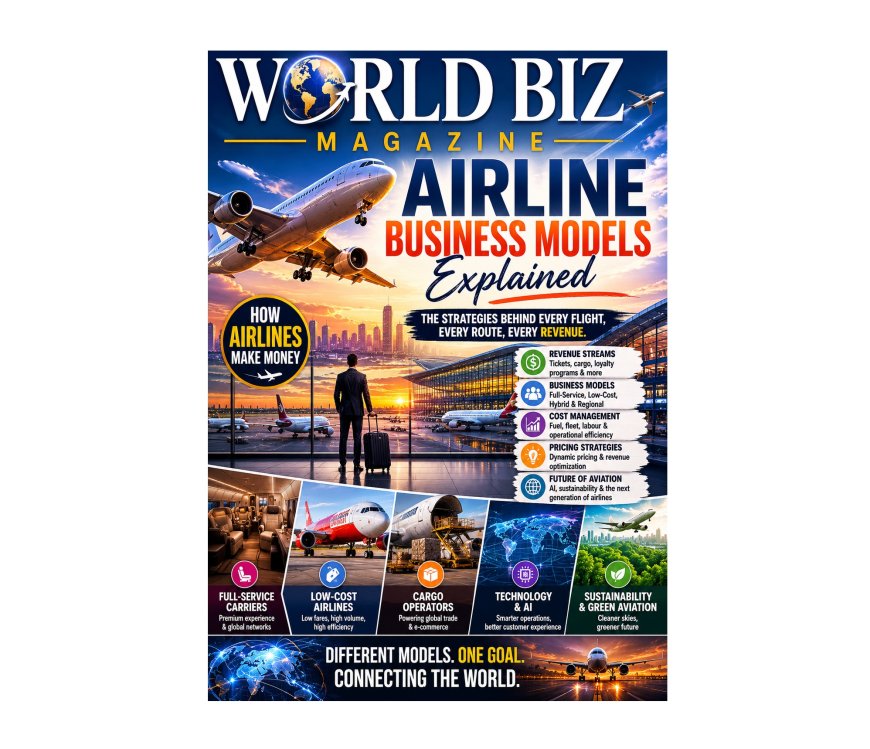
Airline Business Models Explained
Understanding How Airlines Generate Revenue, Manage Costs, and Compete in the Global Aviation Industry
World Biz Magazine | Global Aviation Intelligence | Airline Economics
The Complex Economics Behind the Global Airline Industry
The global airline industry is one of the most complex, competitive, and strategically important sectors in the modern world economy. Airlines connect countries, support international trade, drive tourism, enable business travel, facilitate global logistics, and power economic globalization on a massive scale. Every day, millions of passengers and enormous volumes of cargo move through interconnected aviation networks that operate across continents, financial systems, regulatory environments, and geopolitical regions.
However, despite its massive economic influence and global visibility, the airline industry has historically been one of the most financially challenging businesses in the world. Airlines operate under intense pressure from fuel costs, labor expenses, aircraft financing, airport fees, regulatory requirements, economic cycles, competition, geopolitical instability, currency fluctuations, and changing consumer behavior. Even major airlines handling millions of passengers annually may struggle with thin profit margins and operational volatility.
To survive and compete in such a demanding environment, airlines have developed highly specialized business models designed to balance revenue generation, operational efficiency, customer segmentation, route management, pricing strategies, fleet optimization, and long-term scalability. Over time, different airline business models emerged to target different customer groups, market conditions, and regional opportunities.
Some airlines focus on low-cost operations designed around high passenger volume and minimal operating expenses. Others focus on premium service, global connectivity, luxury travel experiences, and international business travelers. Certain carriers specialize in regional connectivity, cargo logistics, charter services, ultra-long-haul operations, or hybrid models combining multiple revenue strategies.
The evolution of airline business models accelerated dramatically over recent decades due to:
- Globalization
- Tourism growth
- Deregulation
- Digital booking systems
- Fuel price volatility
- Low-cost carrier expansion
- AI-driven analytics
- E-commerce logistics growth
- Post-pandemic travel transformation
Today, modern airlines increasingly operate as sophisticated data-driven transportation ecosystems combining aviation operations, digital commerce, loyalty programs, financial partnerships, cargo logistics, tourism infrastructure, and technology-enabled customer experience systems.
Understanding airline business models is essential not only for aviation professionals and investors, but also for policymakers, tourism industries, economists, logistics companies, business travelers, and anyone seeking insight into how modern global transportation systems function economically.
What Is an Airline Business Model?
An airline business model refers to the operational and financial strategy an airline uses to:
- Generate revenue
- Manage costs
- Serve target customers
- Structure routes
- Operate aircraft fleets
- Compete in the market
The business model influences nearly every aspect of airline operations including:
- Ticket pricing
- Passenger experience
- Fleet size
- Service quality
- Route selection
- Staffing structure
- Revenue diversification
Different airlines adopt different models depending on:
- Market demand
- Geography
- Economic conditions
- Regulatory environments
- Customer demographics
The Traditional Full-Service Carrier Model
Full-service carriers, often called legacy airlines, operate comprehensive aviation networks designed to provide premium travel experiences and international connectivity.
These airlines typically offer:
- Multiple cabin classes
- Global route networks
- Airport lounges
- Loyalty programs
- In-flight meals
- Cargo services
- Business travel infrastructure
Revenue comes from:
- Passenger tickets
- Premium cabins
- Corporate contracts
- Cargo operations
- Ancillary services
Full-service airlines often operate through hub-and-spoke systems connecting passengers through major international airports.
The Hub-and-Spoke System
The hub-and-spoke model is central to many traditional airlines.
Under this structure:
- Major hub airports serve as central connection points
- Smaller routes feed passengers into hubs
- Travelers connect to international destinations through central airports
Advantages include:
- Network efficiency
- Expanded route connectivity
- Better aircraft utilization
- Increased passenger volume
However, hub systems also create:
- Congestion risks
- Operational complexity
- Higher infrastructure costs
Many global airlines rely heavily on this model for international expansion.
The Low-Cost Carrier (LCC) Model
Low-cost carriers revolutionized aviation by focusing aggressively on operational efficiency and cost reduction.
LCCs generally prioritize:
- Lower ticket prices
- High aircraft utilization
- Simplified operations
- Minimal onboard services
- Direct point-to-point routes
To reduce costs, low-cost airlines often:
- Use single aircraft types
- Operate secondary airports
- Reduce turnaround times
- Limit free services
- Charge for extras
This model dramatically expanded affordable air travel globally.
How Low-Cost Airlines Generate Revenue
Low-cost airlines depend heavily on ancillary revenue.
In addition to tickets, they earn income through:
- Baggage fees
- Seat selection charges
- Priority boarding
- Food and beverage sales
- Advertising partnerships
- Travel add-ons
- Credit card partnerships
In some cases, ancillary revenue represents a major percentage of total airline income.
The Point-to-Point Route Strategy
Unlike hub-based carriers, many low-cost airlines use point-to-point systems.
This means:
- Direct flights connect cities without central hubs
- Operational complexity is reduced
- Aircraft spend less time on the ground
Advantages include:
- Lower costs
- Faster turnaround
- Reduced delays
- Simplified logistics
This model works especially well for:
- Short-haul travel
- Domestic routes
- Regional tourism markets
Hybrid Airline Models
Many modern airlines now operate hybrid business models combining elements of:
- Full-service carriers
- Low-cost carriers
- Regional operations
Hybrid airlines may:
- Offer premium services on some routes
- Operate budget pricing on others
- Use mixed fleet strategies
- Sell ancillary services while maintaining premium branding
This allows greater flexibility in competitive markets.
Regional Airline Models
Regional airlines focus on shorter routes and smaller markets.
These airlines often:
- Serve secondary cities
- Feed passengers into major hubs
- Operate smaller aircraft
Revenue may come from:
- Partnerships with major airlines
- Government-supported routes
- Regional connectivity programs
Regional aviation plays a critical role in:
- Domestic transportation
- Economic development
- Remote area accessibility
Charter Airline Business Models
Charter airlines operate differently from scheduled commercial carriers.
Flights are often arranged for:
- Tourism groups
- Sports teams
- Corporate clients
- Pilgrimage travel
- Special events
Revenue depends heavily on:
- Seasonal demand
- Tourism contracts
- Group bookings
Charter models provide flexibility but may face demand volatility.
Cargo Airline Business Models
Cargo airlines focus on freight transportation rather than passengers.
Revenue comes from transporting:
- E-commerce shipments
- Industrial goods
- Medical supplies
- Express logistics
- International trade cargo
The growth of:
- Online shopping
- Global supply chains
- Fast delivery services
has significantly increased the importance of cargo aviation.
Some passenger airlines also operate major cargo divisions.
Premium and Luxury Airline Models
Certain airlines position themselves around luxury travel experiences.
These airlines emphasize:
- Business-class services
- First-class suites
- Airport lounges
- Personalized service
- Premium onboard experiences
Target customers often include:
- Corporate travelers
- High-net-worth individuals
- International business markets
Premium airlines depend heavily on high-margin travelers rather than purely passenger volume.
Airline Alliances and Partnerships
Global airline alliances help carriers expand connectivity without directly operating every route.
Major partnerships may include:
- Code-sharing agreements
- Loyalty program integration
- Shared airport infrastructure
- Joint scheduling systems
Alliances improve:
- International reach
- Passenger convenience
- Operational efficiency
They also strengthen competitive positioning globally.
Fleet Strategy and Aircraft Economics
Aircraft selection is central to airline profitability.
Different business models require different fleet strategies.
Factors include:
- Fuel efficiency
- Maintenance costs
- Route distance
- Passenger capacity
- Operational flexibility
Low-cost airlines often use:
- Standardized fleets
to reduce maintenance and training expenses.
Full-service carriers may use:
- Diversified fleets
to support global route networks.
Fuel Costs and Financial Risk
Fuel is one of the largest airline expenses.
Airlines may use:
- Fuel hedging strategies
- Fleet modernization
- Route optimization
- AI-driven efficiency systems
to manage fuel price volatility.
Changes in oil markets can significantly impact airline profitability.
Airline Pricing Systems and Revenue Management
Modern airlines use advanced revenue management systems.
Ticket prices change dynamically based on:
- Demand
- Booking timing
- Seasonality
- Competition
- Customer behavior
AI and data analytics increasingly optimize:
- Seat pricing
- Occupancy rates
- Revenue forecasting
This allows airlines to maximize profitability per flight.
Loyalty Programs as Major Revenue Businesses
Frequent flyer programs evolved into major standalone business assets.
Airlines generate revenue through:
- Credit card partnerships
- Travel rewards systems
- Corporate travel agreements
- Consumer loyalty ecosystems
In some cases, loyalty programs are worth billions independently from flight operations.
Digital Transformation in Airline Operations
Technology increasingly shapes airline business models.
Modern airlines rely heavily on:
- AI analytics
- Mobile booking systems
- Dynamic pricing algorithms
- Predictive maintenance
- Customer personalization
- Automation systems
Digital transformation improves:
- Efficiency
- Customer experience
- Operational control
- Revenue optimization
Sustainability and Green Aviation Pressure
Environmental concerns are reshaping aviation strategy.
Airlines face pressure to:
- Reduce carbon emissions
- Improve fuel efficiency
- Invest in sustainable aviation fuel
- Modernize fleets
Sustainability increasingly influences:
- Government regulation
- Consumer perception
- Investment decisions
Green aviation may become a major competitive factor in the future.
The Impact of Global Events on Airline Models
Airline business models are highly sensitive to:
- Economic recessions
- Pandemics
- Geopolitical conflicts
- Fuel crises
- Travel restrictions
The COVID-19 pandemic dramatically reshaped:
- Passenger demand
- Business travel
- Tourism patterns
- Airline cost structures
Many airlines accelerated digital transformation and operational restructuring afterward.
AI and the Future of Airline Business Models
Artificial intelligence is transforming aviation rapidly.
AI systems increasingly support:
- Route planning
- Predictive maintenance
- Dynamic pricing
- Customer analytics
- Fuel optimization
- Operational forecasting
Future airlines may become highly automated, data-driven transportation ecosystems.
World Biz Magazine Insights
At World Biz Magazine, we view airline business models as some of the most strategically complex operational systems in the global economy. Airlines are no longer simply transportation providers; they are sophisticated multinational infrastructure businesses balancing logistics, technology, tourism, finance, energy management, customer experience, and international commerce simultaneously.
The evolution of low-cost carriers, digital aviation systems, AI-driven analytics, cargo expansion, loyalty ecosystems, and sustainability pressures continues reshaping the competitive structure of the global airline industry. Modern airlines increasingly depend not only on passenger transportation, but also on diversified revenue ecosystems including financial partnerships, digital platforms, logistics operations, and technology-enabled efficiency systems.
As global travel demand, AI integration, environmental regulation, and digital infrastructure continue evolving, the future of aviation may depend heavily on how effectively airlines balance operational efficiency, customer experience, sustainability, profitability, and technological innovation.
The future airline industry may ultimately be defined not only by where aircraft fly, but by how intelligently airlines manage the global systems surrounding those flights.
Conclusion
Airline business models determine how carriers generate revenue, manage operational costs, structure route networks, serve customers, and compete within one of the world’s most demanding industries. From full-service global carriers and low-cost airlines to cargo operators, charter services, and hybrid aviation models, each structure reflects different economic priorities and market strategies.
Modern airlines increasingly operate as integrated transportation ecosystems powered by technology, data analytics, AI systems, loyalty networks, and global logistics infrastructure. As sustainability, digital transformation, fuel economics, and evolving consumer behavior continue reshaping aviation, airline business models will remain central to the future of global transportation and economic connectivity.
Disclaimer
This article is published for informational, educational, and editorial purposes only and does not constitute financial, investment, legal, aviation, or professional business advice. Readers should consult qualified aviation experts, financial advisors, legal professionals, or industry consultants regarding specific airline, investment, operational, or regulatory matters. World Biz Magazine and its affiliates are not responsible for business decisions, investment outcomes, or operational actions taken based on the information presented in this publication.
What's Your Reaction?
 Like
1
Like
1
 Dislike
0
Dislike
0
 Love
1
Love
1
 Funny
0
Funny
0
 Angry
0
Angry
0
 Sad
0
Sad
0
 Wow
1
Wow
1