










































































































































































































Global Smart City Initiatives: Building Sustainable and Connected Cities of the Future
Global smart city initiatives are creating more efficient, sustainable, and connected urban environments through innovation, data, and infrastructure modernization.


Global Smart City Initiatives
How Technology, Sustainability, and Data-Driven Urban Planning Are Reshaping the Cities of Tomorrow
World Biz Magazine | Smart Cities, Infrastructure & Urban Development
As urban populations continue to grow and sustainability becomes a global priority, smart city initiatives are transforming how governments, businesses, and communities design, manage, and experience modern urban environments.
The Rise of Smart Cities in the Digital Era
Cities have long served as centers of economic growth, innovation, culture, and opportunity. Today, however, urban areas face unprecedented challenges including population growth, traffic congestion, environmental degradation, energy consumption, housing shortages, and infrastructure strain. To address these issues, governments and urban planners worldwide are embracing smart city initiatives that leverage technology, connectivity, and data analytics to improve quality of life while enhancing sustainability and economic competitiveness.
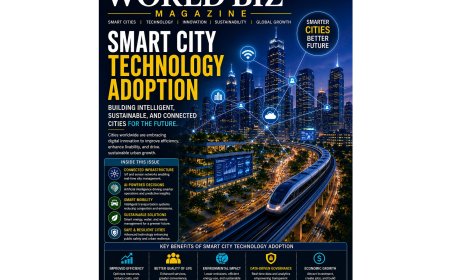
Smart cities utilize interconnected digital systems, sensors, artificial intelligence, cloud computing, and Internet of Things (IoT) technologies to optimize city operations and public services. These technologies enable cities to collect real-time data, monitor infrastructure performance, improve decision-making, and create more efficient urban ecosystems. The result is a city that is not only technologically advanced but also more livable, resilient, and responsive to citizens' needs.
Urbanization Driving the Need for Innovation
According to global demographic trends, a significant majority of the world's population is expected to live in urban areas over the coming decades. This rapid urbanization is placing enormous pressure on transportation networks, public utilities, healthcare systems, housing markets, and environmental resources.
Smart city initiatives are emerging as strategic solutions to manage urban growth more effectively. By integrating technology into infrastructure planning and public administration, cities can reduce operational inefficiencies, improve resource allocation, and provide better services to residents. The shift toward smart urban development is no longer viewed as an optional modernization effort but as a critical component of long-term economic and environmental sustainability.
Intelligent Transportation Systems Transform Mobility
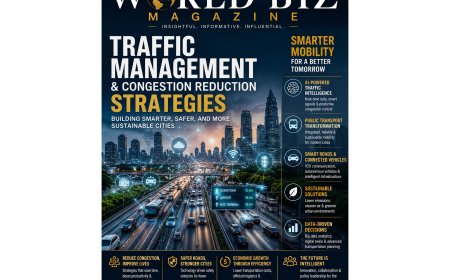
Transportation remains one of the most visible and impactful components of smart city development. Traffic congestion costs economies billions of dollars annually through lost productivity, fuel consumption, and environmental damage. Smart transportation systems aim to address these challenges through data-driven mobility solutions.
Cities around the world are deploying intelligent traffic management systems that utilize sensors, cameras, AI-powered analytics, and adaptive signaling technologies to optimize traffic flow. Real-time monitoring helps reduce congestion, shorten travel times, and improve road safety.
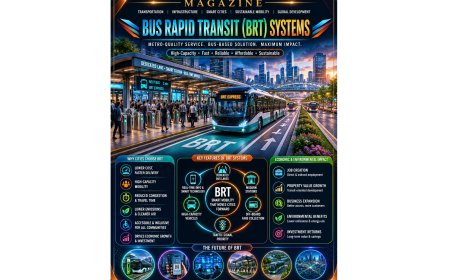
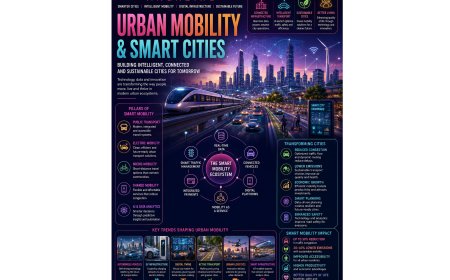
Public transportation is also undergoing significant transformation. Smart ticketing systems, integrated mobility platforms, autonomous vehicle pilots, electric buses, and connected transit networks are improving accessibility and efficiency. Emerging mobility models that combine public transport, ride-sharing services, micro-mobility options, and autonomous transportation are creating more flexible and sustainable urban transportation ecosystems.
Sustainable Energy and Smart Grids
Energy management is a cornerstone of global smart city initiatives. Urban centers consume a substantial portion of global energy resources, making efficiency and sustainability critical priorities.
Smart grids enable real-time monitoring and management of electricity distribution networks. Through advanced metering infrastructure, predictive analytics, and automated controls, utility providers can balance supply and demand more efficiently while reducing outages and energy waste.
Many smart cities are integrating renewable energy sources such as solar, wind, and energy storage systems into their infrastructure. Distributed energy networks, smart buildings, and intelligent energy management platforms help reduce carbon emissions while increasing resilience against energy disruptions. These initiatives support broader climate goals while delivering economic benefits through lower operating costs and improved energy efficiency.
Smart Buildings and Connected Infrastructure
Modern smart city development increasingly focuses on intelligent buildings that utilize automation, sensors, and advanced management systems to optimize energy consumption, security, maintenance, and occupant comfort.
Smart buildings can automatically adjust lighting, temperature, ventilation, and energy usage based on occupancy patterns and environmental conditions. These capabilities reduce operational costs while enhancing sustainability and user experience.
Connected infrastructure extends beyond individual buildings. Bridges, roads, water systems, utility networks, and public facilities can now be monitored continuously through IoT-enabled sensors. Predictive maintenance systems identify potential issues before failures occur, reducing downtime, maintenance expenses, and public safety risks.
Data as the Foundation of Smart Governance
Data has become one of the most valuable assets in smart city development. Through sensors, connected devices, digital platforms, and citizen interactions, cities generate vast amounts of information that can support better decision-making.
Smart governance initiatives leverage data analytics and artificial intelligence to improve public administration, service delivery, and policy development. City leaders can monitor infrastructure performance, evaluate public service effectiveness, forecast future demands, and allocate resources more efficiently.
Digital government platforms are also enhancing citizen engagement by providing easier access to public services, permits, payments, reporting systems, and community participation tools. This improves transparency while strengthening trust between governments and residents.
Smart Water and Waste Management Systems
Water security and waste management are increasingly important challenges for rapidly growing urban populations. Smart city technologies are helping municipalities improve efficiency while reducing environmental impact.
Smart water systems use sensors and monitoring technologies to detect leaks, manage consumption, optimize distribution networks, and improve water quality monitoring. These capabilities help conserve resources and reduce operational costs.
Similarly, intelligent waste management systems utilize sensor-equipped collection bins, route optimization software, and predictive analytics to improve collection efficiency. Cities can reduce fuel consumption, lower operational expenses, and increase recycling rates through data-driven waste management strategies.
Enhancing Public Safety Through Technology
Public safety remains a fundamental responsibility of urban governments. Smart city initiatives are introducing advanced technologies that help improve emergency response, disaster preparedness, and community security.
Integrated command centers allow city agencies to coordinate responses across multiple departments. Real-time surveillance systems, predictive analytics, environmental monitoring, and emergency communication networks enhance situational awareness and response capabilities.
Smart technologies also support disaster resilience by providing early warning systems for floods, earthquakes, extreme weather events, and other emergencies. These systems enable faster responses and help protect lives, infrastructure, and economic assets.
Leading Smart City Initiatives Around the World
Numerous cities are emerging as global leaders in smart urban development. Singapore continues to set benchmarks through its national Smart Nation strategy, integrating digital technologies across transportation, healthcare, public services, and urban planning.
Cities across Europe are implementing sustainability-focused smart city programs centered on renewable energy, green mobility, and carbon reduction initiatives. In the Middle East, large-scale developments are incorporating smart infrastructure from the earliest planning stages to create highly connected urban environments.
Across North America and Asia, governments are investing heavily in intelligent transportation systems, digital governance platforms, AI-powered infrastructure management, and next-generation telecommunications networks. These investments demonstrate the growing recognition that technology-driven urban development is essential for future competitiveness.
The Economic Impact of Smart Cities
Beyond improving quality of life, smart city initiatives represent significant economic opportunities. Investments in digital infrastructure, telecommunications, renewable energy, artificial intelligence, cybersecurity, cloud computing, and urban technology create new industries and employment opportunities.
Smart cities attract businesses seeking modern infrastructure, efficient operations, skilled workforces, and innovation-friendly environments. Technology companies, infrastructure developers, investors, and startups increasingly view smart city ecosystems as attractive markets for growth and collaboration.
As governments continue investing in digital transformation, the global smart city market is expected to generate substantial economic value while accelerating innovation across multiple sectors.
Challenges and Considerations
Despite their promise, smart city initiatives face important challenges. Data privacy, cybersecurity, funding requirements, technology integration, interoperability standards, and digital inclusion remain critical concerns.
Cities must ensure that technological advancement does not create inequalities or exclude underserved populations. Effective governance frameworks, transparent data policies, robust cybersecurity measures, and citizen-centered planning are essential to the long-term success of smart city programs.
Balancing innovation with privacy, efficiency with inclusivity, and growth with sustainability will define the next generation of smart urban development.
World Biz Magazine Insights
The future of urban development is increasingly defined by intelligence, connectivity, and sustainability. Smart city initiatives are evolving beyond technology projects into comprehensive strategies for economic growth, environmental stewardship, and improved quality of life. As governments, businesses, and communities collaborate to build smarter urban ecosystems, the cities of tomorrow will become more adaptive, resilient, and capable of meeting the complex demands of a rapidly changing world.
Conclusion
Global smart city initiatives represent one of the most significant transformations in modern urban development. By leveraging digital technologies, data analytics, renewable energy, and connected infrastructure, cities are creating more efficient, sustainable, and livable environments for future generations. While challenges remain, the momentum behind smart city innovation continues to grow, positioning intelligent urban development as a cornerstone of global economic and social progress in the decades ahead.
Disclaimer
This article is published by World Biz Magazine for informational and educational purposes only. The content reflects general industry trends and perspectives related to smart city development, infrastructure, technology, and urban innovation. It does not constitute investment, engineering, legal, policy, or professional advice. Readers should conduct independent research and consult qualified experts before making decisions related to infrastructure projects, technology adoption, investments, or public policy initiatives. World Biz Magazine assumes no responsibility for actions taken based on the information presented in this publication.
What's Your Reaction?
 Like
1
Like
1
 Dislike
0
Dislike
0
 Love
0
Love
0
 Funny
0
Funny
0
 Angry
0
Angry
0
 Sad
0
Sad
0
 Wow
1
Wow
1