


























































































































































Community Planning & Neighborhood Development: Building Sustainable and Thriving Communities
Understand the principles of community planning and how modern neighborhoods are designed for long-term success and sustainability.

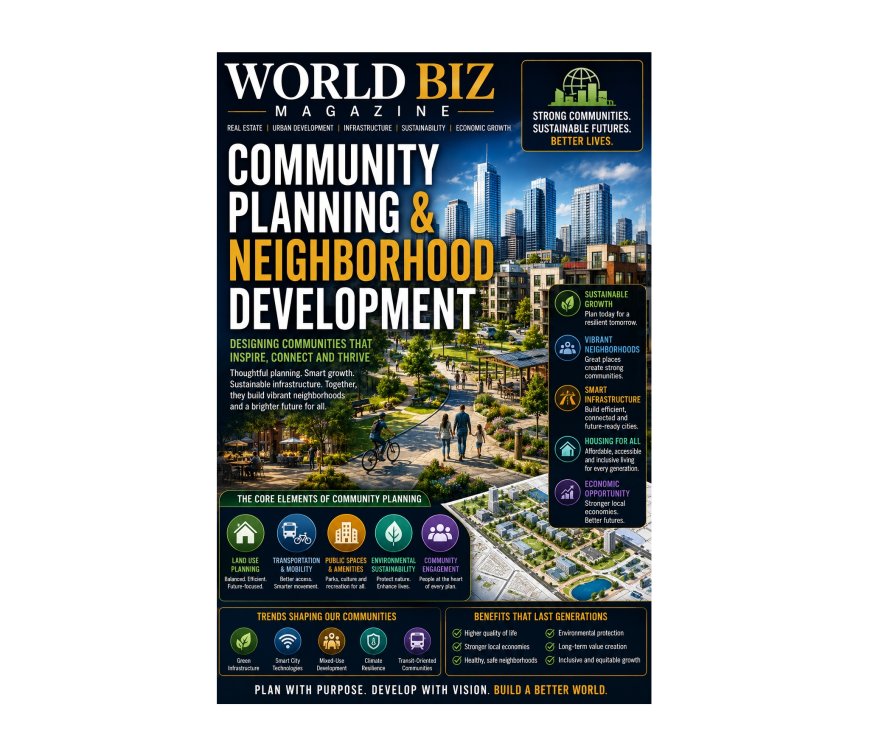
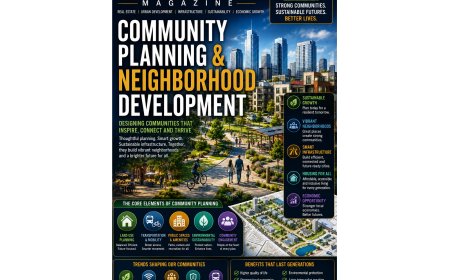
Community Planning & Neighborhood Development
Building Sustainable, Inclusive, and Thriving Communities for Future Generations
World Biz Magazine | Real Estate, Urban Development & Infrastructure
Communities are the foundation of economic prosperity, social well-being, and long-term urban sustainability. As cities continue expanding and populations grow, the importance of thoughtful community planning and neighborhood development has become increasingly significant. Modern urban development is no longer focused solely on constructing buildings and infrastructure; it involves creating environments that support quality of life, economic opportunity, social connectivity, environmental sustainability, and long-term resilience. Successful communities are carefully designed to balance residential, commercial, recreational, educational, and transportation needs while fostering a strong sense of identity and belonging among residents.
Community planning represents one of the most important disciplines within urban development. It provides the strategic framework that guides how neighborhoods evolve, how land is utilized, and how infrastructure investments are prioritized. Effective planning helps ensure that growth occurs in an organized, sustainable, and economically beneficial manner. Without proper planning, cities can experience challenges such as congestion, inadequate infrastructure, housing shortages, environmental degradation, and reduced quality of life.
Neighborhood development plays a crucial role within this broader planning framework. Well-designed neighborhoods serve as the building blocks of successful cities. They influence where people live, work, shop, socialize, and access essential services. From housing affordability and public transportation to green spaces and community facilities, neighborhood development directly impacts daily life and long-term community prosperity.
In today's rapidly changing world, community planning has evolved beyond traditional land-use management. Modern planners increasingly address issues such as climate resilience, smart city technologies, sustainable transportation, affordable housing, social equity, and economic competitiveness. As governments, developers, investors, and community leaders seek solutions to urban challenges, effective community planning and neighborhood development remain central to creating vibrant, inclusive, and future-ready communities.
Understanding Community Planning
Community planning is the process of designing and managing the physical, economic, social, and environmental development of cities, towns, and neighborhoods.
Its primary objective is to create organized and sustainable communities that meet the needs of current and future residents.
Community planning typically addresses:
- Land use
- Housing
- Transportation
- Infrastructure
- Public services
- Economic development
- Environmental protection
The process involves collaboration among government agencies, developers, businesses, residents, and urban planning professionals.
Successful planning balances competing interests while promoting long-term community goals.
The Importance of Neighborhood Development
Neighborhoods are where people experience community life most directly.
They influence:
- Housing quality
- Access to services
- Social interaction
- Safety
- Mobility
- Economic opportunity
Well-planned neighborhoods support healthier lifestyles, stronger local economies, and greater social cohesion.
Poorly planned development can contribute to congestion, inequality, and infrastructure strain.
Neighborhood development therefore plays a critical role in overall urban success.
Key Objectives of Community Planning
Modern planning initiatives typically pursue several core objectives.
These include:
Sustainable Growth
Managing population and economic expansion responsibly.
Economic Prosperity
Supporting employment, investment, and business development.
Social Inclusion
Ensuring equitable access to housing, services, and opportunities.
Environmental Stewardship
Protecting natural resources and reducing environmental impacts.
Quality of Life
Creating safe, attractive, and livable communities.
These objectives guide planning decisions across diverse urban environments.
Land Use Planning
Land use planning is one of the most important aspects of community development.
It determines how land is allocated for different purposes.
Examples include:
- Residential areas
- Commercial districts
- Industrial zones
- Recreational spaces
- Public facilities
Effective land-use planning helps reduce conflicts between different activities while promoting efficient development patterns.
Balanced land use contributes to sustainable growth and community functionality.
Housing and Residential Development
Housing remains a central focus of neighborhood development.
Communities require housing options that accommodate diverse populations and income levels.
Key considerations include:
- Housing affordability
- Population growth
- Housing diversity
- Density management
- Accessibility
Modern planning increasingly emphasizes mixed-income and mixed-use communities that support social and economic diversity.
Affordable housing initiatives remain critical in many urban areas.
Transportation and Mobility
Transportation systems significantly influence community development.
Residents require efficient access to:
- Employment centers
- Schools
- Healthcare facilities
- Retail services
- Recreational amenities
Modern planning prioritizes:
- Public transportation
- Walkability
- Cycling infrastructure
- Traffic management
- Transit-oriented development
Integrated transportation networks improve accessibility while reducing congestion and environmental impacts.
Public Infrastructure Development
Infrastructure forms the backbone of successful communities.
Essential infrastructure includes:
- Roads
- Utilities
- Water systems
- Waste management facilities
- Energy networks
- Digital connectivity
Reliable infrastructure supports economic activity and quality of life.
Strategic infrastructure investment is critical for accommodating future growth.
Infrastructure planning must align with long-term development objectives.
Parks, Open Spaces, and Recreation
Green spaces contribute significantly to community well-being.
Benefits include:
- Improved public health
- Environmental protection
- Social interaction
- Enhanced property values
- Recreational opportunities
Parks and recreational facilities help create vibrant and attractive neighborhoods.
Modern developments increasingly incorporate extensive green infrastructure.
Access to outdoor spaces is becoming a key quality-of-life consideration.
Economic Development and Local Prosperity
Strong communities require strong local economies.
Community planning often seeks to attract:
- Businesses
- Investment
- Employment opportunities
- Entrepreneurship
Economic development initiatives may include:
- Commercial districts
- Innovation hubs
- Business incentives
- Workforce development programs
Economic vitality supports municipal revenues and long-term community sustainability.
Local job creation remains a major planning priority.
Community Engagement and Public Participation
Successful planning depends on stakeholder involvement.
Residents often possess valuable insights regarding community needs and priorities.
Public engagement methods may include:
- Community meetings
- Public consultations
- Surveys
- Workshops
- Digital participation platforms
Inclusive planning processes help build trust and encourage community ownership.
Public participation often improves project outcomes and implementation success.
Sustainable Neighborhood Development
Sustainability has become a central focus of modern planning.
Sustainable communities seek to balance:
- Economic growth
- Social equity
- Environmental protection
Strategies may include:
- Energy-efficient buildings
- Renewable energy adoption
- Water conservation
- Green transportation
- Waste reduction
Sustainable development supports long-term resilience and resource efficiency.
Environmental considerations increasingly influence planning decisions.
Smart Cities and Digital Communities
Technology is transforming community planning and neighborhood development.
Smart city initiatives utilize:
- Data analytics
- Internet of Things (IoT)
- Artificial intelligence
- Smart infrastructure
- Digital services
Applications include:
- Traffic management
- Public safety
- Energy optimization
- Environmental monitoring
Technology enhances efficiency while improving resident experiences.
Digital innovation is expected to play a growing role in future communities.
Climate Resilience and Adaptation
Climate change presents significant challenges for urban development.
Communities increasingly face risks such as:
- Flooding
- Heatwaves
- Storm events
- Water shortages
Planning strategies now emphasize resilience through:
- Flood protection systems
- Green infrastructure
- Climate-adaptive building standards
- Emergency preparedness
Resilient communities are better positioned to withstand environmental disruptions.
Climate considerations are becoming integral to planning frameworks.
Social Equity and Inclusive Development
Modern planning seeks to promote equitable access to opportunities and services.
Inclusive development addresses issues such as:
- Affordable housing
- Public transportation access
- Community facilities
- Economic opportunity
- Accessibility
Social equity initiatives help ensure that development benefits diverse populations.
Inclusive communities often experience stronger social cohesion and long-term stability.
Equity remains a growing priority in urban policy discussions.
Mixed-Use Development Trends
Mixed-use development integrates multiple functions within a single area.
Examples include:
- Residential housing
- Retail spaces
- Offices
- Entertainment venues
Benefits include:
- Reduced travel distances
- Increased walkability
- Enhanced economic activity
- Improved community interaction
Mixed-use neighborhoods have become increasingly popular among planners and developers.
These developments often contribute to more vibrant urban environments.
Challenges Facing Community Planning
Despite its benefits, community planning faces several challenges.
Common obstacles include:
- Population growth pressures
- Housing shortages
- Infrastructure funding gaps
- Environmental concerns
- Political complexities
- Economic uncertainty
Balancing competing interests can be difficult.
Long-term planning requires flexibility and adaptability.
Effective governance remains essential.
The Role of Public-Private Partnerships
Many large-scale development projects involve collaboration between public and private sectors.
Public-private partnerships can support:
- Infrastructure investment
- Housing development
- Urban revitalization
- Community services
These partnerships help leverage resources and expertise.
Successful collaboration can accelerate project delivery and improve outcomes.
Partnership models continue evolving globally.
Future Trends in Community Development
Several emerging trends are shaping future neighborhoods.
These include:
- Smart city technologies
- Sustainable construction
- Transit-oriented development
- Climate resilience planning
- Remote work integration
- Digital infrastructure expansion
Future communities will likely prioritize flexibility, sustainability, and connectivity.
Innovation will continue influencing how neighborhoods are designed and managed.
Community Planning and Real Estate Investment
Effective planning significantly impacts property values and investment performance.
Investors often evaluate:
- Infrastructure quality
- Transportation access
- Growth potential
- Regulatory frameworks
- Community amenities
Well-planned communities typically attract greater investment interest.
Long-term planning supports market stability and sustainable value creation.
Real estate success is closely linked to broader community development outcomes.
World Biz Magazine Insights
Community planning and neighborhood development are far more than exercises in urban design they are strategic investments in economic prosperity, social well-being, and environmental sustainability. The most successful communities are those that balance growth with livability, innovation with inclusivity, and development with resilience. As urban populations continue expanding and cities face increasingly complex challenges, effective planning will remain one of the most powerful tools for shaping thriving, future-ready communities. Governments, developers, investors, and residents who embrace collaborative and sustainable planning approaches will be best positioned to create neighborhoods that generate lasting value for generations to come.
Conclusion
Community planning and neighborhood development play a vital role in shaping the future of cities, towns, and regions worldwide. Through strategic land use, infrastructure investment, housing development, transportation planning, environmental stewardship, and community engagement, planners create the framework for sustainable and prosperous communities.
As urbanization, technological innovation, and climate challenges continue transforming the global landscape, the importance of thoughtful planning will only increase. Successful communities are not built by chance—they are the result of deliberate, collaborative, and forward-looking development strategies.
Ultimately, community planning is about more than physical spaces. It is about creating environments where people can live, work, connect, and thrive while supporting long-term economic growth, social inclusion, and environmental resilience.
Disclaimer
This article is published for informational, educational, and industry analysis purposes only and does not constitute legal, financial, investment, planning, engineering, environmental, or professional advice. Community planning regulations, development policies, and land-use requirements vary by jurisdiction. Readers should consult qualified planning, development, legal, and real estate professionals regarding specific projects or investment decisions.
What's Your Reaction?
 Like
0
Like
0
 Dislike
0
Dislike
0
 Love
0
Love
0
 Funny
0
Funny
0
 Angry
0
Angry
0
 Sad
0
Sad
0
 Wow
0
Wow
0