





































































































































































Real Estate Risk Assessment Framework: Identifying, Managing, and Mitigating Investment Risks
Understand the critical factors that influence real estate investment risk and discover proven frameworks for managing uncertainty and maximizing long-term returns.

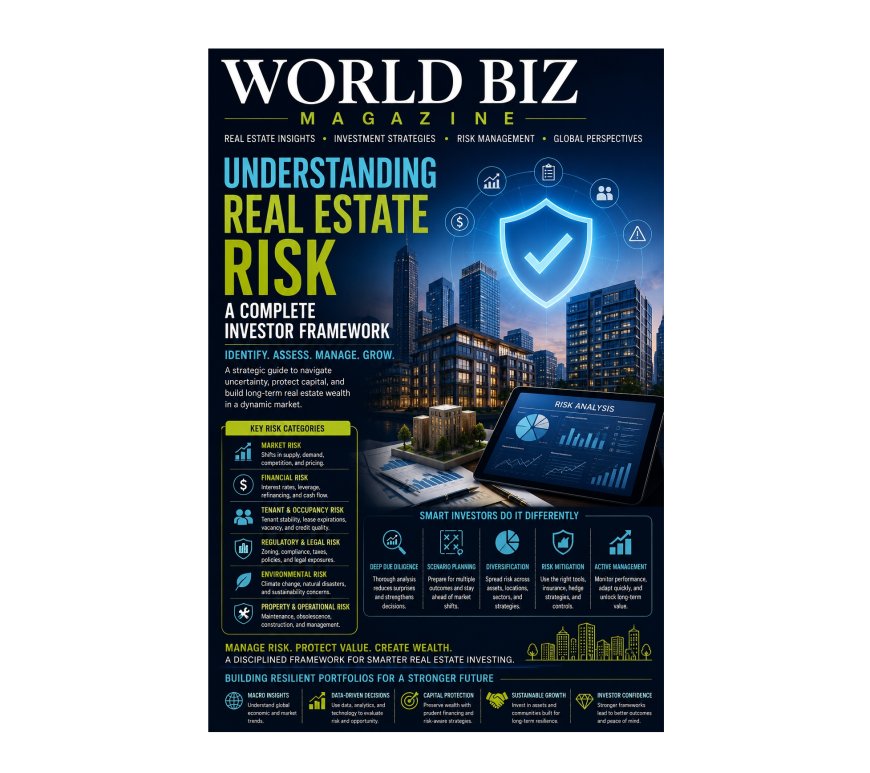
Understanding Real Estate Risk: A Complete Investor Framework
A Strategic Guide to Identifying, Assessing, Managing, and Mitigating Risk Across Property Markets
World Biz Magazine | Real Estate & Investment
Real estate has long been regarded as one of the world's most reliable wealth-building asset classes. From residential housing and commercial offices to industrial facilities, hospitality assets, and mixed-use developments, property investments have generated substantial returns for investors, institutions, developers, and wealth managers for decades. However, despite its reputation as a relatively stable investment vehicle, real estate is far from risk-free.
Every real estate investment carries a unique combination of financial, operational, market, regulatory, environmental, and economic risks that can significantly impact investment performance. While successful investors often focus on growth opportunities and return potential, sophisticated investment strategies place equal emphasis on understanding, measuring, and managing risk.
In today's environment of rising interest rates, economic uncertainty, geopolitical shifts, climate-related challenges, evolving regulations, and technological disruption, risk management has become a critical component of real estate investing. Investors who develop structured frameworks for evaluating risk are better positioned to preserve capital, generate sustainable returns, and navigate changing market conditions.
This article presents a comprehensive framework for understanding real estate risk and explores the key factors investors should consider when evaluating property investments.
What Is Real Estate Risk?
Real estate risk refers to the possibility that an investment may fail to achieve expected financial returns or experience losses due to changing market conditions, operational issues, economic factors, regulatory changes, or unforeseen events.
Risk can affect:
- Property values
- Rental income
- Occupancy levels
- Financing costs
- Liquidity
- Development timelines
- Asset performance
- Investment returns
Understanding risk does not mean avoiding investment opportunities. Instead, it involves identifying potential threats and developing strategies to manage them effectively.
Professional investors recognize that risk and return are closely connected. Higher return opportunities often involve greater uncertainty, while lower-risk investments may offer more stable but modest returns.
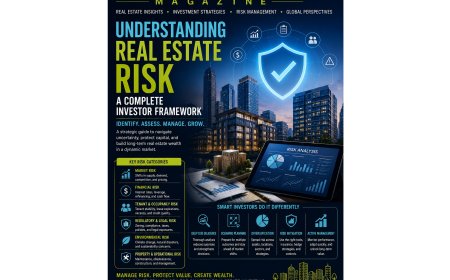
The Real Estate Risk Framework
A comprehensive real estate risk framework can be divided into several key categories:
- Market Risk
- Economic Risk
- Financial Risk
- Property-Specific Risk
- Tenant and Occupancy Risk
- Regulatory and Legal Risk
- Environmental Risk
- Liquidity Risk
- Development and Construction Risk
- Technology and Future Disruption Risk
Each category influences investment outcomes in different ways.
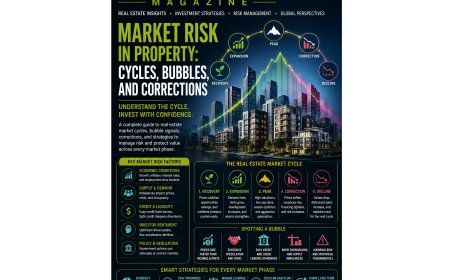
Market Risk
Market risk represents the possibility that broader real estate market conditions may negatively affect property values or income generation.
Key drivers include:
- Supply and demand imbalances
- Overbuilding
- Population shifts
- Demographic changes
- Market sentiment
- Competitive developments
For example, an oversupply of office space may reduce rental rates and increase vacancy levels, even if the underlying property remains well-managed.
Investors must continuously monitor local and regional market trends to assess future risks and opportunities.
Economic Risk
Real estate performance is closely linked to economic conditions.
Economic risk factors include:
- Inflation
- Recession
- GDP growth fluctuations
- Employment levels
- Consumer spending
- Business investment activity
Economic downturns often reduce property demand and place downward pressure on asset values.
Conversely, strong economic growth typically supports rental growth, occupancy expansion, and capital appreciation.
Understanding macroeconomic conditions is essential for long-term investment planning.
Interest Rate and Financing Risk
Interest rates have a significant influence on real estate investment performance.
Rising rates can:
- Increase borrowing costs
- Reduce purchasing power
- Lower property valuations
- Decrease transaction volumes
Financing risks include:
- Loan refinancing challenges
- Debt maturity concerns
- Credit availability restrictions
- Variable interest rate exposure
Investors should stress-test investment assumptions under multiple financing scenarios.
Property-Specific Risk
Every property carries unique characteristics that influence risk.
Key considerations include:
Location Quality
Location remains one of the strongest determinants of long-term performance.
Building Condition
Older properties may require significant maintenance and capital expenditures.
Physical Obsolescence
Buildings that fail to meet evolving market expectations may experience declining competitiveness.
Asset Quality
Higher-quality assets generally attract stronger tenant demand and command premium pricing.
Property-level due diligence remains one of the most important components of risk assessment.
Tenant and Occupancy Risk
Rental income depends on tenant stability and occupancy levels.
Major risks include:
- Tenant defaults
- Lease expirations
- Vacancy increases
- Industry-specific tenant challenges
- Concentration risk
Properties dependent on a small number of tenants may face significant exposure if a major tenant vacates or experiences financial difficulties.
Diversified tenant bases generally reduce occupancy-related risk.
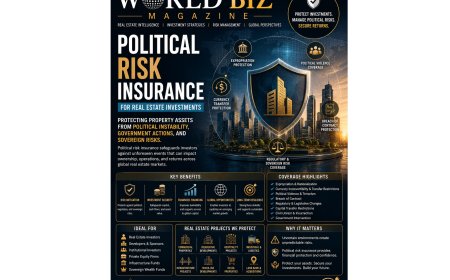
Regulatory and Legal Risk
Government policies and regulations can significantly impact property investments.
Areas of concern include:
- Zoning regulations
- Building codes
- Property taxes
- Rent controls
- Environmental requirements
- Development approvals
- Land-use restrictions
Regulatory changes can affect both operating costs and future development opportunities.
Investors should monitor policy developments at local, regional, and national levels.
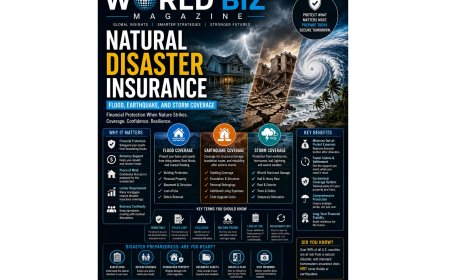
Environmental and Climate Risk
Environmental factors are becoming increasingly important in real estate investing.
Risks include:
- Flooding
- Wildfires
- Hurricanes
- Earthquakes
- Rising sea levels
- Water shortages
- Environmental contamination
Climate-related risks can impact insurance costs, financing availability, asset valuations, and long-term investment viability.
Many institutional investors now incorporate climate resilience assessments into acquisition decisions.
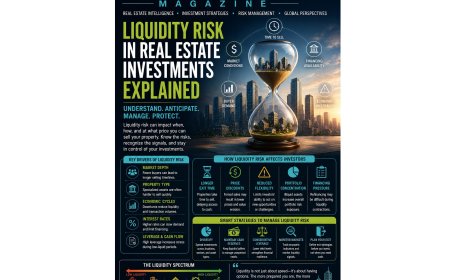
Liquidity Risk
Unlike publicly traded securities, real estate assets are relatively illiquid.
Liquidity risk refers to the difficulty of quickly converting a property into cash without substantial value reductions.
Factors influencing liquidity include:
- Market conditions
- Asset type
- Location
- Buyer demand
- Financing availability
During economic downturns, liquidity risk often becomes more pronounced.
Investors should consider exit strategies before acquiring assets.
Development and Construction Risk
Development projects often offer higher return potential but involve additional risks.
These may include:
- Construction delays
- Cost overruns
- Labor shortages
- Material price increases
- Permitting challenges
- Market timing issues
Project feasibility studies, contractor selection, and contingency planning are essential risk mitigation tools.
Technology and Future Disruption Risk
Technological innovation is reshaping property markets worldwide.
Potential risks include:
- Changing workplace trends
- E-commerce growth
- Smart building requirements
- PropTech disruption
- Cybersecurity vulnerabilities
The rapid adoption of remote work has demonstrated how technological changes can dramatically alter demand for certain property types.
Investors should evaluate how emerging technologies may affect future asset performance.
Risk Assessment Tools Used by Professional Investors
Sophisticated investors use a variety of tools to evaluate risk.
Common approaches include:
Sensitivity Analysis
Testing how changes in assumptions affect returns.
Scenario Planning
Evaluating multiple future market conditions.
Stress Testing
Analyzing performance under adverse circumstances.
Portfolio Diversification
Reducing concentration risk across markets and asset classes.
Due Diligence Reviews
Conducting detailed property, financial, legal, and operational assessments.
These tools help investors make more informed decisions.
Building a Risk Management Strategy
Effective risk management involves:
Diversification
Spreading investments across locations, asset classes, and tenant profiles.
Conservative Financing
Maintaining manageable leverage levels.
Insurance Protection
Mitigating losses through appropriate insurance coverage.
Active Asset Management
Monitoring performance and addressing issues proactively.
Long-Term Planning
Aligning investment decisions with broader economic and market trends.
Successful investors view risk management as an ongoing process rather than a one-time exercise.
Emerging Risk Trends in Global Real Estate
Several trends are reshaping real estate risk assessment.
These include:
- Climate resilience requirements
- Rising interest rates
- Geopolitical uncertainty
- ESG considerations
- Smart city development
- Artificial intelligence integration
- Cybersecurity threats
- Demographic shifts
Investors who adapt to these evolving risks may gain a competitive advantage in future markets.
World Biz Magazine Insights
The most successful real estate investors are not those who avoid risk entirely but those who understand it better than their competitors. In an increasingly complex global market, disciplined risk assessment has become as important as identifying growth opportunities. Investors who integrate market intelligence, financial discipline, climate resilience, regulatory awareness, and technological foresight into their investment strategies are better positioned to protect capital and achieve sustainable long-term returns.
Conclusion
Real estate remains one of the world's most attractive investment classes, but success requires more than identifying promising properties. A comprehensive understanding of risk is essential for preserving capital, managing uncertainty, and maximizing returns.
From market conditions and financing challenges to regulatory changes, environmental threats, and technological disruption, real estate investors face a broad range of interconnected risks. By adopting a structured risk management framework, investors can make better decisions, improve portfolio resilience, and position themselves for long-term success in an increasingly dynamic investment landscape.
Disclaimer
This article is published for informational, educational, and industry analysis purposes only and does not constitute investment, financial, legal, tax, or professional advice. Real estate investments involve risk, and past performance does not guarantee future results. Investors should conduct independent due diligence and consult qualified financial advisors, legal professionals, tax specialists, and real estate experts before making investment decisions.
What's Your Reaction?
 Like
0
Like
0
 Dislike
0
Dislike
0
 Love
0
Love
0
 Funny
0
Funny
0
 Angry
0
Angry
0
 Sad
0
Sad
0
 Wow
0
Wow
0