
















































































































Mass Transit Economics: Understanding the Financial, Social, and Economic Impact of Public Transportation Systems in Modern Cities
Explore how mass transit systems drive economic growth, reduce congestion, improve sustainability, and shape the future of modern cities.

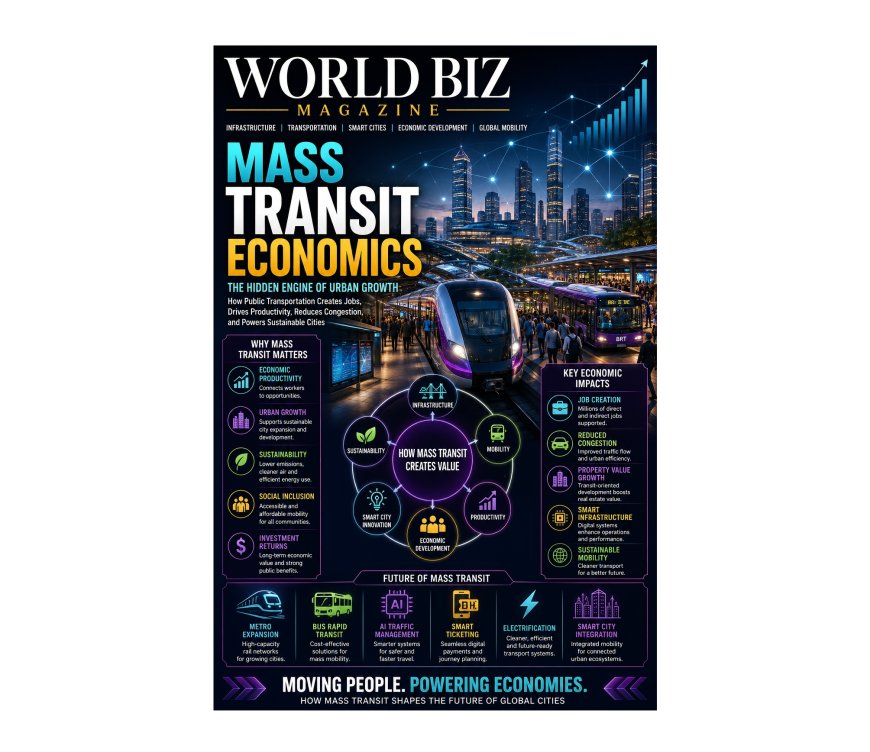
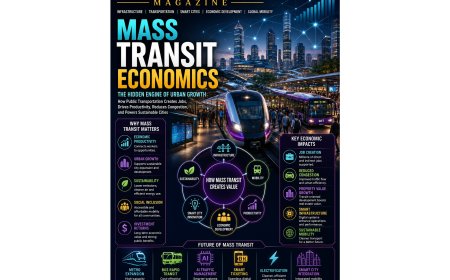
Mass Transit Economics
Understanding the Financial, Social, and Economic Impact of Public Transportation Systems in Modern Cities
World Biz Magazine | Transportation, Infrastructure & Urban Development
Mass transit systems are among the most important investments made by modern societies. From metro rail networks and commuter trains to buses, trams, and Bus Rapid Transit (BRT) systems, public transportation serves as a critical component of urban mobility and economic development. As cities continue to expand and populations become increasingly concentrated in metropolitan regions, efficient mass transit infrastructure has become essential for maintaining economic productivity, reducing congestion, improving environmental sustainability, and enhancing quality of life.
While passengers often view mass transit primarily as a transportation service, its economic significance extends far beyond moving people from one location to another. Public transportation systems influence labor markets, real estate values, business productivity, infrastructure development, environmental outcomes, and long-term urban competitiveness. In many cities, mass transit serves as the backbone of economic activity by connecting workers with employment centers, businesses with customers, and communities with opportunities.
Governments worldwide invest hundreds of billions of dollars annually in transportation infrastructure because of its broad economic impact. Although mass transit systems often require substantial capital expenditures and operational subsidies, their long-term economic benefits frequently outweigh the costs through productivity gains, congestion reduction, environmental improvements, and enhanced urban development.
As urbanization accelerates and sustainability becomes a global priority, understanding the economics of mass transit has become increasingly important for policymakers, investors, urban planners, transportation authorities, and business leaders seeking to build resilient and prosperous cities.
Understanding Mass Transit
Mass transit refers to transportation systems designed to move large numbers of people efficiently through shared infrastructure and services.
Common forms include:
- Metro rail systems
- Subways
- Commuter rail
- Light rail transit
- Bus Rapid Transit (BRT)
- Public bus networks
- Streetcars and trams
- Ferry transportation
Unlike private transportation, mass transit operates on shared routes and schedules, providing affordable mobility solutions for urban populations.
The primary objectives of mass transit include:
- Reducing congestion
- Improving accessibility
- Enhancing mobility
- Supporting economic growth
- Promoting sustainability
Mass transit systems form the foundation of many successful urban economies.
Why Mass Transit Matters Economically
Transportation is a fundamental economic enabler.
Without efficient mobility systems, cities face:
- Traffic congestion
- Reduced productivity
- Labor market inefficiencies
- Higher logistics costs
- Environmental degradation
Mass transit helps address these challenges by moving large numbers of passengers through limited urban space.
Economic benefits extend across multiple sectors, creating value far beyond transportation itself.
The Economic Multiplier Effect
One of the most significant aspects of mass transit economics is the multiplier effect.
Transportation investments generate economic activity through:
Construction Projects
Infrastructure development creates jobs and supports related industries.
Supply Chains
Transit projects require materials, technology, engineering services, and equipment.
Operational Employment
Transit agencies employ large workforces including:
- Drivers
- Engineers
- Maintenance personnel
- Administrators
- Technology specialists
Indirect Economic Activity
Businesses benefit from increased customer access and workforce mobility.
The economic impact often extends throughout regional economies.
Capital Investment Economics
Mass transit infrastructure requires substantial upfront investment.
Major expenditures include:
- Rail construction
- Stations and terminals
- Vehicle procurement
- Signaling systems
- Power infrastructure
- Maintenance facilities
Large-scale transportation projects may require billions of dollars in capital investment.
While costs can be significant, these assets often provide benefits for decades.
Infrastructure investments are typically evaluated using long-term economic return frameworks.
Operating Revenue Models
Mass transit systems generate revenue through multiple channels.
Passenger Fares
Fare collection remains the primary revenue source for most transit agencies.
Pricing models may include:
- Single fares
- Monthly passes
- Annual subscriptions
- Distance-based pricing
- Integrated ticketing systems
Fare revenue contributes toward operational costs but rarely covers total system expenses.
Advertising Revenue
Transit systems provide valuable advertising opportunities.
Revenue may come from:
- Station advertising
- Vehicle branding
- Digital displays
- Sponsorship agreements
Advertising can become a meaningful supplementary income source.
Commercial Leasing
Many transit stations incorporate retail and commercial spaces.
Examples include:
- Restaurants
- Retail stores
- Convenience shops
- Service providers
Commercial leasing enhances overall financial performance.
Government Funding
Most public transportation systems receive financial support through:
- National governments
- Regional authorities
- Municipal governments
Public funding reflects the broader economic benefits generated by mass transit.
Cost Structure of Mass Transit Systems
Operating public transportation networks involves significant expenses.
Major cost categories include:
Labor Costs
Personnel often represent the largest operating expense.
Energy Costs
Fuel and electricity requirements vary by transit mode.
Maintenance Expenses
Infrastructure and vehicle maintenance are essential for reliability and safety.
Technology Systems
Modern transit increasingly depends on digital infrastructure.
Security and Safety
Protecting passengers and assets requires ongoing investment.
Managing these costs effectively is critical for long-term sustainability.
Productivity and Economic Output
One of the most valuable benefits of mass transit is increased economic productivity.
Efficient transportation systems:
- Reduce commuting times
- Improve workforce access
- Enhance labor mobility
- Support business activity
Workers can access employment opportunities more efficiently, while employers gain access to larger labor pools.
These productivity gains contribute significantly to economic growth.
Congestion Reduction and Economic Value
Traffic congestion imposes substantial economic costs.
Congestion contributes to:
- Lost productivity
- Increased fuel consumption
- Higher transportation costs
- Environmental impacts
Mass transit helps alleviate congestion by reducing dependence on private vehicles.
The resulting economic savings benefit individuals, businesses, and governments.
Real Estate and Property Value Impacts
Transit infrastructure often influences property markets.
Areas with strong transit access frequently experience:
- Increased property values
- Higher commercial demand
- Greater investment activity
- Urban redevelopment
Transit-oriented development (TOD) has become a major strategy for maximizing economic benefits.
Developers increasingly prioritize projects near transportation hubs.
Labor Market Benefits
Mass transit expands access to employment opportunities.
Workers can:
- Reach jobs more efficiently
- Access broader labor markets
- Reduce transportation expenses
Employers benefit from:
- Larger talent pools
- Improved workforce reliability
- Expanded recruitment opportunities
These effects strengthen overall economic competitiveness.
Environmental Economics
Environmental considerations are becoming increasingly important.
Mass transit contributes to:
Reduced Emissions
Fewer private vehicles can lower greenhouse gas emissions.
Improved Air Quality
Reduced traffic supports healthier urban environments.
Energy Efficiency
Public transportation often consumes less energy per passenger.
These environmental benefits generate long-term economic value.
Social Equity and Accessibility
Mass transit plays an important role in social inclusion.
Affordable transportation improves access to:
- Employment
- Education
- Healthcare
- Public services
Transportation accessibility helps support broader economic participation.
Inclusive mobility contributes to social and economic resilience.
Technology and Digital Transformation
Modern transit systems increasingly utilize advanced technologies.
Examples include:
Smart Ticketing
Digital payment systems improve convenience.
Artificial Intelligence
AI enhances scheduling, maintenance, and operational efficiency.
Real-Time Passenger Information
Improves customer experiences and service reliability.
Data Analytics
Supports strategic planning and resource allocation.
Technology is becoming a key driver of transit performance.
Public-Private Partnerships
Many transportation projects involve collaboration between governments and private sector organizations.
Benefits may include:
- Additional capital
- Operational expertise
- Risk sharing
- Innovation
Public-private partnerships are becoming increasingly common in large infrastructure projects.
Challenges Facing Mass Transit Systems
Despite their benefits, mass transit systems face numerous challenges.
High Capital Costs
Major projects require substantial investment.
Funding Gaps
Many systems depend on ongoing public support.
Aging Infrastructure
Modernization and maintenance remain ongoing priorities.
Ridership Volatility
Economic conditions and demographic shifts influence passenger demand.
Technological Upgrades
Keeping pace with innovation requires continuous investment.
Addressing these challenges is critical for long-term sustainability.
The Future of Mass Transit Economics
Several trends are expected to influence future transportation economics.
These include:
- Electrification
- Autonomous transit systems
- Smart city integration
- Mobility-as-a-Service (MaaS)
- Sustainable transportation policies
- AI-driven operations
- Digital infrastructure investments
- Transit-oriented development
These innovations may improve efficiency while enhancing economic returns.
Mass Transit as a Strategic Investment
Increasingly, policymakers view transportation infrastructure as a long-term economic asset rather than a simple public service.
Well-designed transit systems support:
- Economic growth
- Urban competitiveness
- Environmental sustainability
- Social inclusion
The long-term benefits often extend far beyond transportation itself.
As cities continue expanding, mass transit will remain central to future economic development strategies.
World Biz Magazine Insights
Mass transit economics demonstrates that transportation infrastructure is far more than a mobility solution it is a foundational economic development tool. The most successful cities increasingly recognize that investments in public transportation generate returns through productivity gains, real estate development, labor market expansion, environmental improvements, and enhanced urban competitiveness. As urban populations continue growing, efficient transit systems will become even more critical in shaping the economic performance and sustainability of future cities.
Conclusion
Mass transit systems play a vital role in supporting economic growth, urban development, environmental sustainability, and social inclusion. While these systems often require significant investment and ongoing operational support, their broader economic benefits extend across virtually every sector of the urban economy.
From reducing congestion and improving workforce mobility to supporting real estate development and lowering environmental costs, mass transit delivers value far beyond passenger transportation. As technology advances and cities pursue smarter, more sustainable development strategies, the importance of efficient public transportation systems is likely to increase further.
For governments, investors, businesses, and communities, understanding mass transit economics is essential for building resilient, competitive, and prosperous urban environments in the decades ahead.
Disclaimer
This article is published for informational, educational, and industry analysis purposes only and does not constitute financial, investment, legal, transportation, infrastructure, engineering, or professional advice. Economic outcomes, transportation policies, funding models, and infrastructure performance vary by region and jurisdiction. Readers should consult qualified professionals before making investment, policy, infrastructure, or strategic decisions related to transportation systems or public transit projects.
What's Your Reaction?
 Like
0
Like
0
 Dislike
0
Dislike
0
 Love
0
Love
0
 Funny
0
Funny
0
 Angry
0
Angry
0
 Sad
0
Sad
0
 Wow
0
Wow
0