































































































































Inside Airline Pricing: How Fare Bundling and Add-Ons Drive Revenue Growth
A detailed World Biz Magazine research guide to airline revenue models, including pricing, bundling, and ancillary services.

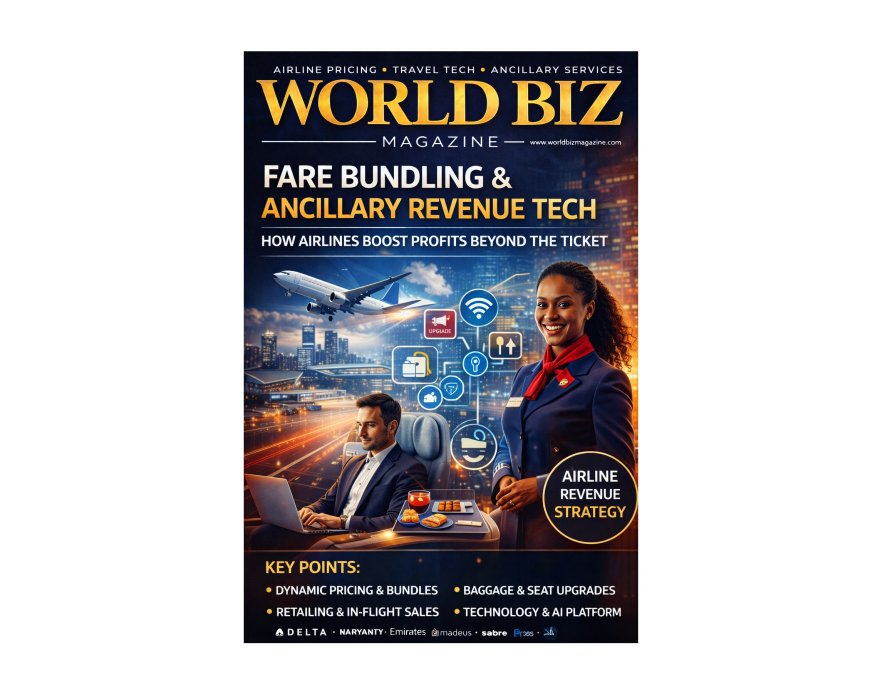
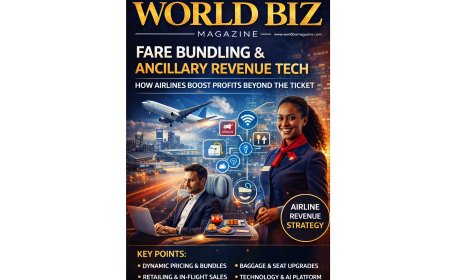
Fare Bundling & Ancillary Revenue Tech
How Airlines and Travel Platforms Maximize Revenue Beyond the Ticket
World Biz Magazine | Aviation Economics & Travel Tech | Revenue Optimization Strategies
The Shift Beyond Base Fares
The airline industry has undergone a fundamental transformation over the past two decades. What was once a straightforward ticket purchase has evolved into a sophisticated revenue ecosystem driven by fare bundling and ancillary revenue technologies.
Today, airlines generate a significant portion of their income not from base fares, but from additional services such as baggage fees, seat selection, meals, and premium upgrades. Industry leaders like Delta Air Lines, Ryanair, and Emirates have mastered this model, leveraging advanced technology to maximize revenue per passenger.
What is Fare Bundling?
Fare bundling is a pricing strategy where airlines package multiple services into a single offering. Instead of offering a one-size-fits-all ticket, airlines provide different fare tiers such as:
- Basic Economy
- Standard Economy
- Premium Economy
- Business Class
Each bundle includes a combination of services:
- Baggage allowance
- Seat selection
- Priority boarding
- Refund flexibility
The goal is to increase perceived value while encouraging upselling.
What is Ancillary Revenue?
Ancillary revenue refers to income generated from services beyond the base ticket price. These include:
- Checked baggage fees
- Seat upgrades
- In-flight meals and Wi-Fi
- Travel insurance
- Lounge access
For many airlines, ancillary revenue accounts for 20-40% of total revenue.
Evolution of Airline Revenue Models
Traditional Model
- Fixed ticket pricing
- Limited service differentiation
Modern Model
- Dynamic pricing
- Personalized offers
- Multiple revenue streams
The shift has been driven by:
- Low-cost carrier competition
- Digital transformation
- Changing consumer behavior
Key Technologies Behind Fare Bundling
Revenue Management Systems (RMS)
These systems optimize pricing based on:
- Demand
- Booking patterns
- Market conditions
Dynamic Pricing Engines
Prices adjust in real time based on:
- Seat availability
- Customer demand
- Time to departure
Customer Data Platforms (CDP)
Airlines use data to:
- Personalize offers
- Predict customer preferences
AI & Machine Learning
AI enables:
- Predictive pricing
- Recommendation engines
- Upselling strategies
NDC (New Distribution Capability)
NDC allows airlines to:
- Offer customized bundles
- Sell directly to customers
- Bypass traditional systems
Market Players in Ancillary Revenue Tech
Airlines Leading the Model
- Ryanair - Pioneer in ancillary revenue
- Spirit Airlines - Ultra low-cost model
- Delta Air Lines - Premium bundling strategy
- Emirates - Luxury-focused upselling
Technology Providers
- Amadeus IT Group - Revenue management and retailing solutions
- Sabre Corporation - Airline retailing and pricing systems
- Travelport - Distribution and merchandising
Specialized Revenue Tech Companies
- PROS (AI pricing solutions)
- Navitaire (low-cost carrier systems)
- Accelya (revenue accounting and NDC solutions)
Examples of Fare Bundling in Practice
Ryanair
Offers ultra-low base fares with paid add-ons:
- Priority boarding
- Seat selection
- Extra baggage
Maximizes ancillary revenue per passenger.
Delta Air Lines
Provides structured bundles:
- Basic Economy (limited features)
- Main Cabin (standard benefits)
- Delta Comfort+ (enhanced experience)
Emirates
Focuses on premium bundles:
- Luxury services
- Personalized travel experience
Benefits of Fare Bundling
For Airlines
- Increased revenue
- Better inventory management
- Enhanced customer segmentation
For Customers
- Flexible options
- Pay-for-what-you-use model
- Customized travel experience
Challenges in Ancillary Revenue Strategies
Customer Perception
Hidden fees can lead to dissatisfaction.
Complexity
Too many options can confuse users.
Regulatory Scrutiny
Governments may regulate:
- Pricing transparency
- Consumer protection
Future Trends in Revenue Optimization
Hyper-Personalization
AI-driven offers tailored to individual travelers.
Subscription Models
Frequent traveler subscriptions for:
- Benefits and discounts
Bundling Across Travel Ecosystem
Integration of:
- Flights
- Hotels
- Experiences
AI-Powered Upselling
Real-time recommendations during booking.
World Biz Magazine Insight
At World Biz Magazine, our analysis highlights:
“The future of airline profitability lies not in selling seats but in selling experiences through intelligent bundling and ancillary services.”
Conclusion: The New Revenue Frontier
Fare bundling and ancillary revenue technologies have redefined the airline business model. By leveraging data, AI, and digital platforms, airlines can maximize revenue while offering personalized travel experiences.
As competition intensifies, the ability to innovate in pricing and bundling will determine industry leaders.
Final Thought
“In modern aviation, the ticket is just the beginning the real revenue lies in everything that follows.”
Disclaimer
This article is intended for informational and educational purposes only and does not constitute financial, investment, legal, or business advice. The analysis of fare bundling strategies, ancillary revenue models, and aviation technology systems is based on general industry practices, publicly available information, and research insights, which may vary across airlines, regions, and regulatory environments.
References to companies such as Delta Air Lines, Ryanair, and Amadeus IT Group are for illustrative purposes only and do not imply endorsement or guarantee of similar performance outcomes.
Airline pricing strategies, ancillary services, and revenue technologies are subject to continuous changes, including regulatory developments, market competition, and evolving consumer preferences.
Readers, investors, and industry stakeholders are advised to conduct independent research and consult qualified financial advisors, aviation experts, and legal professionals before making decisions related to business strategy, investment, or technology adoption.
What's Your Reaction?
 Like
0
Like
0
 Dislike
0
Dislike
0
 Love
0
Love
0
 Funny
0
Funny
0
 Angry
0
Angry
0
 Sad
0
Sad
0
 Wow
0
Wow
0