











































































































































































































Quick Commerce (Q-Commerce): Market Growth, Players & Future of Instant Retail
Discover how 10–30 minute delivery platforms are transforming logistics, consumer behavior, and urban retail ecosystems.


Quick Commerce (Q-Commerce): The Race to Deliver the Instant Economy
How ultra-fast delivery platforms are reshaping urban retail, logistics infrastructure, and consumer expectations worldwide
World Biz Magazine | Retail Innovation & Digital Economy
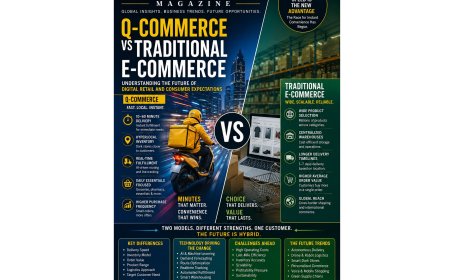
The evolution of e-commerce is entering its next phase: Quick Commerce (Q-Commerce) a hyper-local retail model promising delivery within minutes rather than days. Built on dense logistics networks, data-driven inventory systems, and gig-economy workforces, Q-commerce is transforming how urban consumers access groceries, household items, and daily essentials.
From India’s high-growth digital marketplaces to North America’s logistics-driven platforms and Europe’s technology-first entrants, the sector has rapidly become a battleground for venture capital, infrastructure investment, and digital retail innovation. While the business promises convenience and growth, it also raises questions about profitability, labor sustainability, and long-term economics.
This article explores the global Q-commerce ecosystem including market scale, business models, major players, infrastructure impacts, risks, and future outlook.
Understanding Quick Commerce
Quick commerce refers to on-demand retail delivery typically within 10–30 minutes, enabled by localized fulfillment hubs (“dark stores”), real-time inventory management, and optimized last-mile logistics.
Key characteristics:
- Hyper-local fulfillment infrastructure
- Small basket size, high order frequency
- Delivery through gig or flexible workforce
- AI-driven routing and demand forecasting
- Mobile-first consumer engagement
The sector is expanding rapidly, particularly in densely populated urban markets. In India alone, the industry is projected to become a $200 billion market by 2026, reflecting massive consumer adoption and digital penetration.
Global Market Size and Growth
Q-commerce remains unevenly distributed across regions but is expanding quickly:
- India’s market reached roughly ₹640 billion ($7.3 billion) in 2025 and is expected to triple by 2028.
- Another forecast suggests growth to ₹1.5-1.7 trillion by 2027, underscoring strong demand momentum.
- Saudi Arabia’s sector is valued around $293 million in 2025, projected to exceed $1 billion by 2032 with nearly 20% CAGR.
This expansion is driven by:
- Smartphone penetration
- Urbanization
- Lifestyle time constraints
- Platform competition and marketing
- Infrastructure investment
Core Business Models
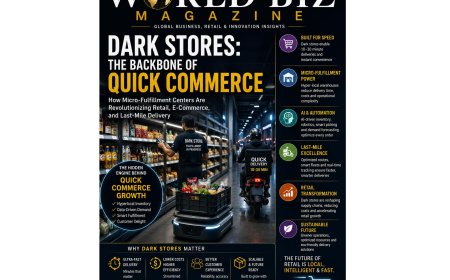
Inventory-Led Dark Store Model
Platforms maintain micro-warehouses close to customers.
- Full control over inventory
- Faster delivery
- Higher capital investment
Example: Blinkit’s network of hundreds of dark stores across multiple cities supports rapid fulfillment.
Marketplace Aggregator Model
Platforms connect customers with local retailers.
- Lower inventory risk
- Commission-based revenue
- Lower operational control
Used in early-stage or hybrid ecosystems.
Hybrid Omnichannel Model
Combines owned inventory with third-party sellers.
- Flexibility and scalability
- Data-driven product expansion
- Cross-subsidization with other services
Large super-apps commonly adopt this structure.
Subscription / Membership Model
Revenue from loyalty programs or delivery passes.
- Predictable revenue streams
- Customer retention tool
Advertising & Data Monetization
Brands pay for app placement or analytics.
- High-margin revenue channel
- Increasingly important as margins tighten
Major Global Players
Asia
- Blinkit (Zomato) - Leading market share in India with aggressive expansion.
- Zepto - Rapidly scaling startup valued at $7B.
- Swiggy Instamart - Logistics-led integration model.
- JioMart - Massive growth with millions of daily orders.
North America
- Gopuff - Leading instant delivery usage metrics
- Instacart - Broader grocery ecosystem leadership
- Amazon / Walmart - Adapting fast-delivery strategies
Europe
- Getir - Strong regional presence despite consolidation
- Regional startups - pursuing niche urban markets
Infrastructure & Economic Impact
Logistics and Real Estate
Rapid delivery demand is fueling growth in micro-warehousing, converting unused urban spaces into fulfillment centers and reshaping city logistics economies.
Employment
The sector supports hundreds of thousands of gig workers in India alone, providing flexible income opportunities.
Retail Transformation
- Drives competition for traditional retailers
- Encourages digital adoption among small brands
- Alters consumer expectations around immediacy
Financial Economics & Profitability Challenges
Despite strong growth, margins remain thin:
- Aggressive discounting and delivery incentives
- High logistics costs
- Expensive infrastructure expansion
- Rising operational expenses
For example, growth in orders has significantly increased costs for leading platforms, highlighting profitability pressures in the sector.
Market competition often prioritizes scale over profitability, delaying breakeven timelines across many operators.
Risks Facing the Industry
Operational Risks
- Inventory spoilage
- Demand forecasting inaccuracies
- Supply chain disruptions
Financial Risks
- Cash burn from expansion
- Investor dependence
- Pricing model instability
Regulatory Risks
- Labor classification issues
- Urban zoning constraints
- Retail competition laws
Strategic Risks
- Customer loyalty volatility
- Entry of major tech giants
- Market consolidation
Opportunities and Future Outlook
Technological Innovation
- AI demand forecasting
- Autonomous delivery
- Robotics and automation
Category Expansion
Beyond groceries into:
- Electronics
- Fashion
- Pharmaceuticals
- Food services
Geographic Expansion
Emerging markets in the Middle East, Southeast Asia, and Africa show strong growth potential.
Integration with Digital Commerce Ecosystems
Convergence with:
- Social commerce
- Live shopping
- Financial services
- Subscription ecosystems
Conclusion
Quick commerce represents one of the most disruptive transformations in retail logistics since the rise of traditional e-commerce. It compresses supply chains, redefines customer expectations, and reshapes urban infrastructure.
Yet the sector’s future depends on solving its core paradox: delivering speed and convenience while achieving sustainable profitability.
For investors, retailers, and policymakers, Q-commerce is not merely a retail innovation it is an emerging foundation of the instant digital economy.
Disclaimer
This article is published by World Biz Magazine for informational, educational, and industry analysis purposes only. The content reflects research, market observations, and publicly available information at the time of writing and does not constitute financial, investment, legal, or business advisory services.
Market figures, projections, and strategic interpretations should be treated as indicative rather than definitive, as the quick commerce sector is rapidly evolving and subject to technological, regulatory, and economic changes. Readers and organizations should conduct independent due diligence or consult qualified professionals before making investment or operational decisions based on the information presented.
World Biz Magazine, its editors, contributors, and affiliated entities assume no liability for actions taken based on this publication. Company names, trademarks, and brands mentioned remain the property of their respective owners and are referenced solely for editorial and analytical purposes.
What's Your Reaction?
 Like
0
Like
0
 Dislike
0
Dislike
0
 Love
0
Love
0
 Funny
0
Funny
0
 Angry
0
Angry
0
 Sad
0
Sad
0
 Wow
0
Wow
0