



































































































































































































How Commercial & Industrial Real Estate is Financed: Capital Structures, Risks & Investment Strategies
A detailed analysis of financing models for commercial and industrial real estate, covering bank lending, institutional capital, private equity, REITs, structured finance, and global investment outlook.

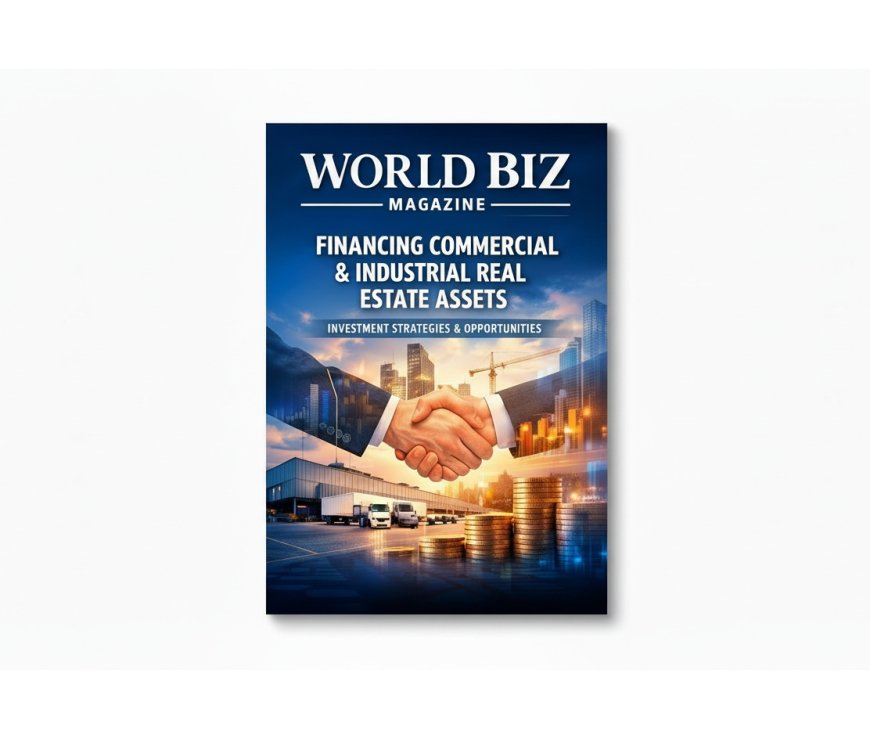
Financing Commercial & Industrial Real Estate Assets - A Comprehensive Overview
World Biz Magazine | Industry Analysis Report
Commercial and industrial real estate financing is a cornerstone of the global property and business investment ecosystem. Unlike residential mortgages where individual homeowners secure loan products commercial and industrial financing is designed to support businesses, investors, developers, and institutions in acquiring, developing, or refinancing income-producing property and facilities used for commercial and industrial operations. Such assets often form the backbone of urban economies and industrial supply chains, facilitating employment, trade, logistics, production, and services.
What Are Commercial and Industrial Real Estate Assets?
Commercial real estate assets generally refer to property used for business purposes that generate rental or operational income, while industrial assets support manufacturing, warehousing, logistics, or production functions. Common classifications include:
Commercial Assets
· Office buildings and corporate headquarters
· Retail centers including malls and strip malls
· Hospitality properties (hotels, resorts)
· Mixed-use developments combining retail and office
· Multifamily rental housing stock treated as commercial
· Medical offices and educational facilities
Industrial Assets
· Warehouses and distribution centers
· Manufacturing plants
· Cold storage/logistics hubs
· Research and development facilities
· Large-scale fabrication and production complexes
· Port-related and intermodal logistics facilities
These asset classes serve different risk-return profiles and are financed under different lending criteria compared with residential loans, most importantly focusing on income generation, cash flow, and corporate financial strength rather than individual affordability.
Key Players in Commercial and Industrial Real Estate Financing
Real estate finance for commercial and industrial assets involves a mix of traditional banks, alternative lenders, insurance companies, pension funds, investment managers, REITs, and private equity firms. Major lenders and capital providers include:
Global Banks
· HSBC Holdings plc - Wide global footprint, CRE loans in Asia, Europe, Americas
· J.P. Morgan Chase - Significant financing, portfolio acquisition, structured debt
· Deutsche Bank & Barclays PLC - Strong European CRE lenders
· Bank of China & ICBC - Large Asia Pacific presence
Insurance and Investment Management
· MetLife Investment Management - long-term CRE debt and equity
· Prudential Financial (PGIM) - multi-asset real estate investing
· Allianz SE Real Estate - European and global financing
Private Equity & Alternative Lenders
· Blackstone Group - Major commercial property debt funds and loan acquisitions
· Brookfield Asset Management - CRE investment and financing solutions
Specialized Lenders & Advisory Firms
· Walker & Dunlop, Inc. - CRE financing and advisory services globally
· Aareal Bank AG - Structured property finance across Europe, NA & APAC
· Hypo Real Estate - Key German commercial property lender
· Enness Global Commercial Property Finance - Specialist lender for complex CRE financing
These companies offer loans, structured finance, mezzanine debt, bridging finance, syndicated deals, project and development finance, refinancing, and even equity-like financing depending on the asset and market.
Countries and Regions Supporting Commercial & Industrial Financing
Commercial real estate finance is active globally, but certain markets are especially well-developed:
North America
· United States & Canada: Largest CRE mortgage and loan markets globally; strong participation from banks, insurance firms, CMBS, and alternative lenders.
Europe
· UK, Germany, France, Netherlands: Mature CRE markets with growth in sustainable/green finance.
Asia Pacific
· China, India, Japan, Australia: Fastest-growing regions driven by urbanization and industrial expansion.
Middle East & Africa
· UAE, GCC, South Africa: Emerging CRE finance markets with government and private sector growth.
These regions often benefit from robust legal frameworks, stable economies, large institutional capital pools, and growing demand for office, logistics, manufacturing, and mixed-use investments.
Procedures for Financing Commercial and Industrial Assets
While processes vary by lender and jurisdiction, common steps include:
1. Pre-qualification & Consultation:
Initial financial assessment, asset evaluation, and discussion of deal structure.
2. Submission of Business & Financial Documentation:
Corporate financials, tax returns, balance sheets, income statements, and asset valuations.
3. Appraisal & Due Diligence:
Independent property appraisals, cash-flow projections, legal title and environmental inspections.
4. Loan Structuring & Negotiation:
Terms are structured based on Loan-to-Value (LTV) ratios, interest rates, amortization profiles, and covenants.
5. Underwriting and Credit Approval:
Risk assessment, credit analysis, and final approval by lending committees.
6. Funding & Drawdown:
Execution of agreements and capital disbursement.
7. Servicing and Monitoring:
Ongoing loan servicing, reporting, and compliance check-ins.
Alternative lenders often offer faster approvals with flexible criteria, while traditional banks may request more stringent documentation and credit profiles.
Eligibility & Limitations
Typical Eligibility Requirements
· Corporate or business registration/license with a verifiable track record.
· Financial stability reflected in audited accounts.
· Asset cash-flow viability and strong collateral value.
· Good credit history for both corporate and principal owners.
· Large projects often require institutional sponsors or investment partners.
Common Lending Limits
· LTV Ratios: Typically 60-80% of collateral value; some markets allow up to100% with specialist lenders.
· Loan Size Caps: Minimums often start around $1-10 million for commercial/industrial loans and can exceed hundreds of millions for institutional deals.
· Tenor: Usually 3-25 years depending on asset class and amortization preferences.
Investment Companies & Funding Sources
Institutional lenders, investment managers, and REITs also provide financing or capital partnerships:
· CBRE Group, Inc. - CRE debt origination and advisory.
· JLL (Jones Lang LaSalle Incorporated) - Global CRE services and capital markets.
· Berkadia Commercial Mortgage LLC - U.S. CRE financing solutions.
· BNP Paribas / Starwood Capital Partnerships - Securitization and co-managed debt portfolios.
· Goldman Sachs & Morgan Stanley - Institutional CRE financing platforms.
Conclusion
Financing commercial and industrial real estate remains vital for global business expansion, urban development, and economic growth. While traditional banks continue to play a significant role, alternative lenders, investment groups, institutional investors, and pension funds are increasingly shaping the landscape, especially for large, complex assets. Regional markets in North America, Europe, and Asia Pacific are well-developed, offering diverse financing options and sophisticated loan products, while emerging markets are also growing rapidly.
Prospective borrowers should carefully assess eligibility, financing limits, lender profiles, and legal compliance before proceeding, and consider partnering with experienced advisors or intermediaries for optimal structuring.
Disclaimer
This article provides general information only and is not financial, legal, or investment advice. Terms, conditions, eligibility, and availability of commercial and industrial real estate financing vary significantly across countries, lenders, and individual circumstances. Readers are advised to consult financial professionals, legal advisors, or qualified lending institutions in their jurisdiction before making investment or financing decisions.
What's Your Reaction?
 Like
0
Like
0
 Dislike
0
Dislike
0
 Love
0
Love
0
 Funny
0
Funny
0
 Angry
0
Angry
0
 Sad
0
Sad
0
 Wow
0
Wow
0