



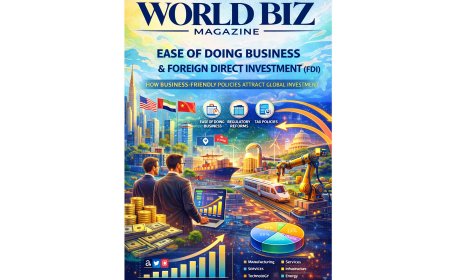


























































































































































Foreign Direct Investment (FDI): Global Market Trends and Economic Impact
A World Biz Magazine analysis of global FDI trends, sector investments, emerging markets, and the outlook for foreign investment through 2035.


What Is Foreign Direct Investment (FDI)?
Global FDI Trends, Investment Flows and the Future of International Capital
World Biz Magazine | Global Economy & Investment Special Report
Foreign Direct Investment (FDI) is one of the most important drivers of global economic growth, international trade, and industrial development. Governments around the world compete to attract foreign investment to create jobs, build infrastructure, strengthen manufacturing capacity, and accelerate technological innovation.
Over the past two decades, FDI flows have reshaped global supply chains, expanded multinational corporations, and integrated emerging markets into the global economy. However, geopolitical tensions, economic policies, trade wars, inflation pressures, and supply chain restructuring have significantly influenced investment patterns.
This World Biz Magazine Industry Today report examines Foreign Direct Investment in detail, including global FDI flows, sector trends, key investors, policy influences, regional competition, geopolitical impacts, and forecasts for global investment through 2035.
What Is Foreign Direct Investment (FDI)?
Foreign Direct Investment refers to capital investments made by a company or investor from one country into business operations located in another country.
Unlike portfolio investment (stocks and bonds), FDI typically involves long-term control or ownership of business operations.
Types of FDI
Greenfield Investment
Building new factories, offices, or infrastructure in a foreign country.
Mergers and Acquisitions
Purchasing or merging with existing companies abroad.
Joint Ventures
Partnerships between foreign investors and local companies.
FDI is essential for transferring capital, technology, and expertise across borders.
Global FDI Market Overview
Global FDI flows fluctuate based on economic conditions, political stability, and global trade dynamics.
Global FDI Flows
|
Year |
Global FDI |
|
2015 |
$1.9T |
|
2020 |
$1.0T (pandemic decline) |
|
2023 |
$1.4T |
|
2025 |
$1.6T |
|
2035 Forecast |
$2.5T+ |
Despite temporary declines during global crises, long-term investment demand remains strong.
Key Industries Attracting FDI
Foreign investment flows into several major economic sectors.
Major FDI Sectors
|
Sector |
Investment Strength |
|
Manufacturing |
very high |
|
Technology |
high |
|
Energy |
high |
|
Infrastructure |
growing |
|
Financial services |
strong |
Technology and renewable energy investments have grown rapidly in recent years.
Key Global Investors
Multinational corporations and institutional investors dominate global FDI flows.
Major Corporate Investors
- Apple
- Toyota Motor Corporation
- Amazon
- Microsoft
- Samsung Electronics
These corporations invest billions annually in international markets.
Countries Attracting the Most FDI
Several countries dominate global FDI inflows.
Top FDI Destinations
|
Country |
Key Strength |
|
United States |
technology and finance |
|
China |
manufacturing hub |
|
Singapore |
financial center |
|
India |
emerging digital economy |
|
Germany |
industrial innovation |
These countries combine strong infrastructure, stable policies, and large markets.
Emerging FDI Destinations
Many developing countries are attracting increasing foreign investment.
High-Growth Investment Markets (2025-2026)
- Vietnam
- Indonesia
- United Arab Emirates
- Saudi Arabia
- Mexico
These economies offer competitive labor costs, growing consumer markets, and pro-investment policies.
Countries Losing FDI Investment
Some countries have experienced declining investment flows.
Declining Investment Destinations
- Russia (due to geopolitical sanctions)
- parts of Eastern Europe affected by conflict
- countries with political instability
Political uncertainty can significantly reduce foreign investor confidence.
Political Influence on FDI
Government policies strongly influence investment decisions.
Key Policy Factors
- tax incentives for investors
- trade agreements
- regulatory frameworks
- political stability
- infrastructure development
Countries with transparent regulatory systems tend to attract more investment.
FDI and Economic Growth
Foreign investment can significantly boost economic development.
Benefits of FDI
- job creation
- technology transfer
- export expansion
- infrastructure development
- increased productivity
Many emerging economies rely heavily on FDI to accelerate economic growth.
Global Supply Chain Transformation
FDI is closely linked to global supply chain restructuring.
Key Trends
- diversification away from single-country manufacturing
- nearshoring and regional supply chains
- digital economy investments
- renewable energy projects
Companies are restructuring supply chains to reduce geopolitical risks.
Inflation and Investment Costs
Rising inflation and higher interest rates influence global investment decisions.
Investment Cost Factors
- labor costs
- construction and infrastructure costs
- energy prices
- financing costs
Economic conditions can significantly affect FDI flows.
Sector-by-Sector FDI Comparison
FDI by Industry
|
Sector |
Share of FDI |
|
Manufacturing |
35% |
|
Services |
40% |
|
Energy |
15% |
|
Technology |
rapidly growing |
Technology and renewable energy investments are gaining a larger share of global FDI.
Major Investment Projects
Large multinational companies continue launching major international investment projects.
Examples include:
- semiconductor manufacturing plants
- renewable energy projects
- digital infrastructure development
- logistics and supply chain hubs
These projects often involve multi-billion-dollar investments.
Global FDI Flow Trend (Estimated)
|
Year |
Global FDI Flow |
|
2015 |
$1.9 Trillion |
|
2017 |
$1.8 Trillion |
|
2019 |
$1.5 Trillion |
|
2020 |
$1.0 Trillion |
|
2022 |
$1.3 Trillion |
|
2024 |
$1.5 Trillion |
|
2025 |
$1.6 Trillion |
|
2030 Forecast |
$2.1 Trillion |
|
2035 Forecast |
$2.5+ Trillion |
Key Insight:
After the pandemic decline in 2020, global investment flows are recovering, driven by technology, renewable energy, digital infrastructure, and semiconductor manufacturing investments.
Largest FDI Recipients
|
Rank |
Country |
Key Investment Sectors |
|
1 |
United States |
Technology, Finance |
|
2 |
China |
Manufacturing |
|
3 |
Singapore |
Financial services |
|
4 |
India |
Digital economy |
|
5 |
Germany |
Industrial manufacturing |
|
6 |
UAE |
Infrastructure |
|
7 |
Vietnam |
Electronics manufacturing |
|
8 |
Mexico |
Automotive supply chains |
|
9 |
Indonesia |
Natural resources |
|
10 |
Saudi Arabia |
Energy transition |
Emerging Trend:
Southeast Asia and Middle East markets are rapidly attracting new global capital flows.
FDI by Industry Sector Comparison Chart
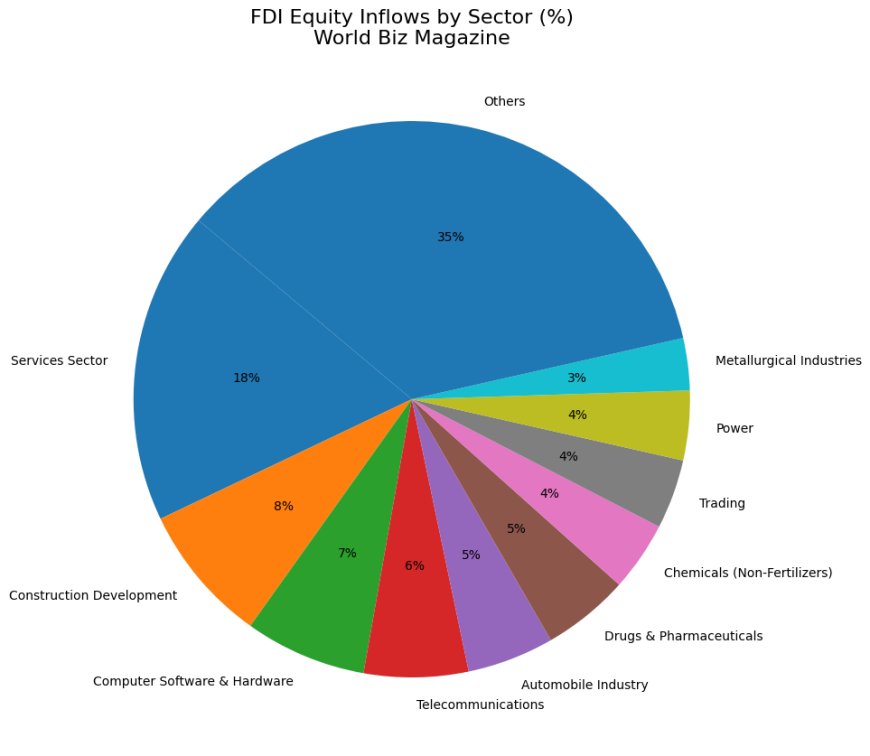
Global FDI Distribution by Sector
|
Sector |
Share of Global FDI |
|
Services |
40% |
|
Manufacturing |
35% |
|
Energy |
15% |
|
Technology |
7% |
|
Agriculture |
3% |
Fastest Growing Sector:
Technology investments including AI, semiconductor manufacturing, cloud infrastructure, and data centers.
Major Global Investment Corridors
North America - Asia
Technology, manufacturing and supply chains.
Europe - Africa
Infrastructure, renewable energy, and mining.
Middle East - Global Markets
Sovereign wealth fund investments.
Asia - Southeast Asia
Electronics and supply chain expansion.
China - Belt & Road Countries
Infrastructure and logistics development.
Future Trends in FDI
Several trends will shape global investment flows.
Digital Economy Investment
Technology infrastructure and AI innovation are attracting significant capital.
Renewable Energy Projects
Global energy transition is driving investment into solar, wind, and hydrogen projects.
Infrastructure Development
Large infrastructure projects are attracting sovereign wealth funds and institutional investors.
FDI Forecast to 2035
Key Growth Drivers
- emerging market expansion
- digital transformation
- renewable energy investments
- infrastructure development
- global supply chain diversification
Market Outlook
|
Segment |
2035 Outlook |
|
global FDI flows |
$2.5T+ |
|
technology investments |
rapid expansion |
|
renewable energy projects |
major growth |
FDI will remain a central component of global economic integration.
World Biz Magazine Insights
Foreign Direct Investment continues to shape global economic power structures. Countries that create favorable investment environments through strong infrastructure, transparent regulations, and skilled workforces will attract the next wave of global capital.
Meanwhile, geopolitical tensions and economic nationalism are forcing investors to reconsider where and how they allocate international capital.
Conclusion
Foreign Direct Investment plays a crucial role in driving global economic development, enabling companies to expand internationally while helping countries strengthen industrial capacity and economic growth.
As the global economy evolves, FDI patterns will continue shifting toward emerging markets, technology sectors, and sustainable energy investments.
Governments that adapt their investment policies to support innovation, transparency, and economic stability will be best positioned to attract future global capital flows.
Disclaimer
The information presented in this article is intended for informational and educational purposes only. Market statistics, projections, and forecasts are based on publicly available industry data and analytical estimates at the time of publication. While every effort has been made to ensure accuracy, World Biz Magazine does not guarantee future market performance or investment outcomes. Readers should consult professional advisors before making financial or strategic decisions based on the information contained in this report. All trademarks and company names mentioned belong to their respective owners.
What's Your Reaction?
 Like
0
Like
0
 Dislike
0
Dislike
0
 Love
0
Love
0
 Funny
0
Funny
0
 Angry
0
Angry
0
 Sad
0
Sad
0
 Wow
0
Wow
0