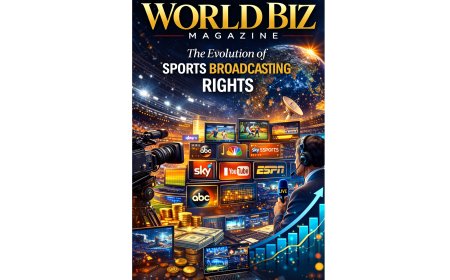















































































































































































































The Evolution of Sports Broadcasting Rights in the Streaming Era
A deep analysis of sports broadcasting rights, media investments, streaming wars, and the future of live sports distribution worldwide.


The Evolution of Sports Broadcasting Rights: From Television to Global Streaming Empires
World Biz Magazine | Media, Sports & Global Investment Report
Sports broadcasting rights have become one of the most valuable assets in the global media and entertainment industry. From the early days of radio commentary to today’s multi-billion-dollar digital streaming agreements, broadcasting rights have transformed how fans consume sports and how leagues generate revenue.
Today, global sports broadcasting rights are worth hundreds of billions of dollars, forming the largest revenue stream for many professional leagues and international sporting events. Major broadcasters, streaming platforms, and digital media companies compete fiercely for exclusive rights to sports content because live sporting events consistently attract massive audiences and advertising revenue.
As media consumption continues to shift toward digital platforms, the evolution of sports broadcasting rights is reshaping the global sports economy.
Early Beginnings: Radio and the Birth of Sports Media
The relationship between sports and media began in the early 20th century with radio broadcasts. Radio allowed fans to follow games live, creating a new form of sports entertainment beyond the stadium.
Key Characteristics of Early Sports Broadcasting
- Live radio commentary for major games
- Limited geographic reach
- Minimal commercial sponsorship
- Focus on local teams and leagues
Despite its simplicity, radio broadcasting helped expand the popularity of sports and laid the foundation for the future sports media industry.
The Television Revolution
The introduction of television dramatically transformed sports broadcasting. By the mid-20th century, televised sporting events had become major entertainment attractions.
Television enabled fans to watch games live from their homes, dramatically expanding the audience for sports leagues and tournaments.
Impact of Television on Sports
- global audience expansion
- increased advertising revenue
- higher visibility for athletes and teams
- growth of international sports competitions
Sports became a central component of television programming, with broadcasters recognizing the strong ratings potential of live events.
The Rise of Multi-Billion-Dollar Broadcasting Deals
As sports audiences grew, broadcasting rights became highly valuable commercial assets. Media companies began negotiating large contracts with leagues to secure exclusive broadcasting rights.
Today, major sports leagues earn billions annually from media deals.
Key Elements of Modern Broadcasting Agreements
- exclusive broadcasting rights
- long-term media contracts
- international distribution rights
- advertising partnerships
These agreements allow broadcasters to monetize sports content through subscriptions, advertising, and digital distribution.
Globalization of Sports Media
The globalization of sports has significantly increased the value of broadcasting rights. International audiences now follow sports leagues from around the world.
Major sports events are broadcast in hundreds of countries, reaching billions of viewers.
Drivers of Global Sports Broadcasting
- satellite television technology
- international sports tournaments
- global fan communities
- multilingual broadcasting services
This global reach has turned sports broadcasting into a powerful international media business.
The Digital Streaming Revolution
The biggest transformation in sports broadcasting has occurred in the digital era. Streaming platforms and digital media companies are now major players in sports media rights.
Fans increasingly watch sports through:
- mobile apps
- streaming platforms
- social media channels
- smart televisions
Digital platforms allow viewers to access sports content anytime and anywhere.
Advantages of Digital Broadcasting
- global accessibility
- personalized viewing experiences
- interactive fan engagement
- on-demand content
Streaming services have intensified competition for sports broadcasting rights.
Technology Transforming Sports Broadcasting
Advancements in technology continue to reshape the sports viewing experience.
Modern sports broadcasting now includes:
- ultra-high-definition video
- multiple camera angles
- real-time statistics and analytics
- virtual and augmented reality features
These innovations enhance the fan experience and increase the value of broadcasting rights.
The Role of Sports Leagues and Governing Bodies
Sports leagues and governing organizations control the distribution of broadcasting rights. Their decisions influence how sports content is distributed globally.
Many leagues now operate their own digital media platforms to complement traditional broadcasting agreements.
Strategic Goals of Sports Organizations
- maximize media revenue
- expand global fan bases
- maintain competitive broadcasting partnerships
- enhance fan engagement
Leagues increasingly view media rights as central to their business models.
Economic Impact of Broadcasting Rights
Broadcasting rights represent the largest revenue source for many sports organizations.
Financial Benefits
Broadcast revenue supports:
- player salaries and team operations
- stadium infrastructure
- youth development programs
- global marketing campaigns
For many leagues, broadcasting deals generate more income than ticket sales and sponsorships combined.
Global Sports Broadcasting Revenue Growth Chart (2000-2035)
The value of sports broadcasting rights has increased dramatically over the past two decades. Major leagues and global sporting events now generate tens of billions of dollars annually from television and streaming agreements.
Global Sports Broadcasting Revenue Growth
|
Year |
Estimated Global Broadcasting Revenue |
|
2000 |
$18 Billion |
|
2005 |
$25 Billion |
|
2010 |
$35 Billion |
|
2015 |
$50 Billion |
|
2020 |
$65 Billion |
|
2025 |
$85 Billion (Projected) |
|
2030 |
$105 Billion (Projected) |
|
2035 |
$130 Billion (Projected) |
Key Insight
Sports broadcasting revenue has grown more than six times since 2000, driven by global media expansion and digital streaming platforms.
Top 10 Most Expensive Sports Broadcasting Deals in History
Sports media rights agreements now represent some of the largest contracts in the entertainment industry.
|
Rank |
League / Event |
Broadcaster |
Deal Value |
Duration |
|
1 |
NFL (USA) |
CBS, NBC, FOX, Amazon |
$113 Billion |
11 Years |
|
2 |
NBA |
ESPN / Turner Sports |
$76 Billion |
11 Years |
|
3 |
English Premier League |
Sky Sports / BT Sport |
$10 Billion |
3 Years |
|
4 |
IPL Cricket |
Viacom / Disney |
$6.2 Billion |
5 Years |
|
5 |
UEFA Champions League |
Multiple Global Broadcasters |
$5 Billion |
3 Years |
|
6 |
Formula 1 Global Rights |
Multiple Broadcasters |
$4 Billion |
Multi-year |
|
7 |
MLB (USA) |
ESPN / FOX / TBS |
$3.7 Billion |
7 Years |
|
8 |
La Liga |
Telefonica / DAZN |
$3.2 Billion |
5 Years |
|
9 |
Bundesliga |
Sky / DAZN |
$2.9 Billion |
4 Years |
|
10 |
FIFA World Cup Media Rights |
Multiple Global Broadcasters |
$2.6 Billion |
Tournament Cycle |
Industry Insight
The NFL broadcasting deal alone is the most valuable media contract in sports history, demonstrating the enormous value of live sports content.
Sports Media Rights Revenue by Sport
Different sports generate varying levels of broadcasting revenue depending on global popularity, league structure, and audience reach.
Media Rights Revenue Distribution
|
Sport |
Estimated Share of Global Media Rights Revenue |
Key Leagues / Events |
|
Football (Soccer) |
40% |
Premier League, UEFA Champions League |
|
American Football (NFL) |
25% |
National Football League |
|
Basketball |
15% |
NBA |
|
Cricket |
10% |
IPL, ICC tournaments |
|
Motorsports (Formula 1) |
5% |
Formula 1 Championship |
|
Other Sports |
5% |
Tennis, Baseball, Olympics |
Key Insight
Football dominates global sports media rights due to its massive international audience, while the NFL leads in revenue per league due to extremely valuable broadcasting contracts in the United States.
Global Sports Broadcasting Revenue Growth Chart (2000-2035)
The value of sports broadcasting rights has increased dramatically over the past two decades. Major leagues and global sporting events now generate tens of billions of dollars annually from television and streaming agreements.
Global Sports Broadcasting Revenue Growth
|
Year |
Estimated Global Broadcasting Revenue |
|
2000 |
$18 Billion |
|
2005 |
$25 Billion |
|
2010 |
$35 Billion |
|
2015 |
$50 Billion |
|
2020 |
$65 Billion |
|
2025 |
$85 Billion (Projected) |
|
2030 |
$105 Billion (Projected) |
|
2035 |
$130 Billion (Projected) |
Key Insight
Sports broadcasting revenue has grown more than six times since 2000, driven by global media expansion and digital streaming platforms.
Challenges in Sports Broadcasting
Despite rapid growth, the sports broadcasting industry faces several challenges.
Fragmentation of Media Platforms
With multiple streaming services competing for rights, fans may need multiple subscriptions to watch different sports.
Rising Costs
Broadcast rights have become extremely expensive, creating financial risks for media companies.
Changing Consumer Behavior
Younger audiences increasingly prefer short-form digital content rather than traditional broadcasts.
The Future of Sports Broadcasting
The next phase of sports broadcasting will likely be shaped by emerging technologies and evolving media consumption habits.
Key trends include:
- direct-to-consumer sports streaming
- immersive viewing experiences through VR and AR
- AI-driven sports analytics integration
- interactive fan engagement platforms
- expansion of sports content across digital ecosystems
Sports leagues may also develop their own streaming platforms to control distribution and maximize revenue.
Conclusion
Sports broadcasting rights have evolved from simple radio commentary to a global multi-billion-dollar media industry. Today, the competition for sports media rights is intense, with broadcasters and streaming platforms investing enormous resources to secure access to live sporting events.
As digital technology continues to reshape media consumption, sports broadcasting will remain one of the most powerful drivers of revenue in the global sports industry.
For fans, the evolution of sports broadcasting promises an increasingly immersive and accessible viewing experience. For leagues and media companies, it represents one of the most valuable opportunities in modern entertainment and media economics.
Disclaimer
This article is intended for informational and editorial analysis purposes only. Market trends, valuations, and industry projections referenced in this publication may evolve over time. World Biz Magazine does not provide investment, legal, or financial advice.
What's Your Reaction?
 Like
0
Like
0
 Dislike
0
Dislike
0
 Love
0
Love
0
 Funny
0
Funny
0
 Angry
0
Angry
0
 Sad
0
Sad
0
 Wow
0
Wow
0