












































































































































































































Startup Readiness for VC Investment: IP Ownership, Valuation & Legal Foundations
A detailed analysis of startup readiness for VC funding, covering IP protection, financial valuation, founder agreements, compliance frameworks, and modern investment expectations.


Startup Readiness for VC Investment: IP Ownership, Valuation & Legal Foundations
How Founders Can Build Investor-Ready Startups Through Intellectual Property Protection, Financial Structuring, and Strong Legal Infrastructure
From intellectual property ownership and startup valuation to corporate governance and investor due diligence, venture capital readiness increasingly depends on legal and operational maturity
World Biz Magazine | Venture Capital, Startup Strategy & Global Business Intelligence
BUILDING A VC-READY STARTUP FROM DAY ONE
In today’s global startup ecosystem, access to venture capital (VC) is often viewed as the ultimate gateway to rapid growth. However, one of the most misunderstood aspects among early-stage founders is what is truly required before approaching investors.
Many founders assume they must secure patents, complete formal valuations, and invest heavily in legal infrastructure before initiating conversations with venture capital firms. In reality, this approach not only delays progress but can also lead to unnecessary capital burn at a stage where efficiency is critical.
This World Biz Magazine Standards Edition provides a comprehensive, structured, and practical roadmap for startups aiming to raise VC funding in the United States. It clarifies:
- What is mandatory vs optional
- How to structure IP ownership correctly
- When and how valuation becomes relevant
- The stage-by-stage financial requirements
- How venture capital funding itself helps complete later-stage compliance
This guide is designed specifically for early-stage founders, emerging tech entrepreneurs, and global startups seeking entry into the U.S. investment ecosystem.
Why Venture Capital Readiness Begins Long Before Funding
For many startup founders, venture capital funding is often viewed as the defining milestone of entrepreneurial success. Media headlines regularly highlight billion-dollar valuations, rapid investment rounds, unicorn startups, and breakthrough technology companies scaling globally through aggressive venture capital backing.
However, behind nearly every successful investment lies a far less glamorous reality:
Investors fund preparedness, not just ideas.
The modern venture capital ecosystem has become increasingly sophisticated, data-driven, and risk-focused. Venture capital firms today evaluate far more than product innovation or market opportunity alone. Investors increasingly analyze:
- Intellectual property ownership
- Legal structure
- Governance systems
- Financial transparency
- Regulatory compliance
- Founders’ agreements
- Shareholding frameworks
- Operational scalability
In highly competitive startup ecosystems, investment readiness has evolved into a critical strategic advantage.
Many startups fail to secure investment not because their ideas lack potential, but because their legal and operational foundations remain incomplete. Venture capital firms increasingly expect startups to demonstrate organizational maturity long before large-scale funding discussions begin.
As global startup ecosystems continue expanding across:
- Artificial intelligence
- Robotics
- fintech
- healthcare
- SaaS infrastructure
- clean technology
- biotechnology
- digital media
the importance of startup readiness is becoming more significant than ever.
The future of venture capital may increasingly favor: Startups that combine innovation with strong legal, financial, and intellectual property infrastructure.
Understanding Venture Capital Readiness
Startup readiness for venture capital refers to the overall preparedness of a company to attract institutional investment.
This includes:
- Legal structuring
- Intellectual property protection
- Financial organization
- Governance systems
- Operational scalability
- Risk management frameworks
Investors evaluate startups not only based on growth potential, but also on:
- Investment security
- Ownership clarity
- Commercial defensibility
- Long-term scalability
A startup may possess strong technology or market traction, but unresolved legal or IP issues can significantly reduce investor confidence.
Venture capital firms increasingly prioritize companies capable of demonstrating:
- Operational discipline
- Legal clarity
- Scalable infrastructure
- Defensible market positioning
Investment readiness is therefore becoming a core component of startup strategy itself.
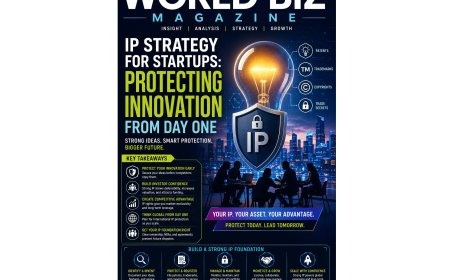
Intellectual Property Ownership: The Foundation of Startup Value
Intellectual property has become one of the most valuable assets in modern startup ecosystems.
In technology-driven industries, investors increasingly view intellectual property as: The foundation of long-term competitive advantage.
IP ownership can include:
- Patents
- Trademarks
- Copyrights
- Proprietary algorithms
- Software code
- Product designs
- Brand assets
- Trade secrets
- Data systems
For many startups, especially in AI, robotics, biotech, SaaS, and advanced technology sectors, intellectual property often represents the majority of enterprise value.
One of the first questions investors ask is:
Who actually owns the technology?
This issue becomes especially important when startups involve:
- Multiple co-founders
- Contractors
- Freelancers
- External developers
- University research partnerships
If ownership rights remain unclear, investors may view the company as legally vulnerable.
Strong IP governance typically requires:
- Assignment agreements
- Founder IP transfer documentation
- Employment invention clauses
- Confidentiality agreements
- Trademark registration
- Patent strategy planning
The absence of these protections can create major investment risks.
Why Investors Care Deeply About IP Ownership
Venture capital firms invest in future market potential.
Without protected intellectual property, startups may struggle to:
- Defend innovation
- Prevent replication
- Build licensing opportunities
- Maintain pricing power
- Secure long-term competitive positioning
IP ownership also directly affects:
- Valuation
- Acquisition attractiveness
- Licensing revenue potential
- Strategic partnerships
- International expansion capability
In sectors such as artificial intelligence, robotics, pharmaceuticals, semiconductors, and software infrastructure, intellectual property increasingly functions as:
Strategic business infrastructure rather than optional legal protection.
Startup Valuation: More Than Revenue Multiples
Startup valuation remains one of the most misunderstood aspects of venture capital fundraising.
Early-stage startup valuation is rarely based purely on current revenue performance. Instead, investors analyze a combination of:
- Market opportunity
- Growth potential
- Product scalability
- Intellectual property strength
- Team quality
- Competitive positioning
- Technology defensibility
- Future exit potential
Venture capital valuation is fundamentally:
Forward-looking rather than backward-looking.
Investors attempt to estimate:
- Future market dominance
- Revenue scalability
- Long-term enterprise value
- Potential acquisition or IPO outcomes
This is why pre-revenue startups in AI or deep technology sectors may still achieve extremely high valuations if investors believe the technology possesses significant future strategic value.
Key Valuation Methods in Venture Capital
Several common methods are used in startup valuation analysis.
Comparable Market Analysis
Investors compare startups against similar companies operating in the same industry or funding stage.
Venture Capital Method
This estimates future exit value and calculates present valuation based on expected returns.
Discounted Cash Flow (DCF)
Although less common for early-stage startups, DCF models may be used for mature high-growth companies.
Scorecard Method
Early-stage startups may be evaluated based on factors including:
- Team capability
- Product differentiation
- Market size
- Competitive advantage
- Traction
Valuation ultimately reflects:
Investor confidence in future scalability.
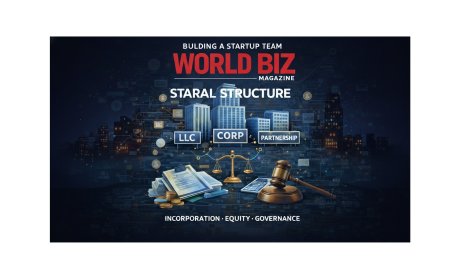
Legal Structure and Corporate Formation
One of the most critical areas of VC readiness involves corporate structuring.
Investors require clear legal entities capable of:
- Holding intellectual property
- Issuing equity
- Managing governance
- Supporting future fundraising rounds
Poor legal structuring can create:
- Ownership disputes
- Tax complications
- Regulatory risk
- Investment restrictions
Many venture-backed startups establish structures optimized for:
- Equity issuance
- International investment
- Employee stock options
- Acquisition flexibility
- IPO readiness
Corporate governance frameworks increasingly matter even at early stages.
Investors often evaluate:
- Founder agreements
- Shareholder rights
- Voting structures
- Board governance
- Compliance systems
Legal maturity signals operational seriousness.
Founder Agreements and Equity Allocation
One of the most overlooked areas in early-stage startups involves founder alignment.
Many startups initially operate informally without properly documented:
- Equity allocation
- Vesting schedules
- Decision rights
- Exit provisions
- IP ownership agreements
This creates major future investment risk.
VC firms increasingly expect:
- Legally documented founder structures
- Vesting mechanisms
- Governance clarity
- Conflict resolution frameworks
Unresolved founder disputes remain one of the most common risks in startup ecosystems.
Strong founder agreements provide:
- Operational stability
- Investment confidence
- Long-term governance structure
Due Diligence: What Investors Actually Examine
Before investing, venture capital firms conduct extensive due diligence reviews.
This process may include examination of:
- Corporate documents
- Financial statements
- Cap tables
- Intellectual property filings
- Employment agreements
- Compliance records
- Litigation exposure
- Tax obligations
- Customer contracts
Due diligence helps investors identify:
- Hidden liabilities
- Ownership disputes
- Regulatory exposure
- Financial inconsistencies
Startups with organized documentation and transparent operations often progress through fundraising faster and more efficiently.
Operational maturity increasingly influences:
Investor trust and deal execution speed.
Regulatory Compliance and Risk Management
As startup ecosystems expand globally, regulatory compliance is becoming increasingly important.
This is especially true in sectors involving:
- Fintech
- Healthcare
- AI systems
- Data privacy
- Cybersecurity
- Financial infrastructure
Investors increasingly evaluate whether startups understand:
- Licensing obligations
- Privacy regulations
- Industry-specific laws
- International compliance exposure
Regulatory failure can significantly damage startup valuation and scalability potential.
The modern venture capital environment increasingly rewards:
Startups prepared for long-term operational accountability.
Data Rooms and Investor Presentation Infrastructure
Investment readiness also involves professional fundraising infrastructure.
Startups increasingly prepare:
- Investor pitch decks
- Financial models
- Data rooms
- Product documentation
- Market analysis reports
- Cap table summaries
A well-organized data room signals:
- Professionalism
- Transparency
- Operational discipline
Institutional investors increasingly expect structured information environments supporting efficient due diligence review.
Country-Wise Startup Investment Ecosystems
United States: Mature Venture Capital Infrastructure
The United States remains the world’s largest venture capital ecosystem.
American startups increasingly emphasize:
- Delaware corporate structures
- IP defensibility
- Scalable governance systems
- Aggressive growth strategy
The U.S. market strongly rewards innovation combined with operational scalability.
United Kingdom: Fintech and International Investment Hub
The United Kingdom continues attracting venture capital through:
- Fintech innovation
- Global investment access
- Strong legal infrastructure
- International startup ecosystems
Singapore: Startup Governance and Regional Expansion
Singapore increasingly positions itself as a major venture capital hub through:
- Startup-friendly regulation
- International investment access
- IP protection frameworks
- Regional scaling infrastructure
China: State-Driven Innovation and Technology Investment
China continues heavily investing in:
- AI startups
- semiconductor ecosystems
- robotics
- advanced manufacturing
- smart infrastructure
Chinese startup ecosystems increasingly combine private capital with national industrial strategy.
ESG, Ethics, and Modern Venture Capital
Environmental, social, and governance considerations are becoming increasingly important within venture capital ecosystems.
Investors increasingly analyze:
- Data ethics
- Workforce practices
- Governance transparency
- Sustainability frameworks
- AI accountability
- Regulatory risk exposure
Future startup valuations may increasingly depend not only on growth potential, but also on:
Responsible operational governance.
The Future of VC Readiness: 2025-2035
Between 2025 and 2035, startup investment readiness may become significantly more sophisticated.
Future venture capital ecosystems may increasingly prioritize:
- AI governance
- Cybersecurity readiness
- Data ownership frameworks
- International compliance systems
- ESG integration
- Autonomous operational infrastructure
Deep technology startups may require increasingly advanced legal and operational structures before institutional capital participation.
The future startup economy may reward:
Founders capable of combining innovation with institutional-grade operational maturity.
World Biz Magazine Insights
WBJ Insight 01 - Intellectual Property is Becoming the Core Asset of Startup Value
Future investment competitiveness increasingly depends on defensible technology ownership.
WBJ Insight 02 - Venture Capital Rewards Operational Preparedness
Strong legal and governance structures improve investor confidence significantly.
WBJ Insight 03 - Valuation is Driven by Future Scalability
Investors increasingly evaluate long-term market dominance rather than short-term profitability.
WBJ Insight 04 - Due Diligence Standards Are Becoming More Sophisticated
Institutional investors now expect greater transparency, compliance, and operational maturity.
WBJ Insight 05 - The Future Startup Economy Will Be More Regulated
Founders increasingly require legal, cybersecurity, and governance readiness from early stages.
KEY STRATEGIC INSIGHT
Venture capital is not awarded based on how much you spend early but on how effectively you validate and scale your business model.
CONCLUSION: CAPITAL EFFICIENCY DEFINES SUCCESS
For startups entering the U.S. venture capital landscape, success is not determined by early-stage expenditure but by strategic execution and clarity of ownership.
A well-prepared startup does not rush into patents or complex valuations. Instead, it builds a strong operational foundation, demonstrates market validation, and ensures legal clarity, positioning itself as a scalable and investable entity.
The most effective founders follow a disciplined approach:
- Build lean
- Validate early
- Structure smartly
- Scale with external capital
In this framework, venture capital becomes not a starting point but a growth accelerator.
Startup readiness for venture capital extends far beyond fundraising presentations and market narratives.
The modern investment ecosystem increasingly demands:
- Intellectual property ownership clarity
- Legal infrastructure
- Governance maturity
- Regulatory preparedness
- Financial transparency
- Scalable operational systems
As startup ecosystems become more competitive globally, investors increasingly favor companies capable of demonstrating institutional readiness alongside innovation potential.
The future of venture capital may not belong solely to the most creative founders.
It may belong to: Founders capable of building scalable, legally defensible, investor-ready companies prepared for long-term global growth.
Disclaimer
This article is intended for informational and editorial purposes only and does not constitute legal, financial, investment, tax, operational, or regulatory advice. Startup laws, intellectual property frameworks, fundraising regulations, and investment structures vary across jurisdictions and industries. Readers should consult qualified legal, financial, and professional advisors before making fundraising, governance, intellectual property, or investment decisions.
What's Your Reaction?
 Like
0
Like
0
 Dislike
0
Dislike
0
 Love
0
Love
0
 Funny
0
Funny
0
 Angry
0
Angry
0
 Sad
0
Sad
0
 Wow
0
Wow
0