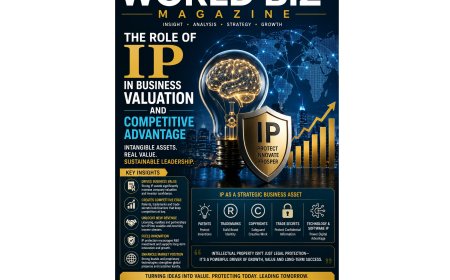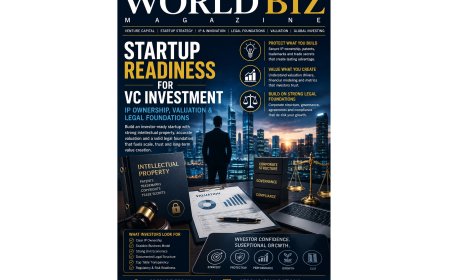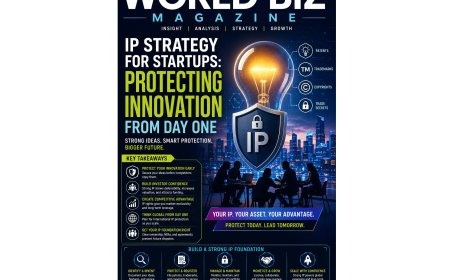

























































































































































Intellectual Property Rights: Patents, Trademarks, Copyrights & Trade Secrets
A detailed guide to intellectual property rights, covering patents, branding, copyrights, trade secrets, global IP systems, and the future of innovation protection.

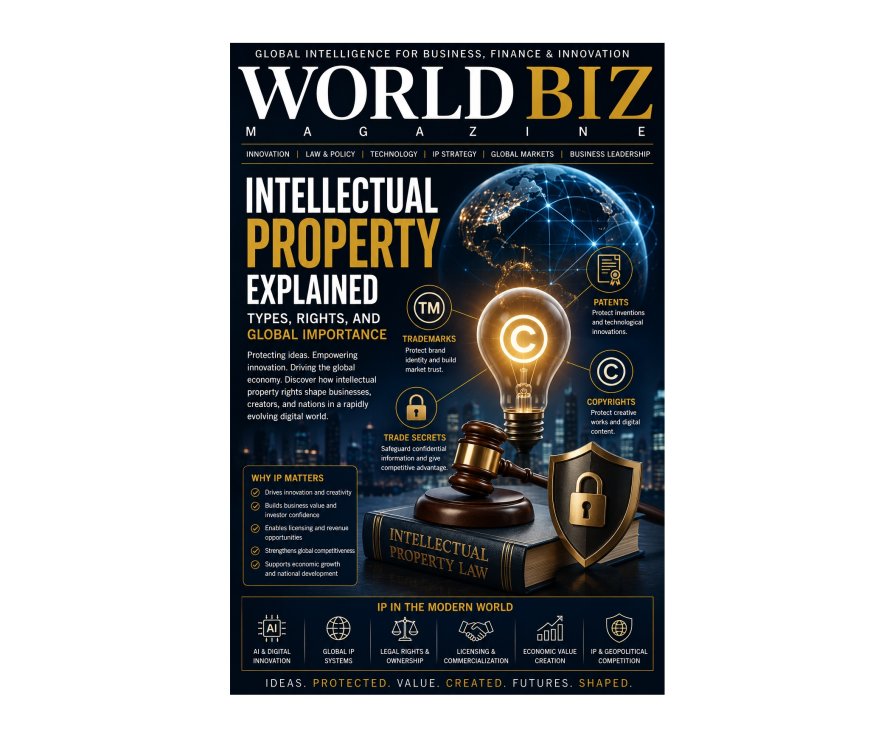
Intellectual Property Explained: Types, Rights, and Global Importance
How Intellectual Property Shapes Innovation, Business Ownership, Technology Leadership, and the Modern Global Economy
From patents and trademarks to copyrights, trade secrets, and digital ownership, intellectual property has become one of the most valuable strategic assets in the modern innovation economy
World Biz Magazine | Intellectual Property, Innovation & Global Business Intelligence
Why Intellectual Property Matters More Than Ever
In the modern global economy, some of the world’s most valuable assets are no longer physical.
The rise of digital business, artificial intelligence, software platforms, biotechnology, entertainment media, advanced manufacturing, and global innovation ecosystems has transformed the nature of economic value itself. Companies are increasingly valued not only by factories, machinery, or physical infrastructure, but by ideas, inventions, designs, algorithms, content, brands, and proprietary technologies.
This transformation has elevated intellectual property into one of the most important foundations of modern commerce.
Today, intellectual property influences:
- Technology leadership
- Startup valuation
- Global trade
- Investment strategy
- Brand power
- Scientific innovation
- Entertainment industries
- Digital economies
- National competitiveness
The world’s largest technology firms, pharmaceutical companies, media organizations, and industrial corporations increasingly derive enormous portions of their enterprise value from intangible assets protected under intellectual property law.
In many cases, intellectual property is no longer simply a legal matter.
It is: Strategic economic infrastructure.
As innovation accelerates across artificial intelligence, robotics, semiconductors, biotechnology, digital media, software ecosystems, and advanced manufacturing, intellectual property protection is becoming increasingly critical for:
- Businesses
- Governments
- Creators
- Investors
- Researchers
- Entrepreneurs
The future global economy may increasingly depend on: Who owns innovation itself.
Understanding Intellectual Property
Intellectual property, commonly referred to as IP, refers to legal rights protecting creations of the human mind.
These rights allow creators, inventors, businesses, and organizations to control and benefit from their innovations, creative works, and proprietary assets.
Intellectual property generally protects:
- Inventions
- Brand identities
- Creative works
- Industrial designs
- Proprietary knowledge
- Software systems
- Artistic content
- Technological innovation
IP laws exist to encourage innovation by ensuring creators can:
- Protect ownership
- Prevent unauthorized use
- Monetize inventions
- License technologies
- Build competitive advantage
Without intellectual property protection, innovators could struggle to recover the time, capital, and research investment required to develop new technologies or creative products.
The Four Main Types of Intellectual Property
The global intellectual property system primarily revolves around four major categories:
- Patents
- Trademarks
- Copyrights
- Trade secrets
Each category protects different forms of intellectual and commercial value.
Patents: Protecting Invention and Technological Innovation
Patents protect inventions and technological innovations.
A patent grants inventors exclusive rights to prevent others from making, using, selling, or distributing an invention for a limited period, typically around 20 years depending on jurisdiction and patent type.
Patents are especially important in industries involving:
- Artificial intelligence
- Robotics
- Pharmaceuticals
- Biotechnology
- Semiconductor manufacturing
- Engineering systems
- Advanced materials
- Industrial machinery
To qualify for patent protection, inventions generally must be:
- Novel
- Useful
- Non-obvious
Patents encourage innovation by giving inventors temporary exclusivity in exchange for publicly disclosing technical details of the invention.
This creates a balance between:
- Innovation incentives
and - Public knowledge sharing.
Spotlight: Why Patents Matter in the Modern Economy
Patents increasingly function as strategic business weapons in global competition.
Technology companies often build enormous patent portfolios to:
- Defend innovation
- Block competitors
- Secure licensing revenue
- Increase valuation
- Support acquisitions
- Strengthen market positioning
In sectors like semiconductors, AI, and pharmaceuticals, patent ownership may determine:
Long-term global market dominance.
Many multinational corporations invest billions annually into research and development largely because patent systems allow them to commercially benefit from innovation.
Without patents, many high-cost innovation sectors might struggle to sustain large-scale R&D investment.
Trademarks: Protecting Brands and Market Identity
Trademarks protect brand identity.
A trademark may include:
- Brand names
- Logos
- Slogans
- Symbols
- Product names
- Packaging designs
Trademark protection allows businesses to distinguish their products and services from competitors.
Strong trademarks help companies build:
- Consumer trust
- Brand recognition
- Market reputation
- Long-term customer loyalty
Unlike patents, trademarks can potentially last indefinitely as long as they remain actively used and properly renewed.
Global brands increasingly derive enormous economic value from trademark recognition alone.
Spotlight: The Economic Power of Branding
In the digital economy, brand value can become more powerful than physical assets themselves.
Consumers often associate trademarks with:
- Product quality
- Corporate reputation
- Innovation
- Lifestyle identity
- Reliability
This makes trademarks critical strategic assets for:
- Technology companies
- Luxury brands
- Media organizations
- Consumer product firms
- Entertainment businesses
Some of the world’s most valuable corporations derive substantial portions of their market value from brand equity protected through trademark systems.
Copyrights: Protecting Creative and Digital Content
Copyright protects original creative works.
This includes:
- Books
- Music
- Films
- Photography
- Software code
- Video games
- Digital media
- Journalism
- Artworks
- Educational content
Copyright gives creators exclusive rights to:
- Reproduce works
- Distribute content
- Display material publicly
- License usage
- Create derivative works
Copyright protection generally applies automatically upon creation in many jurisdictions.
In the digital economy, copyright has become critically important because global internet distribution allows content to spread instantly across borders.
Spotlight: Copyright in the Digital and AI Era
The rise of streaming platforms, social media, generative AI, and digital content ecosystems has dramatically transformed copyright law.
Modern copyright systems increasingly face challenges involving:
- AI-generated content
- Digital piracy
- Streaming rights
- Online content licensing
- Deepfake media
- Platform monetization
Questions surrounding:
- Who owns AI-generated works
- How creators are compensated
- How digital platforms manage copyright enforcement
are becoming increasingly important globally.
The future of digital creativity may heavily depend on how copyright systems evolve in the AI age.
Trade Secrets: Protecting Confidential Business Intelligence
Trade secrets protect confidential business information that provides commercial advantage.
This may include:
- Algorithms
- Manufacturing methods
- Customer data
- Formulas
- Operational systems
- Pricing strategies
- AI models
- Proprietary workflows
Unlike patents, trade secrets are not publicly disclosed.
Protection depends heavily on:
- Confidentiality systems
- Internal controls
- Non-disclosure agreements
- Cybersecurity infrastructure
Trade secrets can remain protected indefinitely as long as secrecy is maintained.
Spotlight: Why Trade Secrets Matter in Technology Industries
Many technology companies increasingly rely on trade secret protection rather than patents.
This is especially true for:
- AI training systems
- Proprietary algorithms
- Recommendation engines
- Manufacturing processes
- Data optimization systems
Trade secrets allow companies to avoid public disclosure while maintaining long-term competitive advantage.
However, trade secret theft and cybersecurity breaches are becoming major global business risks.
Industrial Designs and Emerging IP Categories
Beyond the four major IP categories, many jurisdictions also protect:
- Industrial designs
- Geographical indications
- Plant varieties
- Semiconductor layouts
- Database rights
Industrial design protection is especially important in industries involving:
- Consumer electronics
- Automotive manufacturing
- Fashion
- Product packaging
- Luxury goods
As digital economies evolve, entirely new forms of IP governance may emerge involving:
- Digital assets
- NFTs
- AI-generated inventions
- Metaverse ownership
- Virtual goods
- Data ownership rights
Intellectual Property Rights and Ownership
Intellectual property rights provide legal authority over how protected assets are used commercially.
These rights may include:
- Licensing authority
- Distribution control
- Royalty generation
- Commercial exclusivity
- Enforcement capability
IP rights can often be:
- Sold
- Licensed
- Assigned
- Shared through partnerships
This creates enormous economic ecosystems around:
- Technology licensing
- Entertainment distribution
- Franchise systems
- Software subscriptions
- Pharmaceutical commercialization
In many industries, intellectual property is becoming more valuable than physical infrastructure itself.
Global Intellectual Property Systems
Intellectual property protection operates across national and international legal frameworks.
Major global organizations include:
- World Intellectual Property Organization
- World Trade Organization
International agreements increasingly help standardize intellectual property protections across borders.
Key global frameworks include:
- TRIPS Agreement
- Berne Convention
- Paris Convention
- Patent Cooperation Treaty (PCT)
Global IP systems remain complex because protection often varies significantly across jurisdictions.
Country-Wise Intellectual Property Leadership
United States: Innovation and Patent Leadership
The United States remains one of the world’s largest intellectual property economies.
The U.S. strongly emphasizes:
- Patent protection
- Technology commercialization
- Copyright enforcement
- Startup innovation ecosystems
American technology and entertainment industries rely heavily on IP-driven business models.
China: Rapid Expansion of IP Infrastructure
China has rapidly expanded patent filings, trademark systems, and technology IP investment.
China increasingly positions intellectual property as part of broader industrial and technological modernization strategy.
European Union: Balanced Innovation and Regulatory Governance
The European Union strongly emphasizes:
- Trademark systems
- Data protection
- Geographical indications
- Copyright regulation
- Ethical technology governance
Japan: Precision Innovation and Patent Culture
Japan maintains strong intellectual property traditions linked to:
- Manufacturing
- Robotics
- Electronics
- Industrial engineering
South Korea: Technology and Semiconductor IP Leadership
South Korea continues expanding intellectual property infrastructure across:
- Semiconductors
- AI systems
- Consumer electronics
- Smart manufacturing
Intellectual Property and Startup Ecosystems
Startups increasingly depend on IP protection to:
- Attract investors
- Defend innovation
- Build valuation
- Secure partnerships
- Prevent imitation
Venture capital firms often evaluate:
- Patent ownership
- Trademark protection
- Licensing rights
- IP defensibility
before making investment decisions.
For many startups, intellectual property represents:
The core asset behind future enterprise value.
Intellectual Property Challenges in the AI Era
Artificial intelligence is creating entirely new IP challenges globally.
Key questions increasingly include:
- Can AI invent independently?
- Who owns AI-generated content?
- How should training data be regulated?
- Can machine learning models be patented?
- How should deepfake media be governed?
The future of intellectual property law may require major modernization to address:
- Autonomous creativity
- Synthetic media
- AI-generated innovation
- Digital ownership ecosystems
Intellectual Property, Geopolitics, and Economic Power
IP is increasingly tied to geopolitical competition.
Countries increasingly compete through:
- Technology ownership
- Semiconductor leadership
- AI infrastructure
- Pharmaceutical patents
- Defense technologies
Intellectual property now influences:
- National security
- Supply chains
- Trade disputes
- Industrial competitiveness
The future global economy may increasingly revolve around:
Ownership of technological infrastructure and innovation systems.
The Future of Intellectual Property: 2025-2035
Between 2025 and 2035, intellectual property systems may evolve more rapidly than at any previous point in modern history.
Future developments may include:
- AI-generated patents
- Digital ownership rights
- Blockchain IP verification
- Metaverse asset protection
- Quantum technology patents
- Autonomous content licensing
- Global digital enforcement systems
The future economy may increasingly depend on:
How societies govern ownership in the digital intelligence era.
World Biz Magazine Insights
WBJ Insight 01 - Intellectual Property Has Become Strategic Economic Infrastructure
Modern economies increasingly derive value from intangible innovation assets rather than physical resources alone.
WBJ Insight 02 - AI is Reshaping the Future of IP Law
Artificial intelligence may force major modernization of copyright, patent, and ownership systems globally.
WBJ Insight 03 - Brand Power is Becoming More Valuable Than Physical Assets
Trademark-driven brand ecosystems increasingly dominate digital consumer markets.
WBJ Insight 04 - Startups and Investors Depend on IP Defensibility
Strong intellectual property protection significantly improves scalability, valuation, and competitive positioning.
WBJ Insight 05 - The Future Global Economy May Depend on Innovation Ownership
Technology leadership increasingly revolves around patents, data systems, AI infrastructure, and digital rights management.
Conclusion
Intellectual property has become one of the most powerful forces shaping the modern global economy.
As innovation accelerates across:
- Artificial intelligence
- Robotics
- Biotechnology
- Digital media
- Advanced manufacturing
- Software ecosystems
the importance of protecting ideas, inventions, brands, creative works, and proprietary systems continues expanding rapidly.
Intellectual property is no longer merely a legal technicality.
It has evolved into:
- Strategic business infrastructure
- Economic power
- National competitiveness
- Technology leadership
- Innovation protection
Between 2025 and 2035, the future of intellectual property may increasingly determine:
- Which companies dominate industries
- Which nations lead technological development
- How creators monetize digital work
- How AI-generated innovation is governed
- How global economic value is distributed
The future economy may ultimately depend not simply on who creates innovation but on:
Who legally owns and controls it.
Disclaimer
This article is intended for informational and editorial purposes only and does not constitute legal, financial, regulatory, investment, operational, or intellectual property advice. Intellectual property laws and enforcement systems vary significantly across jurisdictions and industries. Readers should consult qualified legal and professional advisors before making decisions related to patents, trademarks, copyrights, licensing, trade secrets, or other intellectual property matters.
What's Your Reaction?
 Like
0
Like
0
 Dislike
0
Dislike
0
 Love
0
Love
0
 Funny
0
Funny
0
 Angry
0
Angry
0
 Sad
0
Sad
0
 Wow
0
Wow
0