

























































































































































































How Artificial Intelligence is Transforming Digital Marketing and Business Growth
Digital marketing is transforming every aspect of modern business. From artificial intelligence and predictive analytics to SEO, digital advertising, marketing automation, customer experience, cybersecurity, and emerging technologies, organizations are redefining how they engage customers and drive sustainable growth. This World Biz Magazine executive feature examines the evolution of digital marketing, explores the technologies shaping its future, and provides strategic insights for business leaders seeking to build competitive advantage in the rapidly evolving digital economy.

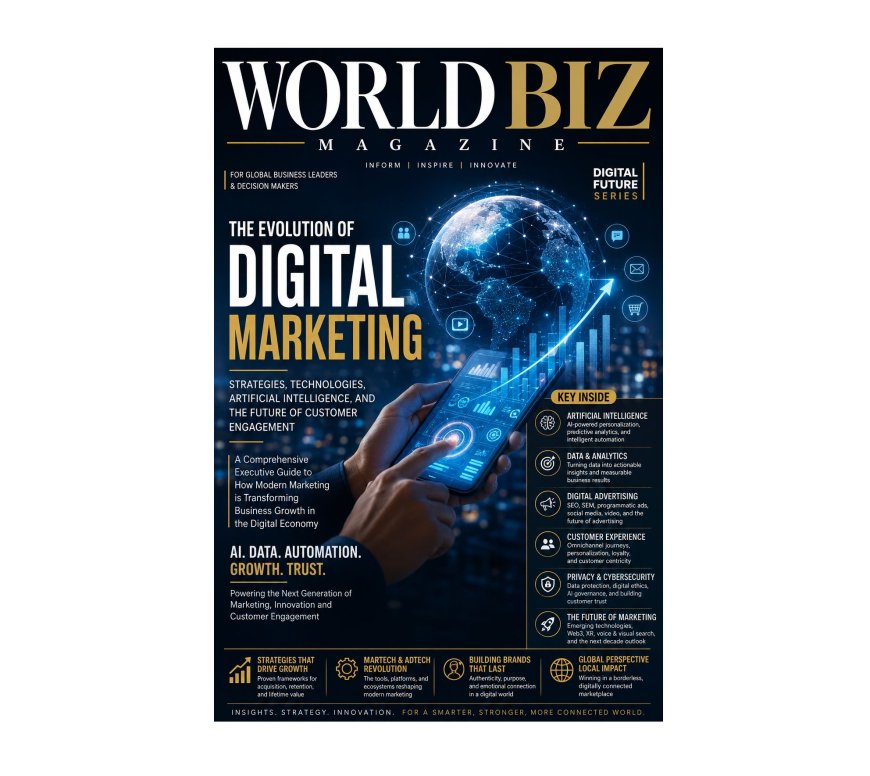
The Evolution of Digital Marketing: Strategies, Technologies, Artificial Intelligence, and the Future of Customer Engagement
Understanding Digital Marketing and the Transformation of Modern Business
World Biz Magazine | Digital Marketing | Business Strategy | Artificial Intelligence | Technology
The digital revolution has fundamentally transformed how businesses communicate, compete, and create value. Marketing, once dominated by newspapers, television commercials, radio broadcasts, direct mail, and outdoor advertising, has evolved into a sophisticated, data-driven ecosystem powered by artificial intelligence, automation, cloud computing, mobile technologies, and real-time analytics. Today, organizations of every size from startups and small businesses to multinational corporations rely on digital marketing not merely as a promotional tool but as a strategic business function that influences customer acquisition, brand perception, revenue growth, innovation, and long-term competitiveness.
Digital marketing has become one of the defining forces of the modern economy because it enables businesses to connect with global audiences more efficiently, measure campaign performance with unprecedented precision, personalize customer experiences at scale, and continuously optimize marketing investments based on data rather than assumptions. Unlike traditional marketing channels, which often relied on broad audience targeting and delayed performance measurement, digital marketing allows organizations to understand customer behavior in real time, adapt campaigns instantly, and create meaningful interactions throughout the customer journey.
As businesses continue their digital transformation, marketing is no longer confined to a single department. It has become deeply integrated with sales, customer service, product development, information technology, finance, and executive leadership. Every customer interaction whether through a website, mobile application, search engine, social media platform, email campaign, chatbot, or online advertisement contributes to the overall customer experience and shapes long-term brand loyalty. Consequently, marketing leaders are increasingly expected to combine creativity with technology, data analytics with strategic thinking, and innovation with ethical responsibility.
The emergence of artificial intelligence represents another significant milestone in this evolution. AI-powered systems now assist businesses in predicting customer behavior, generating personalized content, optimizing advertising campaigns, automating customer support, detecting fraudulent activity, and improving marketing efficiency across virtually every industry. As AI continues to mature, digital marketing is entering a new era where intelligent automation, predictive decision-making, and hyper-personalization are becoming standard business practices rather than emerging innovations.
For executives, entrepreneurs, marketers, and policymakers alike, understanding digital marketing is no longer optional. It is an essential component of corporate strategy, digital transformation, customer engagement, and sustainable business growth.
Understanding Digital Marketing
Digital marketing refers to the strategic use of digital technologies, internet-based platforms, connected devices, and electronic communication channels to promote products, services, brands, and organizations while building long-term relationships with customers. It encompasses a broad range of activities, including search engine optimization, content marketing, social media engagement, email marketing, digital advertising, influencer partnerships, mobile marketing, marketing automation, customer relationship management, and data analytics.
At its core, digital marketing is about creating value for customers while achieving measurable business objectives. Unlike conventional advertising, which primarily focuses on broadcasting messages to large audiences, digital marketing emphasizes interaction, personalization, customer engagement, and continuous optimization based on measurable performance indicators.
The effectiveness of digital marketing stems from its ability to reach highly targeted audiences, deliver personalized experiences, and generate actionable insights through data collection and analysis. Businesses can monitor website traffic, analyze customer behavior, measure advertising performance, track conversion rates, and evaluate return on investment almost instantly. This continuous feedback loop enables organizations to refine strategies, allocate budgets more effectively, and improve campaign outcomes over time.
Digital marketing has also reduced many of the traditional barriers to market entry. Small businesses can now compete with larger enterprises by leveraging search engines, social media platforms, online marketplaces, and content marketing to reach global audiences without requiring enormous advertising budgets. This democratization of marketing has fueled entrepreneurship, accelerated innovation, and expanded opportunities for businesses across virtually every industry.
The Evolution of Marketing
Marketing has evolved significantly over the past century, reflecting broader technological, economic, and societal changes.
During much of the twentieth century, marketing was dominated by mass media. Newspapers, magazines, radio, television, and outdoor advertising enabled businesses to communicate with large audiences through one-way messaging. While these channels played an important role in building brand awareness, they offered limited opportunities for customer interaction or precise performance measurement.
The widespread adoption of the internet during the 1990s marked the beginning of digital marketing. Corporate websites became digital storefronts, email emerged as a cost-effective communication channel, and search engines transformed how consumers discovered products and services. Businesses gradually recognized that online platforms offered greater flexibility, measurable results, and direct customer engagement compared to traditional advertising.
The emergence of social media further revolutionized marketing by enabling two-way conversations between brands and consumers. Organizations could now build communities, respond to customer feedback, encourage user-generated content, and strengthen relationships through ongoing engagement rather than one-time promotional campaigns.
The proliferation of smartphones accelerated this transformation by making digital experiences available anytime and anywhere. Mobile applications, location-based services, mobile commerce, and personalized notifications fundamentally changed consumer expectations regarding convenience, accessibility, and responsiveness.
Today, marketing continues evolving through artificial intelligence, machine learning, cloud computing, automation, augmented reality, voice assistants, and predictive analytics. Rather than replacing human creativity, these technologies enhance decision-making, improve operational efficiency, and enable organizations to deliver increasingly relevant customer experiences.
Why Digital Marketing Has Become Essential
Digital marketing has become indispensable because modern consumers spend a significant portion of their lives online. They search for information, compare products, read reviews, watch videos, communicate through social platforms, complete financial transactions, and consume entertainment using digital devices throughout the day.
This behavioral shift has transformed the customer buying journey. Purchasing decisions are rarely based on a single advertisement or personal recommendation. Instead, consumers often conduct extensive online research, evaluate multiple options, consult reviews, compare pricing, engage with brands across various channels, and interact with digital content before making purchasing decisions.
Organizations that fail to establish a strong digital presence risk becoming invisible during these critical decision-making moments. Conversely, businesses that invest strategically in digital marketing can increase brand awareness, attract qualified leads, improve customer retention, strengthen loyalty, and generate sustainable competitive advantages.
Digital marketing also provides remarkable flexibility. Campaigns can be adjusted in real time based on customer behavior, market conditions, competitive dynamics, or emerging trends. Budgets can be optimized continuously, allowing organizations to maximize returns while minimizing unnecessary expenditure.
Furthermore, digital marketing supports international expansion by enabling businesses to reach customers across geographical boundaries without requiring extensive physical infrastructure. Through localized content, multilingual websites, targeted advertising, and global e-commerce platforms, organizations can establish international market presence more efficiently than ever before.
Traditional Marketing vs. Digital Marketing
Traditional marketing and digital marketing should not be viewed as competing approaches but as complementary components of an integrated business strategy. Each offers distinct advantages depending on organizational objectives, target audiences, and market conditions.
Traditional marketing excels at reaching broad audiences through established media channels such as television, print publications, radio broadcasts, outdoor billboards, and event sponsorships. These methods remain particularly effective for large-scale brand awareness campaigns, local community engagement, and reaching audiences with limited digital access.
Digital marketing, however, offers significant advantages in targeting precision, performance measurement, personalization, flexibility, and cost efficiency. Businesses can tailor messages to specific demographic groups, behavioral patterns, geographic regions, purchasing interests, and customer preferences while continuously monitoring campaign effectiveness.
One of digital marketing's greatest strengths lies in its ability to measure virtually every customer interaction. Organizations can analyze website visits, advertising impressions, click-through rates, engagement levels, conversion rates, customer acquisition costs, lifetime customer value, and numerous other performance metrics. These insights enable continuous optimization and more informed strategic decision-making.
The future of marketing will increasingly involve integrating both traditional and digital approaches into unified omnichannel strategies that deliver consistent customer experiences across physical and digital environments.
The Digital Consumer
Modern consumers are more informed, connected, and empowered than at any point in history. Access to smartphones, high-speed internet, online reviews, comparison platforms, social networks, and artificial intelligence has fundamentally changed purchasing behavior.
Today's customers expect businesses to understand their preferences, anticipate their needs, provide personalized experiences, respond quickly to inquiries, and maintain transparency throughout the customer relationship. Organizations that consistently deliver these experiences are more likely to earn customer trust, loyalty, and long-term advocacy.
Consumers also increasingly value authenticity, ethical business practices, sustainability, privacy protection, and social responsibility. Marketing therefore extends beyond promoting products—it encompasses building trust, demonstrating corporate values, protecting customer data, and fostering meaningful relationships.
Artificial intelligence continues accelerating these expectations by enabling personalized recommendations, intelligent customer support, predictive services, and highly customized experiences across digital platforms. As consumers become accustomed to these capabilities, businesses will need to continuously innovate while balancing personalization with privacy and ethical responsibility.
Marketing in the Age of Artificial Intelligence
Artificial intelligence is no longer a future concept it has become an integral component of modern marketing operations. Organizations increasingly rely on AI to analyze vast datasets, identify customer segments, predict purchasing behavior, optimize advertising campaigns, automate repetitive tasks, and generate high-quality content.
Rather than replacing marketers, AI enables professionals to focus on strategic planning, creative development, relationship building, and innovation while intelligent systems handle data processing and operational efficiency.
As AI technologies continue advancing, successful organizations will combine human creativity with machine intelligence to create marketing strategies that are both technologically sophisticated and genuinely customer-centric.
The future of digital marketing will belong not to organizations with the largest advertising budgets, but to those capable of understanding customer needs, leveraging emerging technologies responsibly, building trust, and continuously adapting to an increasingly dynamic digital economy.
Core Digital Marketing Channels Driving Business Growth
Digital marketing is not a single discipline but an integrated ecosystem of specialized channels that work together to attract, engage, convert, and retain customers. Each channel plays a unique role within the customer journey, from creating initial awareness and generating interest to encouraging purchases and building long-term loyalty.
Organizations that consistently achieve sustainable growth rarely depend on one marketing channel alone. Instead, they develop comprehensive digital marketing strategies where search engines, content, social media, email, advertising, video, mobile applications, and customer communities operate together to deliver a seamless customer experience.
As consumer expectations continue evolving, businesses must understand not only how each digital marketing channel functions individually but also how these channels complement one another to maximize customer engagement and return on investment.
Search Engine Optimization (SEO)
Search Engine Optimization (SEO) is the process of improving a website's visibility within search engine results pages through the creation of high-quality, relevant, technically optimized, and authoritative content. Unlike paid advertising, SEO focuses on earning organic traffic by demonstrating relevance, expertise, trustworthiness, and user value.
Search engines have become the primary gateway through which consumers discover businesses, compare products, conduct research, and make purchasing decisions. Whether someone is searching for a local restaurant, enterprise software, financial advice, healthcare information, or investment opportunities, search engines often represent the first point of interaction between customers and brands.
Effective SEO extends far beyond inserting keywords into webpages. Modern search engines evaluate hundreds of ranking factors, including website performance, mobile responsiveness, page speed, content quality, user experience, internal linking, website architecture, security, structured data, backlinks, and overall topical authority.
Organizations increasingly recognize SEO as a long-term business investment rather than a short-term marketing tactic. High-quality content that addresses customer needs can continue generating qualified traffic for years after publication, creating lasting business value while reducing dependence on paid advertising.
Artificial intelligence is also transforming SEO. Search engines increasingly understand user intent rather than relying solely on exact keyword matches. Businesses therefore benefit from producing comprehensive, authoritative, and genuinely helpful content that answers customer questions while demonstrating expertise within their respective industries.
Search Engine Marketing (SEM)
While SEO focuses on earning visibility organically, Search Engine Marketing (SEM) enables businesses to purchase advertising placements within search engine results.
SEM allows organizations to reach customers who are actively searching for products, services, or information. This intent-based advertising makes search advertising one of the most effective digital marketing channels because it connects businesses with individuals already demonstrating commercial interest.
Modern search advertising platforms provide sophisticated targeting capabilities based on keywords, geographic location, demographics, language preferences, device types, audience interests, purchasing behavior, and previous online interactions. These capabilities allow businesses to allocate advertising budgets more efficiently while improving conversion rates.
Successful SEM campaigns require continuous optimization. Marketers analyze keyword performance, bidding strategies, advertisement quality, landing page experience, click-through rates, conversion data, and customer acquisition costs to maximize advertising effectiveness.
Artificial intelligence increasingly supports SEM by automatically adjusting bids, predicting conversion probabilities, identifying high-performing audience segments, and optimizing campaign performance in real time.
Content Marketing
Content marketing has become one of the most influential components of digital marketing because modern consumers actively seek valuable information before making purchasing decisions.
Rather than interrupting audiences with promotional messages, content marketing focuses on educating, informing, inspiring, and solving customer problems through valuable content.
Businesses now publish articles, research reports, white papers, executive insights, case studies, videos, podcasts, infographics, webinars, newsletters, interactive tools, and educational resources designed to build trust and establish industry authority.
Effective content marketing serves multiple strategic objectives simultaneously. It improves search engine visibility, strengthens brand credibility, generates qualified leads, supports social media engagement, nurtures customer relationships, and positions organizations as trusted thought leaders within their industries.
The most successful content strategies prioritize customer needs over direct product promotion. Organizations that consistently provide valuable insights earn greater customer trust, stronger brand recognition, and higher long-term engagement than those focused solely on advertising products or services.
Artificial intelligence now assists content teams by identifying trending topics, analyzing audience behavior, generating content ideas, improving search optimization, translating content into multiple languages, and personalizing content recommendations based on customer interests.
However, human expertise remains essential for maintaining originality, credibility, ethical standards, and editorial quality.
Email Marketing
Despite the emergence of numerous digital communication platforms, email marketing continues to deliver exceptional business value.
Email remains one of the few communication channels that organizations directly control without relying entirely on third-party algorithms or social media platforms. Businesses use email to build long-term customer relationships, deliver personalized experiences, nurture sales opportunities, announce product launches, provide educational resources, and strengthen customer loyalty.
Modern email marketing extends far beyond mass promotional messages. Advanced automation platforms enable organizations to create personalized customer journeys triggered by specific behaviors, purchasing history, engagement levels, and lifecycle stages.
For example, new subscribers may receive educational welcome sequences, abandoned shopping carts can generate recovery emails, existing customers receive loyalty rewards, and inactive users can be re-engaged through personalized campaigns.
Artificial intelligence further enhances email marketing by predicting optimal sending times, personalizing subject lines, recommending products, segmenting audiences, and improving overall campaign performance.
Organizations that focus on delivering relevant, valuable, and timely communications typically achieve significantly stronger engagement than businesses relying solely on promotional messaging.
Social Media Marketing
Social media has transformed marketing from one-way communication into ongoing conversations between businesses and customers.
Platforms such as LinkedIn, Facebook, Instagram, TikTok, YouTube, X, Pinterest, and emerging social communities enable organizations to build relationships, strengthen brand awareness, share expertise, respond to customer inquiries, and create highly engaged digital communities.
Unlike traditional advertising, social media encourages dialogue. Customers can comment, share experiences, ask questions, recommend products, and influence purchasing decisions through user-generated content.
Businesses increasingly use social media not only for promotion but also for customer service, employer branding, recruitment, crisis communication, market research, product feedback, and community engagement.
Successful social media strategies emphasize authenticity, consistency, storytelling, educational content, and meaningful interaction rather than continuous product promotion.
Artificial intelligence supports social media marketing through content scheduling, audience analysis, sentiment monitoring, trend identification, chatbot automation, social listening, and performance analytics.
However, genuine human engagement remains essential for building trust and long-term customer relationships.
Video Marketing
Video has become one of the most influential forms of digital communication because it combines visual storytelling, emotional engagement, education, and entertainment within a single format.
Consumers increasingly prefer watching videos to reading lengthy product descriptions or promotional materials. Organizations therefore invest heavily in educational videos, product demonstrations, executive interviews, webinars, customer testimonials, documentaries, live broadcasts, animations, and short-form social media content.
Video marketing supports virtually every stage of the customer journey. Awareness campaigns introduce brands to new audiences, educational videos explain complex products, customer success stories build credibility, while tutorials improve customer satisfaction after purchase.
Live streaming has also become increasingly important, enabling businesses to host product launches, industry discussions, investor presentations, training sessions, conferences, and interactive customer events in real time.
Artificial intelligence enhances video production through automated editing, caption generation, multilingual translation, content summarization, personalized recommendations, and audience analytics.
As internet infrastructure continues improving worldwide, video is expected to remain one of the fastest-growing forms of digital content.
Influencer Marketing
Influencer marketing has evolved into a sophisticated marketing discipline where organizations collaborate with trusted creators, industry experts, analysts, professionals, and public figures to reach targeted audiences.
Consumers increasingly value recommendations from individuals they trust more than conventional advertising. As a result, businesses partner with influencers whose audiences align with their products, services, or brand values.
Effective influencer marketing extends beyond celebrity endorsements. Many organizations achieve greater success by collaborating with niche industry experts who possess highly engaged professional communities.
Successful partnerships prioritize authenticity, transparency, and long-term relationships rather than purely transactional promotional campaigns.
Businesses increasingly evaluate influencer performance using measurable metrics including audience quality, engagement rates, brand alignment, conversion performance, and return on investment.
Affiliate Marketing
Affiliate marketing represents one of the most performance-driven digital marketing models.
Under this approach, publishers, content creators, bloggers, influencers, review platforms, and comparison websites promote products or services in exchange for commissions generated through successful referrals.
Because compensation depends on measurable business outcomes rather than advertising impressions alone, affiliate marketing provides relatively low financial risk for advertisers while creating income opportunities for publishers and digital entrepreneurs.
Modern affiliate programs rely on sophisticated tracking technologies, fraud detection systems, attribution models, and performance analytics to ensure fairness, transparency, and accurate commission payments.
As e-commerce continues expanding globally, affiliate marketing is expected to remain an important customer acquisition channel across numerous industries.
Mobile Marketing
Smartphones have fundamentally changed how consumers interact with businesses.
Mobile marketing encompasses responsive websites, mobile applications, SMS messaging, push notifications, location-based marketing, QR codes, mobile wallets, in-app advertising, and mobile commerce.
Consumers increasingly expect seamless experiences across multiple devices. Businesses therefore prioritize mobile-first design, fast-loading webpages, simplified navigation, secure payment systems, and personalized mobile experiences.
Location-based technologies further enable organizations to deliver relevant offers, event notifications, loyalty rewards, and localized services based on customer proximity.
As mobile internet usage continues growing globally, mobile optimization has become a business necessity rather than an optional enhancement.
Podcast Marketing
The popularity of podcasts has created new opportunities for organizations to establish thought leadership and build deeper audience relationships.
Podcasts allow businesses to explore complex industry topics through interviews, executive discussions, educational episodes, customer success stories, and expert analysis.
Unlike short social media content, podcasts encourage long-form conversations that strengthen credibility, increase audience loyalty, and position organizations as trusted sources of knowledge.
Many businesses now integrate podcasts into broader content marketing strategies alongside articles, videos, webinars, newsletters, and social media.
Community Marketing
Modern marketing increasingly emphasizes building communities rather than simply acquiring customers.
Organizations invest in online forums, membership platforms, professional networks, customer groups, user communities, educational hubs, and brand ambassador programs where customers exchange knowledge, provide feedback, solve problems, and strengthen relationships with brands.
Communities generate significant business value by increasing customer retention, encouraging user-generated content, reducing support costs, accelerating innovation through feedback, and creating strong brand advocacy.
Businesses that successfully cultivate engaged communities often achieve greater long-term resilience because loyal customers become active participants in the brand's ongoing development rather than passive consumers.
An Integrated Digital Marketing Ecosystem
No single marketing channel guarantees sustainable business growth. Organizations that consistently outperform competitors integrate SEO, paid advertising, content marketing, email, social media, video, influencer partnerships, affiliate programs, mobile engagement, podcasts, and community building into unified customer experiences.
Artificial intelligence increasingly acts as the connecting layer across these channels, enabling organizations to personalize communications, automate workflows, analyze customer behavior, optimize budgets, and deliver consistent experiences regardless of where customer interactions begin.
The future of digital marketing will belong to businesses capable of combining technology, creativity, strategic planning, ethical responsibility, and customer-centric thinking into integrated marketing ecosystems that build trust while delivering measurable business results.
Artificial Intelligence in Digital Marketing - Transforming Customer Engagement, Automation, and Business Growth
Artificial Intelligence (AI) has become one of the most transformative technologies in the history of modern marketing. While digital marketing revolutionized how businesses communicate with customers through data-driven strategies and online platforms, AI has elevated these capabilities by enabling organizations to make intelligent decisions, automate complex processes, predict customer behavior, personalize experiences at an unprecedented scale, and continuously optimize marketing performance.
Only a decade ago, many marketing decisions depended heavily on human intuition, historical experience, and limited analytical insights. Marketing teams manually segmented customers, created advertising campaigns, analyzed reports, and responded to customer inquiries. Although these approaches often produced successful outcomes, they required considerable time, resources, and manual effort while limiting the ability to process the enormous volumes of data generated by today's digital economy.
The rapid advancement of machine learning, natural language processing, predictive analytics, cloud computing, and generative AI has fundamentally changed this landscape. Organizations can now analyze millions of customer interactions in real time, identify hidden behavioral patterns, forecast future purchasing decisions, generate personalized content, automate customer communications, optimize advertising investments, and continuously improve campaign performance with remarkable accuracy.
Artificial intelligence is no longer a futuristic concept reserved for technology companies. It has become an essential business capability used by retailers, financial institutions, healthcare providers, manufacturers, media organizations, educational institutions, government agencies, and professional service firms worldwide. From multinational corporations to small businesses, AI is increasingly integrated into every stage of the customer journey.
However, the true value of artificial intelligence does not lie solely in automation. Its greatest strength lies in enabling organizations to make smarter decisions, build stronger customer relationships, improve operational efficiency, and deliver highly relevant experiences while allowing marketing professionals to focus on creativity, strategy, innovation, and long-term business growth.
The Evolution of AI in Marketing
Artificial intelligence has gradually evolved from simple automation tools into sophisticated decision-making systems capable of learning, adapting, and improving continuously.
Early marketing automation primarily focused on repetitive administrative tasks such as sending scheduled emails, organizing customer databases, or publishing social media posts. While these tools improved operational efficiency, they lacked the ability to understand customer intent or adapt dynamically to changing behavior.
Modern AI systems operate very differently. They continuously analyze customer interactions across websites, mobile applications, search engines, social media platforms, e-commerce stores, customer service channels, advertising networks, and CRM systems. These systems identify patterns that would be nearly impossible for humans to detect manually, enabling organizations to make proactive marketing decisions based on predictive insights rather than historical assumptions.
Generative AI represents the latest stage of this evolution. Today's AI platforms assist businesses by generating written content, creating images, producing videos, translating materials into multiple languages, summarizing research, recommending marketing strategies, and supporting creative brainstorming while significantly reducing production time.
Rather than replacing human expertise, artificial intelligence increasingly functions as an intelligent business partner that enhances productivity while allowing marketers to concentrate on strategic thinking and customer relationship building.
AI-Powered Customer Personalization
Personalization has become one of the defining characteristics of successful digital marketing.
Modern consumers expect businesses to understand their interests, preferences, purchasing history, browsing behavior, and communication preferences. Generic marketing messages are increasingly ignored in favor of personalized experiences that provide genuine value.
Artificial intelligence enables organizations to deliver this personalization at an unprecedented scale.
Instead of treating all customers identically, AI continuously evaluates behavioral signals including website visits, previous purchases, product searches, geographic location, browsing patterns, device usage, engagement history, demographic information, and contextual factors to create highly individualized customer experiences.
This personalization may include recommending products based on previous purchases, displaying customized website content, sending personalized email campaigns, adjusting promotional offers, prioritizing customer service interactions, or presenting dynamic pricing strategies where appropriate.
Streaming platforms recommend movies and television programs based on viewing habits. E-commerce businesses suggest complementary products. Financial institutions personalize banking services. Healthcare organizations provide individualized patient communication. Educational platforms adapt learning experiences based on student progress.
Across virtually every industry, personalization improves customer satisfaction while increasing conversion rates, customer loyalty, and long-term business value.
Predictive Analytics
One of artificial intelligence's greatest strengths lies in its ability to anticipate future outcomes.
Predictive analytics combines machine learning algorithms with historical data to estimate future customer behavior, allowing organizations to make proactive decisions rather than simply reacting to completed events.
Businesses increasingly use predictive analytics to identify customers most likely to make purchases, estimate customer lifetime value, forecast demand, predict subscription cancellations, optimize inventory, prioritize sales opportunities, and allocate marketing budgets more effectively.
For example, an online retailer may identify customers who frequently purchase seasonal products and automatically recommend related items before peak shopping periods begin. Subscription-based businesses may identify early warning signs of customer dissatisfaction and proactively engage customers before cancellation occurs.
Marketing leaders increasingly rely on predictive models when making investment decisions because these systems improve resource allocation while reducing unnecessary marketing expenditure.
Marketing Automation
Marketing automation has evolved far beyond scheduled email campaigns.
Today's AI-powered automation platforms coordinate complex customer journeys across multiple communication channels while responding dynamically to individual customer behavior.
When a customer downloads an industry report, subscribes to a newsletter, abandons a shopping cart, attends a webinar, completes a purchase, or requests customer support, automation systems immediately initiate personalized communication sequences based on predefined business objectives.
These interactions may include educational content, follow-up emails, product recommendations, customer surveys, promotional offers, appointment reminders, loyalty rewards, onboarding materials, or customer success guidance.
Automation significantly improves marketing efficiency because organizations maintain consistent customer communication without requiring manual intervention for every interaction.
At the same time, AI continuously evaluates campaign performance and recommends improvements based on customer engagement patterns.
Customer Segmentation
Traditional customer segmentation typically divided audiences according to relatively simple demographic categories such as age, gender, income, education, or geographic location.
Artificial intelligence enables significantly more sophisticated segmentation by analyzing hundreds of behavioral variables simultaneously.
AI may identify customers who consistently purchase premium products, engage frequently with educational content, respond positively to promotional discounts, browse products without purchasing, or demonstrate increasing purchase frequency over time.
These behavioral insights enable organizations to develop highly targeted marketing strategies that address the specific needs and interests of each customer segment.
As consumer behavior changes, AI continuously updates these segments automatically, ensuring that marketing communications remain relevant and timely.
Conversational AI and Intelligent Customer Service
Customer expectations regarding responsiveness continue increasing.
Consumers increasingly expect immediate answers regardless of business hours, geographic location, or communication channel.
Artificial intelligence has significantly improved customer service through conversational AI technologies including chatbots, virtual assistants, voice assistants, and intelligent support systems.
Modern AI assistants can answer frequently asked questions, schedule appointments, process transactions, recommend products, resolve technical issues, collect customer information, and escalate complex inquiries to human specialists when necessary.
Unlike earlier chatbot technologies that relied primarily on predefined scripts, today's conversational AI systems understand natural language, recognize context, remember previous interactions, and engage in increasingly sophisticated conversations.
Organizations benefit through reduced support costs, improved response times, increased customer satisfaction, and continuous service availability.
Recommendation Engines
Recommendation systems represent one of the most commercially valuable applications of artificial intelligence.
By analyzing purchasing behavior, browsing history, customer preferences, ratings, and behavioral similarities among users, AI recommends products, services, articles, videos, courses, or entertainment likely to interest individual customers.
These recommendation engines increase customer engagement while improving conversion rates, average order values, and customer retention.
Retailers, streaming platforms, publishers, educational institutions, financial organizations, travel companies, and software providers all rely heavily on recommendation technologies to improve customer experiences.
As AI models become increasingly sophisticated, recommendations continue improving through continuous learning from customer interactions.
Generative AI and Content Creation
Generative artificial intelligence has dramatically accelerated marketing content production.
Businesses increasingly use AI to assist in writing articles, creating advertising copy, generating product descriptions, designing social media posts, producing visual content, creating videos, translating multilingual content, developing marketing concepts, and supporting creative ideation.
These technologies significantly reduce production time while enabling organizations to create personalized content for multiple audience segments simultaneously.
However, responsible organizations recognize that AI-generated content should complement rather than replace human expertise.
Professional editors, marketers, designers, legal teams, and subject matter experts remain essential for ensuring factual accuracy, originality, brand consistency, ethical compliance, and editorial quality.
The most successful organizations combine AI efficiency with human creativity.
Artificial Intelligence in Digital Advertising
AI has fundamentally transformed digital advertising.
Advertising platforms increasingly rely on machine learning algorithms to identify target audiences, optimize bidding strategies, allocate budgets, predict conversion probabilities, detect fraudulent traffic, personalize advertisements, and maximize campaign performance.
Rather than manually adjusting thousands of advertising variables, marketers increasingly define strategic objectives while AI continuously optimizes operational decisions.
This intelligent automation enables organizations to improve advertising efficiency while reducing unnecessary expenditure.
At the same time, AI helps identify invalid traffic, click fraud, advertising fraud, and suspicious user behavior, contributing to safer digital advertising ecosystems.
Ethical Challenges and Responsible AI
Despite its enormous potential, artificial intelligence introduces important ethical responsibilities.
Organizations increasingly collect vast amounts of customer data to improve personalization and predictive capabilities. This creates significant responsibilities regarding privacy protection, transparency, cybersecurity, regulatory compliance, and responsible data governance.
Businesses must ensure that AI systems operate fairly, avoid discriminatory outcomes, protect sensitive information, and explain automated decisions where appropriate.
Responsible AI also requires ongoing human oversight.
Marketing decisions should never rely exclusively on automated systems without considering broader ethical, legal, cultural, and societal implications.
Organizations that prioritize transparency, accountability, customer privacy, and responsible innovation are more likely to build long-term trust while maintaining regulatory compliance.
The Future of AI in Marketing
Artificial intelligence will continue transforming marketing throughout the coming decade.
Future developments are expected to include increasingly sophisticated predictive decision-making, autonomous campaign optimization, multimodal AI capable of generating integrated text, images, audio, and video, intelligent virtual brand assistants, hyper-personalized customer experiences, real-time multilingual communication, immersive augmented reality marketing, and deeper integration between AI, customer data platforms, and enterprise business systems.
Rather than replacing marketers, these technologies will redefine the profession.
Future marketing leaders will require not only creativity and communication skills but also expertise in data analytics, AI governance, marketing technology, customer psychology, cybersecurity, privacy regulations, and digital ethics.
Organizations capable of combining advanced artificial intelligence with human creativity, strategic leadership, and customer trust will be best positioned to compete in the increasingly intelligent digital economy.
Artificial intelligence is reshaping marketing not because it replaces people, but because it empowers organizations to better understand, serve, and create lasting value for customers. The businesses that embrace this transformation responsibly will define the next generation of global marketing excellence.
Digital Advertising, Marketing Technology (MarTech), Advertising Technology (AdTech), and Performance Measurement
Digital advertising has become one of the most influential components of the global digital economy. As businesses increasingly shift their operations online, advertising has evolved from static newspaper placements and television commercials into highly sophisticated, data-driven campaigns capable of reaching precisely targeted audiences across websites, search engines, mobile applications, streaming platforms, connected televisions, gaming environments, and social media networks.
Unlike traditional advertising, where campaign performance was often estimated using limited audience measurements, digital advertising provides organizations with detailed insights into customer behavior, engagement patterns, conversion performance, and return on investment. Every impression, click, interaction, purchase, and customer journey can be measured, analyzed, and optimized in real time.
This transformation has also given rise to two rapidly expanding industries that support modern marketing operations: Marketing Technology (MarTech) and Advertising Technology (AdTech). Together, these technologies enable organizations to automate campaigns, personalize customer experiences, manage customer data, optimize advertising investments, measure performance, and improve marketing efficiency across increasingly complex digital ecosystems.
Today, successful organizations no longer view digital advertising as an isolated promotional activity. Instead, it functions as an integrated business capability supported by artificial intelligence, advanced analytics, customer relationship management platforms, cloud computing, automation technologies, and sophisticated data infrastructure.
Understanding Digital Advertising
Digital advertising refers to the promotion of products, services, brands, or organizations through internet-based platforms and digital communication channels.
Unlike traditional mass advertising, digital advertising allows businesses to reach highly specific audiences based on demographics, interests, purchasing behavior, online activities, geographic location, device usage, professional background, and numerous other targeting criteria.
This precision significantly improves marketing efficiency because organizations can allocate budgets toward audiences most likely to become customers rather than broadcasting identical advertisements to broad populations.
Digital advertising also enables continuous optimization. Campaigns can be adjusted instantly based on performance data, market conditions, customer behavior, seasonal trends, or competitive activity.
This flexibility has made digital advertising one of the fastest-growing investments across virtually every industry.
Search Advertising
Search advertising remains one of the most valuable forms of digital advertising because it targets users actively seeking information, products, or services.
When consumers search for business software, healthcare providers, financial services, hotels, educational institutions, or retail products, search advertisements appear alongside organic search results.
Unlike interruption-based advertising, search advertising reaches customers who have already demonstrated purchase intent.
Businesses compete for visibility by bidding on relevant keywords while advertising platforms evaluate advertisement quality, landing page relevance, expected user experience, and historical performance.
Artificial intelligence continuously optimizes bidding strategies, predicts conversion probability, adjusts budgets automatically, and improves campaign effectiveness based on real-time market conditions.
For many organizations, search advertising represents one of the highest-performing customer acquisition channels because advertisements appear precisely when purchasing decisions are being made.
Display Advertising
Display advertising consists of visual advertisements appearing across websites, mobile applications, online publications, streaming services, and digital platforms.
Modern display advertising extends far beyond traditional banner advertisements. Businesses now utilize responsive advertisements, interactive creative formats, animated graphics, rich media experiences, and personalized visual content tailored to individual audiences.
Display advertising primarily supports brand awareness, product discovery, customer education, and remarketing campaigns.
Organizations frequently use display campaigns to introduce new products, reinforce brand recognition, promote industry events, or maintain customer engagement throughout lengthy purchasing cycles.
Artificial intelligence improves display advertising by identifying optimal placements, predicting audience engagement, adjusting creative formats, and continuously optimizing campaign delivery.
Social Media Advertising
Social media platforms have become major advertising ecosystems where businesses engage highly targeted audiences through sponsored content, videos, stories, interactive experiences, and native promotional formats.
Unlike traditional advertising, social platforms combine demographic targeting with behavioral intelligence.
Businesses can target audiences according to professional interests, purchasing behavior, online activities, education, industry, job roles, hobbies, previous website visits, customer relationships, and engagement history.
Social advertising supports multiple business objectives, including brand awareness, lead generation, product promotion, event registration, mobile application downloads, customer retention, and direct sales.
Artificial intelligence further enhances campaign performance by optimizing audience selection, advertisement placement, creative delivery, and budget allocation automatically.
Video Advertising
Video has become one of the most engaging advertising formats because it combines storytelling, visual communication, education, and emotional connection.
Organizations increasingly invest in short-form videos, educational demonstrations, executive interviews, product launches, customer testimonials, documentary-style branding, and interactive video experiences.
Video advertisements appear across streaming platforms, connected televisions, mobile applications, websites, gaming environments, and social media.
Artificial intelligence helps optimize video advertising by identifying audience preferences, recommending creative variations, improving viewer engagement, generating multilingual subtitles, and measuring viewing behavior.
As consumer preference for video continues increasing, video advertising is expected to remain a central component of future digital marketing strategies.
Programmatic Advertising
One of the most significant innovations in digital advertising is programmatic advertising.
Rather than manually purchasing advertising placements from individual publishers, programmatic technology uses automated software platforms that buy and sell advertising inventory within milliseconds through real-time auctions.
Every time a webpage loads, sophisticated algorithms evaluate numerous factors including audience characteristics, browsing history, geographic location, device type, contextual relevance, advertiser objectives, and bidding strategies before determining which advertisement should appear.
This entire process occurs almost instantaneously without human intervention.
Programmatic advertising improves efficiency by reducing manual negotiations while enabling advertisers to reach highly relevant audiences across thousands of digital properties.
Artificial intelligence continuously refines bidding decisions, audience targeting, frequency management, fraud detection, and budget optimization.
Native Advertising
Native advertising integrates promotional content naturally within editorial environments rather than interrupting user experiences.
Examples include sponsored articles, promoted recommendations, branded storytelling, educational content, and contextual advertisements designed to match surrounding content.
Successful native advertising prioritizes providing value while maintaining transparency regarding sponsored relationships.
When executed responsibly, native advertising enhances customer engagement because it emphasizes education, problem-solving, and informative content rather than purely promotional messaging.
Retail Media Networks
Retail media has emerged as one of the fastest-growing segments within digital advertising.
Large online retailers increasingly provide advertising platforms where brands promote products directly to shoppers already browsing purchasing environments.
Because retailers possess valuable first-party customer data regarding purchasing behavior, shopping preferences, product interests, and transaction history, retail media advertising often delivers highly relevant targeting while supporting measurable commercial outcomes.
As third-party cookies gradually decline, retail media networks are expected to become increasingly important within future advertising ecosystems.
Marketing Technology (MarTech)
Marketing Technology, commonly known as MarTech, refers to software platforms that enable businesses to plan, execute, automate, manage, analyze, and optimize marketing activities.
Modern marketing departments rely on extensive technology ecosystems rather than isolated software applications.
MarTech platforms support customer relationship management, email marketing, content management, customer data integration, marketing automation, campaign orchestration, personalization, analytics, social media management, search optimization, customer engagement, and business intelligence.
Rather than replacing marketers, MarTech enables organizations to operate more efficiently while improving customer experiences through automation, data integration, and intelligent decision-making.
As businesses expand globally, MarTech platforms increasingly function as the operational backbone connecting marketing, sales, customer service, finance, and executive leadership.
Advertising Technology (AdTech)
While MarTech focuses primarily on customer relationships and marketing operations, Advertising Technology (AdTech) specializes in the planning, purchasing, delivery, optimization, and measurement of digital advertising.
AdTech includes demand-side platforms, supply-side platforms, advertising exchanges, data management platforms, campaign management systems, audience targeting solutions, verification technologies, attribution platforms, and fraud detection systems.
Artificial intelligence enables AdTech platforms to automate campaign management, optimize bidding strategies, identify fraudulent activity, improve audience segmentation, and maximize advertising performance.
As privacy regulations evolve, AdTech providers continue developing privacy-preserving targeting technologies based increasingly on first-party data, contextual advertising, and responsible data governance.
Marketing Attribution
One of marketing's most significant challenges involves understanding which marketing activities actually contribute to customer conversions.
Modern customers rarely make purchasing decisions after a single interaction.
Instead, they may discover a brand through social media, conduct research using search engines, read industry articles, subscribe to newsletters, watch educational videos, attend webinars, compare competitors, and later complete purchases through entirely different channels.
Marketing attribution attempts to understand how these multiple interactions collectively influence purchasing decisions.
Organizations increasingly utilize sophisticated attribution models to allocate marketing investments more effectively while improving campaign planning.
Artificial intelligence further enhances attribution by analyzing complex customer journeys involving hundreds of touchpoints across multiple devices and communication channels.
Marketing Analytics and Performance Measurement
Digital marketing has become highly measurable compared with traditional advertising.
Organizations now monitor a broad range of performance indicators including website traffic, customer engagement, advertising impressions, click-through rates, conversion rates, lead quality, customer acquisition costs, customer lifetime value, return on advertising investment, retention rates, subscription growth, customer satisfaction, and overall business revenue.
These insights allow executives to evaluate marketing performance objectively rather than relying on assumptions or intuition.
Advanced business intelligence platforms consolidate information from multiple marketing channels into unified executive dashboards that support strategic decision-making.
Artificial intelligence increasingly identifies emerging trends, predicts future outcomes, recommends optimization opportunities, and automatically detects anomalies requiring management attention.
Brand Safety and Advertising Fraud
As digital advertising continues expanding, organizations face growing risks associated with advertising fraud, invalid traffic, fake impressions, click fraud, brand impersonation, malicious websites, and unsafe advertising environments.
Businesses increasingly invest in brand safety technologies that verify advertising placements, monitor publisher quality, detect automated traffic, identify suspicious activity, and prevent advertisements from appearing alongside harmful or inappropriate content.
Artificial intelligence plays an increasingly important role in protecting advertising investments through continuous fraud detection, behavioral analysis, anomaly identification, and real-time campaign monitoring.
Protecting advertising integrity has become essential not only for financial efficiency but also for maintaining consumer trust and corporate reputation.
The Future of Digital Advertising
Digital advertising continues evolving rapidly through artificial intelligence, automation, immersive technologies, first-party data strategies, contextual targeting, connected television, retail media, augmented reality, voice assistants, and intelligent personalization.
Future advertising will likely become increasingly conversational, predictive, privacy-conscious, and customer-centric.
Rather than relying solely on demographic targeting, organizations will focus on understanding customer intent, delivering relevant experiences, respecting privacy preferences, and building long-term relationships based on trust and transparency.
Marketing Technology and Advertising Technology will continue converging into unified business ecosystems where customer data, artificial intelligence, automation, analytics, and creative innovation operate together to deliver measurable business growth.
Organizations capable of integrating advertising, technology, ethics, and customer experience into cohesive digital strategies will be best positioned to compete in an increasingly connected global economy.
Customer Experience, Brand Building, Influencer Marketing, Affiliate Marketing, Community Marketing, and the Creator Economy
Marketing has evolved beyond attracting customers and generating sales. In today's highly connected digital economy, long-term business success increasingly depends on an organization's ability to create exceptional customer experiences, establish trusted brands, foster meaningful relationships, and build engaged communities that extend far beyond individual transactions.
Consumers today have access to unprecedented amounts of information. They compare products instantly, read reviews before making purchases, engage with brands across multiple platforms, and openly share their experiences through social media, online communities, and professional networks. A single positive experience can transform a customer into a long-term advocate, while a poor experience can quickly damage years of brand-building efforts.
As digital technologies continue reshaping consumer expectations, businesses are recognizing that sustainable competitive advantage no longer comes solely from superior products or competitive pricing. Instead, it increasingly depends on delivering memorable experiences, demonstrating authenticity, maintaining transparency, and consistently earning customer trust throughout every stage of the customer journey.
Artificial intelligence, customer analytics, automation, and digital communication platforms have significantly expanded the opportunities available to organizations. However, technology alone cannot build lasting customer relationships. The most successful brands combine technological innovation with genuine human understanding, ethical business practices, and a deep commitment to customer satisfaction.
Customer Experience: The Foundation of Modern Marketing
Customer Experience (CX) refers to the complete perception customers develop through every interaction they have with a business, from discovering a brand for the first time to purchasing products, receiving support, and maintaining long-term relationships.
Unlike traditional marketing, which primarily focused on promoting products, customer experience considers the entire relationship between an organization and its customers. Every website visit, social media interaction, advertisement, email, customer service conversation, product delivery, billing process, and after-sales service contributes to this overall experience.
Modern customers expect convenience, speed, consistency, personalization, transparency, and responsiveness. Organizations that consistently exceed these expectations often achieve higher customer satisfaction, stronger loyalty, increased referrals, and greater lifetime customer value.
Businesses increasingly map customer journeys to understand how customers interact with different touchpoints before, during, and after purchasing decisions. This holistic understanding enables organizations to identify opportunities for improvement while eliminating unnecessary friction throughout the customer lifecycle.
Artificial intelligence further enhances customer experience by enabling personalized recommendations, intelligent customer support, predictive assistance, automated service delivery, and proactive problem resolution.
Ultimately, customer experience has become one of the strongest differentiators in highly competitive global markets.
Brand Building in the Digital Age
A brand represents far more than a logo, corporate identity, or advertising campaign.
It embodies an organization's reputation, values, credibility, purpose, and emotional connection with customers. Strong brands influence purchasing decisions by creating familiarity, reducing perceived risk, and establishing long-term trust.
Digital transformation has fundamentally changed how brands are built.
In previous decades, businesses controlled most brand communications through traditional advertising. Today, customers actively participate in shaping brand perception through online reviews, social media discussions, community forums, video platforms, professional networks, and user-generated content.
Consequently, organizations must continuously demonstrate authenticity rather than relying solely on promotional messaging.
Successful brands consistently communicate clear values, maintain transparency during both successes and challenges, deliver reliable customer experiences, and actively engage with their communities.
Brand consistency has also become increasingly important. Customers expect similar experiences regardless of whether they interact through websites, mobile applications, physical stores, social media, email, customer support, or digital advertising.
Organizations that successfully maintain consistent messaging across all communication channels strengthen customer recognition while reinforcing trust and credibility.
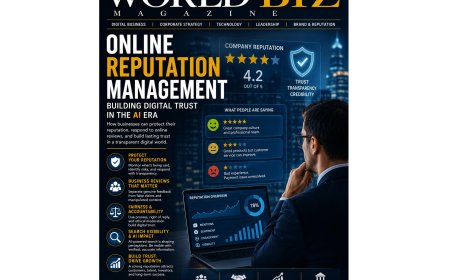
Brand Trust and Reputation Management
Trust remains one of the most valuable assets any organization can possess.
Customers increasingly evaluate businesses based not only on product quality but also on ethical standards, cybersecurity practices, environmental responsibility, customer service quality, privacy protection, and corporate transparency.
Digital platforms have dramatically accelerated reputation management.
Positive customer experiences can generate widespread brand advocacy through recommendations, testimonials, reviews, and social sharing. Conversely, negative experiences may spread rapidly across multiple platforms, influencing public perception and purchasing decisions.
Organizations increasingly invest in online reputation management by monitoring customer feedback, responding promptly to concerns, encouraging satisfied customers to share experiences, addressing misinformation, and continuously improving service quality.
Artificial intelligence assists reputation management through sentiment analysis, social listening, media monitoring, and early identification of emerging issues requiring organizational attention.
Influencer Marketing
Influencer marketing has evolved into one of the most effective forms of digital engagement because consumers increasingly trust recommendations from individuals they follow and respect.
Influencers include industry experts, professional consultants, educators, researchers, entrepreneurs, journalists, content creators, athletes, entertainers, and subject matter specialists who have developed loyal audiences through consistent expertise and authentic communication.
Unlike traditional celebrity endorsements, modern influencer marketing emphasizes credibility and relevance.
Many organizations now collaborate with niche professionals whose audiences closely align with their target markets. These partnerships often generate stronger engagement because recommendations appear more authentic and contextually relevant.
Businesses increasingly evaluate influencers based on audience quality, engagement rates, credibility, professional expertise, brand alignment, and long-term relationship potential rather than simply measuring follower numbers.
Successful influencer partnerships focus on education, storytelling, and genuine customer value instead of purely promotional messaging.
Transparency also remains essential. Organizations and creators increasingly disclose sponsored collaborations to maintain audience trust while complying with advertising regulations.
Affiliate Marketing
Affiliate marketing represents one of the most measurable performance-based marketing models available today.
Under affiliate partnerships, publishers, bloggers, review websites, comparison platforms, influencers, media organizations, and content creators promote products or services in exchange for commissions based on measurable business outcomes such as purchases, subscriptions, registrations, or qualified leads.
Because compensation depends primarily on successful results rather than advertising exposure alone, affiliate marketing aligns incentives between advertisers and publishers.
Businesses benefit from expanded market reach while reducing upfront advertising risk, whereas affiliates generate revenue by recommending products relevant to their audiences.
Artificial intelligence increasingly enhances affiliate marketing by improving attribution, fraud detection, customer segmentation, and campaign optimization while ensuring more accurate commission tracking.
As global e-commerce continues expanding, affiliate marketing remains an important customer acquisition strategy across numerous industries.
Community Marketing
One of the most significant shifts in modern marketing involves moving beyond transactional customer relationships toward community-based engagement.
Community marketing focuses on creating environments where customers interact not only with businesses but also with one another.
Online communities, discussion forums, professional networks, membership platforms, educational groups, user conferences, ambassador programs, and brand communities enable customers to exchange knowledge, solve problems, provide product feedback, and develop stronger emotional connections with organizations.
Communities provide valuable business benefits beyond direct sales.
Organizations gain continuous customer feedback, identify product improvement opportunities, reduce support costs through peer assistance, encourage user-generated content, strengthen customer loyalty, and develop influential brand advocates.
Businesses increasingly recognize that highly engaged communities often become powerful competitive advantages that competitors cannot easily replicate.
The Creator Economy
The rapid growth of digital platforms has given rise to the Creator Economy a global ecosystem where individuals build businesses by producing educational, entertaining, or informative content for online audiences.
Content creators now influence purchasing decisions across industries including technology, finance, education, healthcare, travel, fashion, gaming, entertainment, and professional services.
Many creators operate as independent entrepreneurs while generating revenue through advertising, sponsorships, affiliate partnerships, subscriptions, digital products, consulting, online courses, memberships, and live events.
Organizations increasingly collaborate with creators not merely for product promotion but also for educational initiatives, industry thought leadership, brand storytelling, product demonstrations, and long-term audience engagement.
The Creator Economy continues reshaping marketing by emphasizing authenticity, expertise, creativity, and direct audience relationships rather than conventional advertising models.
Customer Loyalty and Retention
Acquiring new customers is important, but retaining existing customers often generates greater long-term business value.
Loyal customers typically purchase more frequently, recommend businesses to others, provide constructive feedback, and contribute significantly to sustainable revenue growth.
Digital marketing enables organizations to strengthen customer loyalty through personalized communications, loyalty programs, educational content, exclusive memberships, proactive customer support, tailored recommendations, and continuous engagement.
Artificial intelligence assists by identifying customers at risk of disengagement, recommending personalized offers, predicting future purchasing behavior, and automating retention campaigns.
Organizations increasingly recognize that customer retention should receive equal strategic attention alongside customer acquisition.
Omnichannel Customer Engagement
Modern customers interact with organizations across numerous digital and physical channels.
A customer may first discover a company through search engines, continue researching through social media, subscribe to newsletters, visit physical stores, contact customer support, download mobile applications, attend webinars, and complete purchases through e-commerce platforms.
Customers expect these interactions to feel connected rather than fragmented.
Omnichannel marketing seeks to provide consistent experiences regardless of communication channel.
Organizations increasingly integrate customer data across websites, CRM systems, mobile applications, marketing automation platforms, advertising systems, customer support software, and physical retail environments to create unified customer profiles.
This integrated approach enables businesses to deliver seamless experiences while improving customer satisfaction and operational efficiency.
Building Long-Term Customer Relationships
The most successful organizations understand that marketing does not end when a customer completes a purchase.
Instead, every transaction marks the beginning of an ongoing relationship built through trust, communication, service quality, education, and continuous value creation.
Businesses increasingly invest in post-purchase engagement, customer education, onboarding programs, success management, user communities, loyalty initiatives, and personalized communications designed to strengthen long-term relationships.
Artificial intelligence supports these initiatives through predictive engagement, intelligent recommendations, proactive support, and personalized customer journeys.
However, technology alone cannot create meaningful relationships.
Organizations that consistently demonstrate empathy, integrity, transparency, and customer commitment will continue earning loyalty regardless of technological change.
The Human Side of Digital Marketing
Despite remarkable advances in artificial intelligence, automation, analytics, and digital platforms, marketing remains fundamentally human.
Technology enables efficiency, but trust is built through authenticity.
Algorithms can personalize recommendations, but relationships are strengthened through genuine understanding.
Automation accelerates communication, but loyalty grows through meaningful experiences.
As digital marketing continues evolving, organizations that successfully balance technological innovation with human connection will build stronger brands, deeper customer relationships, and more sustainable competitive advantages.
The future of marketing will not be defined solely by advanced technologies but by an organization's ability to combine innovation, empathy, ethical leadership, and customer-centric thinking into every interaction.
Privacy, Data Protection, Digital Ethics, AI Governance, Cybersecurity, and Building Trust in the Digital Economy
The digital economy is built upon one of the world's most valuable assets data. Every online search, website visit, mobile application download, product purchase, social media interaction, email subscription, digital payment, and connected device generates enormous amounts of information that organizations use to better understand customers, improve products, personalize experiences, optimize marketing campaigns, and drive business growth.
This unprecedented access to data has transformed digital marketing into one of the most sophisticated business functions ever developed. Businesses can now understand customer preferences, predict purchasing behavior, recommend relevant products, automate communications, optimize advertising investments, and continuously improve customer experiences through intelligent analysis of digital interactions.
However, this extraordinary capability also introduces significant responsibilities. Consumers increasingly expect organizations to collect, process, store, and protect personal information responsibly while maintaining transparency regarding how their data is used. Governments worldwide continue strengthening privacy regulations, cybersecurity requirements, and digital governance frameworks to protect individuals against misuse, unauthorized access, fraud, identity theft, and unethical business practices.
At the same time, artificial intelligence is reshaping how organizations analyze data and make automated decisions. While AI enables remarkable innovation, it also raises important questions regarding fairness, transparency, accountability, discrimination, and responsible decision-making.
As digital marketing becomes increasingly dependent on customer data and intelligent technologies, organizations must recognize that trust has become one of the most valuable competitive advantages in the digital economy.
Businesses that prioritize privacy, cybersecurity, ethical leadership, and responsible innovation will be better positioned to earn customer confidence while maintaining long-term sustainable growth.
Data: The Foundation of Modern Digital Marketing
Every successful digital marketing strategy begins with data.
Organizations collect information from websites, mobile applications, customer relationship management systems, online purchases, social media engagement, search behavior, surveys, customer service interactions, loyalty programs, and marketing campaigns.
When managed responsibly, this information enables businesses to understand customer preferences, measure campaign performance, improve products, personalize communications, forecast market demand, and identify emerging opportunities.
Data allows organizations to answer critical business questions.
Which marketing channels generate the highest-quality customers?
Which products attract repeat purchases?
What type of content produces the greatest engagement?
Which advertising campaigns deliver the strongest return on investment?
Where do customers abandon purchasing journeys?
These insights enable organizations to make evidence-based decisions rather than relying solely on intuition or assumptions.
However, collecting customer information also creates significant responsibilities regarding security, transparency, regulatory compliance, and ethical use.
Organizations increasingly recognize that data governance is not simply an information technology issue it has become an essential business leadership responsibility.
Privacy in the Digital Economy
Privacy has become one of the defining issues of the modern digital era.
Consumers increasingly understand that personal information possesses significant economic value. Consequently, they expect organizations to explain clearly what information is collected, why it is collected, how it will be used, who can access it, and how long it will be retained.
Modern businesses therefore emphasize transparency throughout the customer relationship.
Privacy policies, cookie preferences, consent management, communication preferences, and data access requests have become standard components of responsible digital operations.
Organizations that openly communicate their privacy practices generally develop stronger customer trust than businesses relying on vague or overly complex disclosures.
Privacy should not be viewed as an obstacle to marketing innovation.
Instead, it provides an opportunity for organizations to demonstrate integrity while strengthening long-term customer relationships.
Global Privacy Regulations
Governments worldwide continue strengthening legal frameworks governing personal information.
Modern privacy regulations establish standards regarding customer consent, data collection, processing, storage, security, international transfers, breach notification, and consumer rights.
Organizations operating internationally increasingly face multiple regulatory environments requiring consistent governance across different jurisdictions.
Rather than treating compliance as merely a legal obligation, leading organizations integrate privacy principles into product development, marketing strategy, customer service, and corporate governance.
This approach often described as "privacy by design" encourages businesses to consider privacy from the earliest stages of planning rather than attempting corrective measures after products or campaigns have already launched.
As digital commerce continues expanding globally, organizations capable of maintaining consistent privacy standards across multiple markets will enjoy greater operational resilience.
First-Party Data and the Changing Marketing Landscape
For many years, digital advertising relied heavily on third-party tracking technologies that enabled businesses to monitor customer behavior across multiple websites.
Growing privacy expectations and evolving browser technologies are gradually reducing the availability of these tracking mechanisms.
Consequently, organizations increasingly prioritize first-party data information collected directly through customer relationships.
Examples include website registrations, newsletter subscriptions, purchase histories, customer accounts, loyalty programs, event participation, surveys, mobile applications, and direct customer interactions.
First-party data generally provides higher quality insights because customers voluntarily establish relationships with organizations while understanding how information will be used.
Businesses investing in customer relationships, valuable content, memberships, and personalized services are therefore building stronger long-term data strategies that rely less on external tracking technologies.
Cookie-less Marketing
The digital marketing industry is adapting to what many describe as the cookie-less future.
Rather than relying primarily on third-party cookies for advertising personalization, organizations increasingly utilize contextual advertising, first-party customer relationships, privacy-preserving technologies, customer data platforms, and artificial intelligence.
Contextual advertising delivers relevant advertisements based on webpage content rather than extensive behavioral tracking.
For example, financial advertisements may appear alongside business news, while travel promotions may accompany tourism-related content.
This approach respects customer privacy while maintaining advertising relevance.
Future marketing strategies will increasingly balance personalization with responsible privacy protection.
Organizations that successfully adapt to this transition will likely maintain stronger customer trust while continuing to achieve effective marketing outcomes.
Cybersecurity in Digital Marketing
As organizations expand their digital operations, cybersecurity has become inseparable from marketing.
Marketing departments manage customer databases, email platforms, websites, mobile applications, advertising accounts, social media profiles, analytics systems, payment integrations, and customer communication platforms.
Each of these systems represents a potential target for cybercriminals.
Unauthorized access may result in stolen customer information, fraudulent advertising campaigns, website defacement, phishing attacks, identity theft, ransomware incidents, financial losses, and severe reputational damage.
Modern cybersecurity therefore extends beyond information technology departments.
Marketing professionals increasingly collaborate with cybersecurity specialists to secure digital assets, protect customer information, implement multi-factor authentication, monitor suspicious activity, conduct regular security audits, and prepare incident response plans.
Protecting digital trust has become an organization-wide responsibility.
Artificial Intelligence Governance
Artificial intelligence introduces remarkable opportunities alongside important governance challenges.
AI systems increasingly influence advertising decisions, customer segmentation, hiring processes, pricing strategies, content recommendations, customer service interactions, fraud detection, and marketing automation.
Organizations must therefore ensure that these systems operate responsibly, transparently, and fairly.
Responsible AI governance includes continuous human oversight, regular performance monitoring, bias detection, explainable decision-making, accountability structures, and ethical review processes.
Businesses should avoid allowing automated systems to make sensitive decisions without appropriate human evaluation.
The objective is not simply building more intelligent systems but developing trustworthy systems that align technological innovation with organizational values and societal expectations.
Ethical Digital Marketing
Ethics has become increasingly important within digital marketing.
Consumers expect organizations to communicate honestly, respect privacy, avoid misleading advertising, protect vulnerable audiences, disclose sponsored content appropriately, and maintain transparency regarding artificial intelligence usage.
Ethical marketing extends beyond regulatory compliance.
It reflects an organization's commitment to integrity, fairness, accountability, and long-term customer relationships.
Businesses increasingly recognize that deceptive marketing practices may generate short-term financial gains while significantly damaging brand reputation and customer trust over time.
Responsible organizations therefore prioritize truthful communication, authentic storytelling, accurate performance claims, transparent pricing, and respectful customer engagement.
Ethics has become a strategic business advantage rather than simply a legal requirement.
Combating Digital Fraud
The rapid expansion of digital marketing has unfortunately been accompanied by increasingly sophisticated fraud.
Advertising fraud, click fraud, fake traffic, bot networks, identity theft, phishing campaigns, counterfeit websites, fraudulent affiliate activity, fake reviews, account takeovers, and brand impersonation collectively cost businesses billions of dollars annually.
Organizations increasingly deploy artificial intelligence, behavioral analytics, anomaly detection, fraud prevention platforms, identity verification technologies, secure authentication, and continuous monitoring to identify suspicious activities before significant damage occurs.
Building secure digital ecosystems requires ongoing collaboration among advertisers, publishers, technology providers, cybersecurity professionals, financial institutions, regulators, and law enforcement agencies.
Fraud prevention is no longer a purely technical issue it represents a critical component of corporate governance and risk management.
Digital Trust: The New Competitive Advantage
Trust has become one of the world's most valuable business assets.
Customers increasingly choose organizations they believe will protect their personal information, communicate honestly, respect privacy, deliver consistent experiences, and respond responsibly during periods of uncertainty.
Digital trust influences purchasing decisions, customer loyalty, investor confidence, business partnerships, regulatory relationships, and long-term corporate reputation.
Organizations build trust gradually through consistent actions rather than marketing campaigns alone.
Reliable customer service, secure digital platforms, ethical leadership, transparent communication, responsible artificial intelligence, privacy protection, cybersecurity investments, and regulatory compliance collectively strengthen customer confidence.
Businesses that prioritize trust often experience stronger customer retention, higher lifetime customer value, increased referrals, and greater resilience during market disruptions.
The Future of Responsible Digital Marketing
The future of digital marketing will extend far beyond technology.
Artificial intelligence will continue improving personalization.
Automation will streamline customer engagement.
Advanced analytics will support increasingly intelligent decision-making.
Immersive technologies will transform digital experiences.
However, none of these innovations will succeed without trust.
Organizations that combine innovation with privacy, cybersecurity, ethics, governance, and transparency will shape the future of responsible digital business.
Digital marketing is entering an era where technological excellence alone is no longer sufficient. Sustainable competitive advantage will increasingly belong to organizations capable of balancing intelligent automation with human values, commercial success with ethical responsibility, and data-driven innovation with unwavering customer trust.
The businesses that earn this trust will not only lead the next generation of digital marketing they will help define the future of the global digital economy.
The Future of Digital Marketing - Emerging Technologies, Executive Strategies, and the Road Ahead
Digital marketing has evolved continuously over the past three decades, driven by advances in internet connectivity, mobile technologies, cloud computing, social media, data analytics, and artificial intelligence. Yet, despite this remarkable transformation, the industry remains in its early stages compared to the technological changes expected during the coming decade.
The future of digital marketing will be defined not by individual technologies but by the convergence of artificial intelligence, automation, immersive experiences, advanced analytics, blockchain, spatial computing, quantum computing, intelligent robotics, and increasingly sophisticated customer ecosystems. These innovations will fundamentally reshape how organizations understand consumer behavior, create products, communicate with audiences, measure business performance, and build lasting customer relationships.
Consumers themselves are also changing. Future customers will expect greater personalization, stronger privacy protections, seamless omnichannel experiences, instant service, transparent business practices, sustainable operations, and increasingly intelligent digital interactions. Organizations capable of anticipating these expectations while maintaining trust will establish significant competitive advantages in an increasingly connected global economy.
The future of marketing therefore belongs not simply to businesses with the largest advertising budgets, but to organizations capable of combining innovation, customer understanding, ethical leadership, and continuous adaptation.
Generative Artificial Intelligence
Generative Artificial Intelligence represents one of the most significant technological breakthroughs influencing modern marketing.
Unlike traditional automation systems that primarily execute predefined tasks, generative AI creates original content including articles, advertisements, product descriptions, marketing campaigns, videos, images, presentations, software code, customer communications, and multilingual translations.
Marketing teams increasingly rely on generative AI to accelerate creative production while maintaining personalization across multiple customer segments.
Businesses can now generate thousands of customized advertisements, personalized email campaigns, localized marketing materials, chatbot conversations, product recommendations, and customer support responses within minutes.
However, successful organizations recognize that artificial intelligence should enhance rather than replace human creativity.
Human marketers remain responsible for strategic planning, brand identity, ethical decision-making, editorial quality, legal compliance, emotional storytelling, and authentic customer engagement.
The future will belong to organizations combining AI efficiency with uniquely human creativity and leadership.
Voice Search and Conversational Marketing
Voice-enabled technologies continue changing how consumers search for information.
Smart speakers, mobile voice assistants, connected vehicles, wearable devices, and intelligent home systems increasingly enable customers to interact using natural conversation rather than traditional text-based searches.
Instead of typing short keyword phrases, consumers ask complete questions and expect immediate, conversational responses.
This transformation requires organizations to optimize digital content for natural language queries while providing concise, authoritative, and contextually relevant information.
Conversational marketing will also continue expanding through intelligent virtual assistants capable of answering questions, scheduling appointments, processing transactions, recommending products, and supporting customers throughout increasingly complex purchasing journeys.
Organizations investing early in conversational experiences will likely strengthen customer accessibility while improving overall engagement.
Visual Search
Advances in computer vision are enabling consumers to search using images rather than words.
Customers can photograph products, buildings, clothing, artwork, furniture, plants, vehicles, or consumer goods and immediately receive related product recommendations, pricing information, reviews, availability, and purchasing options.
Visual search is particularly transforming retail, fashion, manufacturing, travel, architecture, healthcare, education, and industrial sectors.
Businesses increasingly optimize digital assets, product catalogs, and visual metadata to ensure discoverability through image-based search technologies.
As computer vision continues improving, visual search will become an increasingly important component of digital commerce.
Augmented Reality and Virtual Reality
Augmented Reality (AR) and Virtual Reality (VR) are gradually transforming customer engagement by creating immersive digital experiences.
Consumers increasingly expect opportunities to visualize products before purchasing them.
Furniture retailers allow customers to place virtual products inside their homes.
Fashion brands enable virtual clothing demonstrations.
Automotive manufacturers provide immersive vehicle experiences.
Real estate companies offer virtual property tours.
Healthcare organizations utilize immersive education and training.
Industrial companies support maintenance through augmented reality guidance.
Marketing will increasingly shift from static communication toward interactive experiences where customers actively engage with products before making purchasing decisions.
As wearable technologies mature, immersive marketing is expected to become significantly more mainstream.
Social Commerce
The distinction between social media and electronic commerce continues disappearing.
Consumers increasingly discover products, evaluate recommendations, communicate with brands, watch demonstrations, complete purchases, and provide reviews without leaving social platforms.
Social commerce combines entertainment, community engagement, influencer marketing, customer interaction, and online shopping into unified digital experiences.
Businesses increasingly integrate payment systems, customer support, live shopping events, personalized recommendations, and creator partnerships directly within social ecosystems.
This convergence reduces friction throughout purchasing journeys while strengthening customer engagement.
Organizations capable of delivering authentic social commerce experiences will likely outperform competitors relying solely on traditional e-commerce strategies.
Blockchain and Web3 Marketing
Blockchain technology introduces new possibilities regarding transparency, digital ownership, authentication, customer rewards, and decentralized digital ecosystems.
Although still developing, blockchain applications may significantly influence digital marketing through secure identity management, fraud prevention, transparent advertising verification, decentralized loyalty programs, authenticated digital assets, and enhanced consumer control over personal information.
Web3 technologies also encourage more direct relationships between organizations and customers by reducing dependence on centralized digital platforms.
While widespread adoption remains uncertain, businesses should monitor these developments carefully because they may substantially reshape future digital ecosystems.
The Future of Data and Intelligent Decision-Making
Data will remain the strategic foundation of digital marketing, but future data management will become increasingly intelligent, privacy-conscious, and predictive.
Artificial intelligence will continuously analyze customer interactions, economic indicators, supply chains, market trends, competitor activities, and operational performance simultaneously.
Rather than simply reporting historical results, future analytics platforms will recommend strategic actions before opportunities or risks fully emerge.
Marketing executives will increasingly rely on predictive intelligence for budgeting, campaign planning, product development, customer retention, pricing strategies, and international expansion.
Organizations capable of transforming information into actionable business intelligence will gain substantial competitive advantages.
Sustainability and Purpose-Driven Marketing
Consumers increasingly evaluate organizations according to environmental responsibility, ethical business practices, social impact, diversity, transparency, and long-term sustainability.
Marketing therefore extends beyond product promotion toward communicating organizational purpose and measurable societal contributions.
However, businesses must avoid superficial sustainability claims.
Customers increasingly expect evidence rather than promotional messaging.
Organizations demonstrating authentic environmental responsibility, responsible sourcing, community investment, employee well-being, and ethical governance will likely strengthen customer loyalty while improving long-term brand reputation.
Purpose-driven marketing will become an increasingly important component of corporate strategy.
The Future Marketing Leader
The role of marketing executives is changing rapidly.
Future Chief Marketing Officers (CMOs) will require expertise extending far beyond advertising and communications.
Tomorrow's marketing leaders will increasingly combine knowledge of:
- Artificial Intelligence and Machine Learning
- Business Strategy
- Data Analytics
- Cybersecurity
- Customer Experience
- Digital Transformation
- Privacy Regulations
- Financial Performance
- Product Innovation
- Organizational Leadership
- Sustainability
- International Business
Marketing leadership will become one of the most interdisciplinary executive functions within modern organizations.
The future CMO will increasingly function as a strategic business leader rather than solely a communications executive.
The Next Decade of Digital Marketing
During the next ten years, digital marketing is expected to become:
More Intelligent
Artificial intelligence will support virtually every marketing activity, from customer acquisition and personalization to strategic forecasting and business planning.
More Automated
Routine operational tasks will increasingly be performed through intelligent automation, enabling marketing professionals to concentrate on innovation and strategic leadership.
More Personalized
Organizations will deliver increasingly individualized customer experiences based on real-time behavior, contextual understanding, and predictive intelligence.
More Secure
Privacy, cybersecurity, identity verification, fraud prevention, and responsible data governance will become standard competitive requirements.
More Immersive
Virtual reality, augmented reality, mixed reality, spatial computing, and interactive digital environments will create richer customer experiences.
More Integrated
Marketing, sales, customer service, finance, operations, and product development will operate within increasingly unified enterprise ecosystems supported by shared customer intelligence.
Executive Recommendations for Organizations
As digital transformation accelerates, organizations should consider several strategic priorities to remain competitive:
Invest in First-Party Customer Relationships
Develop trusted customer ecosystems rather than relying heavily on external data providers.
Build Responsible AI Capabilities
Integrate artificial intelligence thoughtfully while maintaining transparency, fairness, and human oversight.
Strengthen Cybersecurity
Protect customer information, digital assets, advertising platforms, and organizational reputation through continuous security improvements.
Develop Omnichannel Experiences
Provide consistent customer journeys across websites, mobile applications, physical locations, customer support, and digital communications.
Prioritize Continuous Learning
Digital marketing technologies evolve rapidly. Organizations should continuously invest in employee education, professional development, experimentation, and innovation.
Measure Business Outcomes
Focus beyond marketing metrics alone. Evaluate customer lifetime value, profitability, retention, operational efficiency, and sustainable long-term growth.
World Biz Magazine Insights
Digital marketing is entering a decisive period of transformation where artificial intelligence, automation, customer data, and business intelligence are converging into a unified growth ecosystem. Marketing is no longer confined to advertising campaigns or brand awareness initiatives it has become a strategic business function that influences revenue generation, product innovation, customer experience, operational efficiency, investor confidence, and long-term corporate competitiveness.
Businesses that continue to view marketing solely as a promotional activity risk falling behind organizations that treat marketing as a data-driven, technology-enabled business capability integrated across every department.
Key Industry Trends to Watch
World Biz Magazine identifies several developments that will shape the future of global digital marketing over the next decade:
- Artificial Intelligence becoming the central operating system for marketing.
- First-party data replacing third-party tracking as the primary source of customer intelligence.
- Hyper-personalized customer experiences powered by predictive analytics.
- Continued expansion of Marketing Technology (MarTech) and Advertising Technology (AdTech).
- Rapid growth of retail media networks and commerce-driven advertising.
- Greater emphasis on cybersecurity, privacy, and responsible AI governance.
- Increasing integration of marketing, sales, finance, customer service, and business intelligence.
- Growth of creator-led commerce and community-driven marketing ecosystems.
- Expansion of immersive marketing through augmented reality, virtual reality, and spatial computing.
- Sustainability, corporate transparency, and digital trust becoming major competitive differentiators.
Business Leaders' Takeaway
Digital marketing should no longer be viewed as a cost center.
It has evolved into one of the most measurable investments within modern business, capable of driving sustainable revenue growth, improving customer retention, accelerating innovation, strengthening brand reputation, and enhancing enterprise value.
Organizations that invest strategically in digital capabilities today will be significantly better positioned to compete in tomorrow's increasingly intelligent global economy.
World Biz Magazine Outlook
Looking ahead, World Biz Magazine believes that the future of marketing will be defined by five foundational principles:
Intelligence - Artificial intelligence will augment nearly every marketing activity, enabling smarter and faster business decisions.
Trust - Customer confidence will become the most valuable competitive advantage as privacy, cybersecurity, and ethical leadership shape purchasing decisions.
Integration - Marketing will operate as a core enterprise function connected seamlessly with finance, operations, technology, customer service, and executive leadership.
Innovation - Organizations must continuously embrace emerging technologies while maintaining agility in rapidly changing markets.
Human Connection - Despite technological advances, authentic relationships, creativity, empathy, and customer-centric thinking will remain the defining characteristics of exceptional brands.
World Biz Magazine Executive Perspective
Digital marketing has become one of the defining pillars of the Fourth Industrial Revolution. As artificial intelligence, cloud computing, automation, and intelligent data ecosystems continue reshaping global commerce, organizations that successfully combine technological innovation with ethical governance, customer trust, and long-term strategic vision will emerge as the next generation of market leaders.
The future belongs not to companies that simply adopt new technologies, but to those that use technology to create meaningful value for customers, employees, shareholders, and society.
Conclusion: Marketing Beyond Technology
Digital marketing has evolved from a promotional discipline into one of the world's most strategically important business functions.
It now influences virtually every aspect of organizational performance from customer acquisition and revenue generation to innovation, product development, reputation management, investor confidence, and long-term competitive positioning.
Artificial intelligence, automation, advanced analytics, immersive technologies, and intelligent data ecosystems will undoubtedly continue transforming marketing throughout the coming decade. Yet the organizations that achieve enduring success will not necessarily be those adopting every new technology first.
Instead, future market leaders will be those that combine technological innovation with ethical leadership, customer trust, operational excellence, strategic vision, and an unwavering commitment to creating genuine value.
Technology will continue evolving.
Markets will continue changing.
Consumer expectations will continue rising.
But one principle will remain constant: Organizations that place customers at the center of every decision, embrace innovation responsibly, and build trust through transparency and integrity will define the future of digital marketing.
Digital marketing is no longer simply about reaching audiences. It is about building relationships, creating meaningful experiences, driving sustainable growth, and shaping the future of business in an increasingly connected world.
Final Thoughts
As businesses enter an era defined by intelligent technologies and global digital connectivity, marketing will become even more central to corporate success. Every organization regardless of its size or industry must view digital marketing not as a standalone function but as a strategic capability that integrates technology, data, creativity, ethics, and customer-centric thinking.
Those that continuously innovate while remaining committed to trust, transparency, and long-term value creation will be best positioned to lead the next generation of the global digital economy.
Editorial Disclaimer
This article is published by World Biz Magazine as part of its ongoing commitment to delivering high-quality editorial analysis, business insights, and thought leadership on emerging industries, technologies, global markets, and economic trends. The content is intended for informational and educational purposes only and should not be interpreted as legal, financial, investment, tax, cybersecurity, or professional business advice.
While every effort has been made to ensure the accuracy, relevance, and reliability of the information presented at the time of publication, technological developments, regulatory frameworks, market conditions, and industry best practices evolve continuously. Readers are encouraged to conduct independent research and seek qualified professional advice before making business, financial, legal, or strategic decisions based on the information contained in this publication.
The opinions expressed in this article are those of the editorial contributors and do not necessarily reflect the views of organizations, institutions, companies, or individuals referenced. References to products, services, technologies, or businesses are provided solely for informational and editorial purposes and should not be considered endorsements or recommendations.
© World Biz Magazine. All rights reserved. No part of this publication may be reproduced, distributed, transmitted, stored, or published in any form without prior written permission from World Biz Magazine, except where permitted by applicable copyright laws or with proper attribution.
What's Your Reaction?
 Like
1
Like
1
 Dislike
0
Dislike
0
 Love
0
Love
0
 Funny
0
Funny
0
 Angry
0
Angry
0
 Sad
0
Sad
0
 Wow
1
Wow
1