



















































































































































































Corporate Compliance Frameworks for Global Companies: Building Governance, Risk Management, and Regulatory Excellence
Understand how governance, compliance, technology, and risk management work together to support sustainable corporate growth.

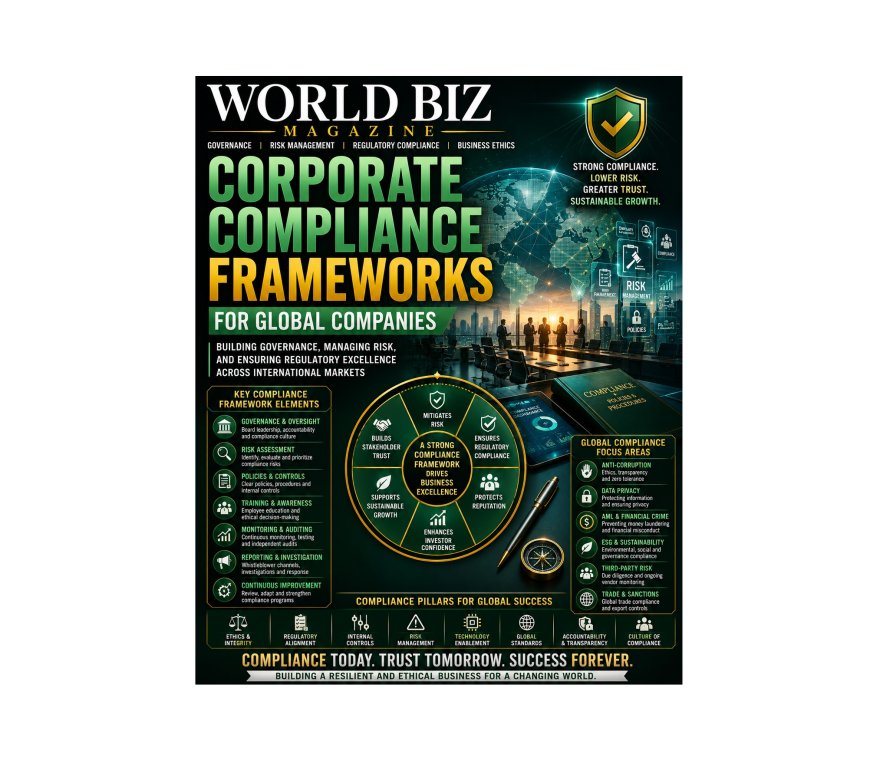
Corporate Compliance Frameworks for Global Companies
How Multinational Organizations Build Governance, Risk Management, and Regulatory Compliance Systems Across International Markets
World Biz Magazine | Corporate Governance, Risk Management & Global Business
In today's increasingly interconnected global economy, corporate compliance has evolved from a legal obligation into a strategic business function. As organizations expand across international borders, engage with diverse regulatory environments, and operate within highly scrutinized industries, compliance frameworks have become essential tools for managing risk, protecting corporate reputation, ensuring regulatory adherence, and supporting sustainable growth. For multinational corporations, compliance is no longer limited to avoiding legal penalties; it has become a critical component of corporate governance, stakeholder trust, investor confidence, and long-term business resilience.
The complexity of modern compliance obligations has increased significantly over the past two decades. Global companies must navigate an expanding web of regulations covering anti-corruption, data privacy, financial reporting, anti-money laundering (AML), environmental standards, labor rights, competition law, cybersecurity, sanctions compliance, and ESG disclosure requirements. These regulations often differ across jurisdictions, creating challenges for organizations operating in multiple countries. A compliance failure in one region can trigger regulatory investigations, financial penalties, reputational damage, and operational disruptions across global operations.
As regulators strengthen enforcement efforts and stakeholders demand greater accountability, companies are investing heavily in sophisticated compliance programs designed to identify, assess, monitor, and mitigate regulatory risks. The most successful organizations recognize that compliance is not merely about satisfying regulators it is about creating a culture of integrity, transparency, and responsible business conduct.
Understanding how corporate compliance frameworks operate provides valuable insight into the systems that help global organizations manage complexity while maintaining operational excellence and regulatory confidence.
Understanding Corporate Compliance
Corporate compliance refers to the processes, policies, controls, and governance mechanisms organizations implement to ensure adherence to applicable laws, regulations, industry standards, and internal corporate policies.
A comprehensive compliance framework seeks to answer a fundamental question:
How can an organization consistently operate within legal and ethical boundaries while pursuing business objectives?
Compliance programs typically address:
- Legal obligations
- Regulatory requirements
- Industry standards
- Internal governance policies
- Ethical business practices
- Risk management procedures
The objective is to establish systems that proactively prevent violations rather than simply responding after issues occur.
Modern compliance functions increasingly operate alongside legal, audit, risk management, cybersecurity, and governance departments.
Why Compliance Matters in Global Business
The consequences of non-compliance can be severe.
Regulatory violations may result in:
- Financial penalties
- Criminal investigations
- Litigation exposure
- Operational restrictions
- License revocations
- Reputational damage
- Investor concerns
- Market value erosion
For multinational corporations, these risks are magnified because compliance obligations often span multiple jurisdictions.
A violation in one country can create legal exposure in several others.
Consequently, compliance has become a board-level priority within many global organizations.
Strong compliance programs help companies maintain trust with regulators, investors, customers, employees, and business partners.
The Foundation of a Corporate Compliance Framework
A corporate compliance framework serves as the organizational structure through which compliance activities are managed.
While specific designs vary, most frameworks contain several core elements:
- Governance structures
- Risk assessments
- Policies and procedures
- Training programs
- Monitoring systems
- Reporting mechanisms
- Investigations processes
- Continuous improvement initiatives
These components work together to create an integrated compliance environment.
Effective frameworks align regulatory requirements with business operations.
Governance and Leadership Oversight
Strong compliance begins at the top of the organization.
Corporate boards and executive leadership teams play a critical role in establishing compliance culture.
Board responsibilities often include:
- Oversight of compliance risks
- Approval of compliance strategies
- Monitoring program effectiveness
- Reviewing regulatory developments
Senior management is responsible for implementing policies and ensuring organizational accountability.
A visible commitment to compliance from leadership strengthens organizational culture and encourages ethical behavior throughout the company.
Risk Assessment as the Starting Point
Risk assessment is one of the most important elements of any compliance framework.
Organizations must first identify the specific compliance risks they face.
These risks vary based on:
- Industry sector
- Geographic presence
- Customer base
- Business model
- Regulatory environment
Common risk categories include:
- Corruption and bribery
- Data privacy
- Financial crime
- Environmental compliance
- Employment law
- Trade sanctions
Risk assessments help organizations allocate resources efficiently while focusing attention on the most significant threats.
Policies and Procedures
Compliance frameworks rely on documented policies and procedures to establish expectations and operational standards.
Key policy areas may include:
- Code of conduct
- Anti-bribery policies
- Data protection requirements
- Conflict-of-interest rules
- Whistleblower protections
- Financial controls
- Cybersecurity protocols
Policies should be clear, accessible, and regularly updated.
Well-designed procedures translate regulatory obligations into practical operational guidance.
Global Anti-Corruption Compliance
Anti-corruption compliance has become a major focus for multinational corporations.
Laws such as:
- The U.S. Foreign Corrupt Practices Act (FCPA)
- The UK Bribery Act
- International anti-corruption regulations
create extensive obligations for businesses operating internationally.
Organizations must implement controls designed to prevent:
- Bribery
- Improper payments
- Corrupt business practices
- Third-party misconduct
Anti-corruption programs frequently include due diligence procedures, training initiatives, monitoring systems, and reporting mechanisms.
Failure to comply can result in substantial penalties and reputational harm.
Data Privacy and Information Protection
Digital transformation has elevated data privacy compliance to a strategic priority.
Global companies collect and process significant volumes of customer, employee, and business data.
Regulations such as:
- GDPR
- CCPA
- Regional privacy laws
impose strict requirements regarding:
- Data collection
- Consent management
- Information security
- Breach reporting
- Cross-border data transfers
Privacy compliance now intersects with cybersecurity, technology governance, and risk management functions.
Organizations that fail to protect personal information face increasing regulatory scrutiny.
Anti-Money Laundering (AML) and Financial Crime Compliance
Financial institutions and many multinational companies must implement programs designed to detect and prevent financial crime.
AML frameworks typically include:
- Customer due diligence
- Transaction monitoring
- Sanctions screening
- Suspicious activity reporting
- Record retention
Financial crime compliance has become increasingly important as regulators strengthen oversight of global financial systems.
Organizations operating in high-risk markets often face enhanced compliance obligations.
ESG Compliance and Corporate Responsibility
Environmental, Social, and Governance (ESG) regulations are reshaping corporate compliance priorities.
Stakeholders increasingly expect companies to demonstrate responsible business practices.
Compliance areas may include:
- Sustainability reporting
- Climate disclosures
- Human rights protections
- Supply chain oversight
- Diversity and inclusion initiatives
Governments and regulators worldwide are introducing new ESG-related reporting requirements.
As a result, ESG compliance is becoming integrated into broader governance frameworks.
Third-Party Risk Management
Many compliance failures originate through third-party relationships.
Organizations frequently rely on:
- Suppliers
- Distributors
- Agents
- Consultants
- Joint venture partners
Third-party risk management programs typically involve:
- Due diligence reviews
- Contractual protections
- Ongoing monitoring
- Risk-based assessments
Managing external relationships has become a critical component of modern compliance frameworks.
Compliance Training and Culture
Policies alone are insufficient.
Employees must understand compliance obligations and their responsibilities.
Training programs commonly address:
- Ethical conduct
- Regulatory requirements
- Reporting procedures
- Industry-specific risks
Regular education strengthens awareness and promotes consistent decision-making.
Organizations with strong compliance cultures often experience fewer violations and improved risk management outcomes.
Whistleblower Programs and Reporting Mechanisms
Employees frequently identify potential misconduct before management becomes aware of issues.
Effective compliance frameworks provide confidential reporting channels.
These may include:
- Ethics hotlines
- Online reporting systems
- Compliance officers
- Anonymous reporting tools
Whistleblower protections encourage employees to raise concerns without fear of retaliation.
Strong reporting systems improve organizational transparency.
Monitoring, Auditing, and Continuous Improvement
Compliance programs require ongoing evaluation.
Monitoring activities may include:
- Internal audits
- Compliance testing
- Regulatory reviews
- Risk assessments
- Performance metrics
Continuous improvement ensures frameworks remain effective as regulations evolve.
Organizations must regularly adapt to changing legal requirements and emerging risks.
Compliance is an ongoing process rather than a one-time initiative.
Technology and Compliance Management
Technology is increasingly transforming compliance operations.
Modern tools include:
- Regulatory monitoring platforms
- AI-powered risk analytics
- Compliance management software
- Automated reporting systems
- Cybersecurity monitoring tools
Technology improves efficiency, visibility, and scalability.
As regulatory complexity increases, digital compliance solutions are becoming essential for global organizations.
Compliance Challenges for Multinational Companies
Despite significant investments, global compliance remains challenging.
Organizations often face:
- Regulatory fragmentation
- Cross-border legal conflicts
- Resource constraints
- Rapid regulatory changes
- Cultural differences
- Data localization requirements
Managing compliance consistently across multiple jurisdictions requires careful coordination and governance.
The complexity of international business ensures compliance will remain a strategic challenge.
The Future of Corporate Compliance
Several trends are expected to shape future compliance frameworks.
These include:
- AI-driven compliance monitoring
- Expanded ESG regulation
- Cybersecurity governance requirements
- Increased transparency expectations
- Global regulatory cooperation
- Real-time compliance reporting
- Supply chain accountability standards
Compliance functions are expected to become more integrated, technology-driven, and strategically aligned with enterprise risk management.
Organizations that proactively adapt to these trends will be better positioned to navigate future regulatory environments.
World Biz Magazine Insights
Corporate compliance has evolved into one of the most important pillars of modern business governance. In an era defined by regulatory complexity, stakeholder scrutiny, cybersecurity threats, and global accountability expectations, compliance frameworks serve as critical mechanisms for protecting enterprise value and supporting sustainable growth. The most successful global organizations view compliance not as a regulatory burden but as a strategic capability that strengthens resilience, enhances reputation, and builds trust across markets. As regulatory expectations continue expanding worldwide, effective compliance management will increasingly distinguish industry leaders from their competitors.
Conclusion
Corporate compliance frameworks provide the governance structures, policies, controls, and monitoring systems necessary for organizations to operate responsibly within increasingly complex regulatory environments. By addressing legal obligations, ethical standards, risk management requirements, and stakeholder expectations, these frameworks help protect organizations from financial, operational, and reputational harm.
For global companies, compliance has become a strategic business function that supports governance, investor confidence, operational integrity, and long-term sustainability. As technology advances, ESG regulations expand, and regulatory scrutiny intensifies, organizations must continue strengthening compliance capabilities to remain competitive and resilient.
Ultimately, strong compliance frameworks do more than reduce risk they create a foundation for responsible growth, corporate accountability, and enduring business success in a rapidly evolving global marketplace.
Disclaimer
This article is published for informational, educational, and industry analysis purposes only and does not constitute legal, regulatory, compliance, financial, investment, tax, cybersecurity, or professional advice. Compliance obligations vary by jurisdiction, industry, and organizational structure. Readers should consult qualified legal, regulatory, compliance, and professional advisors regarding specific compliance programs, governance frameworks, and regulatory requirements.
What's Your Reaction?
 Like
1
Like
1
 Dislike
0
Dislike
0
 Love
0
Love
0
 Funny
0
Funny
0
 Angry
0
Angry
0
 Sad
0
Sad
0
 Wow
1
Wow
1