



































































































































































































Digital Compliance Systems and Automation: Transforming Governance, Risk Management, and Regulatory Compliance
Understand the role of digital compliance systems in transforming risk management, cybersecurity oversight, ESG reporting, and regulatory compliance.

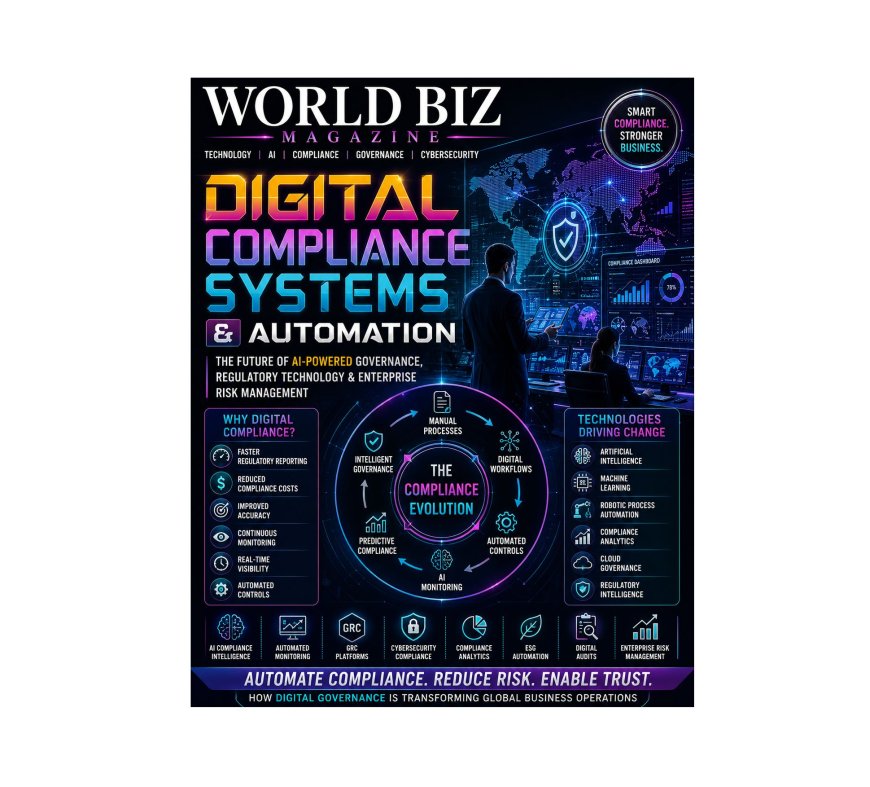
Digital Compliance Systems and Automation
How Technology, Artificial Intelligence, and Automated Governance Platforms Are Transforming Corporate Compliance Management
World Biz Magazine | Compliance, Technology & Corporate Governance
The modern regulatory environment has become increasingly complex, data-intensive, and globally interconnected. Organizations operating across multiple jurisdictions now face a rapidly expanding landscape of legal obligations, regulatory requirements, industry standards, cybersecurity mandates, environmental disclosures, financial reporting rules, and governance expectations. Traditional compliance management methods that relied heavily on spreadsheets, manual reviews, paper-based documentation, and fragmented reporting systems are no longer sufficient to manage the scale and complexity of today's compliance challenges.
As regulatory expectations continue growing, businesses are increasingly turning to digital compliance systems and automation technologies to strengthen governance, improve efficiency, reduce risk exposure, and enhance organizational resilience. Digital compliance has evolved from a supporting administrative function into a strategic capability that enables organizations to monitor regulatory obligations in real time, identify emerging risks, automate workflows, improve reporting accuracy, and maintain continuous compliance across global operations.
The emergence of artificial intelligence, machine learning, cloud computing, robotic process automation (RPA), advanced analytics, and integrated governance, risk, and compliance (GRC) platforms has accelerated the transformation of compliance management. These technologies allow organizations to move beyond reactive compliance approaches toward predictive, data-driven compliance ecosystems capable of adapting to rapidly changing regulatory environments.
Today, digital compliance systems are used by multinational corporations, financial institutions, healthcare providers, technology companies, manufacturers, government agencies, and highly regulated industries worldwide. As compliance becomes increasingly central to corporate governance and stakeholder trust, understanding the role of automation and digital compliance technologies is essential for business leaders seeking to remain competitive in a highly regulated global marketplace.
The Evolution of Compliance Management
For decades, compliance management was largely manual.
Organizations relied on:
- Paper documentation
- Manual approvals
- Periodic audits
- Spreadsheet tracking
- Email-based communication
- Physical recordkeeping
While these methods were adequate in less complex regulatory environments, they often struggled to provide visibility, scalability, and consistency.
As businesses expanded globally and regulatory frameworks became more sophisticated, organizations faced growing challenges in maintaining accurate records and monitoring compliance activities.
The digital transformation of compliance emerged as a response to these operational limitations.
Technology now enables organizations to manage compliance obligations more effectively and efficiently than ever before.
Understanding Digital Compliance Systems
Digital compliance systems are technology platforms designed to manage regulatory requirements, internal policies, governance processes, and risk management activities through centralized digital infrastructure.
These systems typically support:
- Compliance monitoring
- Policy management
- Risk assessments
- Regulatory tracking
- Audit management
- Reporting workflows
- Documentation control
- Incident management
Rather than relying on disconnected processes, organizations can manage compliance through integrated platforms that provide enterprise-wide visibility.
Digital systems create a single source of truth for compliance-related activities.
This improves transparency, accountability, and decision-making.
Why Organizations Are Embracing Compliance Automation
Several factors are driving increased adoption of compliance automation technologies.
These include:
Regulatory Complexity
Organizations face growing numbers of regulations across multiple jurisdictions.
Operational Scale
Large enterprises must manage compliance across thousands of employees and numerous business units.
Risk Management Demands
Stakeholders expect stronger oversight and accountability.
Cost Reduction Objectives
Automation reduces manual workloads and administrative costs.
Real-Time Visibility Requirements
Executives increasingly require immediate access to compliance information.
These factors are accelerating investment in digital compliance capabilities.
Governance, Risk, and Compliance (GRC) Platforms
One of the most significant developments in compliance technology has been the emergence of Governance, Risk, and Compliance (GRC) platforms.
GRC systems integrate:
- Corporate governance
- Enterprise risk management
- Regulatory compliance
into a unified framework.
These platforms provide centralized oversight of compliance activities across the organization.
Common features include:
- Risk registers
- Compliance dashboards
- Policy repositories
- Audit management tools
- Reporting systems
By integrating governance and compliance functions, GRC platforms help organizations improve coordination and strategic alignment.
Automated Regulatory Monitoring
Keeping pace with regulatory changes is one of the greatest challenges facing compliance teams.
Digital compliance systems increasingly utilize automated regulatory monitoring tools.
These solutions track:
- New regulations
- Legislative updates
- Regulatory guidance
- Enforcement actions
Relevant changes can be automatically identified and routed to responsible stakeholders.
This reduces the risk of missed regulatory developments and improves responsiveness.
Organizations operating in highly regulated industries particularly benefit from automated monitoring capabilities.
Artificial Intelligence in Compliance Management
Artificial intelligence is becoming one of the most transformative technologies in compliance operations.
AI applications include:
- Document analysis
- Risk identification
- Pattern recognition
- Regulatory interpretation
- Predictive analytics
Machine learning algorithms can review vast amounts of information more quickly than traditional manual processes.
AI systems can identify anomalies, detect potential violations, and highlight emerging risks.
These capabilities support more proactive compliance management.
As AI technologies mature, their role in compliance frameworks is expected to expand significantly.
Robotic Process Automation (RPA)
Robotic Process Automation enables organizations to automate repetitive compliance tasks.
Examples include:
- Data entry
- Report generation
- Document validation
- Regulatory filings
- Transaction monitoring
RPA improves efficiency while reducing human error.
Compliance teams can redirect resources toward higher-value activities such as risk analysis and strategic planning.
Organizations often achieve substantial productivity improvements through automation initiatives.
Digital Policy Management
Policies serve as the foundation of compliance programs.
Managing policies manually can be difficult, particularly within large organizations.
Digital policy management systems provide:
- Centralized repositories
- Version control
- Employee acknowledgments
- Approval workflows
- Policy updates
These tools help ensure employees have access to current requirements.
Automated distribution and tracking improve policy compliance and organizational consistency.
Compliance Training and Learning Platforms
Employee education remains a critical component of compliance programs.
Digital learning platforms allow organizations to deliver:
- Regulatory training
- Ethics programs
- Cybersecurity awareness
- Anti-corruption education
- Industry-specific compliance courses
Automated learning systems can track completion rates, assess knowledge retention, and generate compliance reports.
These capabilities improve oversight while reducing administrative burdens.
Training data can also support regulatory examinations and audits.
Continuous Monitoring and Real-Time Compliance
Traditional compliance approaches often relied on periodic reviews.
Modern digital systems enable continuous monitoring.
Real-time oversight helps organizations identify issues before they escalate.
Monitoring capabilities may include:
- Transaction analysis
- Access controls
- Data security alerts
- Regulatory reporting metrics
- Behavioral analytics
Continuous monitoring enhances risk detection and improves organizational responsiveness.
Organizations gain greater visibility into operational compliance performance.
Data Analytics and Compliance Intelligence
Data has become a critical asset within compliance management.
Advanced analytics tools allow organizations to:
- Identify risk trends
- Evaluate control effectiveness
- Measure compliance performance
- Detect anomalies
Analytics transform compliance from a reactive function into a strategic intelligence capability.
Executives can make more informed decisions based on comprehensive compliance insights.
Data-driven compliance supports stronger governance and operational resilience.
Cybersecurity and Compliance Integration
As digital operations expand, cybersecurity and compliance have become increasingly interconnected.
Many regulations now require organizations to implement:
- Data protection controls
- Incident response procedures
- Access management systems
- Security monitoring programs
Compliance platforms often integrate cybersecurity oversight into broader governance frameworks.
This alignment helps organizations manage regulatory obligations while strengthening digital resilience.
Cybersecurity compliance is becoming a core component of enterprise risk management.
Third-Party Compliance Management
Organizations frequently face compliance risks through external relationships.
Digital compliance systems help manage:
- Vendor due diligence
- Supplier risk assessments
- Third-party certifications
- Contractual compliance obligations
Automated workflows improve consistency and transparency.
Third-party oversight has become particularly important as regulators increasingly scrutinize supply chains and outsourcing arrangements.
Audit Automation and Documentation Management
Regulatory examinations and internal audits require extensive documentation.
Digital compliance systems simplify audit preparation by maintaining:
- Electronic records
- Audit trails
- Compliance evidence
- Control documentation
Automated reporting reduces administrative burdens and improves audit readiness.
Organizations can respond more efficiently to regulatory requests and compliance reviews.
ESG Compliance and Sustainability Reporting
Environmental, Social, and Governance (ESG) obligations are driving new compliance requirements.
Digital systems support ESG initiatives through:
- Sustainability data collection
- Emissions tracking
- Governance reporting
- Social impact metrics
Automation improves reporting accuracy while supporting stakeholder transparency.
As ESG regulations continue evolving, technology will play a central role in compliance management.
Challenges of Compliance Automation
Despite significant benefits, implementation challenges remain.
Common obstacles include:
- Legacy systems
- Data quality issues
- Regulatory uncertainty
- Integration complexity
- Change management requirements
Organizations must carefully plan digital transformation initiatives to maximize effectiveness.
Successful implementation requires alignment between technology, governance, and business strategy.
The Future of Digital Compliance
Several trends are expected to shape future compliance ecosystems.
These include:
- AI-powered compliance assistants
- Predictive risk management
- Real-time regulatory reporting
- Blockchain-based audit trails
- Advanced analytics platforms
- Autonomous compliance monitoring
Future systems will likely become increasingly intelligent, interconnected, and proactive.
Organizations that embrace these innovations may gain significant competitive advantages.
World Biz Magazine Insights
Digital compliance systems are transforming compliance from a reactive administrative function into a strategic business capability. Through automation, artificial intelligence, advanced analytics, and integrated governance platforms, organizations can improve regulatory oversight, strengthen risk management, and enhance operational efficiency. As compliance obligations continue expanding across industries and jurisdictions, technology-enabled compliance frameworks will increasingly become essential components of corporate governance and enterprise resilience. Companies that successfully integrate compliance automation into broader business strategies will be better positioned to navigate future regulatory complexity while maintaining stakeholder trust and competitive advantage.
Conclusion
Digital compliance systems and automation technologies are reshaping how organizations manage regulatory obligations, governance requirements, and enterprise risks. By leveraging artificial intelligence, robotic process automation, advanced analytics, and integrated compliance platforms, businesses can achieve greater efficiency, transparency, and compliance effectiveness.
As regulatory expectations continue evolving, compliance management will become increasingly data-driven, technology-enabled, and strategically integrated into corporate decision-making. Organizations that invest in digital compliance capabilities today are building the foundation for stronger governance, improved resilience, and sustainable long-term growth.
Ultimately, digital compliance is no longer simply about meeting regulatory requirements—it is about creating intelligent systems that support responsible business operations in an increasingly complex global environment.
Disclaimer
This article is published for informational, educational, and industry analysis purposes only and does not constitute legal, regulatory, compliance, financial, technology, cybersecurity, or professional advice. Regulatory requirements, compliance obligations, and technology implementation strategies vary by jurisdiction, industry, and organizational structure. Readers should consult qualified legal, compliance, technology, and professional advisors regarding specific compliance frameworks, governance systems, and automation initiatives.
What's Your Reaction?
 Like
0
Like
0
 Dislike
0
Dislike
0
 Love
0
Love
0
 Funny
0
Funny
0
 Angry
0
Angry
0
 Sad
0
Sad
0
 Wow
0
Wow
0