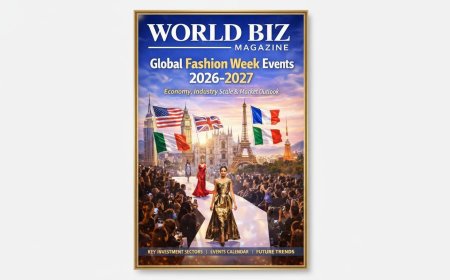

































































Global Fashion Week Calendar Explained | World Biz Magazine
A detailed guide to the Global Fashion Week Calendar, including major cities, fashion seasons, business influence, digital transformation, and trends.

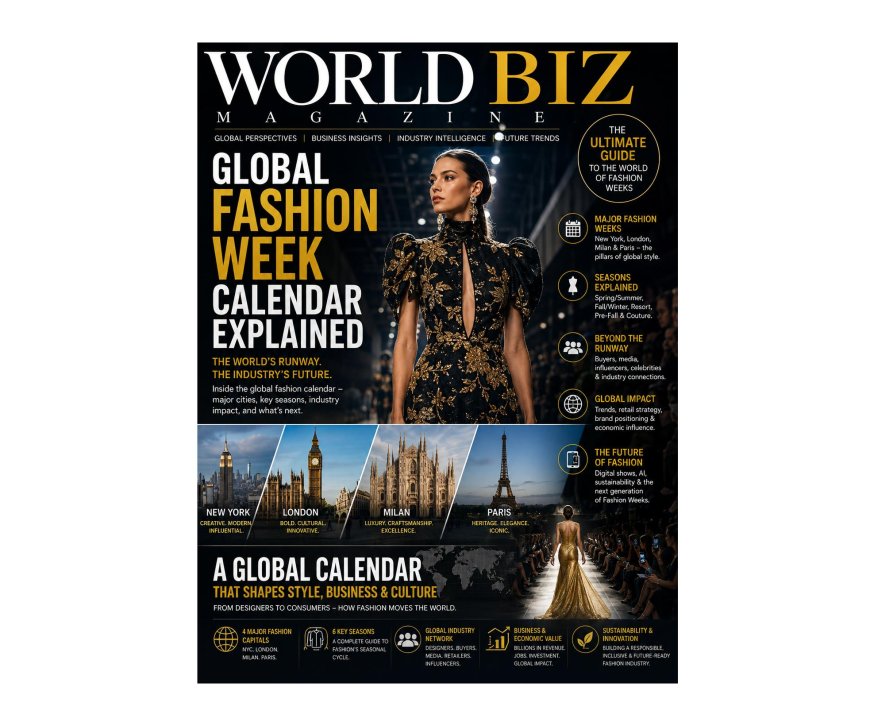
Global Fashion Week Calendar Explained
Understanding the World's Major Fashion Weeks, Their Business Influence, Seasonal Cycles, and Role in the Global Fashion Industry
World Biz Magazine | Fashion Business | Global Markets | Luxury | Retail | Culture |
Fashion Week as a Global Business Calendar
Fashion Week is far more than a series of glamorous runway shows. Behind the lights, designers, celebrities, photographers, buyers, editors, investors, manufacturers, retailers, and technology companies participate in a highly coordinated global business ecosystem that helps determine what the fashion industry will produce, promote, sell, and discuss in the months ahead.
Every year, major fashion capitals host organized fashion weeks that showcase upcoming collections and establish important commercial and cultural moments for the global fashion industry. The most internationally influential fashion calendars are traditionally associated with cities such as New York, London, Milan, and Paris, while other cities have developed increasingly important fashion weeks and regional platforms.
For consumers, Fashion Week can appear to be a collection of runway events. For the industry, however, it represents an interconnected calendar of product launches, wholesale buying, media coverage, brand positioning, trend forecasting, networking, investment, retail planning, and cultural influence.
Understanding the Fashion Week calendar therefore provides insight into how the global fashion business operates and how seasonal collections move from designers and manufacturers to retailers and eventually to consumers.
What Is Fashion Week?
Fashion Week is a scheduled period during which designers and fashion brands present collections to buyers, media organizations, industry professionals, influencers, celebrities, and increasingly, the general public.
The traditional objective is to showcase collections for an upcoming fashion season.
Historically, fashion calendars were primarily business-oriented. Buyers attended runway presentations to evaluate collections and determine which products they might purchase for department stores, boutiques, and other retail channels.
Over time, Fashion Week evolved into a global media and entertainment phenomenon.
Today, a single runway presentation can generate:
· International media coverage
· Social media engagement
· Influencer content
· Celebrity exposure
· Brand awareness
· Retail demand
· Investor attention
· Cultural discussion
This transformation has made Fashion Week an important intersection between fashion, media, entertainment, technology, and commerce.
The Traditional Fashion Capitals
Four cities have historically occupied a particularly influential position within the international fashion calendar:
New York Fashion Week
New York is widely associated with contemporary fashion, commercial creativity, sportswear, streetwear, luxury, and American design.
New York Fashion Week often provides an early major international platform for designers to present upcoming collections and establish seasonal narratives.
The city's fashion ecosystem also benefits from its connections to advertising, entertainment, finance, media, technology, and retail.
London Fashion Week
London is recognized for its distinctive creative identity and strong relationship with emerging designers, experimental fashion, tailoring, cultural expression, and design innovation.
London's fashion environment has historically provided opportunities for new designers to gain international attention while allowing established brands to present collections to global audiences.
The city's broader creative economy including music, art, publishing, architecture, and entertainment also influences its fashion culture.
Milan Fashion Week
Milan occupies a central position within global luxury fashion and is particularly influential in areas such as Italian craftsmanship, tailoring, leather goods, accessories, footwear, and luxury manufacturing.
Italian fashion houses have built global reputations around quality, design, craftsmanship, and industrial expertise.
Milan Fashion Week therefore represents not only creative presentation but also an important commercial event connected to the broader Italian fashion manufacturing ecosystem.
Paris Fashion Week
Paris remains one of the most important destinations on the global fashion calendar and is closely associated with haute couture, luxury fashion, heritage brands, artistic direction, and high-end design.
The city hosts presentations from some of the world's most influential fashion houses and serves as a major international meeting point for designers, buyers, journalists, celebrities, investors, and fashion professionals.
Paris frequently represents a culmination of the major international ready-to-wear calendar, although the exact structure and scheduling of fashion events can change from season to season.
Why Fashion Weeks Are Scheduled in Seasons
Fashion operates through seasonal planning cycles.
Traditional fashion calendars commonly revolve around:
· Spring/Summer collections
· Fall/Winter collections
· Resort or Cruise collections
· Pre-Fall collections
· Haute Couture collections
· Menswear collections
These seasons allow designers and retailers to plan production, marketing, wholesale distribution, inventory, and retail launches months in advance.
The traditional system therefore operates significantly ahead of the consumer retail calendar.
A collection presented during a Fashion Week may represent products that consumers will see in stores or online months later.
Spring/Summer Fashion Week Cycle
Spring/Summer collections generally focus on warmer-weather fashion.
Designers may introduce:
· Lightweight clothing
· Resort-inspired designs
· Bright or seasonal colors
· Summer accessories
· Warm-weather footwear
· Travel-oriented collections
The international presentation calendar for Spring/Summer collections typically occurs well before the season itself.
This gives manufacturers and retailers time to finalize production, distribution, merchandising, and marketing.
Fall/Winter Fashion Week Cycle
Fall/Winter collections focus on colder-weather products and often emphasize:
· Outerwear
· Knitwear
· Tailoring
· Boots
· Layering
· Cold-weather accessories
· Luxury fabrics
Fall/Winter collections represent a major commercial period for many fashion businesses because consumers frequently purchase higher-value garments and accessories during the colder seasons.
Resort and Cruise Collections
Resort and Cruise collections occupy a unique position within the fashion calendar.
Originally associated with consumers traveling to warmer destinations during winter, these collections have evolved into significant commercial categories.
They often provide brands with additional opportunities to release products between the major Spring/Summer and Fall/Winter cycles.
For luxury fashion companies, Resort collections can represent an important source of revenue and brand engagement.
Pre-Fall Collections
Pre-Fall collections bridge the gap between major seasonal launches.
They often provide commercially wearable products that retailers can introduce before the main Fall/Winter collection reaches the market.
From a business perspective, Pre-Fall collections help brands maintain customer engagement and create more frequent retail opportunities.
Haute Couture and Ready-to-Wear Are Different
One of the most important distinctions in the fashion calendar is the difference between haute couture and ready-to-wear.
Haute Couture
Haute couture represents highly specialized, custom-made fashion characterized by exceptional craftsmanship, detailed construction, and often extensive manual work.
These collections are primarily associated with luxury positioning, artistic expression, heritage, and craftsmanship.
Ready-to-Wear
Ready-to-wear collections are designed for broader commercial production and distribution.
Although they can still occupy the luxury segment, they are generally produced in standardized sizes and sold through retail networks.
The two categories serve different commercial and creative purposes while contributing to the overall identity of fashion houses.
Menswear Has Its Own Fashion Calendar
Menswear has developed its own significant international fashion schedule.
Major menswear presentations take place in fashion capitals and provide designers with dedicated platforms to showcase upcoming collections.
Menswear Fashion Weeks are particularly important for:
· Luxury tailoring
· Streetwear
· Sportswear
· Contemporary fashion
· Accessories
· Footwear
· Lifestyle brands
The growing commercial importance of menswear has encouraged many fashion houses to invest heavily in dedicated men's collections and presentations.
Fashion Week Is a Business-to-Business Event
Although consumers see runway images across social media and news platforms, Fashion Week historically serves an important business function.
Industry professionals attend to evaluate:
· Product direction
· Seasonal trends
· Retail opportunities
· Brand positioning
· Wholesale potential
· Manufacturing requirements
· Competitive strategies
Buyers and retailers use Fashion Week information to make decisions about future inventory and merchandising.
This makes Fashion Week an important component of the fashion supply chain.
The Role of Fashion Buyers
Fashion buyers act as an important connection between designers and retailers.
They evaluate collections based on factors such as:
· Commercial potential
· Consumer demand
· Price positioning
· Brand relevance
· Quality
· Seasonal trends
· Retail strategy
A collection may receive significant editorial attention but still face commercial challenges if retailers do not believe consumers will purchase the products.
This demonstrates the difference between fashion influence and commercial success.
Fashion Editors and Media
Fashion media plays a major role in transforming runway presentations into global cultural conversations.
Editors and journalists analyze:
· Collection themes
· Design direction
· Emerging trends
· Brand strategy
· Creative leadership
· Cultural influences
Coverage can significantly affect brand visibility and consumer awareness.
Digital publishing has expanded this influence, allowing Fashion Week content to reach international audiences almost immediately.
Social Media Has Changed Fashion Week
The rise of social platforms has fundamentally changed how Fashion Week operates.
Previously, runway collections were primarily experienced by invited industry audiences and later reported through magazines and television.
Today, consumers can watch:
· Runway livestreams
· Behind-the-scenes footage
· Designer interviews
· Celebrity arrivals
· Influencer content
· Short-form fashion videos
· Real-time reviews
A fashion show can therefore become a global digital event within minutes.
Influencers and the Creator Economy
Fashion influencers and digital creators have become important participants in the modern Fashion Week ecosystem.
Brands increasingly collaborate with creators to generate:
· Product awareness
· Social engagement
· User-generated content
· Brand storytelling
· Community interaction
· Direct consumer interest
This has expanded the definition of fashion media beyond traditional publishing organizations.
Celebrity Culture and Fashion Week
Celebrity participation can significantly increase the visibility of fashion events.
Actors, musicians, athletes, digital personalities, and other public figures frequently attend shows wearing products from participating brands.
Celebrity appearances can generate substantial social media engagement and media coverage, strengthening brand awareness.
However, successful fashion marketing increasingly depends on authenticity and relevance rather than celebrity visibility alone.
Digital and Virtual Fashion Weeks
Technology has created new formats for fashion presentation.
Brands increasingly experiment with:
· Livestreaming
· Virtual showrooms
· Digital presentations
· Augmented Reality
· Virtual Reality
· 3D product visualization
· Digital garments
· Interactive commerce
These technologies allow brands to reach audiences that may never physically attend a fashion capital.
The Rise of See-Now-Buy-Now
Traditional Fashion Week operates months ahead of retail availability.
However, some brands have experimented with see-now-buy-now models that allow consumers to purchase selected products shortly after or during a presentation.
This approach attempts to reduce the gap between consumer excitement and product availability.
Digital commerce makes such strategies increasingly practical, although production, inventory, and logistics remain significant challenges.
Fashion Week and Retail Strategy
Fashion Week influences retail planning months before consumers enter stores.
Retailers analyze collections to determine:
· Product categories
· Color directions
· Silhouettes
· Materials
· Price points
· Inventory levels
· Marketing priorities
This information feeds into purchasing, merchandising, supply chain, advertising, and store planning.
Fashion Week therefore operates as an important forecasting mechanism for the wider fashion economy.
Fashion Trends and Consumer Behavior
Fashion Week does not completely determine what consumers will wear.
Instead, it contributes to a broader trend ecosystem involving:
· Designers
· Retailers
· Social media
· Celebrities
· Influencers
· Street style
· Music
· Entertainment
· Consumer culture
Trends emerge through interaction between these different forces.
Consumers increasingly reinterpret runway concepts through affordable retail, vintage fashion, secondhand marketplaces, and independent designers.
The Growing Importance of Emerging Fashion Cities
While New York, London, Milan, and Paris remain highly influential, fashion is increasingly global.
Cities across Asia, the Middle East, Africa, Latin America, and other regions are developing stronger fashion ecosystems and international platforms.
These markets contribute unique:
· Cultural perspectives
· Design traditions
· Manufacturing capabilities
· Consumer markets
· Creative communities
· Fashion technologies
The global fashion calendar is therefore becoming more geographically diverse.
Fashion Week and the Global Economy
Fashion is a major global economic industry involving design, manufacturing, textiles, logistics, retail, advertising, media, technology, and entertainment.
Fashion Weeks generate economic activity through:
· Tourism
· Hospitality
· Transportation
· Retail
· Event production
· Photography
· Media
· Advertising
· Catering
· Security
· Technology services
Major fashion events can therefore generate economic value well beyond runway presentations.
Sustainability and the Changing Fashion Calendar
The fashion industry is under increasing pressure to address environmental and social challenges.
Fashion businesses are examining:
· Sustainable materials
· Circular production
· Recycling
· Supply-chain transparency
· Responsible manufacturing
· Reduced waste
· Sustainable packaging
· Ethical labor practices
Fashion Week is increasingly becoming a platform where brands communicate their sustainability strategies alongside creative collections.
Technology Will Transform Future Fashion Weeks
Artificial Intelligence, virtual production, 3D design, digital twins, augmented reality, and data analytics are expected to increasingly influence fashion presentation.
AI can assist designers with:
· Trend analysis
· Consumer research
· Design ideation
· Demand forecasting
· Inventory planning
· Personalization
Technology will not necessarily replace creative leadership. Instead, it is likely to become another tool through which designers and fashion companies understand markets and develop new concepts.
How to Read a Global Fashion Week Calendar
A Fashion Week calendar can appear complicated because different events serve different purposes.
When analyzing a calendar, readers should identify:
1. City
Which fashion market is hosting the event?
2. Season
Is the collection Spring/Summer, Fall/Winter, Resort, Pre-Fall, or another category?
3. Category
Is the event focused on womenswear, menswear, haute couture, or another segment?
4. Format
Is the presentation a runway show, presentation, showroom, digital event, or trade event?
5. Audience
Is it primarily industry-focused, media-focused, consumer-facing, or a combination?
Understanding these distinctions makes the global Fashion Week system much easier to navigate.
Why the Fashion Week Calendar Matters to Investors and Businesses
Fashion Week can provide valuable signals about the strategic direction of major brands.
Investors and business leaders may analyze:
· Creative leadership
· Product positioning
· Market expansion
· Luxury demand
· Brand relevance
· Consumer trends
· Geographic opportunities
· Retail strategy
However, runway popularity alone should never be treated as a direct indicator of financial performance.
Commercial results depend upon many additional factors including pricing, production, distribution, marketing, consumer demand, economic conditions, and operational execution.
The Future of the Global Fashion Calendar
The traditional Fashion Week system is likely to continue evolving.
Future fashion calendars may become:
· More digitally accessible
· More geographically diverse
· More consumer-oriented
· More technology-driven
· More sustainability-focused
· More integrated with e-commerce
Brands may increasingly combine physical runway experiences with digital presentations, virtual showrooms, livestream shopping, creator partnerships, and personalized online experiences.
The distinction between fashion presentation, marketing, entertainment, and commerce will likely become increasingly blurred.
Executive Perspective
The Global Fashion Week calendar represents far more than a sequence of runway events. It is an international business infrastructure connecting creativity with manufacturing, retail, media, technology, tourism, investment, and consumer culture.
New York, London, Milan, and Paris remain central pillars of the traditional international fashion system, but the industry's influence is increasingly distributed across a wider network of cities, designers, digital platforms, manufacturers, creators, and consumers.
For businesses, Fashion Week provides valuable insight into upcoming trends, competitive positioning, consumer expectations, and market opportunities. For consumers, it provides a window into the creative direction of the fashion industry.
As technology, sustainability, social media, and global consumer markets continue transforming fashion, the traditional Fashion Week calendar will increasingly become a hybrid ecosystem combining physical events with digital experiences and direct commerce.
Understanding this calendar therefore provides a broader understanding of how the global fashion economy operates—and how creative ideas ultimately become commercial products, cultural movements, and consumer trends.
World Biz Magazine Insights
The global Fashion Week calendar is one of the most visible and influential systems within the international fashion economy. However, its significance extends far beyond runway presentations. Fashion Week functions as a meeting point where creativity, commerce, media, technology, investment, tourism, and consumer culture intersect.
World Biz Magazine views the modern Fashion Week ecosystem as an evolving global business network rather than a fixed calendar controlled exclusively by a small number of fashion capitals.
Several key developments are expected to shape its future.
1. The Fashion Calendar Will Become More Global
New York, London, Milan, and Paris will remain highly influential, but the global fashion industry is becoming increasingly geographically diverse. Fashion ecosystems across Asia, the Middle East, Africa, Latin America, and other emerging markets are developing stronger creative and commercial identities.
This expansion creates opportunities for new designers, manufacturers, retailers, investors, and fashion entrepreneurs to participate in the international industry.
The future fashion calendar is therefore likely to become more interconnected rather than centered exclusively around a handful of traditional capitals.
2. Fashion Week Will Become Increasingly Digital
Digital technology has already changed how Fashion Week content reaches audiences.
Livestreams, short-form video, virtual showrooms, social media, digital product launches, and interactive platforms allow brands to reach millions of people without requiring physical attendance.
Future events may combine physical runway experiences with virtual environments, augmented reality, AI-generated experiences, digital commerce, and personalized content.
This transition could make Fashion Week more accessible while simultaneously creating new commercial opportunities for brands.
3. Fashion and Commerce Will Become More Closely Connected
The traditional model separates runway presentation from retail availability.
However, digital commerce is increasingly shortening the distance between seeing a product and purchasing it.
See-now-buy-now strategies, livestream shopping, social commerce, digital showrooms, and direct-to-consumer platforms are creating a more immediate relationship between fashion presentation and consumer demand.
The future Fashion Week experience may therefore function simultaneously as a runway event, marketing campaign, media spectacle, and commercial marketplace.
4. Sustainability Will Reshape Fashion Events
Environmental responsibility will increasingly influence not only what designers create but also how fashion events are organized.
Brands and event organizers will face growing expectations regarding:
· Sustainable materials
· Production transparency
· Waste reduction
· Responsible sourcing
· Event logistics
· Carbon emissions
· Reusable installations
· Ethical manufacturing
Sustainability is likely to become a central component of fashion business strategy rather than a secondary marketing message.
5. Artificial Intelligence Will Influence Fashion Intelligence
Artificial Intelligence is expected to become increasingly important throughout the fashion ecosystem.
AI can assist organizations with trend forecasting, consumer analysis, demand prediction, inventory planning, product recommendations, marketing, and supply-chain optimization.
For designers, AI may provide additional tools for experimentation and research, while business executives can use it to understand consumer behavior and improve commercial decision-making.
The most successful applications will likely combine technological capabilities with human creativity, cultural understanding, and strong design leadership.
6. The Creator Economy Will Reshape Fashion Influence
Traditional fashion media is no longer the only source of fashion authority.
Influencers, independent creators, stylists, photographers, commentators, and online communities increasingly shape consumer perceptions.
A designer's success may therefore depend not only on traditional editorial coverage but also on how effectively a collection generates conversations across digital communities.
Fashion influence is becoming more decentralized, creating opportunities for new voices to participate in the global fashion conversation.
Conclusion
The Global Fashion Week calendar represents one of the world's most sophisticated intersections of creativity and commerce. Its influence extends across luxury, retail, manufacturing, media, entertainment, tourism, technology, and consumer culture.
New York, London, Milan, and Paris remain central to the traditional international fashion system, but the future is increasingly global, digital, inclusive, and interconnected. Emerging fashion markets, digital creators, technology platforms, and new consumer behaviors are expanding the definition of what constitutes a major fashion event.
For designers and brands, Fashion Week provides an opportunity to establish creative direction, strengthen brand identity, engage industry stakeholders, and influence consumer trends. For retailers and buyers, it provides valuable signals about future product demand and market direction. For consumers, it offers an increasingly accessible window into the creative and commercial forces shaping the fashion industry.
The next generation of Fashion Weeks will likely combine physical runway experiences with livestreaming, virtual environments, social commerce, artificial intelligence, immersive technology, and direct consumer engagement.
Ultimately, the Fashion Week calendar is not simply a schedule of shows. It is a global business and cultural ecosystem that helps transform creative ideas into commercial products, consumer trends, international brands, and economic activity.
Understanding that ecosystem provides a deeper understanding of how the global fashion industry operates and why Fashion Week remains one of the most important recurring events in the international fashion business.
Disclaimer
This article is published by World Biz Magazine for editorial, educational, and informational purposes only. The information presented is based on publicly available information, established fashion industry practices, historical context, and independent editorial analysis.
Fashion Week schedules, participating designers, event formats, locations, collection seasons, and official calendars can change due to organizational decisions, business circumstances, venue availability, market conditions, or other factors. Readers should consult the relevant official fashion organizations, fashion houses, event organizers, or designers for the most current event schedules and participation information.
This article should not be interpreted as investment, financial, business, legal, professional, or commercial advice. References to fashion houses, designers, cities, organizations, technologies, brands, or industry practices are provided for informational and editorial purposes and do not constitute endorsement, sponsorship, certification, or commercial affiliation with World Biz Magazine.
World Biz Magazine supports responsible fashion innovation, ethical business practices, sustainability, transparency, creativity, cultural diversity, and responsible use of emerging technologies throughout the global fashion ecosystem.
What's Your Reaction?
 Like
0
Like
0
 Dislike
0
Dislike
0
 Love
0
Love
0
 Funny
0
Funny
0
 Angry
0
Angry
0
 Sad
0
Sad
0
 Wow
0
Wow
0