




































































































































































































Choosing the Right Payment Gateway for Your E-Commerce Store | World Biz Magazine
Choosing the right payment gateway can improve conversions, customer trust, operational efficiency, and long-term e-commerce growth.

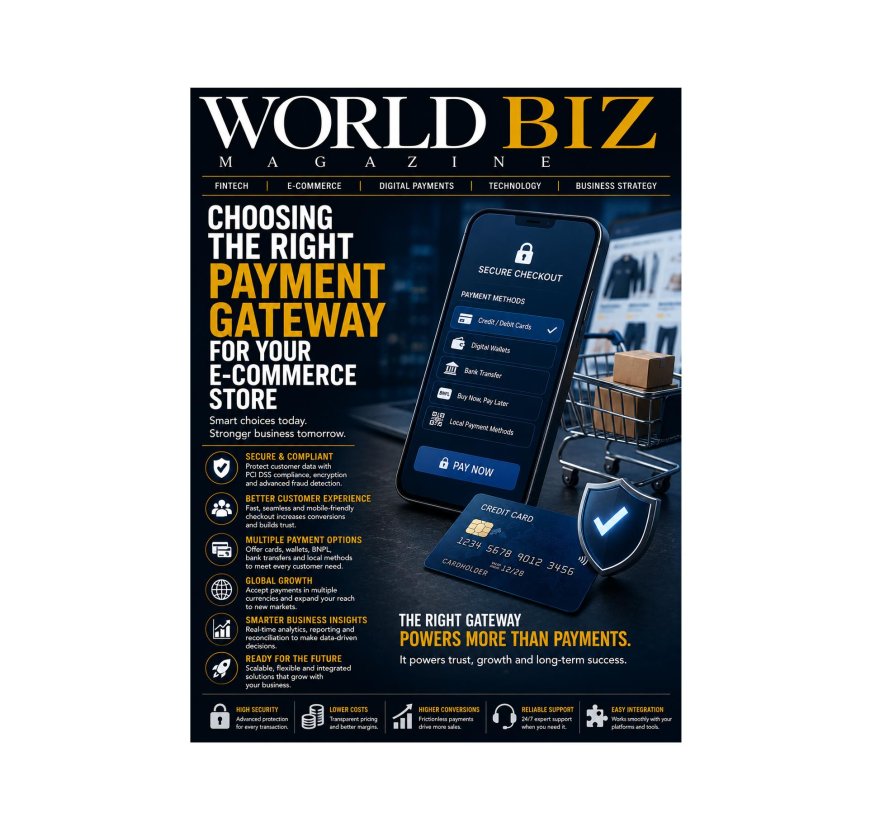
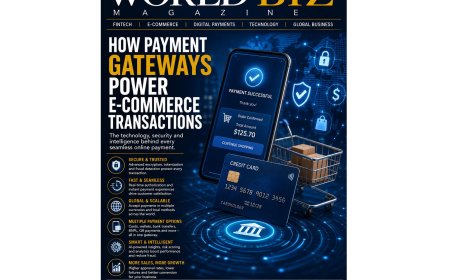
Choosing the Right Payment Gateway for Your E-Commerce Store
A Strategic Guide to Selecting Secure, Scalable, and Customer-Centric Payment Infrastructure for Sustainable Digital Commerce
World Biz Magazine | FinTech | E-Commerce | Digital Payments | Retail Technology
Why Payment Gateway Selection Is a Strategic Business Decision
In today's digital economy, the payment gateway has evolved from a simple transaction processor into one of the most important strategic components of an e-commerce business. Regardless of whether an online retailer serves local customers or operates globally, the ability to offer secure, reliable, and seamless payment experiences directly influences customer satisfaction, conversion rates, operational efficiency, and long-term profitability.
Consumers now expect online payments to be fast, frictionless, and trustworthy. A slow checkout process, limited payment options, or security concerns can quickly result in abandoned shopping carts and lost revenue. According to numerous industry studies, checkout friction remains one of the leading causes of cart abandonment worldwide, making payment optimization a critical priority for online merchants.
Selecting the right payment gateway therefore extends far beyond comparing transaction fees. Business leaders must evaluate security, scalability, international payment capabilities, fraud prevention technologies, regulatory compliance, customer preferences, integration flexibility, reporting capabilities, and future technological readiness.
As digital commerce continues expanding through mobile shopping, social commerce, subscription services, embedded finance, and cross-border transactions, choosing the right payment gateway has become a competitive business decision rather than simply a technical implementation.
Understanding the Role of a Payment Gateway
A payment gateway serves as the secure bridge between customers, merchants, financial institutions, and payment networks.
Its responsibilities include:
- Encrypting payment information
- Authorizing transactions
- Communicating with acquiring and issuing banks
- Detecting fraudulent activity
- Supporting regulatory compliance
- Managing payment processing
- Facilitating transaction settlement
An efficient payment gateway operates behind the scenes, enabling customers to complete purchases with minimal effort while protecting sensitive financial information throughout the transaction lifecycle.
Why the Right Gateway Matters
The payment experience represents one of the final interactions customers have before completing a purchase. Even after investing heavily in digital marketing, search engine optimization, user experience design, and product merchandising, an inefficient payment process can prevent successful conversions.
The right gateway contributes to:
- Higher conversion rates
- Lower cart abandonment
- Stronger customer trust
- Faster checkout
- Improved operational efficiency
- Better fraud protection
- Greater international reach
- Long-term scalability
Conversely, an unsuitable gateway can introduce unnecessary costs, customer frustration, payment failures, and security risks.
Security Should Always Come First
Security remains the single most important consideration when evaluating payment gateways.
Businesses should prioritize providers offering:
- PCI DSS compliance
- End-to-end encryption
- Tokenization
- SSL/TLS protection
- 3-D Secure authentication
- AI-powered fraud detection
- Real-time monitoring
- Multi-factor authentication
- Secure API infrastructure
Consumers are increasingly aware of cybersecurity risks. A secure payment environment strengthens customer confidence while protecting businesses from financial losses and reputational damage.
Customer Experience Drives Revenue
Modern consumers expect convenient checkout experiences regardless of device or location.
An effective payment gateway should provide:
- Fast page loading
- Mobile optimization
- One-click checkout
- Saved payment methods
- Guest checkout
- Multiple currencies
- Multiple languages
- Responsive design
- Minimal checkout steps
Reducing friction throughout the payment process significantly improves purchase completion rates.
Support Multiple Payment Methods
Consumer payment preferences continue evolving across regions and demographics.
Businesses should select gateways supporting:
- Credit cards
- Debit cards
- Digital wallets
- Apple Pay
- Google Pay
- Bank transfers
- Buy Now, Pay Later (BNPL)
- QR code payments
- Local payment methods
- Cryptocurrency payments where appropriate
Offering localized payment options increases customer confidence while improving international sales opportunities.
Global Expansion Requires International Capabilities
Businesses planning international growth should evaluate payment gateways capable of supporting cross-border commerce.
Important capabilities include:
- Multi-currency payments
- Dynamic currency conversion
- Local acquiring
- Regional payment methods
- International settlement
- Tax calculation
- Language localization
- Global compliance
The ability to localize payment experiences often determines success when entering foreign markets.
Evaluate Pricing Beyond Transaction Fees
Transaction costs represent only one component of payment gateway economics.
Businesses should also consider:
- Setup fees
- Monthly subscriptions
- Chargeback fees
- Refund processing fees
- Currency conversion costs
- Cross-border transaction fees
- API usage costs
- Premium feature pricing
The lowest transaction fee does not always deliver the lowest total cost of ownership.
Comprehensive financial evaluation supports better long-term decision-making.
Integration and Technical Flexibility
Modern businesses rely upon interconnected digital ecosystems.
Payment gateways should integrate smoothly with:
- E-commerce platforms
- Enterprise Resource Planning (ERP)
- Customer Relationship Management (CRM)
- Accounting software
- Inventory systems
- Subscription platforms
- Mobile applications
- Point-of-Sale (POS) systems
- Analytics platforms
Flexible APIs and developer-friendly documentation simplify implementation while reducing long-term maintenance costs.
Fraud Prevention and Risk Management
Digital fraud continues increasing alongside e-commerce growth.
Leading payment gateways incorporate:
- Machine learning
- Behavioral analytics
- Device fingerprinting
- Velocity monitoring
- Risk scoring
- Geolocation analysis
- AI fraud detection
- Automated transaction review
Advanced fraud prevention protects revenue while minimizing false payment declines that negatively impact legitimate customers.
Reliability and Performance
Downtime directly affects revenue.
Businesses should evaluate:
- Platform uptime
- Processing speed
- Geographic redundancy
- Disaster recovery
- Load balancing
- Service availability
- Infrastructure scalability
Highly reliable payment systems improve customer confidence during peak shopping periods.
Reporting and Business Intelligence
Modern payment gateways generate valuable operational insights.
Businesses benefit from dashboards providing:
- Sales analytics
- Payment success rates
- Failed transaction reports
- Fraud statistics
- Customer payment preferences
- Geographic sales data
- Chargeback trends
- Settlement reporting
Data-driven decision-making supports continual optimization of payment performance.
Subscription and Recurring Billing
Recurring revenue models continue expanding across industries.
Businesses offering subscriptions should evaluate:
- Automated billing
- Payment retries
- Subscription management
- Customer self-service portals
- Invoice automation
- Flexible billing cycles
- Membership management
Reliable recurring payment functionality improves customer retention while stabilizing revenue.
Regulatory Compliance
Payment providers operate within highly regulated financial environments.
Businesses should verify support for:
- PCI DSS
- Anti-Money Laundering (AML)
- Know Your Customer (KYC)
- GDPR and privacy regulations
- Consumer protection requirements
- Local payment regulations
- Tax compliance
Strong compliance reduces operational and legal risks.
Scalability for Future Growth
The payment gateway selected today should support tomorrow's business growth.
Scalable platforms should accommodate:
- Higher transaction volumes
- New geographic markets
- Additional currencies
- Expanded payment methods
- Omnichannel commerce
- Marketplace functionality
- AI-powered payment optimization
- Future financial technologies
Investing in scalable infrastructure minimizes costly migrations later.
Artificial Intelligence and Intelligent Payments
Artificial Intelligence is transforming payment ecosystems.
Future-ready gateways increasingly utilize AI for:
- Dynamic fraud detection
- Intelligent payment routing
- Personalized checkout
- Customer authentication
- Predictive analytics
- Payment optimization
- Automated customer support
- Financial forecasting
Businesses adopting intelligent payment technologies can improve both operational efficiency and customer experience.
Questions Every Business Should Ask Before Choosing a Payment Gateway
Before making a decision, business leaders should evaluate:
- Does the gateway support our target markets?
- Can it scale with projected growth?
- Are security standards industry-leading?
- Does it integrate with existing systems?
- What payment methods do customers prefer?
- How reliable is customer support?
- What are the total operating costs?
- How strong are fraud prevention capabilities?
- Is reporting sufficiently comprehensive?
- Does the provider have a clear innovation roadmap?
These questions help align payment infrastructure with long-term business strategy.
Economic Impact of Choosing the Right Payment Gateway
Payment gateways are no longer merely financial technology solutions that facilitate online transactions they have become essential infrastructure supporting the digital economy. Every successful payment contributes to economic activity by connecting consumers, businesses, financial institutions, technology providers, logistics companies, and governments within an increasingly interconnected commercial ecosystem.
The quality, efficiency, and accessibility of payment infrastructure directly influence business productivity, consumer confidence, cross-border commerce, financial inclusion, and national economic competitiveness. As digital commerce continues expanding, payment gateways are becoming strategic drivers of economic growth rather than simple transaction-processing tools.
Accelerating E-Commerce Growth
Reliable payment gateways enable businesses of all sizes to participate in digital commerce with confidence.
By simplifying payment acceptance and improving transaction success rates, they help:
- Increase online sales
- Expand digital entrepreneurship
- Support small and medium-sized enterprises (SMEs)
- Encourage business innovation
- Improve customer confidence
- Reduce barriers to market entry
This contributes to stronger domestic digital economies while enabling businesses to reach international customers more efficiently.
Supporting Small Businesses and Entrepreneurs
Modern payment gateways have significantly lowered the barriers to launching online businesses.
Small enterprises no longer require complex banking infrastructure to accept digital payments.
Affordable payment technologies allow entrepreneurs to:
- Launch online stores quickly
- Sell internationally
- Accept multiple payment methods
- Improve cash flow
- Automate financial operations
- Build recurring revenue models
These capabilities promote innovation, employment, and economic diversification.
Driving Cross-Border Trade
International commerce depends upon secure and efficient payment systems.
Advanced payment gateways support:
- Multiple currencies
- Local payment methods
- International settlement
- Cross-border fraud protection
- Regional regulatory compliance
By reducing friction in global transactions, payment gateways help businesses access new markets while strengthening international trade and investment.
Increasing Consumer Spending
Fast, secure, and convenient checkout experiences improve customer confidence.
When consumers trust online payment systems, they are more likely to:
- Complete purchases
- Shop more frequently
- Subscribe to digital services
- Purchase internationally
- Adopt new financial technologies
Higher consumer confidence contributes directly to increased retail activity and broader economic growth.
Encouraging Financial Inclusion
Digital payment infrastructure is expanding financial access for individuals and businesses that have traditionally been underserved by conventional banking systems.
Through mobile wallets, QR code payments, digital banking, and alternative payment methods, payment gateways enable broader participation in the formal economy.
Greater financial inclusion supports entrepreneurship, tax collection, digital transformation, and long-term economic development.
Creating Employment Across Multiple Industries
The growth of digital payments generates employment opportunities beyond the financial sector.
Industries benefiting from payment ecosystem expansion include:
- Financial technology
- Banking
- Cybersecurity
- Software development
- Artificial Intelligence
- Data analytics
- Customer support
- Digital marketing
- Logistics
- Cloud computing
- Regulatory compliance
The payment industry therefore contributes significantly to the broader digital workforce.
Strengthening Government Revenue
Digital payments improve transaction transparency and support more efficient tax administration.
Electronic transactions can reduce cash dependency while improving recordkeeping and financial accountability.
As digital commerce expands, governments benefit through:
- Improved tax collection
- Greater financial transparency
- Reduced informal economic activity
- Better economic data
- Enhanced regulatory oversight
This strengthens fiscal management while supporting sustainable public investment.
Supporting Innovation Ecosystems
Payment infrastructure enables innovation across numerous industries.
Emerging technologies including Artificial Intelligence, Open Banking, Embedded Finance, digital identity, and Real-Time Payments depend upon secure payment ecosystems.
Investment in payment infrastructure therefore stimulates broader technological advancement throughout the digital economy.
Executive Perspective
Selecting a payment gateway is no longer merely a technical procurement decision it is a strategic investment that influences every stage of the customer journey.
From customer acquisition and checkout conversion to fraud prevention, international expansion, regulatory compliance, and long-term scalability, payment infrastructure has become a central component of digital business success.
Organizations that prioritize security, customer experience, operational flexibility, and technological innovation when selecting payment gateways are better positioned to build customer trust, improve profitability, and compete effectively in an increasingly digital global economy.
As e-commerce continues evolving through Artificial Intelligence, embedded finance, open banking, real-time payments, and intelligent financial ecosystems, businesses must view payment gateways as strategic growth partners rather than simply transaction processors.
The right payment gateway does far more than process payments—it enables trust, supports innovation, accelerates global expansion, and powers sustainable digital commerce for the future.
World Biz Magazine Insights
The future of global commerce will increasingly depend on the quality of digital payment infrastructure. As businesses expand across borders and consumers embrace digital-first lifestyles, payment gateways are evolving into intelligent financial ecosystems that support not only transactions but also innovation, trust, and economic resilience.
World Biz Magazine believes that selecting the right payment gateway has become a strategic business decision with implications extending far beyond checkout efficiency. It influences customer experience, cybersecurity, regulatory compliance, operational scalability, international competitiveness, and long-term enterprise value.
Our editorial analysis identifies five transformative trends shaping the future of payment infrastructure:
1. Payment Gateways Will Become Strategic Business Platforms
Modern payment providers are evolving from transaction processors into integrated commerce platforms offering fraud prevention, analytics, subscription management, embedded finance, customer intelligence, and AI-powered business optimization.
Organizations will increasingly evaluate payment gateways based on the complete business ecosystem they provide rather than transaction fees alone.
2. Artificial Intelligence Will Redefine Payment Intelligence
AI will continue transforming fraud detection, customer authentication, payment routing, predictive analytics, and personalized checkout experiences.
Businesses adopting AI-enabled payment technologies are expected to achieve higher authorization rates, stronger security, and improved operational efficiency.
3. Cross-Border Commerce Will Drive Gateway Innovation
As international e-commerce continues expanding, merchants will require payment platforms capable of supporting multiple currencies, local payment preferences, regional compliance, and real-time international settlement.
Future payment gateways will increasingly remove traditional barriers to global commerce.
4. Consumer Trust Will Become the Ultimate Competitive Advantage
Cybersecurity, data privacy, transparency, and regulatory compliance will become increasingly important purchasing considerations.
Payment providers that consistently demonstrate reliability, resilience, and responsible financial governance will strengthen customer confidence while supporting long-term digital commerce growth.
5. Financial Inclusion Will Expand Global Digital Economies
Digital payment technologies are creating economic opportunities for millions of consumers, entrepreneurs, and small businesses that previously lacked access to advanced financial services.
Payment gateways will continue playing an important role in expanding financial participation, supporting digital entrepreneurship, and accelerating inclusive economic development.
World Biz Magazine believes that payment gateways should be viewed as critical digital infrastructure powering the next generation of commerce. Businesses that invest in secure, scalable, customer-focused payment technologies will be better positioned to compete in increasingly intelligent, interconnected, and globally integrated markets.
Conclusion
Choosing the right payment gateway is no longer simply an operational or technical decision it is a strategic investment that influences every stage of the customer journey and every aspect of digital business performance.
An effective payment gateway enhances security, improves customer confidence, reduces fraud, increases conversion rates, supports international expansion, simplifies regulatory compliance, and provides valuable commercial intelligence for better decision-making. As digital commerce continues evolving through Artificial Intelligence, Open Banking, Embedded Finance, mobile commerce, and Real-Time Payments, payment infrastructure will become even more central to business competitiveness.
Organizations that carefully evaluate scalability, security, customer experience, integration capabilities, payment flexibility, and future innovation when selecting payment partners will be better positioned to achieve sustainable growth in the rapidly evolving digital economy.
Ultimately, the right payment gateway does far more than process transactions it strengthens trust, supports innovation, enables global commerce, and creates the financial foundation upon which successful digital businesses are built.
Disclaimer
This article is published by World Biz Magazine for editorial, educational, and informational purposes only. The analysis, opinions, and observations presented are based on publicly available information, financial technology trends, industry practices, and independent editorial research.
This publication should not be interpreted as financial, banking, legal, tax, cybersecurity, regulatory, investment, or professional advice. Businesses should conduct independent due diligence and consult qualified financial institutions, payment service providers, legal counsel, cybersecurity professionals, and regulatory advisors before selecting or implementing payment gateway solutions or other financial technologies.
References to payment gateways, financial institutions, payment processors, digital wallets, technologies, products, or commercial practices are provided solely for informational and educational purposes and do not constitute endorsement, certification, commercial affiliation, or recommendation by World Biz Magazine. The magazine supports secure digital payments, responsible financial innovation, regulatory compliance, consumer protection, and ethical business practices as essential foundations for sustainable growth in the global digital economy.
What's Your Reaction?
 Like
1
Like
1
 Dislike
0
Dislike
0
 Love
1
Love
1
 Funny
0
Funny
0
 Angry
0
Angry
0
 Sad
0
Sad
0
 Wow
0
Wow
0