















































































































































































































The Freelancer’s Biggest Fear: What Happens When a Client Opens a Dispute?
A detailed World Biz Magazine analysis explaining freelance client disputes, payment risks, communication breakdowns, and reputation management.

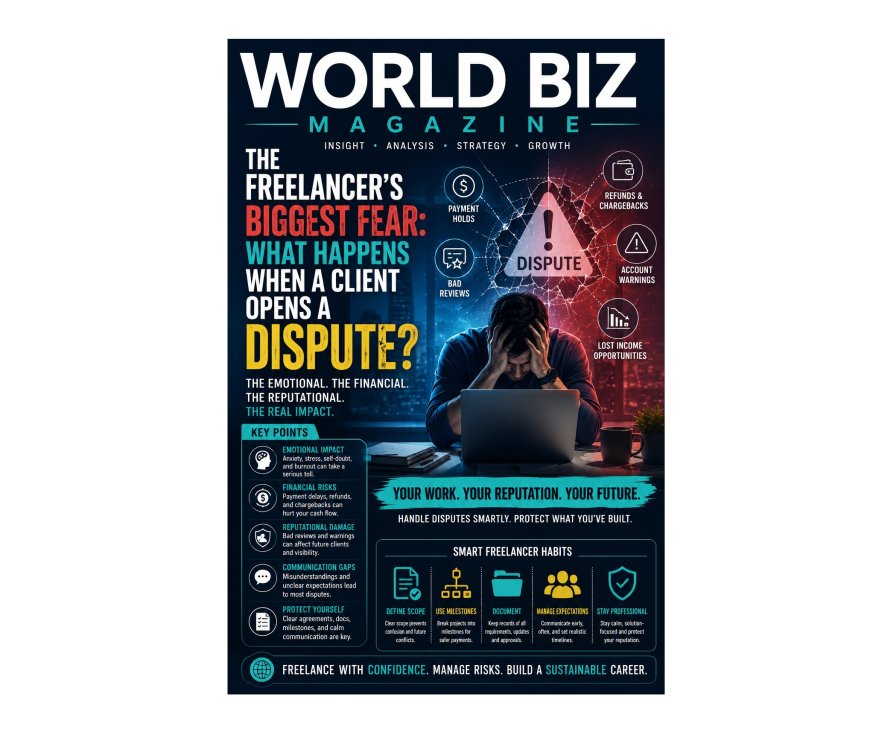
The Freelancer’s Biggest Fear: What Happens When a Client Opens a Dispute?
Understanding the Emotional, Financial, and Professional Impact of Freelance Disputes in the Digital Work Economy
World Biz Magazine | Global Freelance & Digital Economy Intelligence
The Hidden Anxiety Behind Freelance Freedom
Freelancing has become one of the fastest-growing forms of work in the modern global economy. Millions of professionals worldwide now earn income independently through remote services including game development, design, animation, programming, writing, digital marketing, consulting, media production, and countless other specialized skills. The rise of remote work, digital communication, cloud collaboration, and global talent marketplaces has created unprecedented opportunities for independent professionals to build careers outside traditional corporate structures.
For many freelancers, the appeal is clear: flexibility, global clients, creative independence, location freedom, and the ability to scale personal income without relying on a single employer. However, behind the promise of independence lies a reality many outsiders rarely see the constant pressure of uncertainty, client dependency, payment risk, and reputational vulnerability. Among all the challenges freelancers face, few create more fear, stress, and emotional exhaustion than the possibility of a client dispute.
A dispute can instantly transform what seemed like a successful project into a professional crisis. Freelancers may suddenly face frozen payments, refund claims, account warnings, negative reviews, project cancellations, reputation damage, communication breakdowns, and financial instability. In severe cases, disputes can threaten future income opportunities, platform visibility, long-term client trust, and even the sustainability of an independent career.
Unlike traditional employees who often benefit from legal departments, HR systems, contracts, and salary protection, freelancers frequently operate alone. They manage client communication, contracts, negotiations, revisions, deadlines, invoicing, and dispute resolution personally. This creates an environment where a single disagreement can have consequences far beyond one project.
The emotional impact is equally significant. Anxiety, sleeplessness, self-doubt, burnout, financial panic, and fear of reputation loss are common experiences during dispute situations. For many freelancers, disputes are not merely business disagreements; they feel deeply personal because the freelancer’s skills, professionalism, identity, and livelihood are directly tied to the work being challenged.
As the global freelance economy continues expanding, understanding the risks, realities, and psychological effects of client disputes has become increasingly important for freelancers, agencies, entrepreneurs, and digital work ecosystems worldwide.
Why Freelance Disputes Happen
Freelance disputes can arise for many different reasons, and in many cases, both the freelancer and the client may genuinely believe they are correct.
Common causes include:
- Miscommunication
- Unclear project scope
- Missed deadlines
- Quality disagreements
- Revision conflicts
- Budget misunderstandings
- Changing client expectations
- Delayed responses
- Technical issues
- Payment disagreements
In creative and technical industries especially, expectations can become highly subjective. A client may expect one outcome while the freelancer interprets the project differently.
Without strong communication and documentation, small misunderstandings can escalate rapidly into formal disputes.
The Emotional Impact of a Dispute on Freelancers
One of the most overlooked aspects of freelance disputes is the emotional pressure they create.
For many freelancers, a dispute feels deeply personal because:
- Their reputation is attached to the work
- Their income depends on client trust
- Their future opportunities may be affected
- Their professional identity is being questioned
Unlike corporations with large teams and legal support systems, freelancers often face disputes completely alone.
Anxiety and Mental Stress
Disputes frequently create intense anxiety.
Freelancers may worry about:
- Losing payment
- Receiving negative reviews
- Account penalties
- Client retaliation
- Public reputation damage
- Future project loss
Even highly experienced freelancers can experience stress, sleep disruption, emotional exhaustion, and reduced productivity during active disputes.
Fear of Reputation Damage
For freelancers, reputation is one of the most valuable business assets.
A single negative review or unresolved dispute may influence:
- Client trust
- Search visibility
- Future hiring decisions
- Referral opportunities
Many freelancers fear that one dispute could undo years of reputation building.
This fear becomes even stronger for newer freelancers who may have limited client history or smaller portfolios.
Self-Doubt and Burnout
Disputes can trigger significant self-doubt.
Freelancers may begin questioning:
- Their skills
- Their communication abilities
- Their professionalism
- Their career stability
Repeated disputes or difficult client experiences may eventually contribute to burnout and emotional fatigue.
Financial Risks During Disputes
Beyond emotional pressure, disputes often create immediate financial consequences.
Payment Holds and Delays
In many freelance work environments, disputed payments may become temporarily frozen while the issue is reviewed.
This creates cash flow problems for freelancers who rely on:
- Ongoing monthly income
- Project-based payments
- Immediate cash access
Because many freelancers operate without large financial reserves, even temporary payment delays can create serious financial stress.
Refund Risks
Clients involved in disputes may request:
- Partial refunds
- Full refunds
- Charge reversals
- Project cancellations
In some cases, freelancers may lose payment even after completing significant portions of work.
This becomes especially painful when:
- Large amounts of time were invested
- Revisions were already completed
- Expenses were incurred during production
Loss of Future Income
A dispute may affect future business opportunities if:
- Reputation is damaged
- Visibility decreases
- Client confidence declines
- Repeat business is lost
Freelancers often depend heavily on long-term relationships and referrals, making reputation protection extremely important.
The Reputational Risks Freelancers Face
In the freelance economy, trust is currency.
Clients often make hiring decisions based on:
- Reviews
- Ratings
- Testimonials
- Portfolio reputation
- Professional conduct
Disputes can impact all of these areas.
Negative Reviews
Negative reviews may:
- Reduce client trust
- Lower hiring rates
- Affect project invitations
- Damage professional credibility
Even one highly visible negative review can influence future client perception significantly.
Account Warnings and Professional Standing
Some freelance ecosystems may issue:
- Performance warnings
- Quality alerts
- Temporary restrictions
- Reduced visibility
- Account reviews
Freelancers often fear these outcomes because they may influence long-term earning potential.
Public Reputation Concerns
In creative industries especially, professional reputation extends beyond individual projects.
Disputes may affect:
- Word-of-mouth referrals
- Industry networking
- Social reputation
- Business partnerships
Freelancers frequently invest years building credibility and trust within their niche markets.
Why Miscommunication Is Often the Root Cause
Many disputes originate not from bad intentions, but from poor communication.
Unclear Scope of Work
One of the biggest freelance risks is unclear project scope.
Problems often occur when:
- Deliverables are vague
- Revision limits are undefined
- Timelines are unclear
- Client expectations evolve mid-project
Without written clarity, misunderstandings become far more likely.
Revision Conflicts
Clients may request repeated changes beyond the original agreement.
Freelancers may feel:
- The project scope expanded unfairly
- Additional work is unpaid
- Expectations became unrealistic
Meanwhile, clients may believe revisions were included.
Clear revision policies are essential to avoid conflict.
Communication Delays
Slow communication can create:
- Timeline confusion
- Missed expectations
- Frustration
- Escalation of minor issues
Fast, professional communication often helps prevent disputes from intensifying.
The Psychological Pressure of Client Dependency
Many freelancers depend heavily on a small number of clients for income stability.
This creates psychological vulnerability during disputes because:
- Losing one client may affect financial survival
- Future work pipelines may weaken
- Referral opportunities may disappear
Freelancers often feel pressured to remain overly accommodating even in unfair situations because they fear income instability.
How Experienced Freelancers Reduce Dispute Risk
Experienced freelancers often develop systems designed to reduce conflict before problems arise.
Clear Contracts and Agreements
Professional agreements should define:
- Deliverables
- Deadlines
- Payment terms
- Revision limits
- Ownership rights
- Scope boundaries
Written clarity reduces misunderstanding significantly.
Milestone-Based Workflows
Breaking projects into milestones helps:
- Improve transparency
- Reduce payment risk
- Confirm client approval gradually
- Prevent large-scale disagreements
Milestone structures create better accountability for both sides.
Detailed Documentation
Experienced freelancers document:
- Client requests
- Revisions
- Approval stages
- Scope changes
- Delivery confirmations
Documentation becomes extremely valuable if disagreements occur later.
Managing Client Expectations
Successful freelancers often focus heavily on expectation management.
This includes:
- Realistic timelines
- Honest communication
- Transparent limitations
- Clear production processes
Overpromising is one of the fastest ways to create dispute risk.
The Importance of Emotional Control During Disputes
One of the biggest mistakes freelancers make during disputes is responding emotionally.
Stress may cause:
- Defensive communication
- Angry responses
- Escalation of conflict
- Reputation damage
Professional, calm communication often improves resolution outcomes significantly.
Even when a freelancer feels unfairly treated, professionalism remains critical.
Freelance Disputes and Mental Health
The freelance economy often lacks traditional emotional support systems found in corporate workplaces.
Freelancers may experience:
- Isolation
- Anxiety
- Emotional exhaustion
- Burnout
- Fear of instability
Disputes intensify these pressures significantly.
As freelancing continues growing globally, mental health awareness within the freelance economy is becoming increasingly important.
The Rise of Freelance Risk Management
As the freelance economy matures, more professionals are adopting formal risk management strategies including:
- Legal contracts
- Insurance
- Client screening
- Deposits and milestone payments
- Financial reserves
- Project management systems
Freelancing is increasingly evolving from informal gig work into highly structured independent business operations.
The Future of Freelance Work and Dispute Resolution
The future freelance economy may see improved systems for:
- Mediation
- Escrow protection
- AI-assisted dispute resolution
- Smart contracts
- Transparent project tracking
- Reputation verification
Technology may eventually help reduce conflict through better accountability and communication systems.
However, human communication and trust will likely remain central to freelance relationships.
World Biz Magazine Insights
At World Biz Magazine, we view freelance disputes as one of the most emotionally and professionally complex challenges within the modern digital work economy. Freelancers operate in highly competitive environments where reputation, communication, trust, and financial stability are deeply interconnected.
While freelancing offers extraordinary opportunities for independence and global business growth, it also exposes professionals to risks traditionally absorbed by larger organizations. Disputes can affect not only income, but also emotional well-being, confidence, long-term career growth, and professional identity.
As the global freelance economy continues expanding across creative industries, software development, media production, AI services, and remote work ecosystems, the importance of professional communication, contract management, emotional resilience, and risk mitigation will continue growing.
The freelancers who successfully combine technical skill with strong business systems and client management strategies are likely to build the most sustainable long-term careers in the evolving digital economy.
Conclusion
Client disputes represent one of the most stressful realities of freelance work. Beyond payment concerns, disputes can affect emotional well-being, reputation, career stability, client trust, and long-term business growth.
As freelancing becomes increasingly integrated into the global economy, understanding dispute risks and developing strong communication, documentation, and professional management strategies has become essential for independent professionals seeking sustainable success.
Freelancers are no longer simply service providers; they are independent businesses managing reputation, operations, legal risk, emotional resilience, and client relationships simultaneously in highly competitive global markets.
Protecting both professional reputation and mental well-being may ultimately become just as important as delivering high-quality work itself.
Disclaimer
This article is published for informational, educational, and editorial purposes only and does not constitute legal, financial, employment, mental health, or professional business advice. Readers should consult qualified legal professionals, financial advisors, business consultants, or mental health professionals regarding specific freelance disputes, contracts, or professional situations. World Biz Magazine and its affiliates are not responsible for legal outcomes, financial losses, professional disputes, or decisions made based on the information presented in this publication.
What's Your Reaction?
 Like
0
Like
0
 Dislike
0
Dislike
0
 Love
0
Love
0
 Funny
0
Funny
0
 Angry
0
Angry
0
 Sad
0
Sad
0
 Wow
0
Wow
0