







































































































































































Cloud Kitchens and Q-Commerce Integration: The Future of Food Delivery | World Biz Magazine
A comprehensive executive guide to cloud kitchens, quick commerce, digital food delivery, smart logistics, AI, and the future of on-demand commerce.

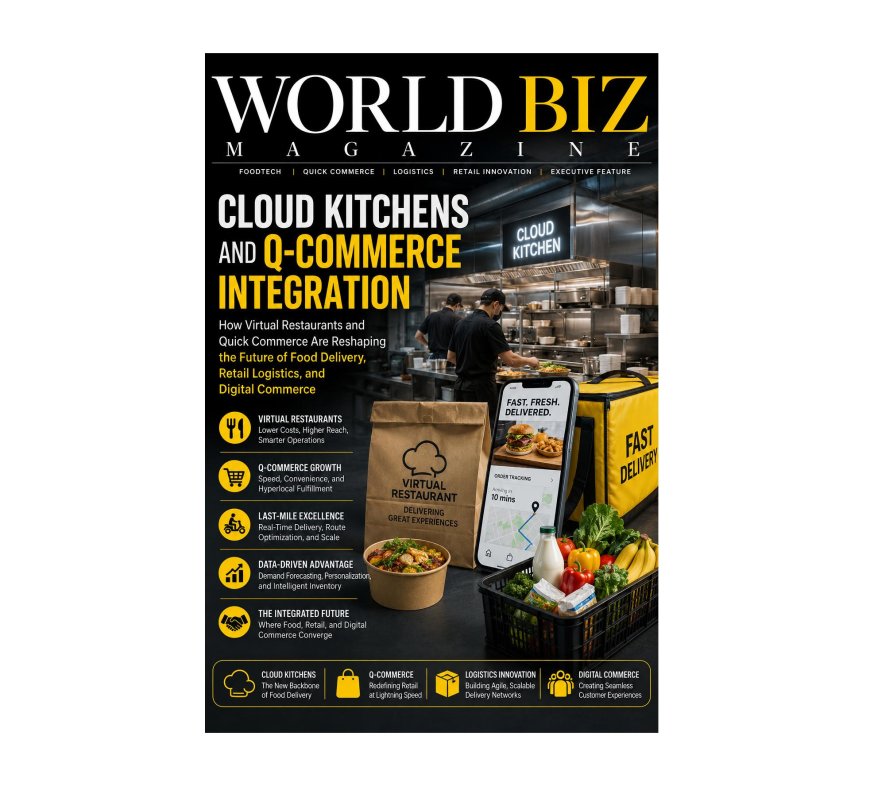
Cloud Kitchens and Q-Commerce Integration
How Virtual Restaurants and Quick Commerce Are Reshaping the Future of Food Delivery, Retail Logistics, and Digital Commerce
World Biz Magazine | FoodTech | Quick Commerce | Logistics | Retail Innovation
The global food and retail industries are undergoing a profound digital transformation driven by changing consumer expectations, rapid urbanization, and advances in logistics technology. Consumers increasingly expect meals, groceries, beverages, pharmaceuticals, and everyday essentials to arrive at their doorstep within minutes rather than hours. This demand for speed, convenience, and seamless digital experiences has accelerated the rise of two of the fastest-growing business models in modern commerce: Cloud Kitchens and Quick Commerce (Q-Commerce).
While cloud kitchens revolutionized restaurant operations by eliminating traditional dine-in infrastructure and focusing exclusively on delivery, Quick Commerce introduced hyperlocal fulfillment models capable of delivering products within 10 to 30 minutes. Today, these two ecosystems are rapidly converging, creating integrated fulfillment networks that combine food preparation, inventory management, artificial intelligence, micro-fulfillment, and last-mile delivery into a unified digital commerce platform.
The integration of cloud kitchens with Q-Commerce is fundamentally changing how food is prepared, distributed, marketed, and delivered. Restaurants are becoming logistics businesses, while grocery delivery platforms are evolving into comprehensive on-demand marketplaces capable of serving multiple consumer needs from a single digital ecosystem.
As Artificial Intelligence (AI), Internet of Things (IoT), robotics, predictive analytics, and cloud computing continue to advance, cloud kitchens and quick commerce are emerging as critical components of the future urban economy.
Understanding Cloud Kitchens
Cloud kitchens, also known as ghost kitchens, virtual kitchens, dark kitchens, or delivery-only kitchens, are commercial food preparation facilities designed exclusively for online food orders. Unlike traditional restaurants, cloud kitchens have no customer dining areas, storefronts, or front-of-house operations. Their primary objective is to maximize kitchen efficiency while fulfilling orders placed through mobile applications, websites, or third-party food delivery platforms.
By eliminating the costs associated with premium retail locations, dining spaces, waitstaff, and customer-facing operations, cloud kitchens significantly reduce capital expenditure and operating costs. This enables restaurant operators to launch multiple food brands from a single kitchen, test new menus with minimal risk, and rapidly scale their delivery business.
Cloud kitchens have become an essential component of the digital food economy, allowing businesses to focus on operational efficiency, culinary innovation, and customer convenience.
Understanding Quick Commerce (Q-Commerce)
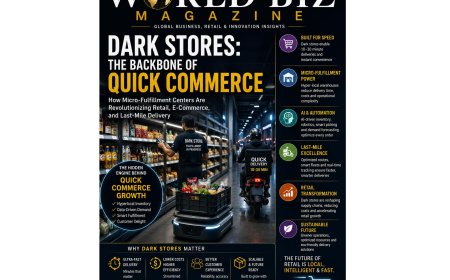
Quick Commerce represents the next evolution of e-commerce by emphasizing ultra-fast delivery of products through hyperlocal fulfillment centers. Rather than relying on centralized warehouses located far from customers, Q-Commerce platforms utilize strategically positioned dark stores, micro-fulfillment centers, and local inventory hubs to enable deliveries within minutes.
Originally focused on groceries and convenience items, Q-Commerce has expanded to include pharmaceuticals, beauty products, consumer electronics, household essentials, and increasingly, freshly prepared meals. The model depends on advanced logistics, real-time inventory management, optimized delivery networks, and AI-powered demand forecasting to meet customer expectations for speed and reliability.
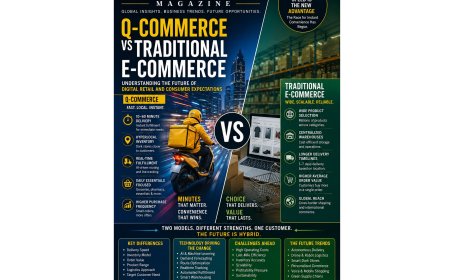
The convergence of Q-Commerce with cloud kitchens enables platforms to offer consumers a broader range of products from restaurant meals to grocery essentials through a single digital interface.
The Convergence of Cloud Kitchens and Q-Commerce
The integration of cloud kitchens with Q-Commerce represents a natural evolution of on-demand commerce. Both models rely on localized fulfillment, digital ordering, intelligent logistics, and rapid delivery. By combining food preparation with hyperlocal inventory, businesses can optimize infrastructure, reduce delivery times, and increase operational efficiency.
An integrated facility may include a cloud kitchen preparing meals alongside a dark store stocking groceries, beverages, and household essentials. Customers can place a single order containing restaurant food, fresh produce, snacks, and personal care products, all delivered together by the same logistics network.
This convergence creates significant economies of scale while improving customer convenience and expanding revenue opportunities.
Technology Driving Integration
Technology serves as the foundation of cloud kitchen and Q-Commerce integration.
Artificial Intelligence
AI optimizes demand forecasting, menu planning, inventory allocation, kitchen scheduling, route optimization, and customer personalization. Machine learning models analyze purchasing behavior, weather conditions, local events, seasonal trends, and historical data to predict demand with remarkable accuracy.
Cloud Computing
Cloud-based platforms synchronize customer orders, kitchen operations, inventory systems, payment gateways, delivery management, and business analytics across multiple locations, ensuring seamless coordination and scalability.
Internet of Things (IoT)
IoT sensors monitor refrigeration, food safety, equipment performance, inventory levels, and environmental conditions. Real-time monitoring reduces waste, improves operational reliability, and ensures regulatory compliance.
Robotics and Automation
Automated food preparation systems, robotic inventory handlers, autonomous storage systems, and intelligent packaging solutions improve efficiency while reducing operational costs and human error.
Data Analytics
Advanced analytics provide insights into customer preferences, operational performance, delivery efficiency, product profitability, and marketing effectiveness, enabling continuous optimization.
Hyperlocal Fulfillment Networks
Hyperlocal fulfillment is central to the success of integrated cloud kitchens and Q-Commerce. Facilities are strategically located close to residential and commercial areas, reducing delivery distances and enabling faster service.
Instead of maintaining large centralized warehouses, businesses operate networks of smaller fulfillment hubs capable of serving specific neighborhoods. This approach improves freshness, reduces transportation costs, lowers carbon emissions, and enhances customer satisfaction.
The hyperlocal model also enables businesses to respond quickly to local demand patterns, seasonal trends, and neighborhood-specific preferences.
Last-Mile Delivery Optimization
The final stage of delivery remains one of the most critical and expensive components of the digital commerce ecosystem. Integrated cloud kitchens and Q-Commerce platforms leverage AI-powered route optimization, GPS tracking, dynamic rider allocation, and real-time traffic analysis to improve delivery performance.
Delivery fleets increasingly include electric motorcycles, bicycles, scooters, autonomous robots, and, in the future, delivery drones. By consolidating multiple product categories into a single delivery, businesses reduce transportation costs while improving operational efficiency.
Real-time order tracking and accurate delivery estimates enhance transparency and strengthen customer trust.
Inventory Management and Demand Forecasting
Effective inventory management is essential to maintaining service quality while minimizing waste. AI-driven forecasting systems analyze customer purchasing patterns, weather forecasts, promotional campaigns, holidays, and local events to predict demand and optimize stock levels.
Cloud kitchens manage perishable ingredients, while Q-Commerce platforms oversee grocery and retail inventory. Integrated inventory systems ensure synchronized replenishment, reduce stockouts, and minimize food waste.
Predictive analytics also supports dynamic menu planning and product assortment optimization, allowing businesses to respond rapidly to changing consumer preferences.
Business Models
Cloud kitchen and Q-Commerce integration supports multiple business models.
Restaurant brands may operate proprietary cloud kitchens connected to their own delivery platforms or partner with third-party Q-Commerce providers. Grocery retailers increasingly establish in-house cloud kitchens to offer freshly prepared meals alongside retail products.
Third-party logistics providers manage fulfillment for multiple restaurant brands, while franchise operators leverage shared infrastructure to expand into new markets with lower capital investment.
Multi-brand kitchens enable businesses to serve diverse customer segments from a single facility, maximizing asset utilization and operational efficiency.
Customer Experience
Integrated digital platforms provide consumers with a seamless shopping experience. Customers can browse restaurant menus, grocery products, beverages, pharmacy items, and household essentials within a single application.
Personalized recommendations, loyalty programs, subscription services, digital wallets, and AI-driven promotions enhance customer engagement and encourage repeat purchases. Real-time notifications, transparent order tracking, and responsive customer support further improve satisfaction.
Convenience has become a defining competitive advantage in the digital commerce landscape.
Economic Advantages
The integration of cloud kitchens with Q-Commerce generates substantial economic benefits.
Businesses reduce infrastructure costs by sharing facilities, logistics networks, technology platforms, and delivery fleets. Higher asset utilization improves profitability while expanding service offerings.
Consumers benefit from greater convenience, broader product selection, faster deliveries, and competitive pricing. Investors gain access to rapidly growing markets supported by scalable digital business models.
Governments benefit through increased digital entrepreneurship, job creation, and innovation in urban logistics.
Sustainability Considerations
Sustainability is becoming a strategic priority for integrated fulfillment networks. Businesses increasingly adopt electric delivery fleets, recyclable packaging, renewable energy, and AI-driven route optimization to reduce environmental impact.
Food waste is minimized through predictive inventory management and demand forecasting. Shared logistics networks reduce unnecessary transportation, while localized fulfillment lowers fuel consumption and greenhouse gas emissions.
Sustainable operations not only improve environmental performance but also strengthen brand reputation among environmentally conscious consumers.
Challenges and Risks
Despite its rapid growth, the integrated model faces several challenges.
High real estate costs in urban areas, rising labor expenses, thin operating margins, complex inventory management, regulatory compliance, food safety standards, cybersecurity threats, and increasing competition require continuous innovation and operational excellence.
Customer expectations for ever-faster delivery continue to pressure businesses to optimize costs while maintaining service quality.
Scalable technology infrastructure, strong data governance, and resilient supply chains will be essential to long-term success.
Emerging Innovations
The future of cloud kitchens and Q-Commerce will be shaped by continuous technological advancement.
Autonomous cooking systems, robotic food preparation, AI-powered menu engineering, drone deliveries, autonomous delivery vehicles, blockchain-based food traceability, digital twin fulfillment centers, predictive supply chains, and edge AI logistics are expected to become increasingly common.
The integration of generative AI into customer service, marketing, and operational decision-making will further enhance efficiency and personalization.
Smart cities may eventually integrate food delivery networks with broader urban mobility systems, creating fully connected digital commerce ecosystems.
Global Market Outlook
The global market for cloud kitchens and Q-Commerce is expected to continue expanding as urban populations grow, smartphone penetration increases, and digital payment adoption accelerates. Emerging markets present particularly strong growth opportunities due to rising middle-class populations and rapidly evolving consumer behavior.
Major retailers, technology companies, restaurant chains, logistics providers, and venture capital firms continue investing heavily in cloud kitchen infrastructure, dark stores, automation, and AI-driven logistics platforms. Strategic partnerships between food brands, grocery retailers, and delivery platforms are expected to further accelerate market expansion.
The integration of food services with broader digital commerce ecosystems will increasingly define competitive differentiation in the years ahead.
World Biz Magazine Insights
Cloud kitchens and Quick Commerce are no longer separate business models they are becoming interconnected pillars of the digital economy. Their integration demonstrates how technology can simultaneously improve operational efficiency, customer convenience, and business scalability. Companies capable of combining intelligent fulfillment, AI-driven logistics, sustainable operations, and personalized digital experiences will establish lasting competitive advantages in the evolving retail landscape.
As cities become smarter and consumer expectations continue to rise, integrated fulfillment ecosystems will increasingly replace traditional retail and restaurant infrastructure. The businesses investing today in automation, data analytics, and hyperlocal logistics are building the foundation of tomorrow's on-demand economy.
Conclusion
The convergence of cloud kitchens and Quick Commerce represents a significant milestone in the evolution of retail, food service, and digital logistics. By integrating localized food production, intelligent inventory management, advanced technology, and rapid last-mile delivery, businesses are creating highly efficient fulfillment ecosystems capable of meeting the demands of modern consumers.
This integrated approach not only enhances operational performance and customer satisfaction but also unlocks new opportunities for revenue growth, market expansion, and sustainable innovation. As Artificial Intelligence, robotics, cloud computing, and autonomous logistics continue to mature, cloud kitchens and Q-Commerce will become even more deeply embedded within the future of urban commerce.
Organizations that embrace these technologies, prioritize operational excellence, and remain adaptable to evolving consumer behavior will be best positioned to lead the next generation of digital retail and food delivery.
Disclaimer
This article is published by World Biz Magazine for informational, educational, and editorial purposes only. The insights, opinions, forecasts, and analysis presented are based on publicly available information, industry research, market developments, and the editorial assessment of the publication at the time of writing.
The content should not be interpreted as financial, legal, investment, operational, or professional business advice. Readers should conduct independent research and consult qualified advisors before making strategic, investment, or commercial decisions.
References to companies, technologies, products, platforms, or business models are provided solely for editorial and educational purposes and do not constitute endorsement or recommendation by World Biz Magazine. As technologies, regulations, market conditions, and consumer preferences continue to evolve, readers should verify current information through official and authoritative sources before relying on it for business or investment decisions.
What's Your Reaction?
 Like
0
Like
0
 Dislike
0
Dislike
0
 Love
0
Love
0
 Funny
0
Funny
0
 Angry
0
Angry
0
 Sad
0
Sad
0
 Wow
0
Wow
0